
Insights · 93 engineering guides
Structural steel engineering, code by code
Loads, seismic systems, crane runways, data halls and the drawing loop: the engineering behind every package we fabricate, written so the design team and the shop read the same sheet.
Sheet index
One sheet per engineering discipline
Each sheet gathers the guides for one part of the design, in reading order. Codes are cited by section, values are metric first with US units in brackets.
Loads, connections and drawings
ASCE 7-22 loads, delegated connection design, OSHA Subpart R erection details, member choice and approval rounds.
- ASCE 7-22 design loads: what a steel fabricator needs from you3 min
- Delegated connection design: the three AISC options and who does what3 min
- OSHA Subpart R: what the steel fabricator supplies for safe erection6 min
- Plate girders or rolled W-shapes: choosing the right member3 min
- Steel shop drawings: how to get them approved in one round3 min
AISC 341 seismic systems
Moment frames, braced frames, shear walls and the drawings the provisions ask for.
- AISC 341-22: what changed for US seismic steel projects7 min
- AISC 341 vs AISC 360: how the seismic steel code stack fits together7 min
- Seismic steel materials: Table A3.1, ASTM A709 and expected strength7 min
- Seismic design drawings: what AISC 341-22 requires on the contract documents7 min
- Overstrength factor, diaphragms and collectors in AISC 341-227 min
- Nonlinear response history analysis for steel: AISC 341-22 Chapter C and Appendix 17 min
Show all 19 articles
- Width-to-thickness ratio limits for seismic steel members: Table D1.1 explained7 min
- Beam stability bracing and protected zones in seismic steel frames7 min
- Seismic bolted joints and welded joints: AISC 341-22 Section D27 min
- Seismic column splices and column bases: AISC 341-22 Sections D2.5 and D2.67 min
- OMF, IMF and STMF: choosing an intermediate moment frame or its neighbors7 min
- Special moment frame design under AISC 341-22: joints, panel zones and continuity plates7 min
- Cantilever column systems: OCCS and SCCS under AISC 341-227 min
- Concentrically braced frames: OCBF vs SCBF under AISC 341-227 min
- Eccentrically braced frames: how the link works under AISC 341-227 min
- Buckling-restrained braced frames under AISC 341-22: braces that yield both ways7 min
- Steel plate shear walls under AISC 341-22: tension fields and boundary elements7 min
- Composite seismic systems and the new coupled composite plate shear wall7 min
- Cyclic qualification testing of seismic connections: AISC 341-22 Chapter K7 min
AWS D1.8 seismic welding details
Weld sequence, access holes, backing, tabs and protected zones.
- AWS D1.8 explained: what the seismic welding code adds to D1.18 min
- Heat input envelope testing: keeping seismic welds tough from root to cap7 min
- Lowest anticipated service temperature: when cold weather changes seismic welding7 min
- FCAW-S intermix testing: when shop and field welds meet in one seismic joint7 min
- Bottom flange weld sequence: how seismic beam-to-column welds are laid down7 min
- Weld access holes in seismic frames: geometry, finish and inspection7 min
Show all 10 articles
Mill and crane buildings, AIST TR-13
Crane loads, columns, bracing, foundations and floors for heavy industry.
- Mill building class A to D: how crane load cycles set the design4 min
- Crane side thrust, impact and traction: the dynamic loads on a mill runway4 min
- Crane runway load combinations in AIST TR-13: LRFD, ASD and fatigue4 min
- Mill building geotechnical investigation: borings, depths and the report7 min
- Crane building foundations: settlement, piles and caissons under heavy cranes7 min
- Mill floor live loads: AIST TR-13 Table 3.1 for platforms and operating floors7 min
Show all 17 articles
- Moving loads in mill buildings: rail cars, ladle cars, forklifts and tracked vehicles7 min
- Mill building seismic design: crane mass, stored material and the nonbuilding route7 min
- Mill building wind and snow loads: open sides, drifts, drift limits and frame spread7 min
- Vibrating equipment supports in mill buildings: fans, screens, crushers and resonance7 min
- Duct and pipe loads in mill buildings: dust depth, full pipes, utilities and contingency7 min
- Crane column types: stepped, bracket or independent columns in a mill building4 min
- Mill building expansion joints and bracing: managing length, heat and crane forces3 min
- Crane girder deflection and frame drift limits for mill buildings3 min
- Crane girder backup bracing and box girders for long, heavy runways4 min
- Crane runway end stops and bumper forces: designing for the full-speed hit3 min
- Crane runway upgrade: reusing an existing mill building for a heavier crane3 min
Data center structures
Ratings, floor loads, cooling, power support steel and hazard design for data halls.
- Risk Category IV for data centers: designing above the code minimum5 min
- Performance-based seismic design for data centers: designing for downtime, not just collapse5 min
- Converting existing buildings to data centers: the structural due diligence5 min
- Data center wind design: hurricanes, tornadoes and the steel envelope5 min
- Data center roof loads: snow, rain, ponding and rooftop equipment5 min
- Data center flood design: storm surge, tsunami and keeping critical plant dry6 min
Show all 27 articles
- Data center disaster recovery: lessons from Superstorm Sandy and Tohoku5 min
- TIA-942 ratings and the building: what Rated 1 to 4 asks of the structure5 min
- Data center tiers and redundancy: N+1, 2N and what the frame must carry5 min
- ASHRAE data center guidelines: what TC 9.9 means for the building and its steel5 min
- BICSI 002 data center classes: what the best-practice guide asks of the building5 min
- NFPA 75 and data center fire suppression: sprinklers, clean agent and the structure5 min
- Data center floor load: how much a data hall floor should carry5 min
- Data center ceiling height: building the clear height from the rack up5 min
- Data hall column grid: fitting the steel to the rack layout5 min
- Raised floor or slab? Choosing the data hall floor and what it means for the steel5 min
- Overhead busway and cable tray support steel in the data hall5 min
- Hot aisle containment and the structure: plenums, panels and what hangs from the steel5 min
- Air-side economizer design: what free cooling asks of the data center building5 min
- Liquid and immersion cooling: the structural loads of the next data hall5 min
- Rooftop equipment steel for data centers: dunnage, platforms and screens5 min
- Gaseous contamination in data centers: corrosive air, a sealed shell and the right steel finishes5 min
- Data center generator yards: the steel behind backup power5 min
- UPS and battery rooms: the heaviest floor in the data center4 min
- Data center grounding and bonding: what the structural steel has to do6 min
- Fire-resistance-rated steel in data centers: ratings, assemblies and protection choices5 min
- Data center reliability engineering: why the structure is a common cause failure5 min
ASTM steel grades
A992, A572, A36, A500, Charpy, bolts, anchor rods and grade substitutions.
- A992 vs A572 vs A36: choosing the grade for each part of a steel frame7 min
- ASTM A992 steel: why wide flange beams and columns use it7 min
- ASTM A572 steel plate: Grades 42 to 65 and where each one is used7 min
- ASTM A36 steel today: plate, angles, channels and connection parts7 min
- ASTM A500 Grade C HSS: tube grades, wall thickness and corners7 min
- ASTM A1085 vs A500: when tighter HSS tolerances and Charpy pay off7 min
Show all 15 articles
- ASTM A53 Grade B pipe in structural steel: columns, bollards and rails7 min
- ASTM A6: the general rules behind every rolled shape and plate7 min
- Charpy V-notch toughness in structural steel: when to ask and what to write7 min
- ASTM A588 weathering steel: where bare steel works and where it fails7 min
- Structural bolt grades under ASTM F3125: A325, A490 and twist-off bolts7 min
- Anchor rod grades under ASTM F1554: Grade 36, 55 and 105 explained7 min
- Cold-formed steel grades: A653 and A1011 for purlins, girts and panels7 min
- JIS, KS and EN steel grades against ASTM: what is and is not equivalent7 min
- Steel grade substitution: how to request one and what the engineer checks7 min
Latest
New in engineering and codes
 Engineering and codes
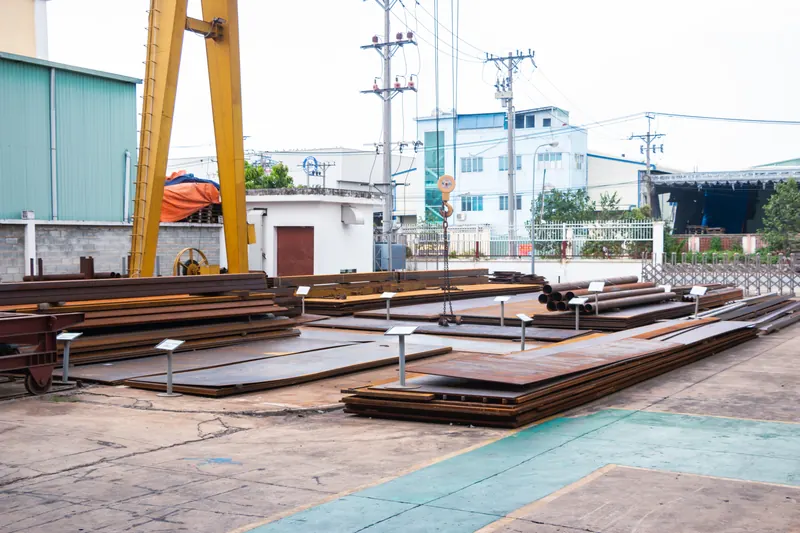
A992 vs A572 vs A36: choosing the grade for each part of a steel frame
Three ASTM specifications cover most of the hot-rolled steel in a US building. They are not interchangeable, and choosing between them is less about strength than about shape, chemistry and what the mill actually rolls. Here is how the choice works.
7 min read · Nov 24, 2026
 Engineering and codes
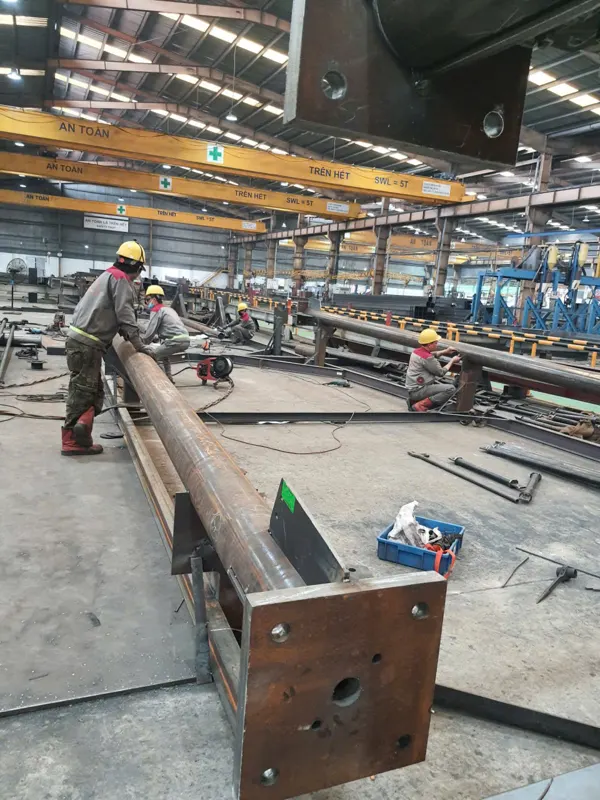
Anchor rod grades under ASTM F1554: Grade 36, 55 and 105 explained
Anchor rods tie a steel frame to its foundation, and they are cast in long before the steel arrives. A wrong grade or a missed detail is expensive to fix. Here is how the three ASTM F1554 grades compare and what to put on the drawings.
7 min read · Nov 24, 2026
 Engineering and codes
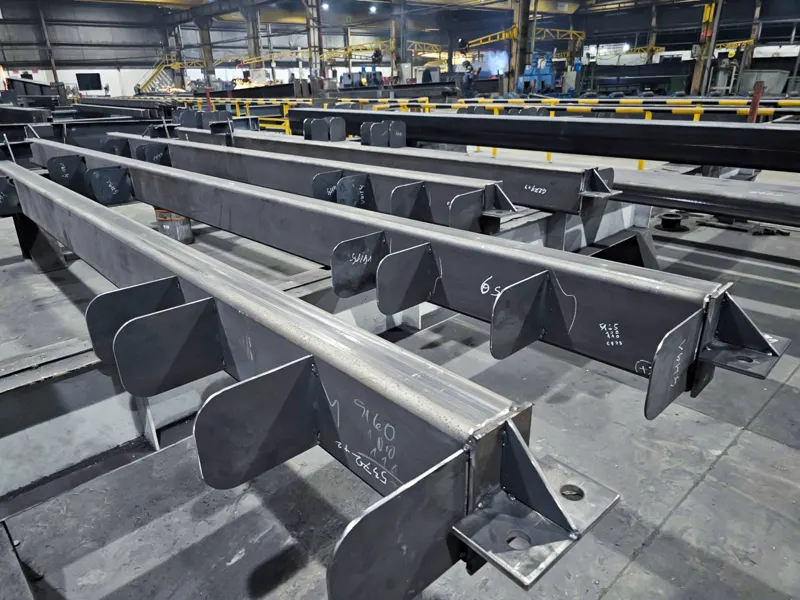
ASTM A1085 vs A500: when tighter HSS tolerances and Charpy pay off
ASTM A1085 was written to fix the things designers disliked about A500: a thin design wall, no yield ceiling and no toughness requirement. It is not always needed, and it is less widely rolled. Here is how to decide.
7 min read · Nov 24, 2026
World Steel products and services
Put these guides to work on your project
Each guide links to the World Steel pages behind it. These are the products and services US contractors use most after reading about engineering and codes.
Large-project capacity
2,500 tof structural steel fabricated every month in our own plant in Vietnam
The articles above come from the engineers and inspectors who run these jobs. IAS AC472 accredited, shipped to US ports and jobsites, with production tracked in real time in PEB Studio.
Our large-project program- Sunpro Steel millSteel mill, crane buildings5,000 t
- CPV FoodFood processing plant2,500 t
- Long SonOil and gas, 56,000+ m² (600,000+ sq ft)2,000 t
- M&D Warehouse, ThailandWarehouse and factory2,000 t
- New EraCold storage1,000 t
Flagship series
Read the full series on its landing page
Questions
Engineering and codes: questions from US contractors
Which US codes does World Steel design to?
The code editions your jurisdiction adopts: typically IBC, ASCE 7, AISC 360 and AISC 341, AISI S100, AWS D1.1, D1.3 and D1.8, and the MBMA manual for metal buildings. We list the governing editions in the design basis.
Do you provide the PE seal?
No. Our engineers prepare calculations and drawings ready for your Engineer of Record’s review and approval. The Engineer of Record provides any seal the jurisdiction requires.
Can you take delegated connection design?
Yes. We design connections under the AISC option your contract documents choose and submit the calculations with the shop drawings for review.
Are shop drawings included?
Yes. Tekla models and shop drawings are included on every project at no extra cost, released in the sequence the job is fabricated, shipped and erected.
How heavy can members be?
Our laser machines cut and hole plate up to 100 mm (4 in) thick, and we build plate girders, box columns, cruciform columns and crane runway girders for heavy industrial work.
Bidding a large US project?
Send the bid documents, or just a footprint and an address. Our engineers check them against US code requirements and confirm what World Steel would supply, from a plant that fabricates 2,500 metric tons of structural steel a month.