Open the structural drawings of almost any US steel building and the general notes will say that wide flange shapes are ASTM A992 steel. It became the normal grade for W shapes in the US within a few years of its first edition in 1998, and AISC lists it as the preferred specification for them. This article explains what A992 requires, why it replaced the older choices, and what a reviewer should check when the certificates arrive.
The values below are a selection from the current edition of ASTM A992/A992M. The edition named in the project specification governs.
What A992 covers
ASTM A992/A992M is the standard specification for structural steel shapes for use in building framing. It applies to rolled shapes, and in practice it is used for wide flange shapes above all. Plate, bar, hollow sections and pipe are outside its scope and are ordered to other specifications, such as A572 for plate and A500 or A1085 for HSS.
Like every rolled shape specification, A992 relies on ASTM A6/A6M for its general requirements: dimensions and tolerances, test frequency, marking, certification and the list of supplementary requirements that can be added to an order. The ASTM A6 article in this series explains those rules.
Before A992: why a new grade was needed
Before the late 1990s, wide flange shapes in the US were usually ordered to A36 or A572 Grade 50. Steelmaking in the US had shifted to electric arc furnaces melting scrap, and shapes ordered to A36 often came out with yield strengths well above 250 MPa (36 ksi), sometimes above 345 MPa (50 ksi). That was good for strength but bad for predictability. A member designed to yield first, in a moment frame for example, could end up stronger than the connection beside it.
After the 1994 Northridge earthquake, the industry looked hard at moment connection behavior and at material variability. A992 was the answer on the material side: a 345 MPa (50 ksi) grade with an upper limit on yield, a limit on the yield-to-tensile ratio and a carbon equivalent cap. It gave designers a narrower band of strength and more consistent weldability.
Strength requirements
| Property | ASTM A992 |
|---|---|
| Yield strength | 345 to 450 MPa (50 to 65 ksi) |
| Tensile strength, minimum | 450 MPa (65 ksi) |
| Yield-to-tensile ratio, maximum | 0.85 |
| Elongation in 200 mm (8 in), minimum | 18% |
| Elongation in 50 mm (2 in), minimum | 21% |
The maximum yield of 450 MPa (65 ksi) is the feature that sets A992 apart. A572 Grade 50 has the same minimum but no maximum. For gravity framing the ceiling makes little difference; for frames where ductility and the order of yielding matter, it makes the behavior of the steel more predictable.
The yield-to-tensile ratio limit of 0.85 keeps a margin between first yielding and fracture. A steel with a high ratio reaches its ultimate strength soon after yielding and has less reserve to spread plastic strain along a member. AISC 341 relies on that reserve in seismic systems.
Chemistry and the carbon equivalent
A992 sets maximum values for carbon, manganese, silicon, phosphorus, sulfur, copper, nickel, chromium, molybdenum, vanadium and columbium. The key limits are:
- Carbon: 0.23% maximum.
- Manganese: 0.50 to 1.60%.
- Vanadium: 0.15% maximum; columbium: 0.05% maximum.
- Carbon equivalent: 0.45 maximum, or 0.47 for shapes with flange thickness over 50 mm (2 in).
The carbon equivalent combines carbon with manganese, chromium, molybdenum, vanadium, nickel and copper into one number that predicts hardenability, and therefore the risk of cracking in the heat-affected zone of a weld. A cap at 0.45 means most A992 shapes can be welded with the minimum preheat AWS D1.1 sets for their thickness. Above that value, a welding engineer would look harder at preheat and hydrogen control.
The limits on residual elements, such as copper, nickel and chromium, exist because scrap-based steel carries them. Capping them keeps the chemistry, and therefore the weldability and strength, in a known range.
Heavy shapes
The largest W shapes have flanges over 50 mm (2 in) thick. They are used for transfer girders, heavy columns in tall buildings and industrial structures with large crane loads. Three extra points apply to them:
- The carbon equivalent limit is slightly higher, 0.47, because heavy sections need more alloy to reach strength through the thickness.
- AISC 360-22 Section A3.1c requires Charpy V-notch testing of heavy rolled shapes when they are spliced with complete-joint-penetration groove welds and carry primary tension. The test is taken at the alternate core location of ASTM A6 Supplementary Requirement S30, which is where the steel is slowest to cool and toughness is lowest.
- AISC 341 Section A3.3 asks for notch toughness in heavy shapes of seismic force-resisting systems, with flange thickness of 38 mm (1-1/2 in) and over, at a stated energy and temperature.
When a job includes heavy shapes, the material schedule should name the Charpy requirement next to the grade so the mill order carries it.
A992 in seismic design
AISC 341 uses the expected yield strength of a material, not just its minimum, when it sizes the parts of a seismic system that must stay elastic. The factor for A992 is lower than for A36, because the A992 strength band is narrower. That is one reason A992 is the expected choice for beams and columns in special moment frames and braced frames.
It also explains why replacing A992 with "any 50 ksi shape" is not a neutral swap in a seismic job. The AISC 341 series and the seismic steel materials article show how expected strength enters the design.
Dual certification with A572
Mills often certify wide flange shapes to A992 and A572 Grade 50 at the same time. A dual-certified shape meets both: it has a yield of at least 345 MPa (50 ksi), no more than 450 MPa (65 ksi), and the A992 chemistry and ratio limits. The reverse is not true. A shape certified only to A572 Grade 50 does not satisfy an A992 order, because nothing on that certificate proves the maximum yield, the ratio or the carbon equivalent.
When a reviewer checks an A992 certificate, three numbers should be visible for each heat: the measured yield, the measured tensile strength (so the ratio can be checked) and the carbon equivalent or the chemistry to calculate it.
What a reviewer checks on the certificate
An A992 mill certificate should show, for each heat:
- The specification, A992/A992M, and the edition if the project fixes one.
- The heat number, matching the number stenciled or stamped on the shape.
- The section designation, for example W610 × 125 (W24 × 84).
- Heat analysis for every element the specification limits, and the carbon equivalent.
- Yield strength, tensile strength and elongation from the tension tests.
- Charpy V-notch results, test temperature and location, if the order asked for them.
The EN 10204 mill certificate page explains the difference between a 2.2 and a 3.1 certificate. A 3.1 certificate is validated by the mill's inspection representative, independent of production, and is the type we ask for on structural jobs.
Metric and US section names
A992 has both an inch-pound and an SI designation, and the shapes themselves are named both ways: W610 × 125 is the metric name of W24 × 84, with depth in millimetres and mass in kilograms per metre. The shapes are physically the same. Drawings for US jobs usually use the US names, and our shop drawings show the designation the drawings use so the piece mark and the certificate match.
Asian mills that roll shapes to A992 for export follow the ASTM A6 dimension tables. Other H-shapes, rolled to JIS or EN dimension tables, can look similar but have different depths, flange widths and masses. A section is checked against the A6 table before it is accepted as a W shape, as described in the foreign grade equivalents article.
When A992 is not the answer
A992 is the default for W shapes, but not for every member:
- Built-up members that replace a W shape are plate and are ordered to A572 Grade 50 or another plate grade; see built-up steel sections.
- Hollow sections follow A500, A1085 or A53.
- Higher strength shapes for heavy columns are sometimes specified to ASTM A913, a quenched and self-tempered grade available at 450 MPa (65 ksi) and higher. Availability is limited and should be confirmed early.
- Weathering steel shapes are ordered to A588 or a weathering grade of another specification.
Common review questions on A992
A few questions come up again and again when A992 submittals are reviewed:
- "The certificate shows a yield of 470 MPa. Is that a problem?" Yes, for an A992 order. The maximum is 450 MPa (65 ksi), so a heat above it does not meet A992 even if it meets A572 Grade 50. It may still be usable in a gravity member with the engineer's acceptance, but it is a substitution.
- "Can the carbon equivalent be calculated if the certificate does not print it?" Yes, from the heat analysis, using the formula in the specification. A reviewer should do it for heavy shapes and for members with large welds.
- "Is a shape from a different mill in the same order a concern?" No, provided each heat has its own certificate and the heat numbers stay with the pieces.
How World Steel orders and checks A992 shapes
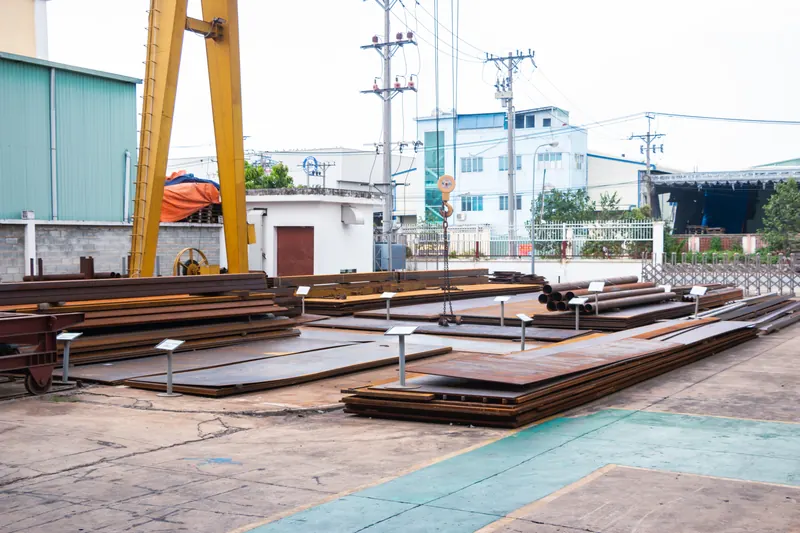
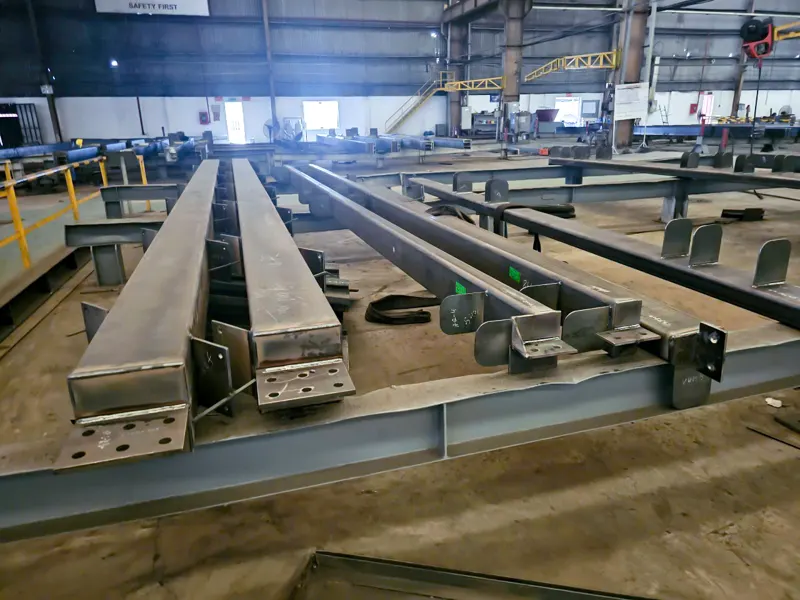
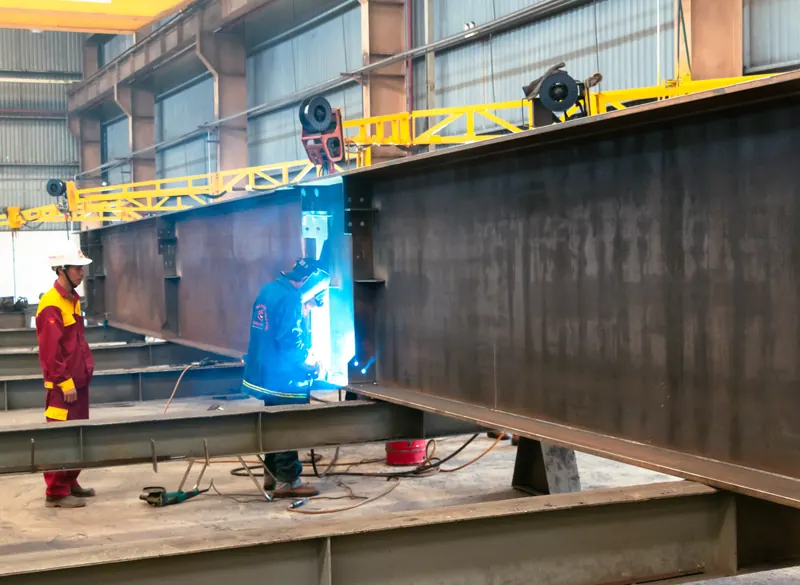
World Steel fabricates 2,500 metric tons of structural steel a month in its own IAS AC472-accredited plant in Vietnam, and wide flange shapes are a large part of that steel. Shapes are bought mainly from leading Vietnamese mills, with Japan, Korea, Indonesia and Thailand when a section size or a heavy shape requires it, and always to the specification on your drawings.
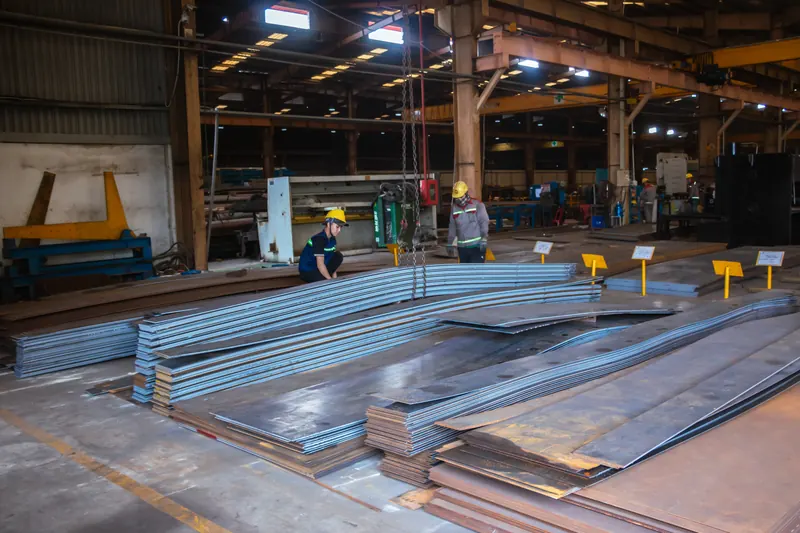
At intake, each bundle's heat number is matched to its EN 10204 3.1 certificate, the yield, tensile ratio and carbon equivalent are checked against A992, and the section is measured against the ASTM A6 tables. Charpy V-notch results are added to the order when your design calls for them, and any check test runs at an ILAC-recognized ISO/IEC 17025 laboratory or the laboratory you name. The full list of grades is on the structural steel materials page. Next in the series: A572 plate from Grade 42 to Grade 65.
Quick answers
What is the yield strength of ASTM A992?
A minimum of 345 MPa (50 ksi) and a maximum of 450 MPa (65 ksi), with a minimum tensile strength of 450 MPa (65 ksi) and a yield-to-tensile ratio no higher than 0.85.
Is A992 only for W shapes?
It is written for rolled structural shapes and is the preferred grade for W shapes. It is also used for some other shapes when a mill rolls them to it, but plate, HSS and pipe are ordered to other specifications.
What is the carbon equivalent limit in A992?
A maximum of 0.45, or 0.47 for shapes with flange thickness over 50 mm (2 in), calculated from the heat analysis with the formula in the specification.
Does A992 need Charpy testing?
Not by default. It is added when the design calls for it, for example heavy shapes under AISC 360 Section A3.1c, members in AISC 341 seismic systems with thick flanges, or members in cold service.
Keep building your steel plan
Go further on USPEB.com
On this topic
Across the US market
- US codes and standardsIBC, AISC, AWS and MBMA, designed to
- Crane building designUS crane standards for mill and bay buildings
- Design ReportWhat our US-code design report contains
- Large projects, 2,500 t a monthCapacity for large US general contractors
- Contractor partnershipLong-term supply for US contractors
- Solutions by stateState-by-state steel solutions