Skip to content
Seeking US contractor partners IAS AC472 ACCREDITED ★ METAL BUILDINGS ★ AC472 IAS AC472 accreditedIAS AC472
World Steel USA
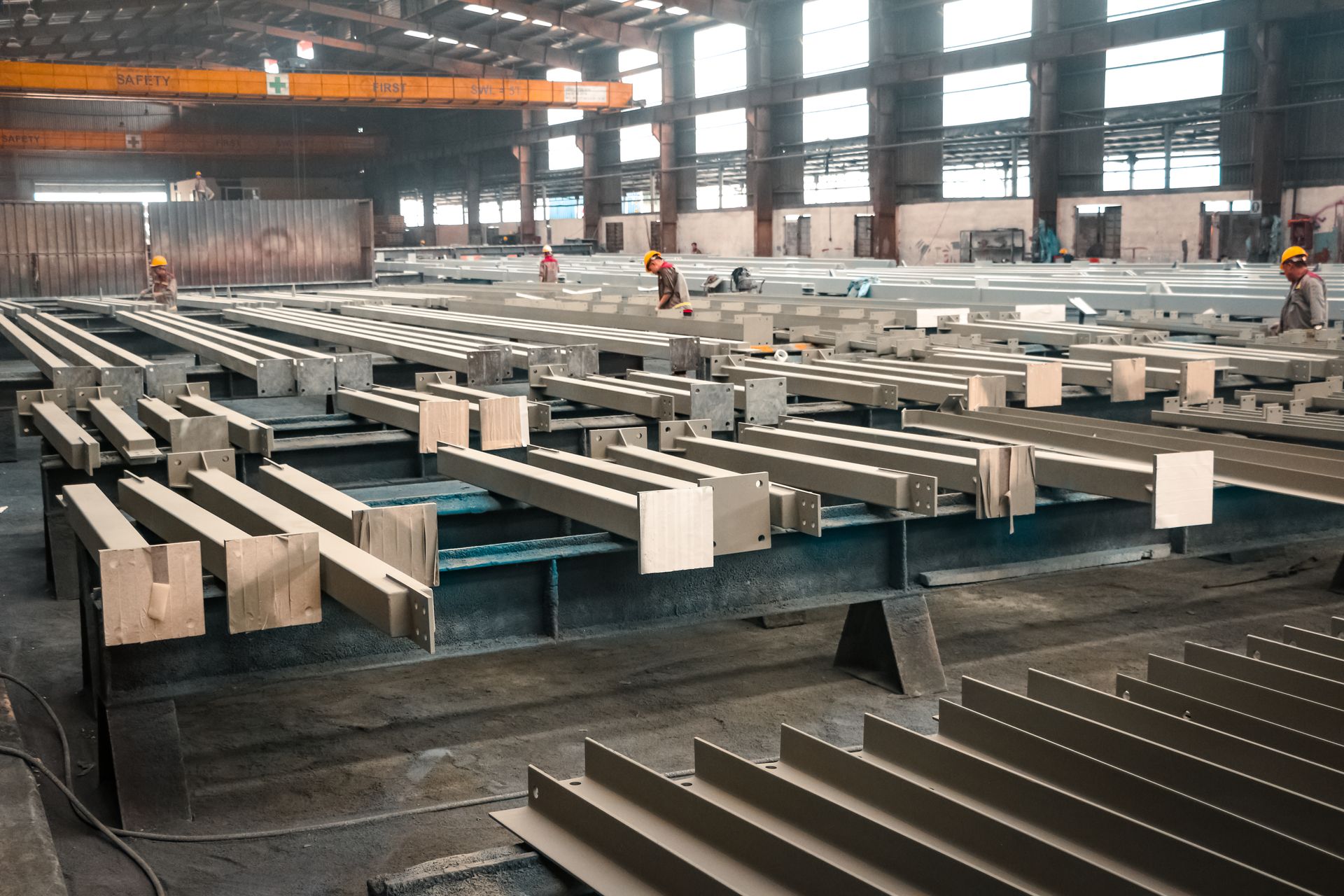
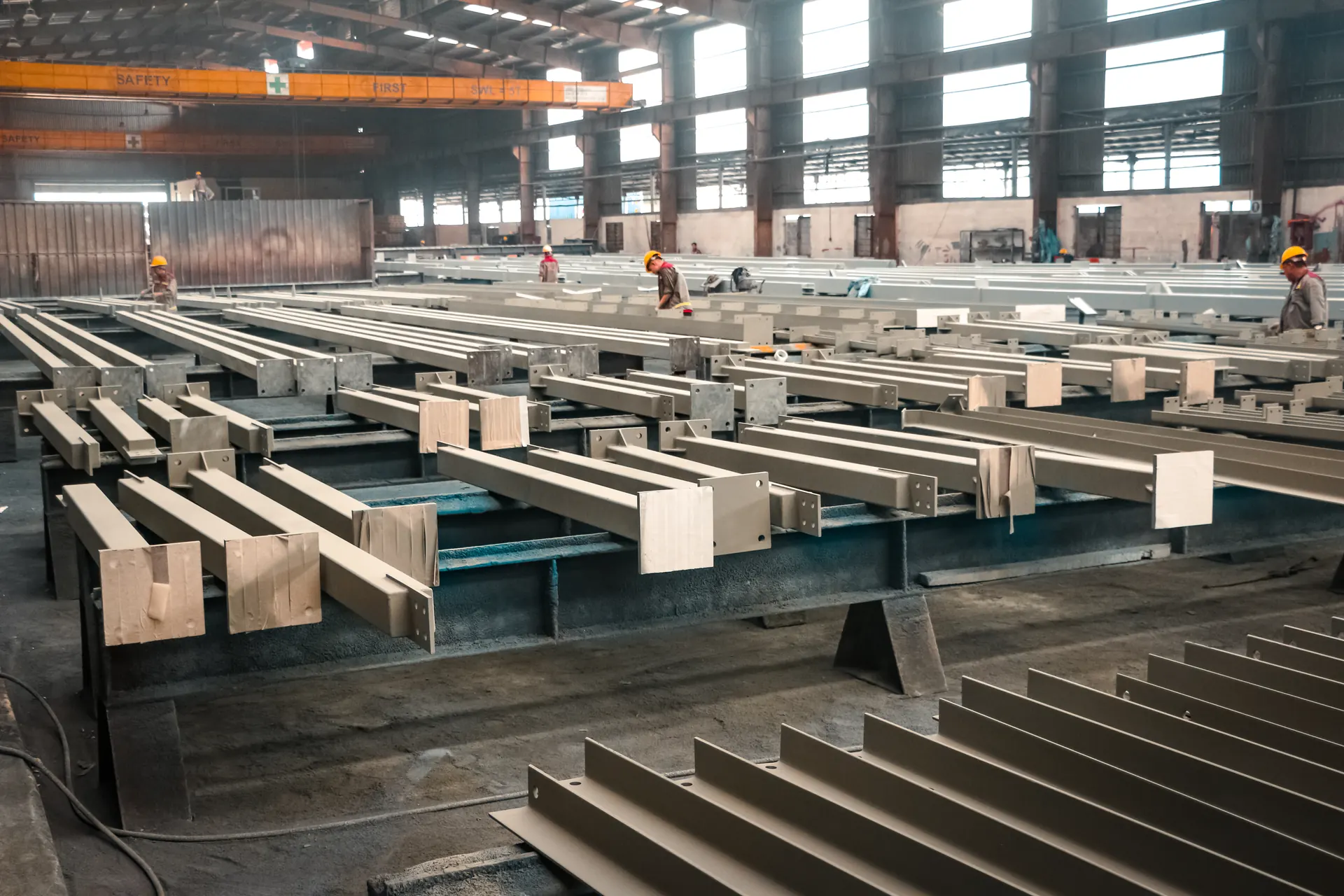
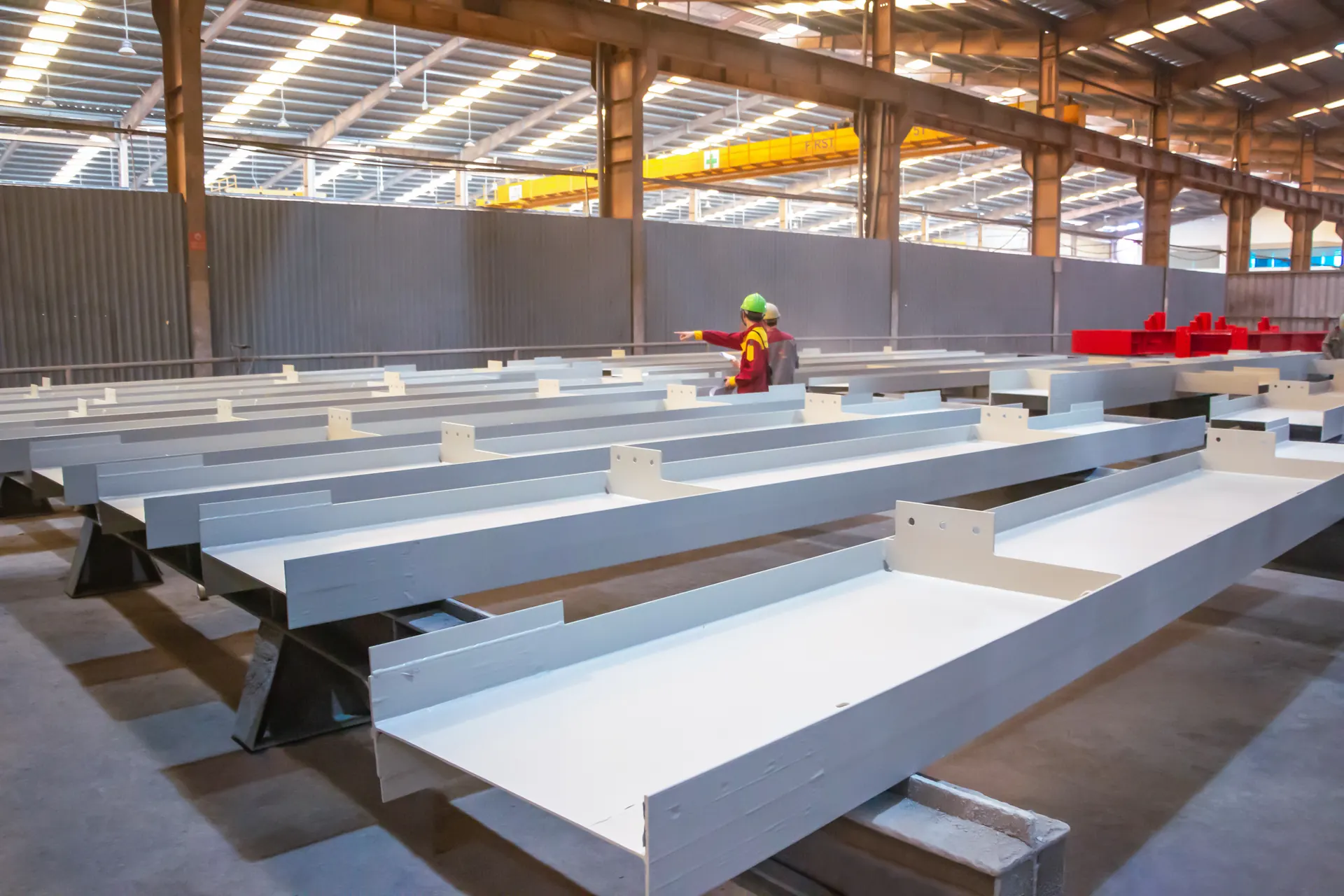
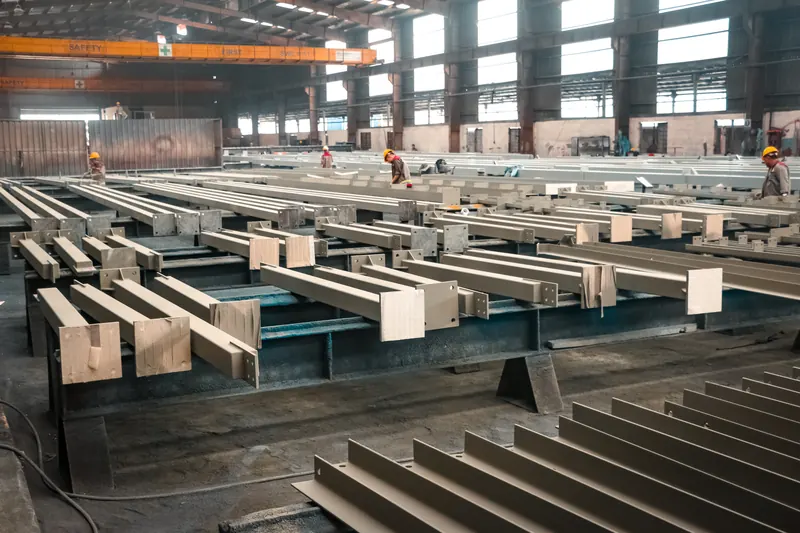
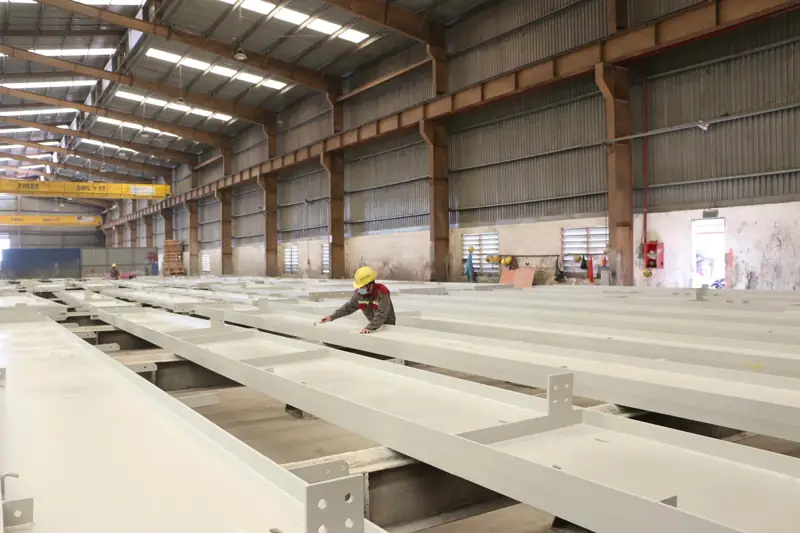
Coated members drying in rows on stands in the paint hall

Structural steel fire protection · US projects

Fire-rated steel, protected the way US codes require

From hospitals and office towers to data centers and petrochemical plants, we fabricate structural steel ready for its fire protection: sized with the coating in mind, primed with a primer the coating maker accepts and, where your project calls for it, coated in our paint hall in Vietnam with the listed intumescent product your specification names.

About 2,500 metric tons (2,750 US tons) of structural steel a month, from the first and only fabricator in Vietnam accredited under IAS AC472. We make no fire coatings and hold no fire listing: the rating comes from the tested, listed design.

Standard fire curves for steel The ASTM E119 and UL 263 building fire rises to about 927 °C at one hour and 1,010 °C at two hours. The UL 1709 hydrocarbon fire reaches about 1,093 °C within five minutes and stays there. Unprotected steel columns reach the 538 °C average limit within minutes. 03006009001,200 030 min1 h2 h3 h4 h °C 538 °C (1,000 °F) column average limit UL 1709 hydrocarbon fire ASTM E119 / UL 263 building fire
Standard building fire Hydrocarbon pool fire Steel column limit
Ratings from
IBC Table 601 and Chapter 7
Proven by
UL 263 / ASTM E119 listed designs
Applied
In our paint hall in Vietnam, or on site
Accepted by
Special inspector and fire marshal

How a US fire rating works

Seven links, and the rating is only as strong as the weakest

A fire-resistance rating is not a property of a paint. It is a chain that runs from the building code to the inspector’s report, and each link has an owner.

Two fires, two tests

A building fire and a fuel fire are tested differently

Steel keeps most of its strength up to a few hundred degrees, then loses it fast. US tests heat protected steel along a standard curve and record how long it stays below the limit.

ASTM E119 / UL 263

The standard building fire: about 927 °C (1,700 °F) at one hour and 1,010 °C (1,850 °F) at two. The basis of every hourly rating in IBC Chapter 7.

UL 1709 / ASTM E1529

A hydrocarbon pool fire: about 1,093 °C (2,000 °F) within five minutes. Used for refineries, petrochemical and LNG plants and fuel storage.

Hydrocarbon fires and UL 1709
Standard fire curves for steel The ASTM E119 and UL 263 building fire rises to about 927 °C at one hour and 1,010 °C at two hours. The UL 1709 hydrocarbon fire reaches about 1,093 °C within five minutes and stays there. Unprotected steel columns reach the 538 °C average limit within minutes. 03006009001,200 030 min1 h2 h3 h4 h °C 538 °C (1,000 °F) column average limit UL 1709 hydrocarbon fire ASTM E119 / UL 263 building fire
Standard building fire Hydrocarbon pool fire Steel column limit

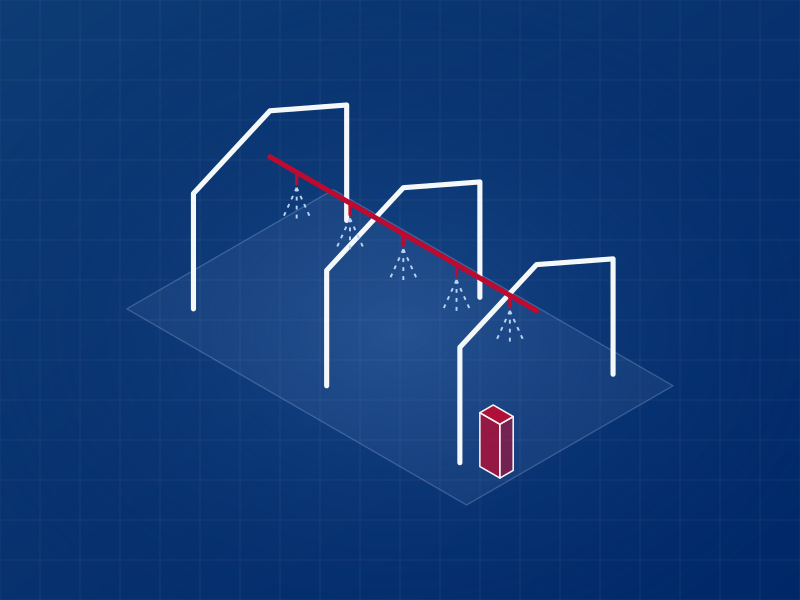
Intumescent or SFRM

Three ways to protect steel, chosen zone by zone

Large buildings rarely use one system. Concealed beams, exposed columns and process steel each get the protection that fits them. Bars show typical dry thickness, illustrative only.

Thin-film intumescent

Painted look for exposed steel.

thinthick
Thickness
Fractions of a millimeter to several millimeters
Ratings
Most often 1 to 2 hours
Exposure
Interior; exterior only where listed
Applied
Shop or site
Best for
Lobbies, atriums, parking, exposed columns

Thick-film epoxy intumescent

Hard-wearing, weather and hydrocarbon fires.

thinthick
Thickness
Several millimeters to 25 mm (1 in) or more
Ratings
Up to 4 hours, UL 263 and UL 1709
Exposure
Exterior, marine, industrial
Applied
Mostly in the shop
Best for
Pipe racks, modules, process plants

SFRM, cementitious or fiber

Economical for concealed steel.

thinthick
Thickness
About 10 mm (3/8 in) to several tens of millimeters
Ratings
Up to 4 hours
Exposure
Interior, concealed
Applied
On site after erection
Best for
Floor beams, girders above ceilings

US product requirements

Before a fire coating touches the steel, it must check every line

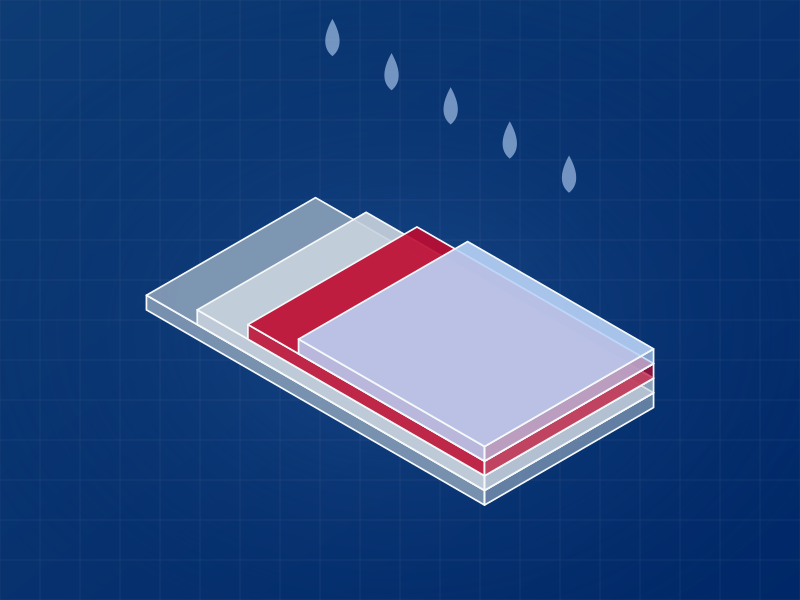
Listed · UL 263 / ASTM E119

This is where US projects most often fail inspection. A coating approved somewhere else, a primer the fire coating maker never tested, or a thickness taken from the wrong table, and the steel is stripped and recoated. We confirm each line before fabrication.

  • A listed design number, tested to ASTM E119 or UL 263, that matches the element: beam, column, floor or roof.
  • The exact product named in that design, with its manufacturer and product name, not a look-alike.
  • Containers that carry the listing mark of the agency, with batch numbers recorded for traceability.
  • A rating type that matches the drawings: restrained or unrestrained, and the hours required.
  • Thickness taken from the manufacturer’s tables for that design and the actual section size or section factor.
  • A shop primer, and if used a topcoat, that the coating manufacturer accepts for the listed system.
  • An exposure classification that suits the job: interior, conditioned, or exterior with durability testing such as UL 2431.
  • Surface preparation to the manufacturer’s written requirement, commonly an SSPC blast standard.
  • Application by an applicator the manufacturer trains or approves, to its written instructions.
  • Submittals the building official will ask for: product data, the listing, the thickness schedule and safety data sheets.

Shop-applied intumescent coating

Move fire protection off the job site

Fireproofing is one of the last and most crowded trades on a US site. Coating repetitive members in the shop turns it into a controlled, recorded production step. Here is what moves, and what stays.

In our paint hall in Vietnam

  • Controlled conditions. Steel temperature, air temperature, humidity and dew point are kept inside the manufacturer’s limits for every coat, so cure is predictable.
  • Consistent thickness. Members are coated at a comfortable working height and turned as needed, which gives more even film build than spraying overhead from a lift.
  • Records by piece mark. Surface preparation, batch numbers and thickness readings are tied to each member and handed over with the steel.
  • A faster, simpler site. Fewer lifts and scaffolds, no fireproofing crew waiting for the frame, and more room for the trades that follow.
  • Weather taken out. Rain, cold and humidity on site no longer stop or spoil the coating work.
  • Less site containment. Less overspray, masking and cleanup around finished work, and fewer solvent-bearing coatings applied on site.

Still on site, with the US contractor

  • Slip-critical faying surfaces, bolts and field welds, coated after erection
  • Touch-up of handling and erection damage with the same listed product
  • SFRM on concealed steel, once the deck and services are in place
  • Firestopping at penetrations and joints, a separate listed system
  • Special inspection and the fire marshal’s final acceptance

Shop application is agreed per project with the coating manufacturer and your design team: product, primer and topcoat, transit protection and how the building official will inspect it.

From bare steel to a coated, wrapped member

  1. Blast

    Members go through the automatic shot blaster to the cleanliness and profile the coating manufacturer specifies.

  2. Prime

    The primer accepted for the listed system goes on within the time allowed after blasting.

  3. Mask

    Slip-critical faying surfaces, bolt holes and field-weld zones are masked as the shop drawings show.

  4. Coat

    The listed intumescent is built up in coats to the thickness in the schedule, each coat checked before the next.

  5. Seal

    An approved topcoat or sealer goes on where the system or the voyage calls for one.

  6. Cure

    Members stay on stands until the coating is hard enough to handle and stack, by the manufacturer’s data.

  7. Measure

    Dry film thickness readings are taken and recorded before QC releases the piece.

  8. Pack

    Soft slings, padded dunnage and wrapping protect the coating for the trip to your US port.

Fire and anti-corrosion coatings

Products from worldwide paint brands, applied by certified painters

The coating products we use carry UL certification, and our painters are trained and certified by the paint manufacturer. Because these brands sell across the United States, the US contractor can buy the same product locally to touch up connections and erection damage.

  • JotunNorway
  • PPGUnited States
  • CarbolineUnited States
  • HempelDenmark
  • Nippon PaintJapan
  • International PaintUnited Kingdom

For a fire rating, the listed product named in the tested design governs. When the specification names one of these brands, we apply that product; when it names another listed product, we apply that one.

Epoxy lines included: zinc-rich epoxy primers, high-build epoxy coats and thick-film epoxy intumescent coatings, with a primer the fire coating maker accepts.

Brand names are trademarks of their owners and are named only to show the coating systems we apply. No partnership or endorsement is implied. The product on each project is the one named in its coating schedule. Surface preparation follows SSPC standards, read with the paint data sheet.

Featured reference · Oil and gas · petrochemical

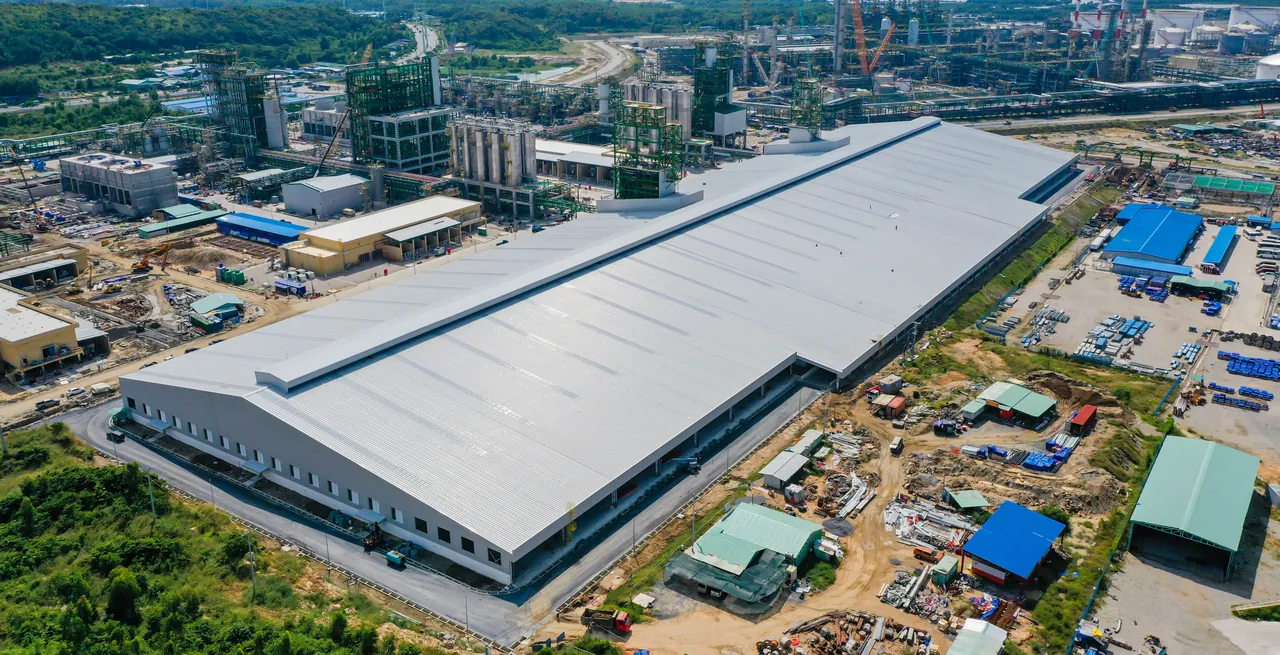
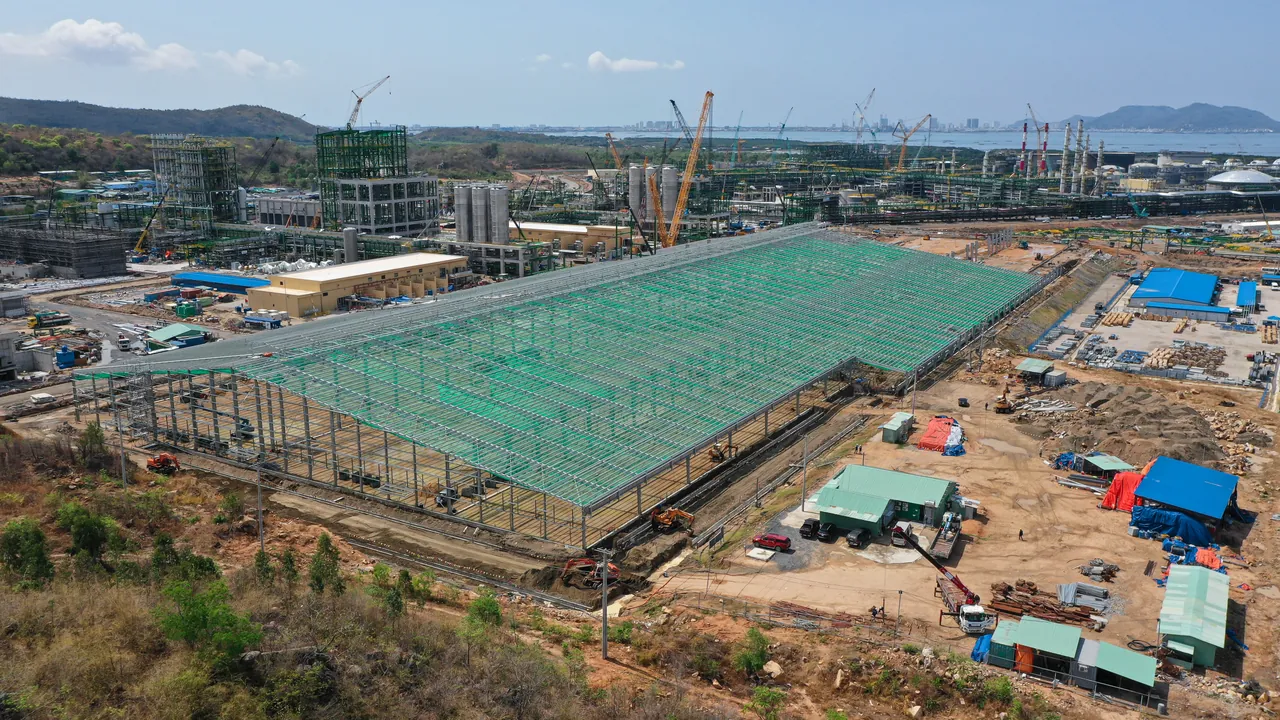
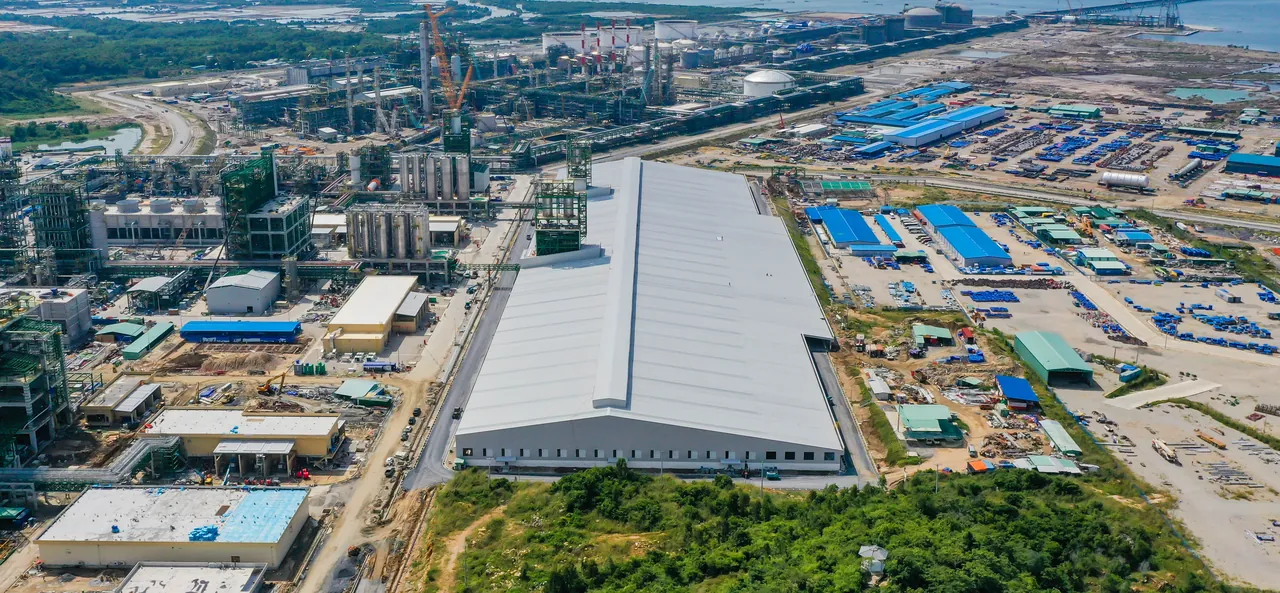
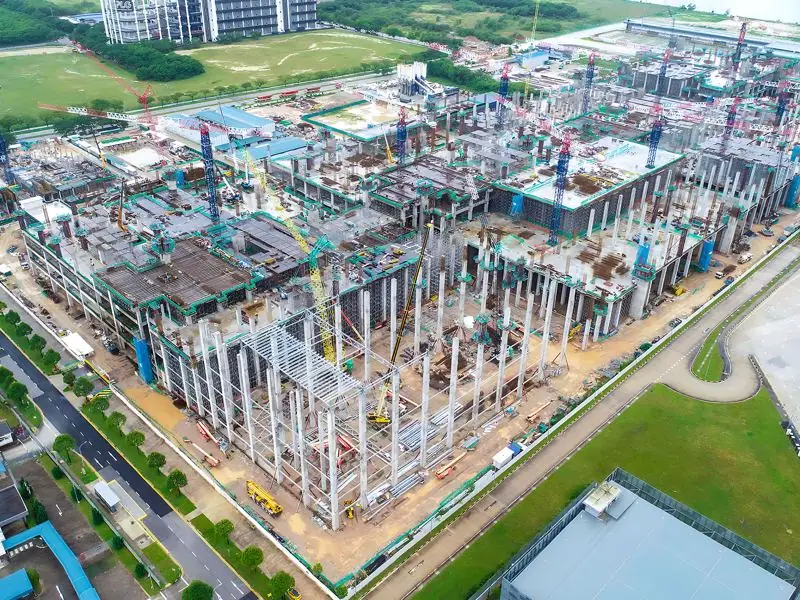
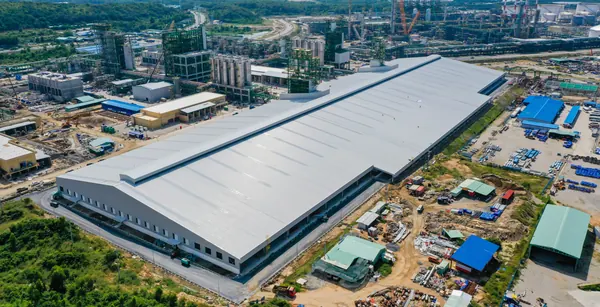
Southern Vietnam Petrochemical Complex, Long Son

A large oil and gas process plant in southern Vietnam, built to an owner’s petrochemical specification. World Steel designed, fabricated and supplied more than 56,000 m² (over 600,000 sq ft) of steel structure for the complex: the kind of job where every member is traceable, every coat is recorded and the inspection file is as important as the steel.

Steel structure areaMore than 56,000 m² (over 600,000 sq ft)
SectorOil and gas · petrochemical
LocationLong Son, Ba Ria–Vung Tau, Vietnam
Year2022

Steel structure design, fabrication and supply by World Steel. Shown as process plant experience; fire protection on any project follows that project’s own specification.

Fabrication capacity

Shop capacity for large US projects

2,500 metric tons a month

About 2,750 short tons of structural steel fabricated every month in World Steel’s own plant in Vietnam.

Big tonnage does not have to queue behind other work. The plant is sized to take the steel package of a large US job, from heavy frames and built-up girders to multi-story framing, and to ship it to your US port in the order your erector needs it.

Largest jobs delivered: Sunpro Steel 5,000 t · CPV Food 2,500 t · Long Son petrochemical 2,000 t · M&D Thailand 2,000 t →

Large and fire-rated projects

A complete fire protection approach, decided early

Fire protection touches the architect, the engineers, the fabricator, the coating maker, the erector and the inspectors. Deciding it in this order avoids stripped primer, recoated members and failed inspections.

  1. Concept and schematic

    Construction type, rated elements, restrained or unrestrained status, and whether a performance-based study under AISC 360 Appendix 4 is worth it.

  2. Design development

    Protection system by zone, listed designs, a shortlist of products, and the primer and topcoat that suit them.

  3. Steel design

    Section sizes checked against coating thickness, so heavier members are used where they save coating and time.

  4. Shop drawings

    Piece marks carry system, rating, design number and thickness; masked areas and connection details shown.

  5. Fabrication

    Blasting, priming and, where agreed, shop coating, with readings recorded and tracked by member.

  6. Shipping and erection

    Protected packing, careful handling, then connection coating and touch-up by the contractor’s applicator.

  7. Inspection and handover

    Special inspection, firestopping checks, final acceptance and the records the owner keeps for the life of the building.

The large-project playbook

Scale

2,500 t a month

About 2,750 US tons of structural steel a month, with automatic blasting and a covered paint hall in the same line, in erection order and tracked member by member.

Who does what

Ratings, listed designs and product selection
Architect, fire protection engineer and Engineer of Record
Thickness schedule from the listing
Coating manufacturer, with the design team; we link it to piece marks
Blasting, priming and shop coating to the schedule
World Steel, in our plant in Vietnam, to the manufacturer’s instructions
Shop thickness records and Manufacturing Data Record
World Steel
Erection, connection coating and touch-up
The US contractor, our customer, and its applicator
Firestopping at penetrations and joints
The US contractor’s firestop installer
Special inspection and final acceptance
Inspectors approved by the building official, and the fire marshal

The fire protection solution group

Seven guides, from the code book to the inspector’s report

Written for US contractors, architects and engineers, each tied to how we design, fabricate, coat and document your steel.

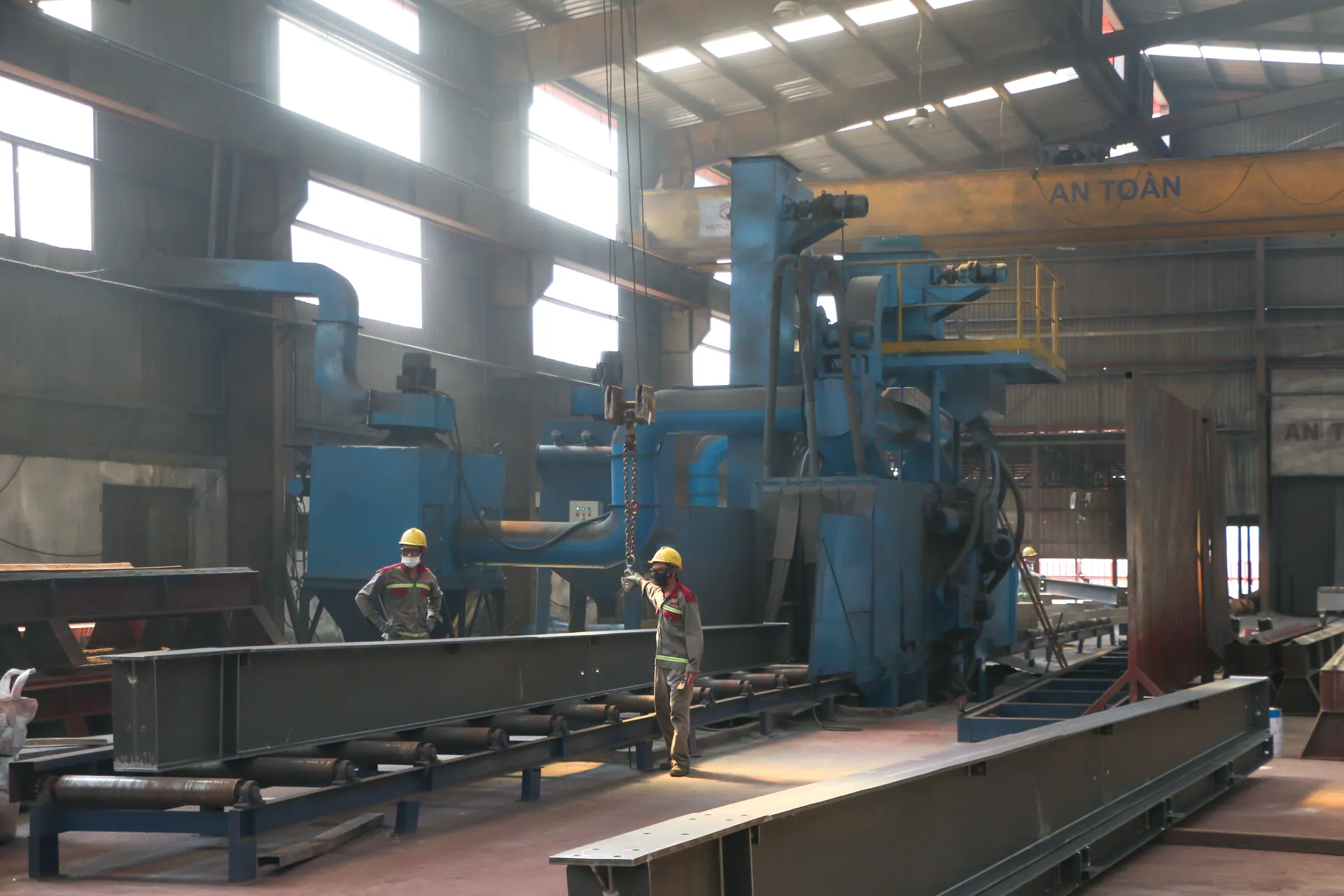
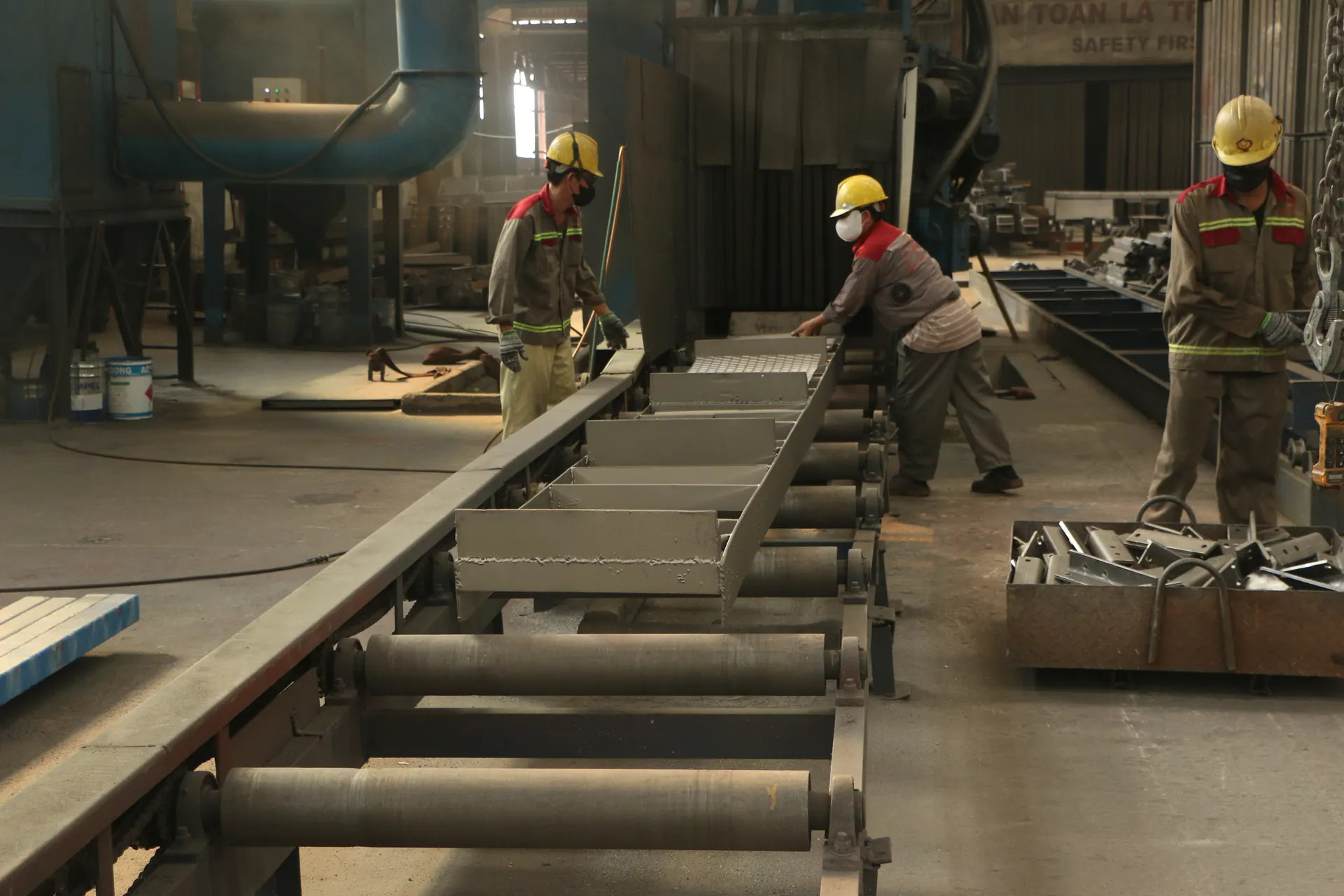
Real photos from our plant in Vietnam

Where your steel is blasted, primed and coated

Automatic shot blasting, a covered paint hall and a packing hall in one line, in World Steel’s own plant in Tay Ninh Province, Vietnam. Real photos, not stock images.

Roller conveyor carrying members into a shot-blasting machine Photo
Surface preparation: the automatic shot blaster at the Vietnam plant.
Crew loading steel parts onto the shot-blasting conveyor Photo
Parts going into the blaster ahead of primer, World Steel, Vietnam.
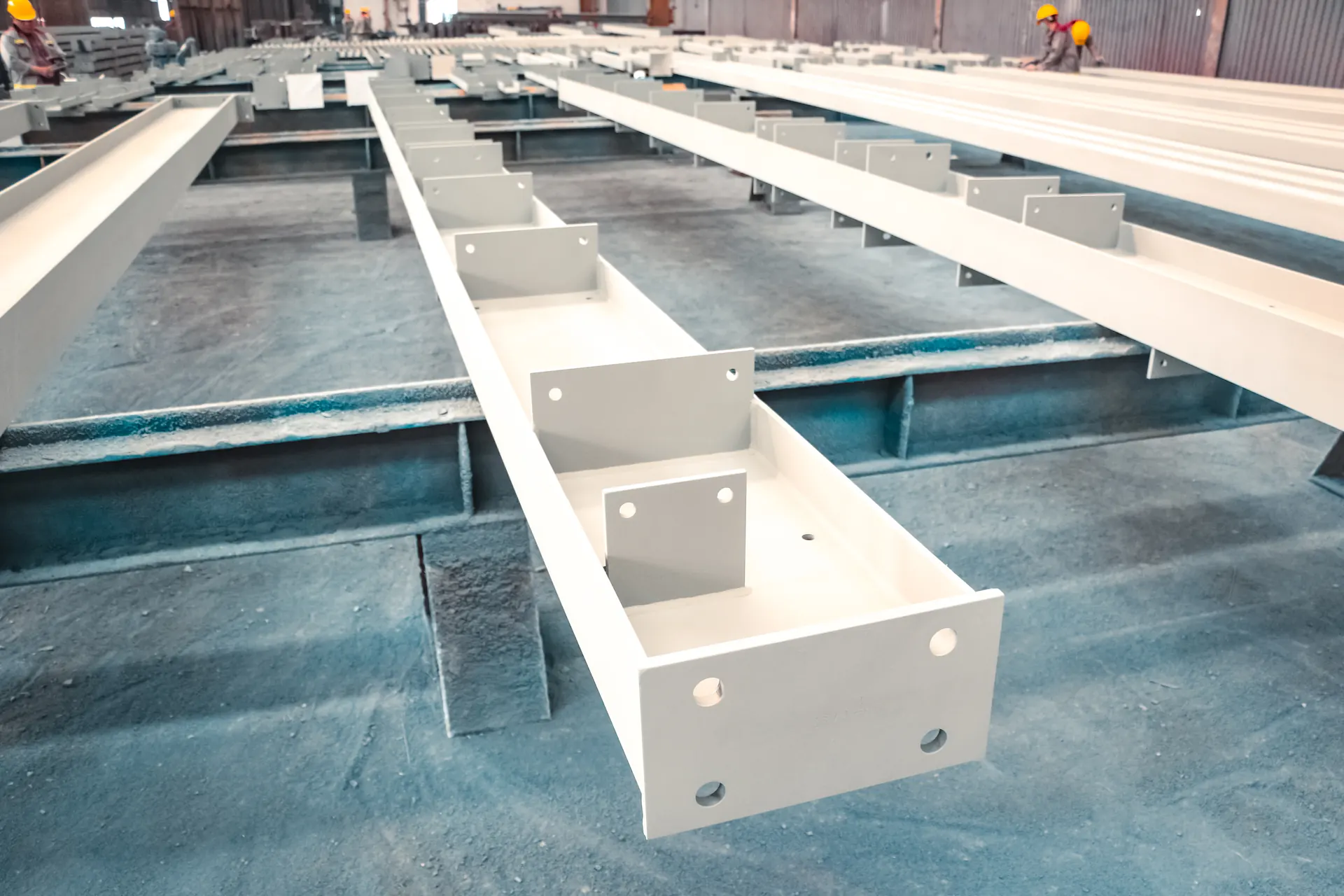
Primed column with its bolted end plate set on painting stands Photo
Primer on a column and its end plate at the Vietnam plant, ready for the next coat.
Coated members drying in rows on stands in the paint hall Photo
Members drying in the World Steel paint hall in Vietnam after coating.
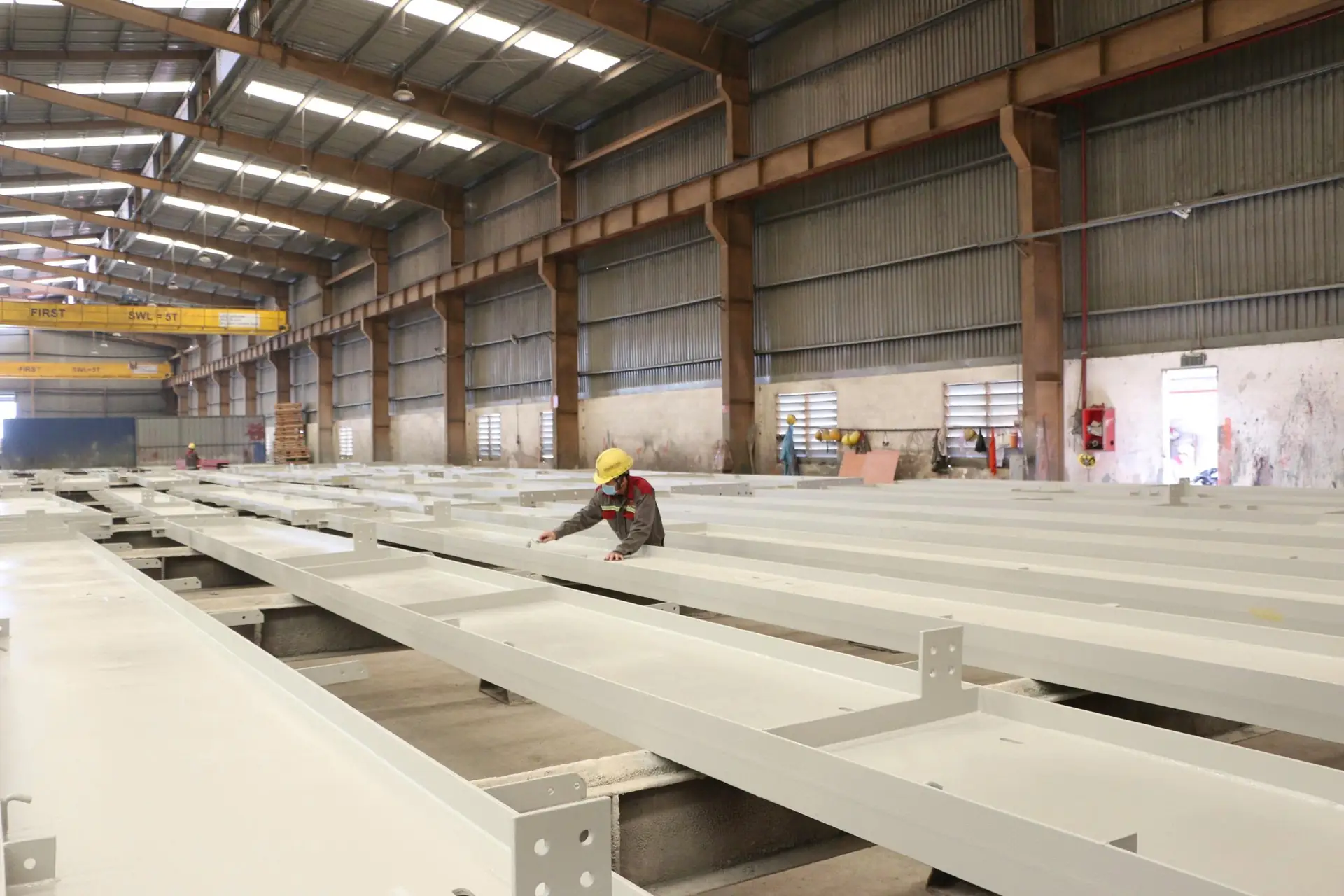
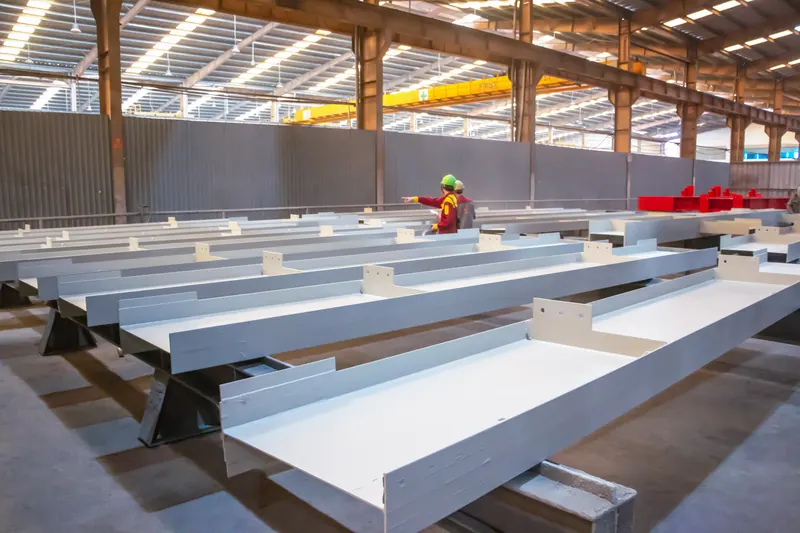
Members in gray finish paint laid out in the paint hall Photo
Gray finish coat applied in the Vietnam paint hall.
Inspector walking a line of painted built-up members on the shop floor Photo
Final look at coated members before they are released to packing, World Steel plant in Vietnam.
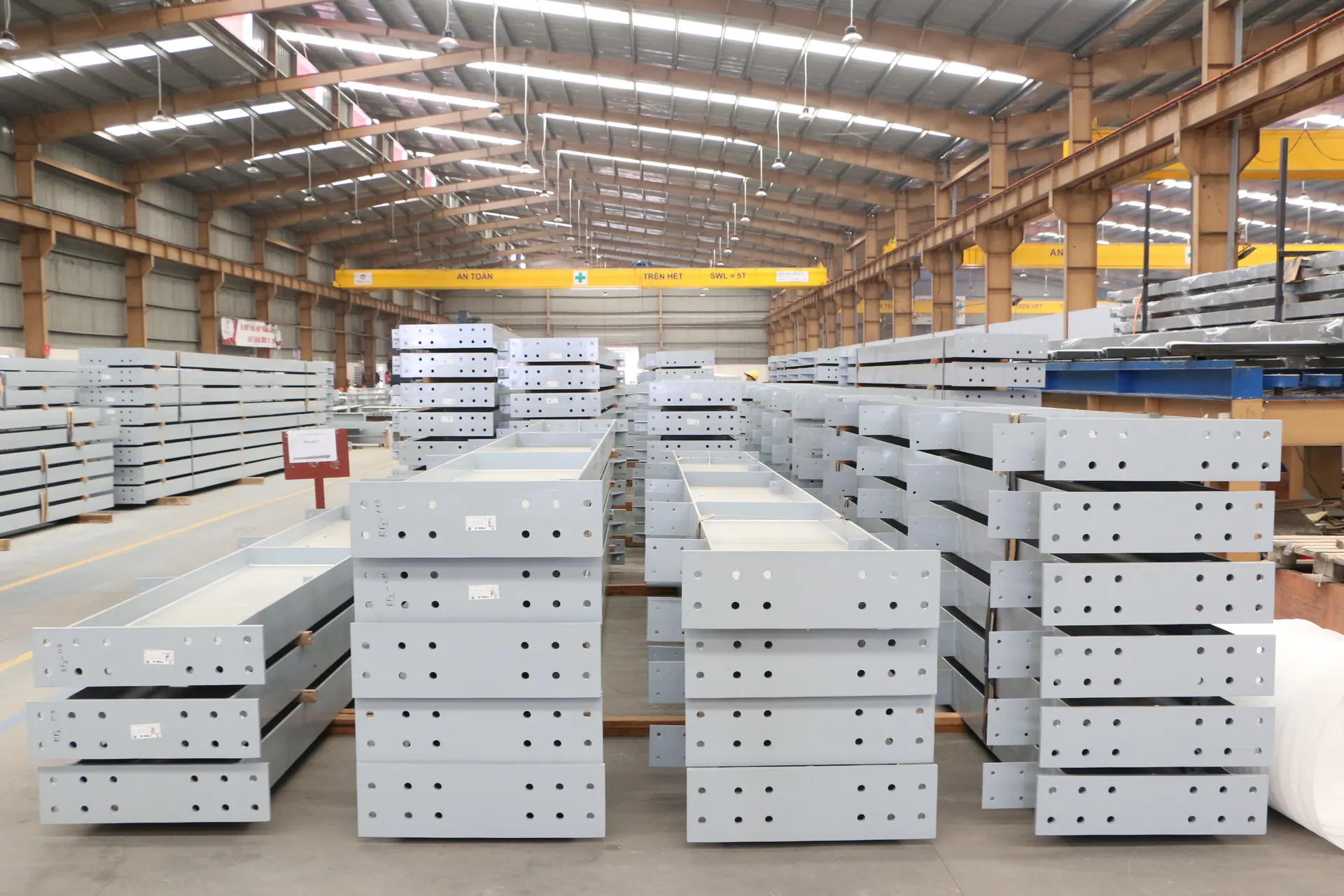
Painted members strapped into bundles and stacked for the voyage Photo
Bundles made up for an export shipment at the Vietnam plant.
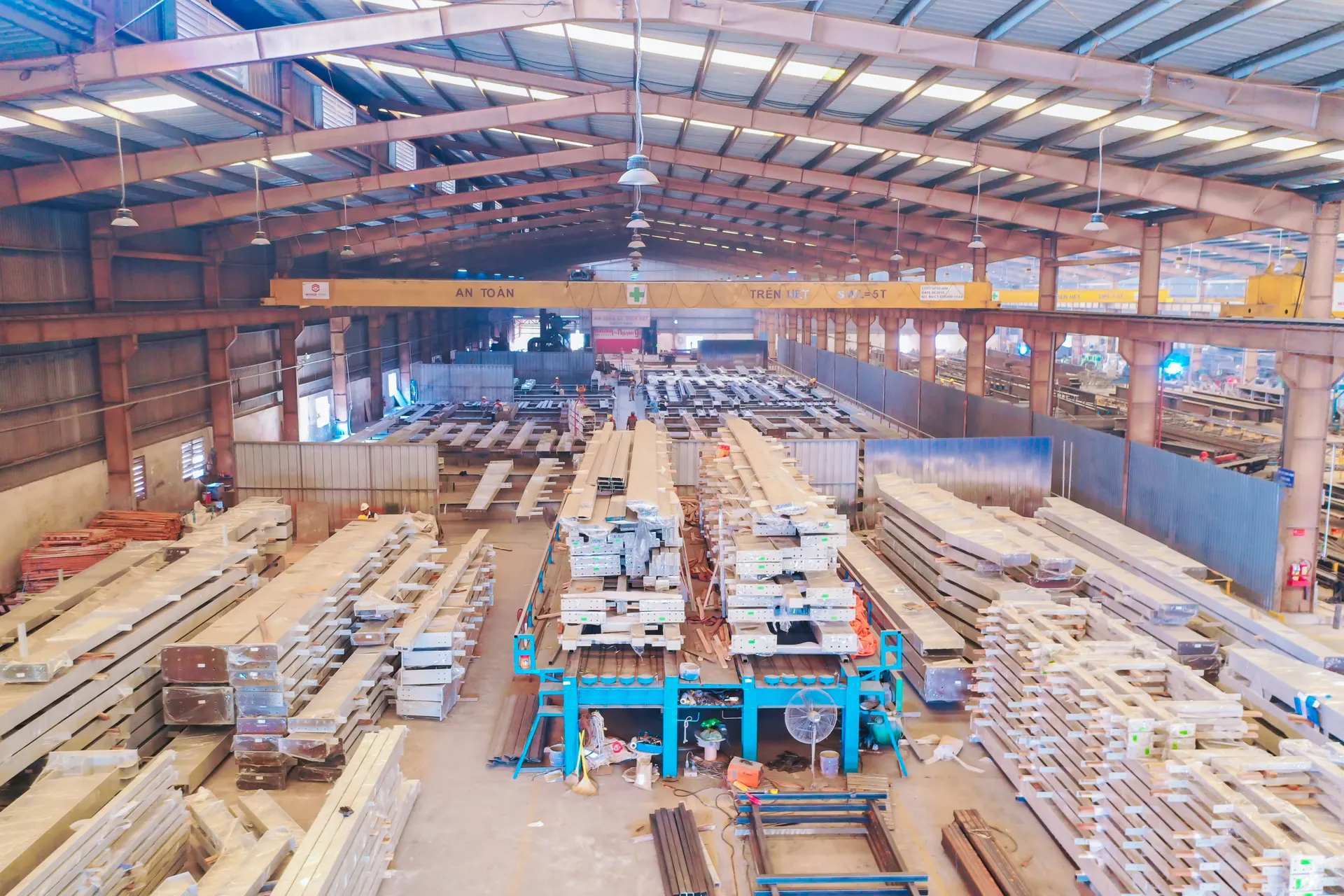
Packing hall with steel bundles, timber dunnage and loading racks Photo
Timber dunnage and bundles in the packing hall at the Vietnam plant.

The fire protection ecosystem

Fire-rated steel, with everything around it

The fire protection support we offer, the engineering and services that come with the steel, and the industries and projects where rated steel matters.

US codes and standards

The documents behind fire-rated steel

Fire protection also follows ASTM E119, UL 263, UL 1709, ASTM E84, ASTM E605 and E736, AWCI Technical Manuals 12-A and 12-B, NFPA codes and the IBC your jurisdiction adopted. We design and fabricate to these documents as your project requires; they are references, not certifications.

Questions from US buyers

Fire protection questions we hear

Can World Steel supply fire-protected structural steel for a US project?

Yes. We design, fabricate and supply the steel structure prepared for the fire protection your specification names: blasted and primed with a primer the coating manufacturer accepts, and, where agreed for the project, coated in our paint hall in Vietnam with the listed intumescent product to the thickness schedule.

Does World Steel hold a UL listing or certify fire ratings?

No. Ratings belong to tested designs listed by agencies such as UL Solutions or Intertek, and the products belong to their manufacturers. We apply the listed product to the manufacturer’s instructions and record what we did.

What makes a fire coating acceptable to a US building official?

A design tested to ASTM E119 or UL 263 and listed by an approved agency, the exact product named in it, an accepted primer, thickness from the manufacturer’s tables for each section, and special inspection under IBC Chapter 17.

Why apply intumescent coating in the shop?

Controlled conditions, even film build, thickness recorded by piece mark and fewer trades, lifts and weather delays on site. Connections and handling damage are still finished on site.

Who applies SFRM and firestopping?

The US contractor’s site applicators. They are site trades. We supply steel prepared for them.

Does World Steel erect the steel or sign off fire protection?

No. World Steel supplies the steel structure only. Erection, field fire protection, firestopping, the permit and inspections are the scope of the US contractor, our customer, with the inspectors the building official approves.

Which paint brands does World Steel use for fire and anti-corrosion coatings?

Coating systems from Jotun, PPG, Carboline, Hempel, Nippon Paint and International Paint (IP), epoxy lines included. They are sold worldwide, so the US contractor can buy the same product locally for touch-up. For a fire rating, the listed product named in the tested design governs.

Is steel fireproof?

No building material is. Steel does not burn, but it loses strength as it heats, which is why rated steel is protected to a tested, listed design.

Pricing fire-rated structural steel?

Send the drawings, the specification and the fire protection schedule. We confirm the listed systems and primer with your team, then return a written scope for steel designed to US codes, made in our plant in Vietnam and prepared, or coated, for its fire protection.