
Arc spot weld
Also called a puddle weld: melts through the sheet into the support below. Common for deck to steel.
Most asked about AWS D1.3
Where it sits in the US code stack
Where it governs in your building
Measure the steel first
AWS D1.3 covers structural sheet steel up to 4.8 mm (3/16 in). AWS D1.1 covers structural steel from 3 mm (1/8 in) up. Where the two overlap, your specification names which applies; on a World Steel building the split follows the member type.
Also called a puddle weld: melts through the sheet into the support below. Common for deck to steel.
An elongated spot weld along a lap, for side laps and edge attachment.
Along a lapped or T-joint edge of thin sheet, with burn-through control.
Into the curved corner of a bent sheet or tube, such as a C section heel.
11 answers from our engineers
Answers on thin-steel welding: where AWS D1.3 applies on a metal building, deck welds, galvanizing repair, inspection and what World Steel welds versus what is bolted or screwed.
No. Purlins and girts are bolted to clips on the frame, which is faster for your erector and avoids burning off the coating on site.
Your specification decides. Many specifications send all cold-formed sheet members to D1.3 and all hot-rolled or plate members to D1.1, whatever the exact thickness. We follow the split your specification sets and note it on the shop drawings.
Not exactly. Gauge is a traditional number that maps to a nominal thickness, and the mapping differs between galvanized and uncoated sheet. Our drawings give thickness in millimeters with the gauge in brackets, and the material is ordered by thickness.
Deck is welded or screwed on site by your erector, so its inspection is part of the field inspection program your building department requires.
It can be part of our supply on multi-story projects, profiled to the specified thickness and coating and bundled by floor. Attaching it on site, by puddle welds or screws, is the US contractor's scope.
Mechanical fasteners avoid burning the galvanizing, need no welder certification on the deck crew and can be faster. The fastener type and pattern come from the deck design and the diaphragm forces your Engineer of Record confirms.
On very thin deck, D1.3 and the deck design may call for a weld washer so the arc spot weld does not burn a hole. It is a site detail for the erector, shown in the deck attachment schedule.
Burned zinc is cleaned and touched up with a zinc-rich coating as your specification allows, and the repair is recorded with the weld.
Visually, against D1.3 acceptance criteria for size, fusion, burn-through and cracks. Arc spot and arc seam welds may also have their visible diameter or length measured. Destructive tests are part of qualifying the procedure, not routine production checks.
Yes. D1.3 has its own welder qualification tests for the weld types and thicknesses involved. A welder qualified only to D1.1 on plate is not automatically qualified for arc spot welds on deck.
No AWS company certification is claimed. Sheet steel welds made in our plant follow D1.3 through project procedures and welder records your reviewer can check.
More answers on every US code we design to: search all standards questions.
The code in brief
A weld on 1.5 mm (16 gauge) steel behaves nothing like a weld on 20 mm (3/4 in) plate. Burn-through, distortion and the zinc coating on galvanized sheet all change how the joint is made and how it should be judged. AWS D1.3 sets procedures, welder qualification and acceptance criteria for those conditions.
On a metal building the line is usually easy to draw: frames, plates and hot-rolled members follow AWS D1.1; purlins, girts, clips and decking follow D1.3 if they are welded at all. Your specification names both, and inspectors check them differently.
Who welds what
| Joint | How it is made | Code if welded |
|---|---|---|
| Purlin and girt to frame | Bolted through clips | None: bolted |
| Purlin laps | Bolted at the lap | None: bolted |
| Light-gauge clips and accessories | Shop welded where the detail needs it | AWS D1.3, in our plant |
| Floor and roof deck to supports | Puddle welds or screws by your erector | AWS D1.3, on site, by others |
| Frame members and plates | Shop welded | AWS D1.1, in our plant |
Request these
Who does what under AWS D1.3
On a World Steel building, light-gauge members are bolted or screwed by default. When a thin part is welded, it is welded in our plant to AWS D1.3, and the field work stays mechanical.
What a reviewer looks for
Few welds, but each one is on thin, coated steel, so the checks are specific.
| The reviewer checks | Where it comes from | What our package shows |
|---|---|---|
| Which code applies to this joint | AWS D1.3 scope | Sheet steel up to 4.8 mm (3/16 in) follows D1.3; thicker parts follow D1.1, and the drawings say which. |
| The weld type and its strength | AWS D1.3 with AISI S100 | Arc spot, arc seam, fillet or flare-groove welds named on the drawings, with strengths from the design. |
| The procedure and the welder | AWS D1.3 qualification | A qualified procedure for each weld type, and the welder's qualification on file. |
| Coating at the weld | Project specification | The coating repair after welding, named in the procedure and recorded. |
Go deeper
The design, the welding and the coating each have their own page.
How purlins, girts and other light-gauge members are designed.
AISI S100 →How a procedure is written and qualified before production.
WPS and PQR guide →Plate and hot-rolled members follow the structural welding code.
AWS D1.1 →Coatings and their repair after shop work.
Coating quality →Real photos from World Steel
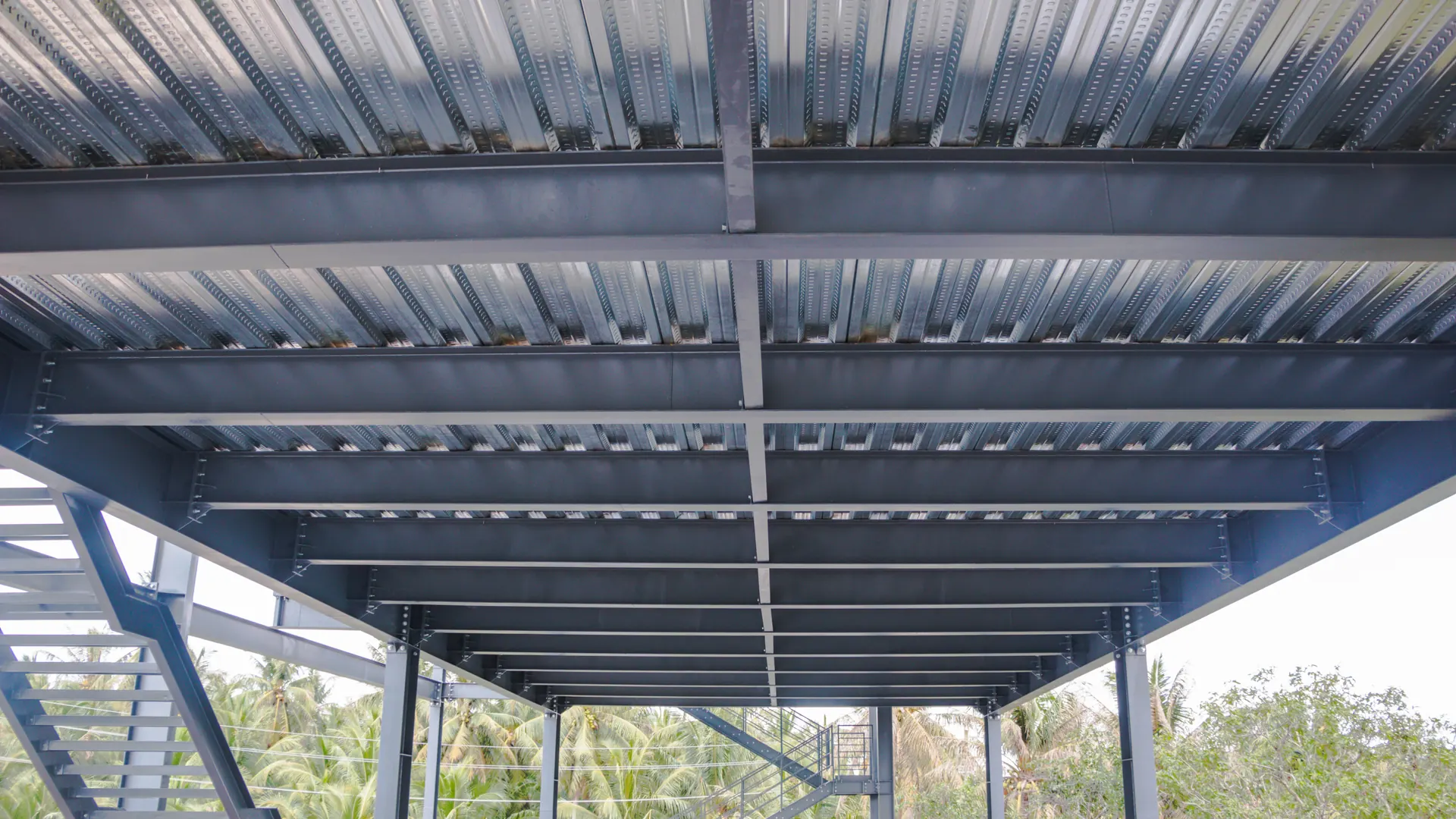
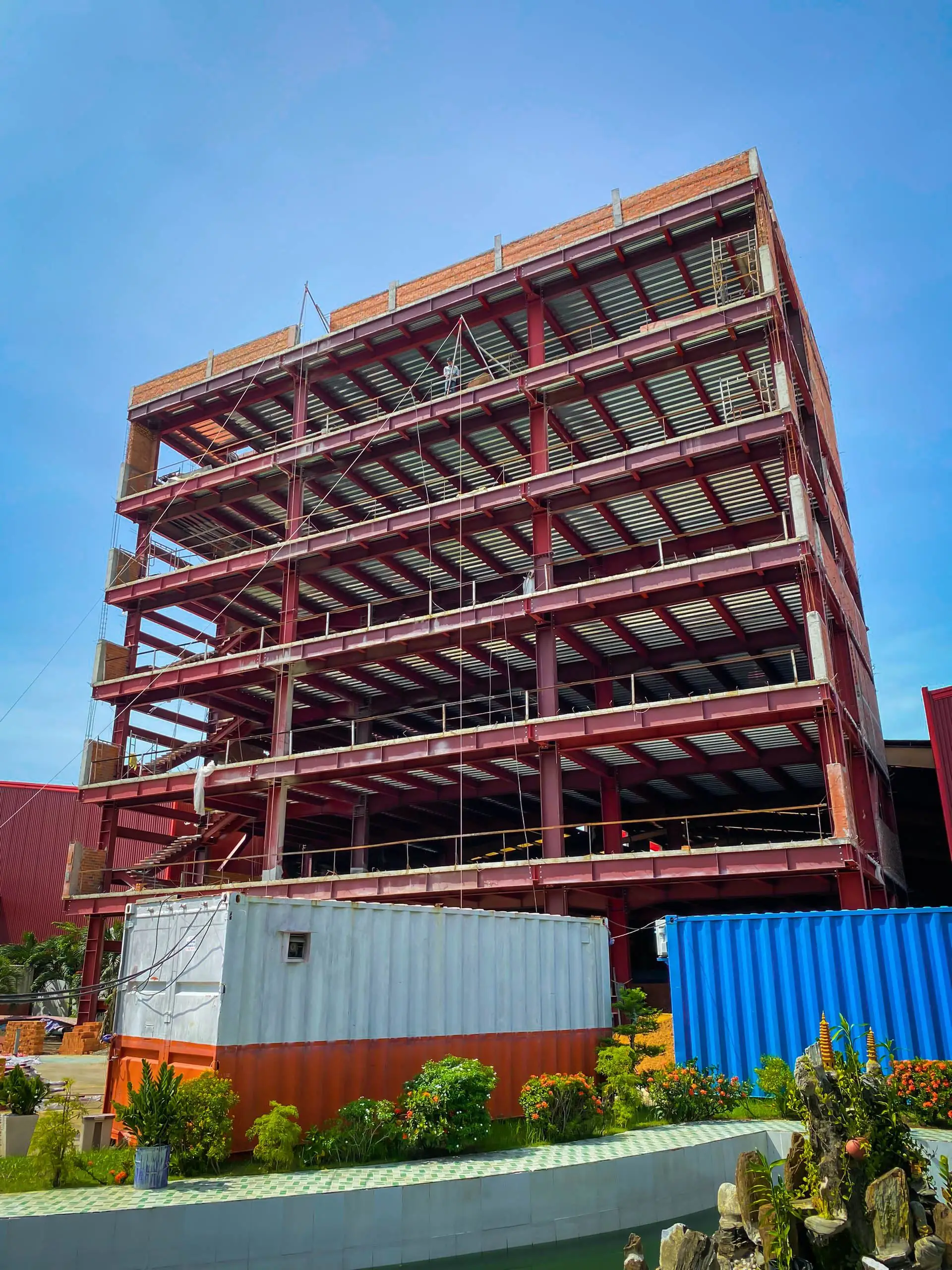
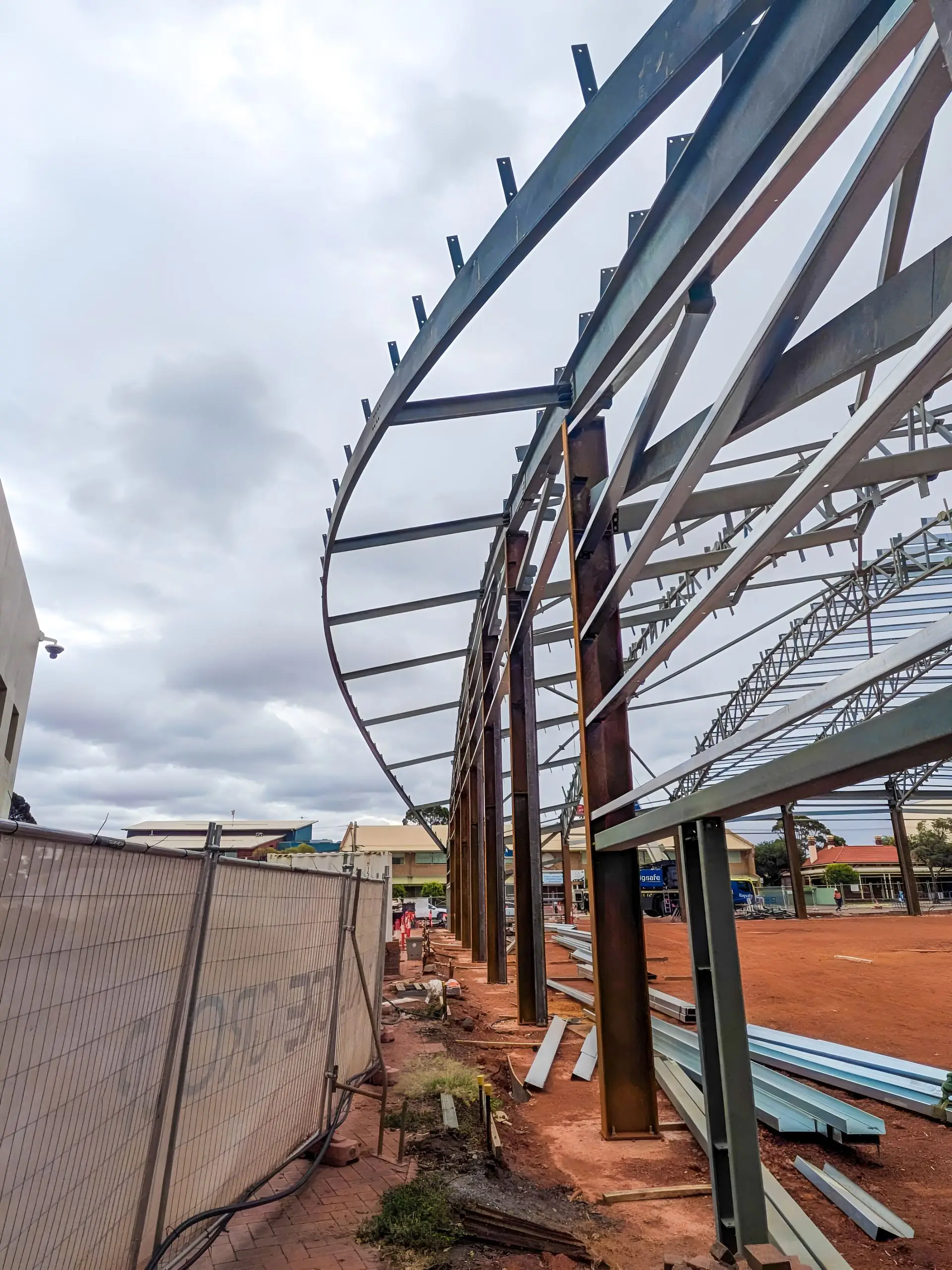
Photographed in our own plant in Tay Ninh Province, Vietnam, and on World Steel jobs. Not stock images.

AWS D1.3 never works alone
Each link opens the full page, with its own questions and answers.
Honest status
Sheet steel welds made in our plant follow AWS D1.3 through project procedures and welder records. No AWS company certification is claimed. Field welding of deck is done by your erector.
Who does what
World Steel designs, fabricates and supplies the steel structure from its own plant in Vietnam. The US contractor, our customer, erects it, has the drawings approved and sealed by their Engineer of Record and pulls the permit.
Details confirmed in quote Edition: Per project specification
Source record: https://www.aws.org/
Last checked: —. Editions change on a cycle, so your Engineer of Record confirms which one your jurisdiction enforces.
All US codes & standardsSend the specification section. We confirm which sheet steel joints are shop welded, bolted or screwed and list the D1.3 records that come with any weld we make.