
Where it sits in the US code stack
Where it governs in your building
Open the book
Seven IBC chapters that decide what your steel looks like
The IBC runs to more than thirty chapters. These are the ones a steel building has to clear, and what each one hands to our engineers, your Engineer of Record and your building official.
Occupancy classification
Decides what the building is used for: storage (S-1, S-2), factory (F-1, F-2), business, assembly and so on.
For your steel
The occupancy sets the live loads, the fire rules your architect follows and, through Chapter 16, the risk category.
Height and area
Caps how tall and how large a building of each occupancy and construction type may be, with increases for sprinklers and open frontage.
For your steel
Large clear-span warehouses are often planned as unlimited-area buildings under Section 507, which shapes the bay layout we design.
Roof assemblies
Covers roof coverings, their wind resistance and rooftop structures such as screens and equipment platforms.
For your steel
Panel attachment and edge details on our roof drawings follow the uplift your Engineer of Record confirms.
Structural design
Sets the risk category and pulls every load in from ASCE 7: dead, live, snow, rain, wind, tornado and seismic.
For your steel
Our calculation package opens with the Chapter 16 criteria, so the reviewer sees the basis before a single member check.
Special inspections and tests
Lists what must be inspected in the shop and in the field, and by whom.
For your steel
Section 1704.2.5 lets the building official waive shop inspection for an approved fabricator; IAS AC472 is the approval many officials accept.
Soils and foundations
Covers the geotechnical report, footings and anchorage into concrete.
For your steel
We hand your foundation engineer the column reactions and the anchor rod plan; the footing design stays with them.
Steel
Hands steel design to AISC 360, seismic detailing to AISC 341 and cold-formed members to AISI S100.
For your steel
Every frame, purlin and connection we design is checked to the standards Chapter 22 names.
15 answers from our engineers
IBC questions and answers
What US owners, contractors and plan reviewers ask us about the International Building Code, from editions and occupancies to Chapter 17 inspections. Pick a topic on the left.
Editions and adoption 4 answers
Which IBC edition do you design to?
IBC 2024 with ASCE 7-22 and AISC 360-22 by default, or the edition your jurisdiction enforces when the permit calls for it.
How often is the IBC revised?
The International Code Council publishes a new edition every three years: 2018, 2021, 2024 and so on. Each state or city then decides when to adopt it, which is why two neighboring counties can enforce different editions.
Does a newer IBC edition always mean heavier steel?
No. Each edition changes the referenced load and steel standards, and the effect depends on the site. ASCE 7-22, referenced by IBC 2024, lowered ground snow in some places and raised it in others, for example. We design to the edition your permit is reviewed against.
What happens if the county adopts a new IBC while we are in design?
Usually the edition in force when the permit application is filed governs. Your Engineer of Record confirms the date that counts, and we lock the design basis on the criteria sheet so nothing shifts halfway through.
Occupancy and risk category 4 answers
What is a risk category, and who sets it?
IBC Table 1604.5 sorts buildings into Risk Categories I to IV by the hazard to people if they fail: farm sheds at I, most warehouses and plants at II, schools and large assembly buildings at III, hospitals and fire stations at IV. Your architect and Engineer of Record set it; we design the loads to match.
Why does the risk category change the steel?
A higher category raises the wind speed map used, the seismic importance factor and, under ASCE 7-22, the ground snow value. A Risk Category IV building is designed for noticeably larger forces than the same shape in Category II.
Our warehouse stores hazardous materials. Does that change anything for the frame?
It can. High-hazard occupancies may move the building into Risk Category III or IV and add fire separation requirements your architect handles. Tell us the occupancy early so the loads are right from the first calculation.
Can one building have two risk categories?
Parts separated structurally can, but a single connected structure is designed for the highest category it contains. A two-hour wall alone does not split the structure; an expansion joint with independent frames can.
Chapter 17 inspections 4 answers
If the plant is IAS-accredited, is anything still inspected?
Yes, plenty. The accreditation can at most spare you the shop inspection, at the building official's discretion; foundations, bolting and erection on site stay on the inspection schedule.
Which IBC section mentions approved fabricators?
Section 1704.2.5. It lets the building official skip special inspection of shop work done by a fabricator approved to perform it without one. IAS AC472 accreditation, which World Steel has held since 2019, is one of the recognized ways to show that approval.
Who pays for and hires the special inspector?
Under Chapter 17 the owner, or the registered design professional acting for the owner, engages the special inspection agency. The contractor may not hire it. World Steel gives that agency full access to our records and hold points.
What does the IAS audit cycle look like?
IAS experts audit our design office and plant twice a year, with Smith-Emery Laboratories carrying out the periodic plant inspections named on every certificate. Your building official can verify the accreditation in the IAS online directory.
Permits and plan review 3 answers
What does a plan reviewer look for in a steel building submittal?
The design criteria (code edition, risk category, loads), calculations that follow from them, drawings that match the calculations, and the special inspection program. Our package is laid out in that order to make the review short.
Who answers plan review comments on the steel?
We draft written responses to every comment on our calculations and drawings and revise them as needed. Your Engineer of Record reviews the responses and submits them through the US contractor, who holds the permit application.
Can World Steel stamp the drawings for the building department?
No. World Steel designs and fabricates the steel; the US contractor's Engineer of Record reviews, approves and seals the drawings where the jurisdiction requires a seal. We supply calculations and drawings ready for that review.
More answers on every US code we design to: search all standards questions.
IAS AC472 and the IBC
What approved-fabricator status does and does not do
The provision
IBC §1704.2.5 gives your building official discretion to skip special inspection of shop work done by a fabricator approved through a recognized program.
World Steel's standing
IAS AC472 accreditation covering both the plant (Part A) and the design office (Part C), current through August 1, 2027.
The practical gain
Your inspector need not travel to an overseas plant; the accreditation body audits the plant on a regular schedule instead.
What stays the same
Your building official still decides how much weight the approval carries, and inspections in the field go ahead regardless.
US-code references
Buildings delivered to American codes
Who does what under the IBC
The IBC names a role for everyone on a steel job
The code speaks of the registered design professional, the approved fabricator, the special inspector and the building official. On a World Steel job, those roles fall like this.
World Steel
- Designs the steel structure to the IBC edition adopted for your site, through ASCE 7 and the Chapter 22 steel standards
- Holds IAS AC472 accreditation for its plant and design office, the approval route of IBC Section 1704.2.5
- Supplies the calculations, drawings and shop records your submittal needs
US contractor and Engineer of Record
- Prepare the construction documents and the statement of special inspections
- Review, approve and seal the structural drawings for the permit
- Erect the building and coordinate field inspections
Building official
- Issues the permit and decides how the fabricator approval applies to shop inspection
- Accepts the special inspectors for field work
- Signs off the final inspection
What a reviewer looks for
Six IBC checks on a steel building submittal, and where we answer them
The IBC itself only sets a few numbers for a steel building. Most of what a reviewer checks is whether the right standards were applied, and that is easy to show.
| The reviewer checks | Where it comes from | What our package shows |
|---|---|---|
| The risk category | IBC Table 1604.5 | Stated on the design criteria sheet with the occupancy that sets it. |
| The load combinations | IBC Section 1605 | The combination set and the design method, LRFD or ASD, named on the first pages. |
| Deflection limits | IBC Table 1604.3 | Limits for roof members, walls and frames listed in the criteria and checked member by member. |
| Special inspection of steel | IBC Sections 1704 and 1705 | The shop inspection items and records list your design professional needs for the statement of special inspections. |
| Fabricator approval | IBC Section 1704.2.5 | The IAS AC472 certificate and its scope, which cites this section for the 2015 through 2024 editions. |
| Referenced standard editions | IBC Chapter 35 | Each steel standard used, with the edition the adopted code references. |
In your submittal file
Four records that help a permit through review
Issued with the design package or as fabrication runs, and posted in PEB Studio for your team.
-
IAS AC472 certificate
Accreditation of the plant and design office, with the scope your building official can check.
IAS AC472 accreditation -
Design report
Code basis, loads and member checks, ready for your Engineer of Record.
How the design report reads -
Inspection and test plan
The shop inspection items, frequencies and hold points, agreed per project.
How the ITP works
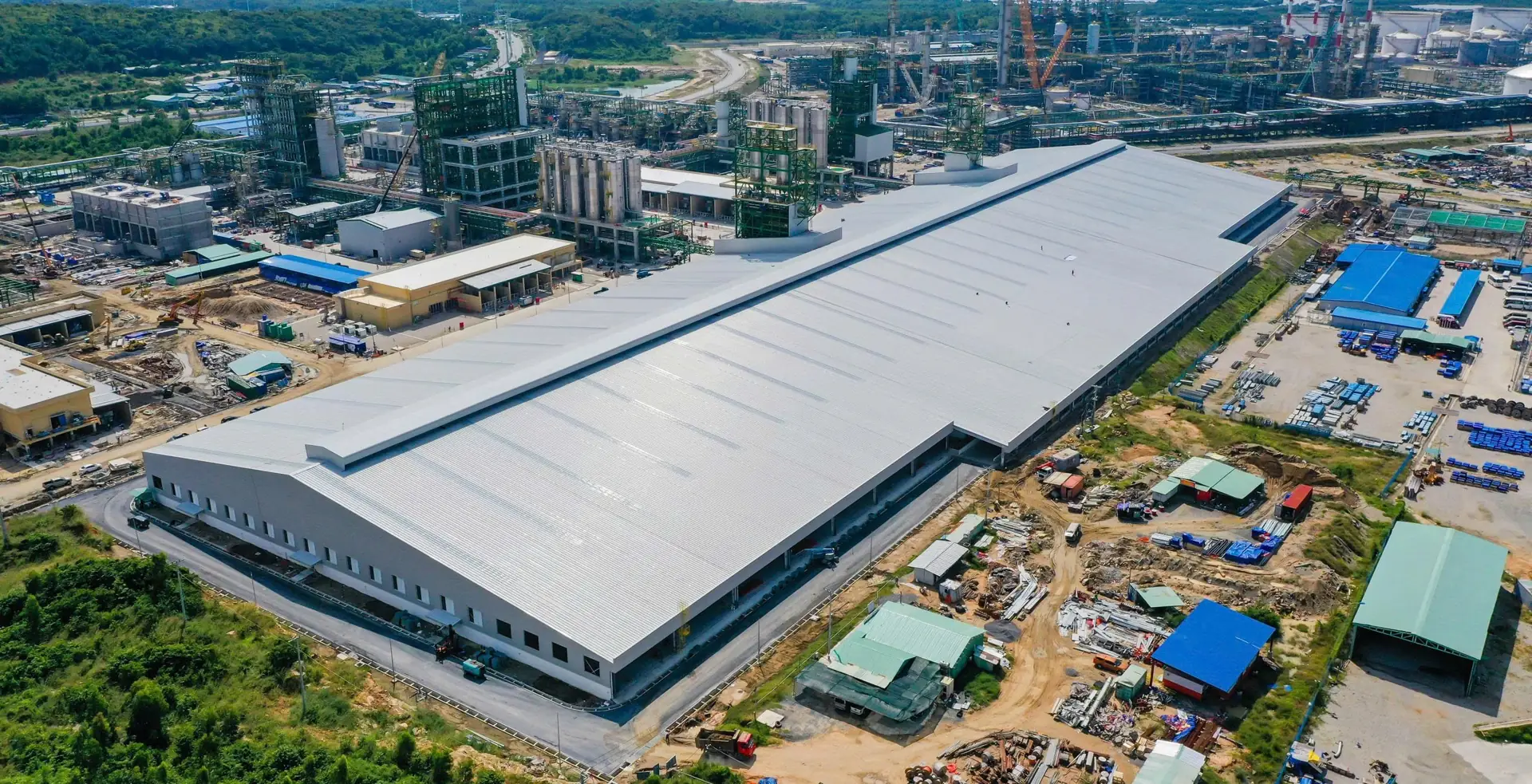
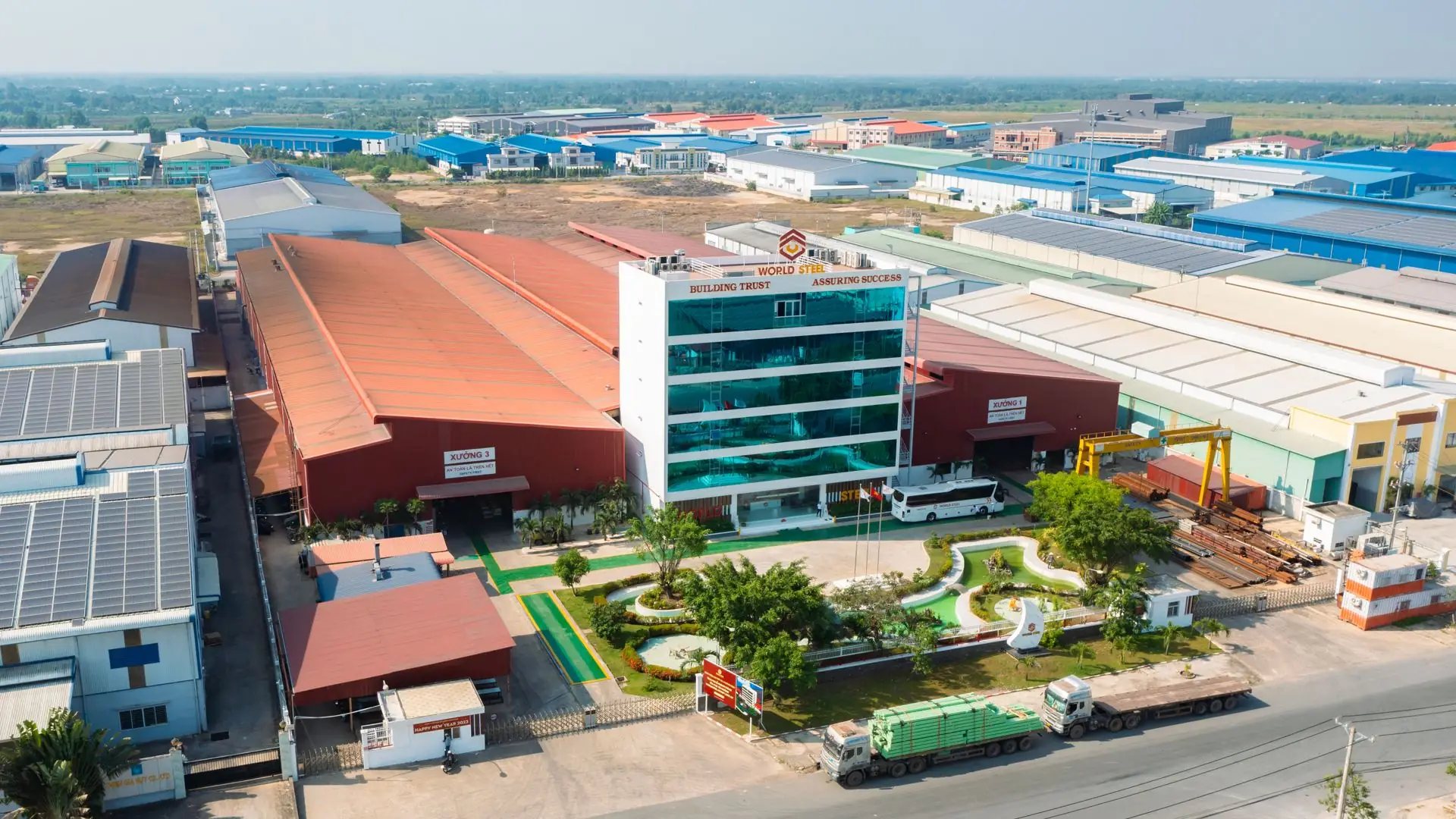
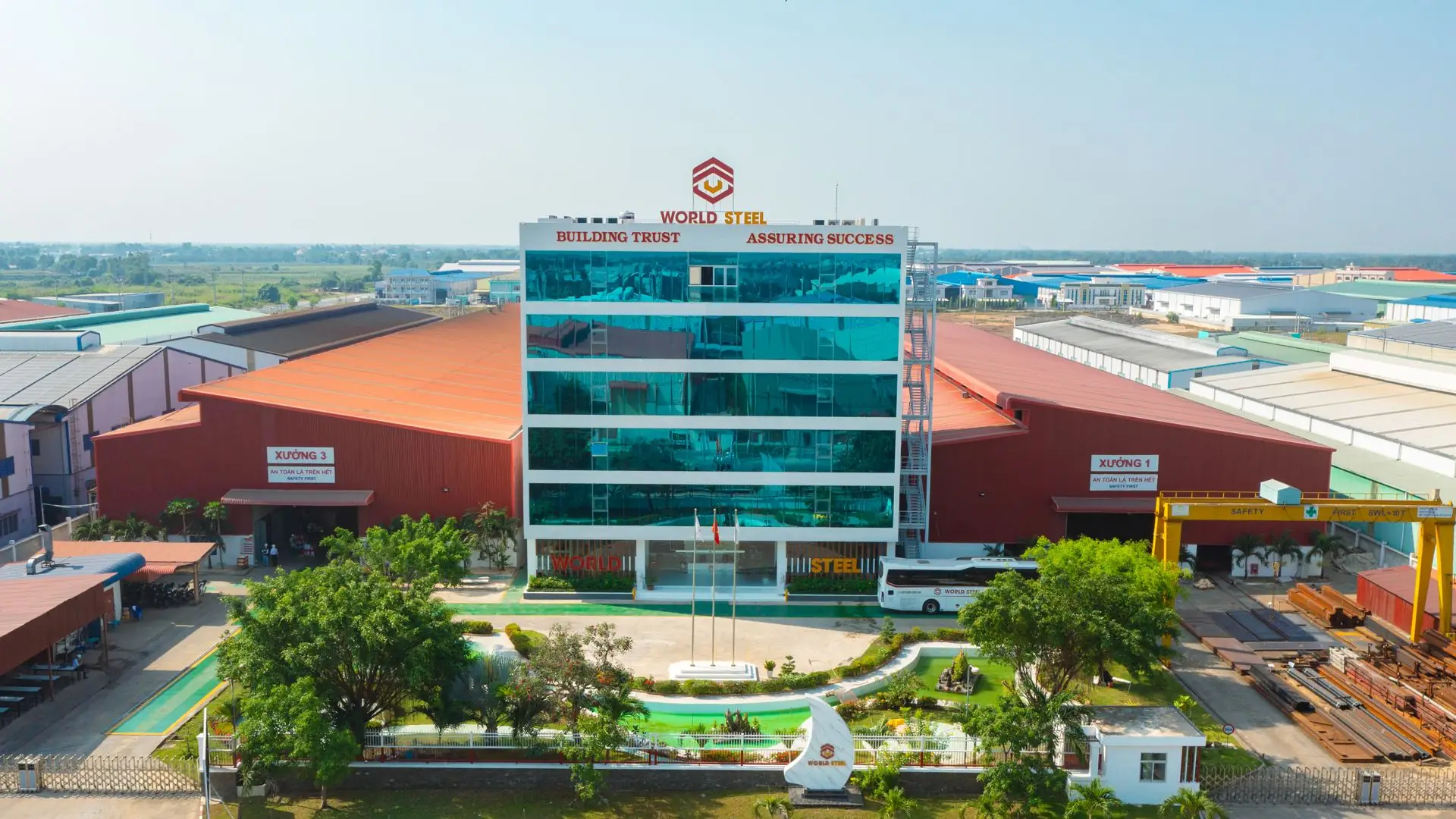
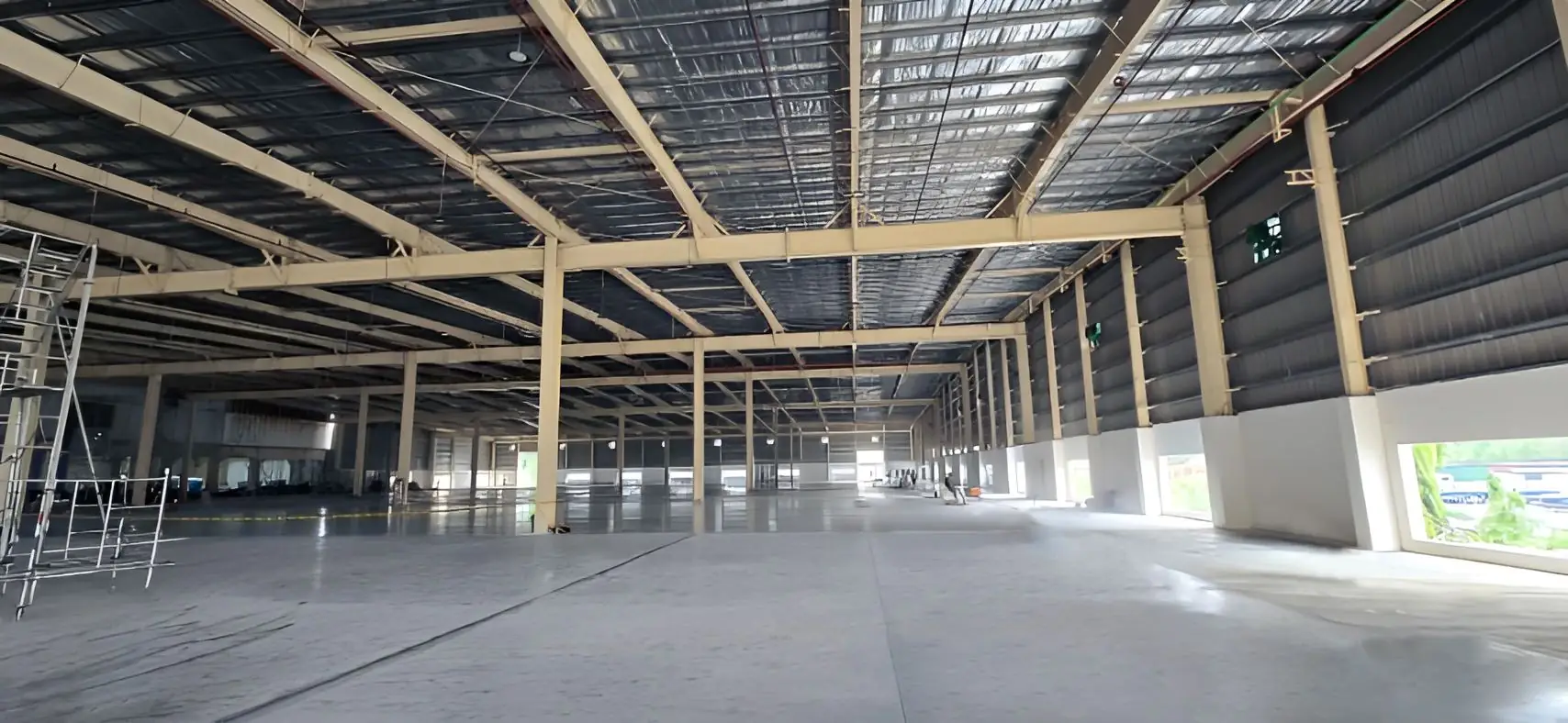
Real photos from World Steel
Buildings and the plant behind IBC-based designs
Photographed in our own plant in Tay Ninh Province, Vietnam, and on World Steel jobs. Not stock images.
IBC never works alone
The standards and guides it works with
Each link opens the full page, with its own questions and answers.
Who does what
World Steel designs, fabricates and supplies the steel structure from its own plant in Vietnam. The US contractor, our customer, erects it, has the drawings approved and sealed by their Engineer of Record and pulls the permit.
Verified Edition: 2024 (latest edition)
Source record: IAS AC472 page: scope and how to verify it
Last checked: November 8, 2026. Editions change on a cycle, so your Engineer of Record confirms which one your jurisdiction enforces.
All US codes & standardsNeed the IBC basis settled for your building?
Send the address and the use of the building. Our engineers confirm the edition, occupancy and risk category with your Engineer of Record, then design the steel to it.