
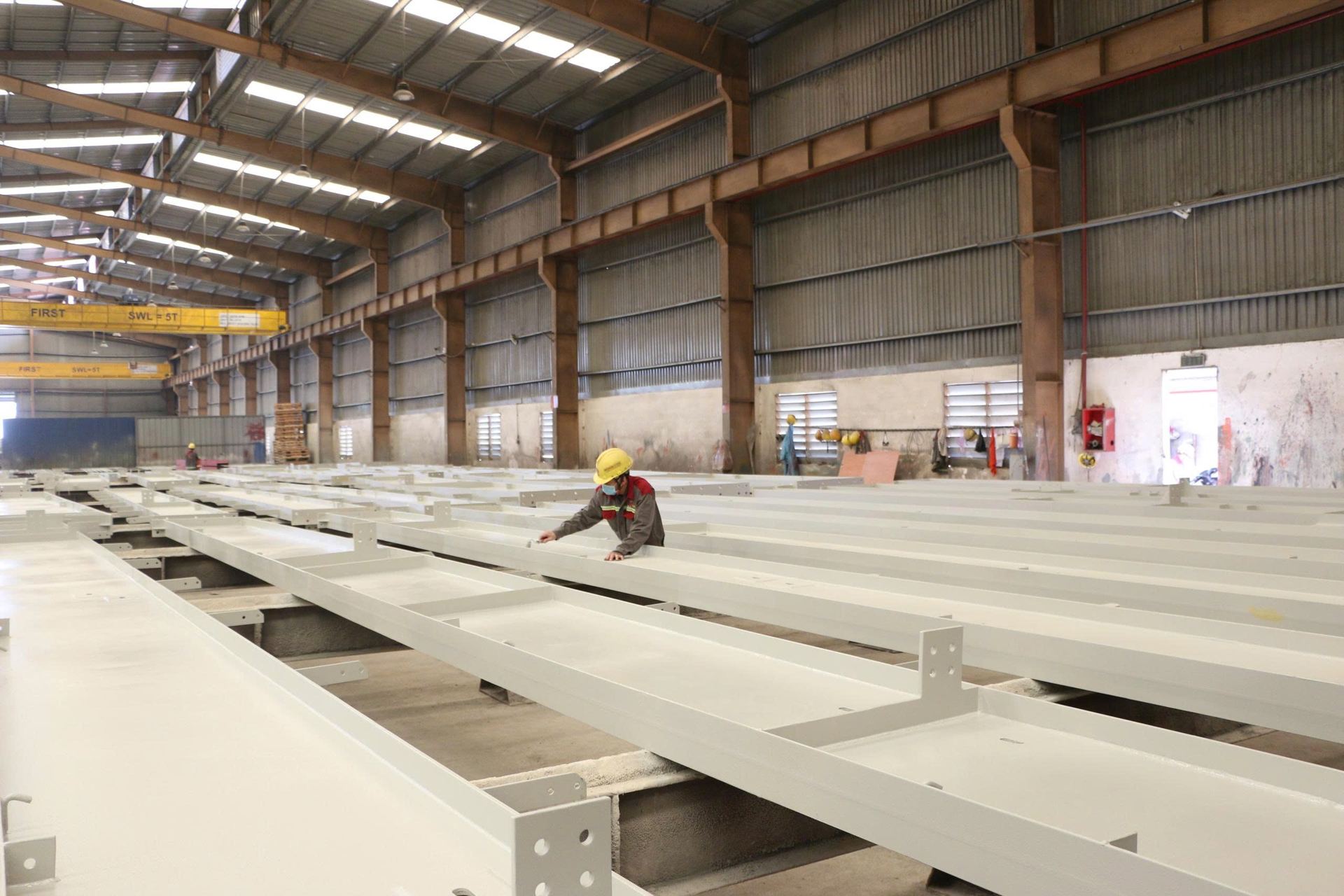
Fillet weld
Stiffeners, clips, end plates on lighter members, brackets.
Where it sits in the US code stack
Where it governs in your building
Three joints, five documents
Almost every structural weld in a World Steel building is one of three joint types. Each is made to a written, tested procedure by a qualified welder, then inspected and filed under its piece mark.
Stiffeners, clips, end plates on lighter members, brackets.
Flange splices, moment end plates where the design requires full strength, crane brackets.
The long welds that build a plate girder or tapered frame, run on automated submerged arc lines.
Welding Procedure Specification: process, filler, joint, position, preheat and settings.
Procedure Qualification Record: test coupons that prove the WPS works before your steel.
Each welder tested by process and position for the joints they weld.
Which welds get visual, UT, MT or PT, and where you can stop and witness.
Procedure, welder and result under the piece mark, closed into the Manufacturing Data Record.
14 answers from our engineers
What owners, inspectors and engineers ask about structural welding in our Vietnam plant: procedures, welders, inspection and testing, witnessing from the US and the records you receive.
AWS D1.1 lists joint details, processes and filler combinations that are prequalified: proven by long experience, so no procedure test is needed if every limit is respected. Anything outside those limits needs a WPS qualified by test, backed by a PQR.
Submerged arc welding on automated lines for long web-to-flange seams, and flux-cored or gas metal arc welding for fittings, stiffeners and end plates. Each process has its own procedures and welder qualifications.
A welder's qualification stays valid while they keep using the process; AWS D1.1 requires a re-test if they have not used it for six months or if there is a reason to question their skill. Our records track that for every welder.
Yes, when the steel thickness, grade and process call for it. Minimum preheat comes from the WPS, following AWS D1.1, and is checked before welding starts on thick plates and heavy sections.
All of them are inspected visually. UT, MT or PT is added to the extent your specification and the code call for, and that extent is written into the Inspection and Test Plan.
Ultrasonic testing (UT) looks inside groove welds for lack of fusion, cracks and porosity. Magnetic particle testing (MT) finds surface and near-surface cracks. Penetrant testing (PT) shows surface-breaking defects. Each suits different joints, as the code and your specification set.
Technicians qualified for each method, working to written NDT procedures. Their qualifications are part of the submittal, and your special inspector can review results or witness the tests.
It is marked, repaired to a repair procedure, and inspected again by the same method. The original result, the repair and the re-test all stay in the record under the piece mark.
Yes, either at the plant in person or online over Zoom or Microsoft Teams, with video kept on file. A third-party agency can do the same.
Only for the shop portion, and only if your building official agrees under IBC §1704.2.5. Everything inspected in the field is still inspected.
Yes. Weld reports are filed per component, and a report will not close unless the WPS, PQR and welder qualification check out. You can open a member and export its full record to PDF.
The frame arrives ready to bolt, so its connections need no welding on site. If another trade welds embed plates or similar items, that work sits outside our contract.
Ask before they do. Welding to a member can damage coatings, add heat to a stressed area or land in a protected zone on seismic frames. We check the request and issue a detail if it is acceptable.
Welds are inspected before blasting and painting, then members are bundled with timber dunnage and strapped to avoid knocks. Coating touch-up materials ship with the steel for any transit damage.
More answers on every US code we design to: search all standards questions.
The code in brief
AWS D1.1, the Structural Welding Code for steel, sets out how welded joints are designed, which procedures are allowed and how they are proven, how welders show they can make the weld, and how finished welds are inspected and accepted. AISC 360 refers to it for welded steel buildings, and most US specifications name it outright. AWS D1.3 covers sheet steel, and designated welds in seismic systems add the AWS D1.8 seismic supplement.
Buyers can boil it down to a short test. Before production there should be a written procedure for each weld type, test results proving it, and evidence that every welder using it is qualified. During and after welding, inspection should follow acceptance criteria you agreed to, and all of it should be on file.
On the shop floor
Your welding and inspection requirements are reviewed and confirmed in our proposal.
Before production, each joint type on your job has a written procedure backed by a test record, and only qualified welders use it.
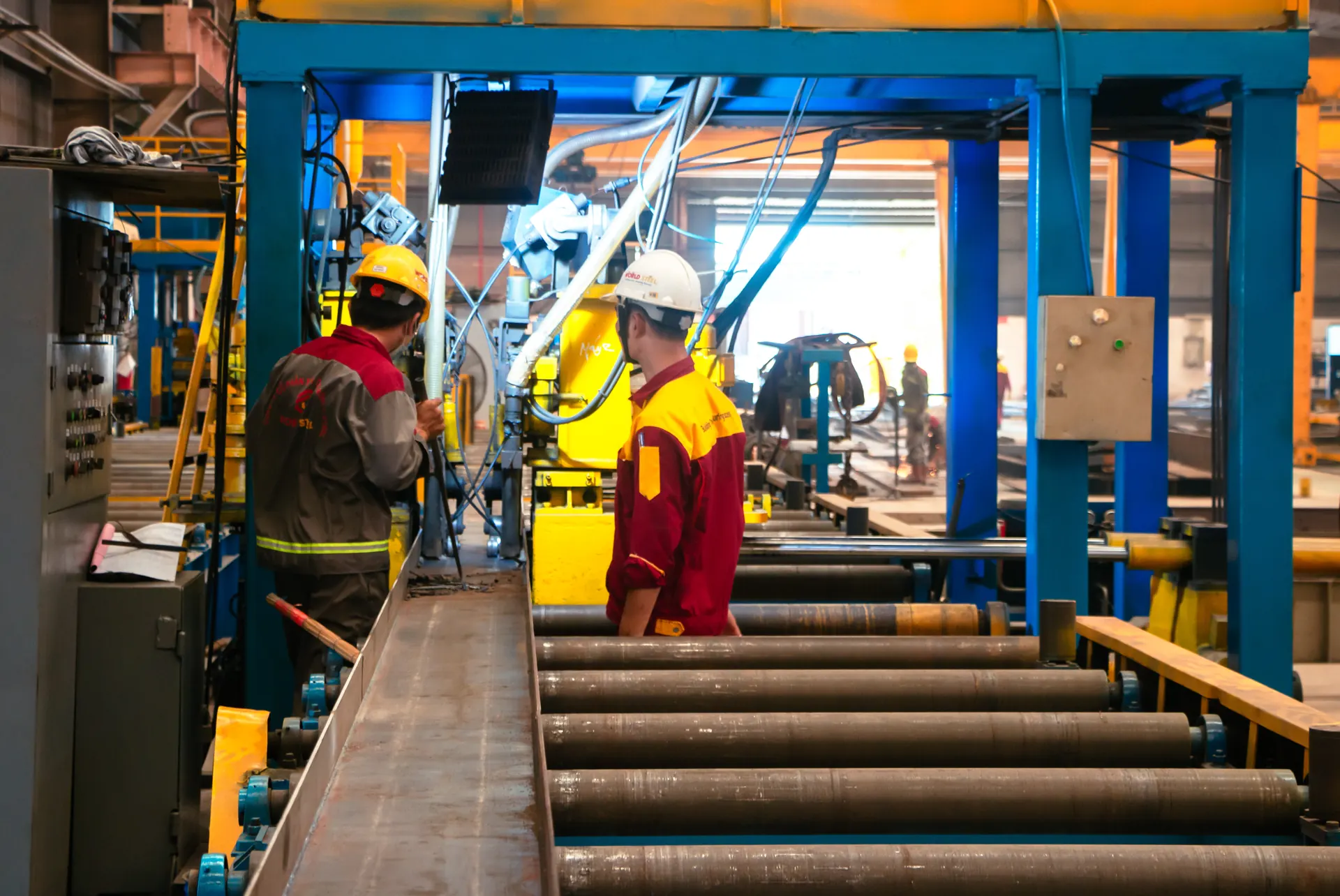
Built-up frames get their web-to-flange welds on automated submerged arc lines for steady penetration along the whole member.
Every weld is inspected visually. On top of that, UT, MT or PT is applied to the welds your specification or the code singles out.
Hold points can be witnessed in person at the plant or remotely over Zoom or Microsoft Teams, by you, your inspector or a third-party agency, and the video is archived.
Results are filed under the piece mark and later assembled into the Manufacturing Data Record.
Why this helps at permit time
Field joints are bolted, so the welds that carry wind, snow and seismic load are made and checked in the factory, not from a lift in bad weather.
IBC §1704.2.5 allows the building official to waive special inspection of shop fabrication for an approved fabricator. IAS AC472 is a recognized approval program, and your building official decides how it applies.
When your lateral system falls under AISC 341, welds in that system meet it and the AWS D1.8 supplement.
A video link puts your inspector on our shop floor during a hold point, with no flight to Vietnam.
Open the weld records
A weld report in PEB Studio will not close unless the WPS, PQR and welder qualification check out, and acceptance follows whatever criteria your project names, AWS D1.1 among them. Any component's full record exports to PDF.
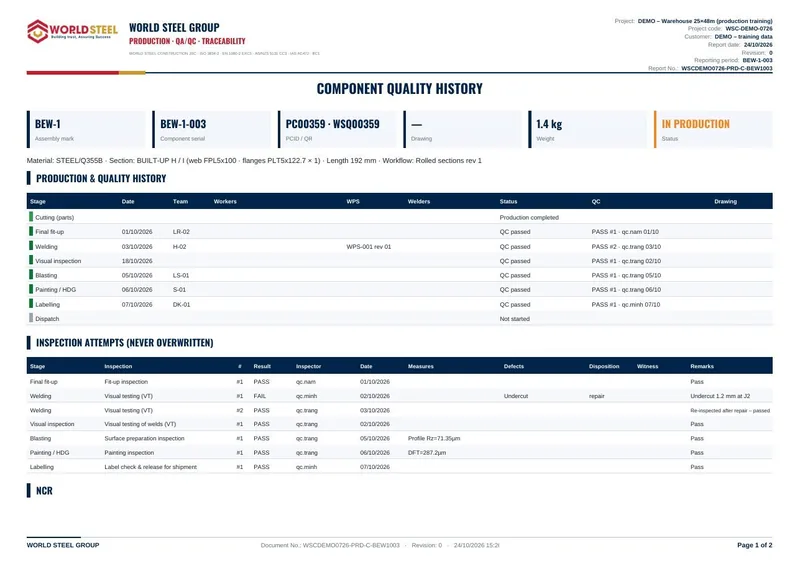 Demonstration data
Quality
Every member carries its own quality log: date and result for each stage, the welding procedure applied and every inspection attempt, failed ones and post-repair re-inspections included.
These are real PEB Studio screens filled with sample training data, so no customer’s job is exposed and personal names are masked.
Request these
Who does what under AWS D1.1
AWS D1.1 separates the contractor's inspection, done by the fabricator, from verification inspection on behalf of the owner. On a World Steel job the split looks like this.
What an inspector asks
Each question is answered by a document that exists before the steel ships, not by a promise.
Is this WPS prequalified or qualified by test?
Each WPS states its basis; a WPS qualified by test comes with its PQR attached.
Who welded this piece, and are they qualified?
The welder's ID is recorded against the piece mark, with the qualification record by process and position.
What preheat was used on the thick plate?
Preheat and interpass temperatures are set in the WPS by steel grade and thickness, and checked at the joint.
Which welds got NDT, and to what criteria?
NDT extent per your specification, method and acceptance criteria named, results by piece mark, technician qualifications attached.
How was a rejected weld repaired?
A nonconformance report with the repair procedure, the re-inspection result and the sign-off.
Does the filler metal match the base metal?
The consumable and its classification are named in each WPS for the ASTM grades being joined.
Go deeper
Each step of the weld record has its own page, with the documents and the checks explained in full.
How a procedure is written, tested and approved before your steel is welded.
WPS and PQR guide →Procedure and welder qualification as a checkpoint on your job.
Welding qualification →Visual inspection of every weld and the UT, MT or PT your specification adds.
Weld inspection and NDT →The EN 10204 3.1 certificate behind every heat of steel we weld.
EN 10204 explained →Real photos from World Steel
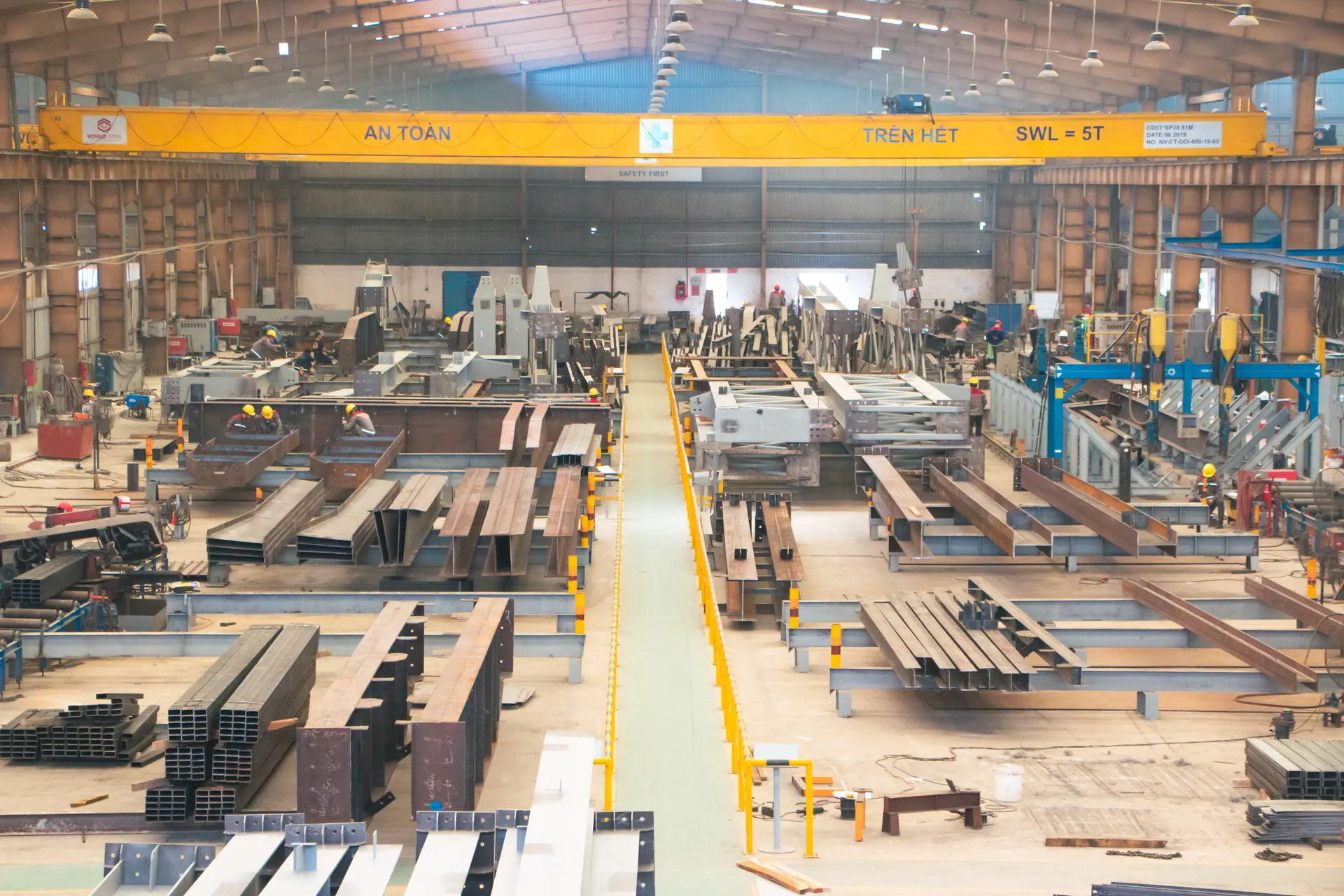
Photographed in our own plant in Tay Ninh Province, Vietnam, and on World Steel jobs. Not stock images.
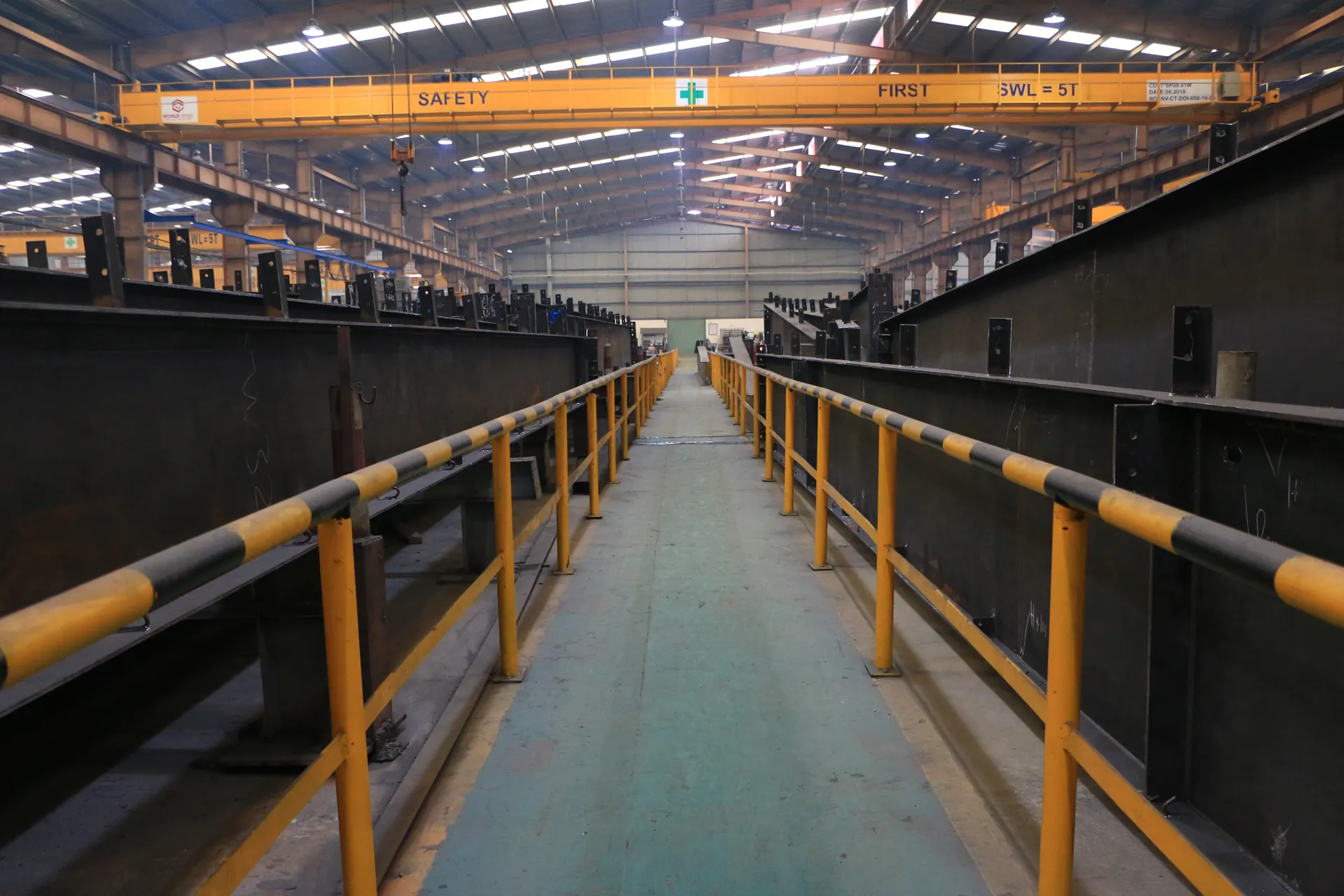
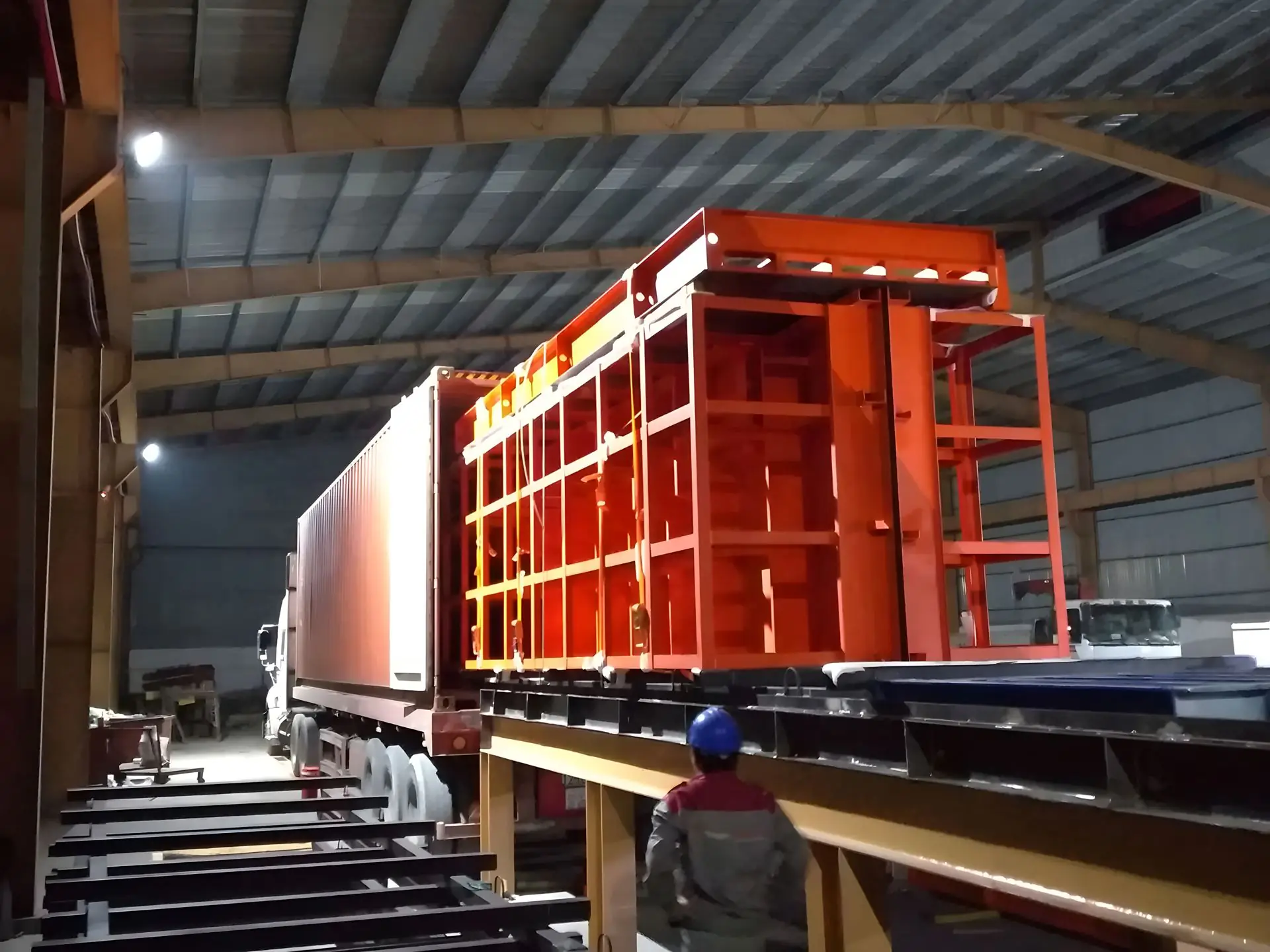
AWS D1.1 never works alone
Each link opens the full page, with its own questions and answers.
Honest status
Two credentials stand behind our welding: EN ISO 3834-2 certification of the welding quality system and IAS AC472 Part A accreditation of fabrication. For AWS D1.1, the evidence is project-specific: the procedures, welder qualifications and inspection plan your engineer reviews; no AWS certification is claimed here.
Who does what
World Steel designs, fabricates and supplies the steel structure from its own plant in Vietnam. The US contractor, our customer, erects it, has the drawings approved and sealed by their Engineer of Record and pulls the permit.
Details confirmed in quote Edition: Per project specification
Source record: https://worldsteelgroup.com/
Last checked: November 8, 2026. Editions change on a cycle, so your Engineer of Record confirms which one your jurisdiction enforces.
All US codes & standardsAsk for sample WPS, PQR and inspection records for the joints on your job. We send them with the proposal, and your inspector can witness hold points live.