
Where it sits in the US code stack
Where it governs in your building
AISC Code of Standard Practice
Three ways to assign connection design, and how a World Steel job runs
The Code of Standard Practice gives the contract three choices. Each row shows who does the work; the last column shows the World Steel arrangement for a metal building or structural steel package.
11 answers from our engineers
Connections questions and answers
Who designs the connections, who reviews them, what the calculations show and how changes are handled: the questions contractors and Engineers of Record ask before they sign a steel contract.
Responsibility 4 answers
On a metal building, whose job is the connection design?
Ours, in the usual arrangement: the supplier engineers its system including every joint, and your Engineer of Record reviews it. Write that split into the contract so nobody is left guessing.
What if our engineer would rather detail the joints?
That works too. We build the joints in Tekla exactly as your engineer drew them and raise an RFI wherever a detail would be hard to fabricate or ship.
Does World Steel seal its connection calculations?
No. World Steel designs the connections and submits calculations for review; the US contractor's Engineer of Record reviews and approves them and applies any seal the jurisdiction requires.
Who designs connections between our steel and another trade's?
Interfaces such as steel to concrete embeds, to masonry or to another supplier's framing are agreed at the start. We design our side and give loads; the other trade or your Engineer of Record designs theirs.
Calculations and checks 4 answers
Where do the connection design forces come from?
From the SAP2000 model of the whole structure, for every load combination. Each joint is designed for its governing forces, not a generic table value, and the calculation shows which combination governs.
Which limit states do you check at a bolted end plate?
Bolt tension and shear, plate bending, prying action, column flange and web local effects, weld strength at the plate and stiffener needs, following AISC 360 and the AISC Design Guides for end plates.
Do you check base plates and anchor rods?
Yes, the steel side: plate bending, anchor rod tension and shear, and bearing. Concrete breakout, embedment and the footing are checked by your foundation engineer from our reactions.
Are seismic connections designed differently?
Yes. In an AISC 341 system, connections are designed for the force the yielding member can actually deliver, not just the analysis force, and moment connections follow AISC 358 or a tested detail.
Field joints and changes 3 answers
Are any connections welded on site?
No. Field connections on a World Steel frame are bolted, without exception. All structural welding is done and inspected in our plant.
What if a field joint does not fit?
Stop and call us before cutting, reaming or welding. We check the cause with photos and measurements and issue a fix. Field changes made without approval sit outside our design.
How are design changes after approval handled?
The connection is redesigned in the model, the affected drawings are reissued under a new revision and the change is logged, so the as-built record matches what was made and shipped.
More answers on every US code we design to: search all standards questions.
Our method
Connection design on a World Steel job, step by step
-
Whole-building forces
Design forces for each joint are taken from the SAP2000 model of the complete structure.
-
Design and model
Each joint is checked to AISC 360 and RCSC, then built in Tekla Structures.
-
Submittal
The calculations and details travel with the approval drawings to your Engineer of Record.
-
Make and log
Approved joints go to the shop floor, where each is made, checked and logged under its piece mark.
Who does what with connections
Every connection has an owner before the first drawing
The AISC Code of Standard Practice lets a contract assign connection design in more than one way. On a World Steel building, the split is settled in the proposal.
World Steel
- Designs every connection in our building system, with calculations
- Welds shop connections in the plant and details field joints as bolted
- Shows each connection, plate and bolt on the shop drawings
US contractor and Engineer of Record
- Review and approve the connection design
- Design connections to anything outside our system, such as the foundation or existing work
- Make the field bolted connections to the drawings
Inspector
- Checks the shop welds and the field bolting the specification calls for
- Confirms plates, bolts and hole types against the drawings
- Reports any field modification before it is accepted
What a reviewer looks for
Five connection checks a reviewer looks for
Each check has a calculation and a detail, and the two agree because both come from one model.
| The reviewer checks | Where it comes from | What our package shows |
|---|---|---|
| End-plate moment connections | AISC 360 Chapter J with Design Guide 16 | Plate bending, bolt tension and prying checked for each typical knee and ridge. |
| Base plates and anchor rods | AISC Design Guide 1 | Bearing, plate bending and anchor rod forces reported, with reactions for the foundation engineer. |
| Bracing connections | AISC 360 Chapter J | Gusset, weld and bolt checks for rod and angle bracing. |
| Seismic connections | AISC 341 | Where the system is seismic, connections designed to its required strengths. |
| Bolt grades and joint types | RCSC Specification | Each bolted joint labeled snug-tight, pretensioned or slip-critical. |
Go deeper
Four pages behind a connection
From the bolts to the plates, each part of a connection has its own page.
High-strength bolting
Joint types and installation under RCSC.
RCSC →Steel design
The connection limit states of AISC 360 Chapter J.
AISC 360 →Connection plates
End plates, gussets and base plates we fabricate.
Connection plates →Load path
One continuous path from roof screw to anchor rod.
Connections and load path →
Real photos from World Steel
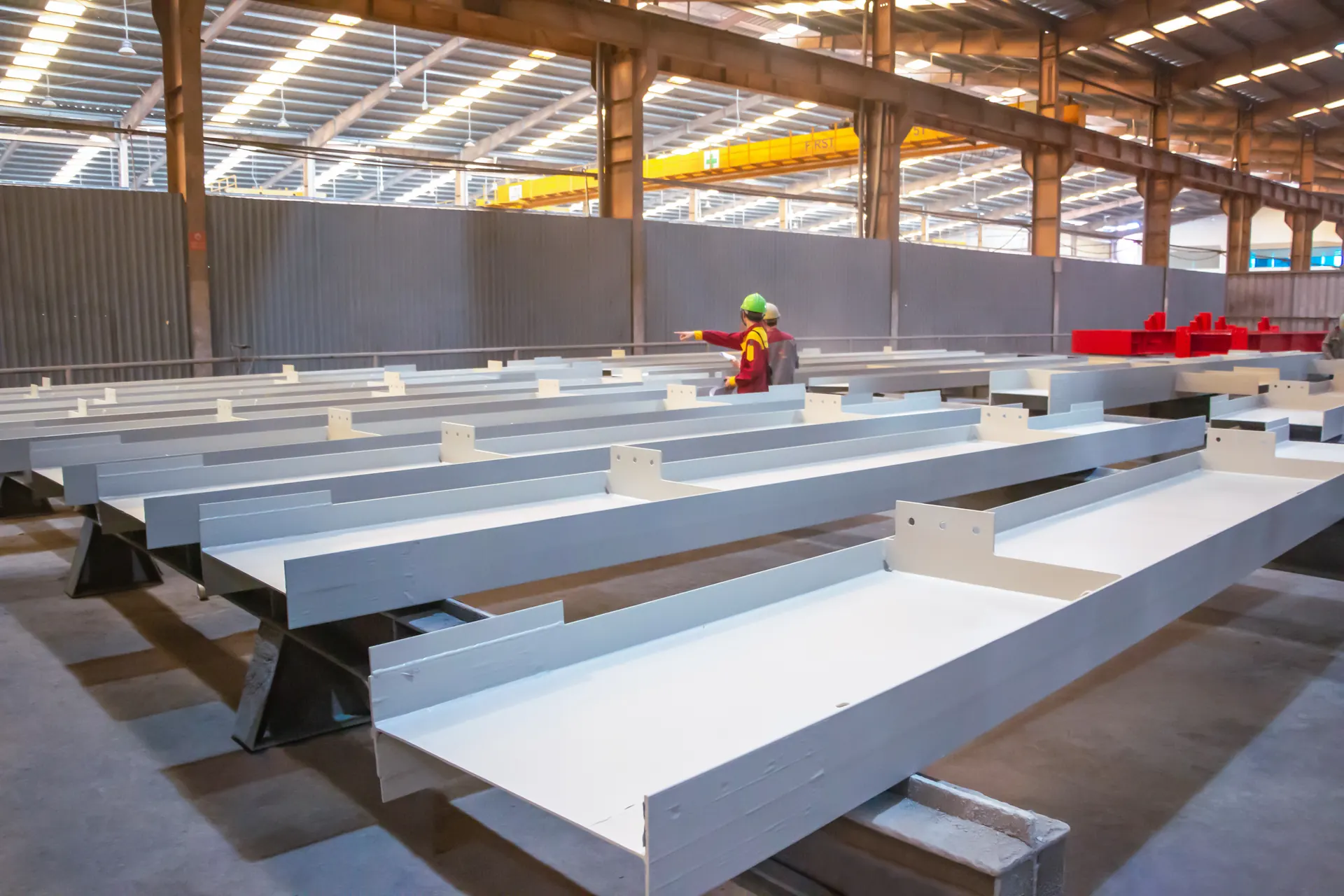
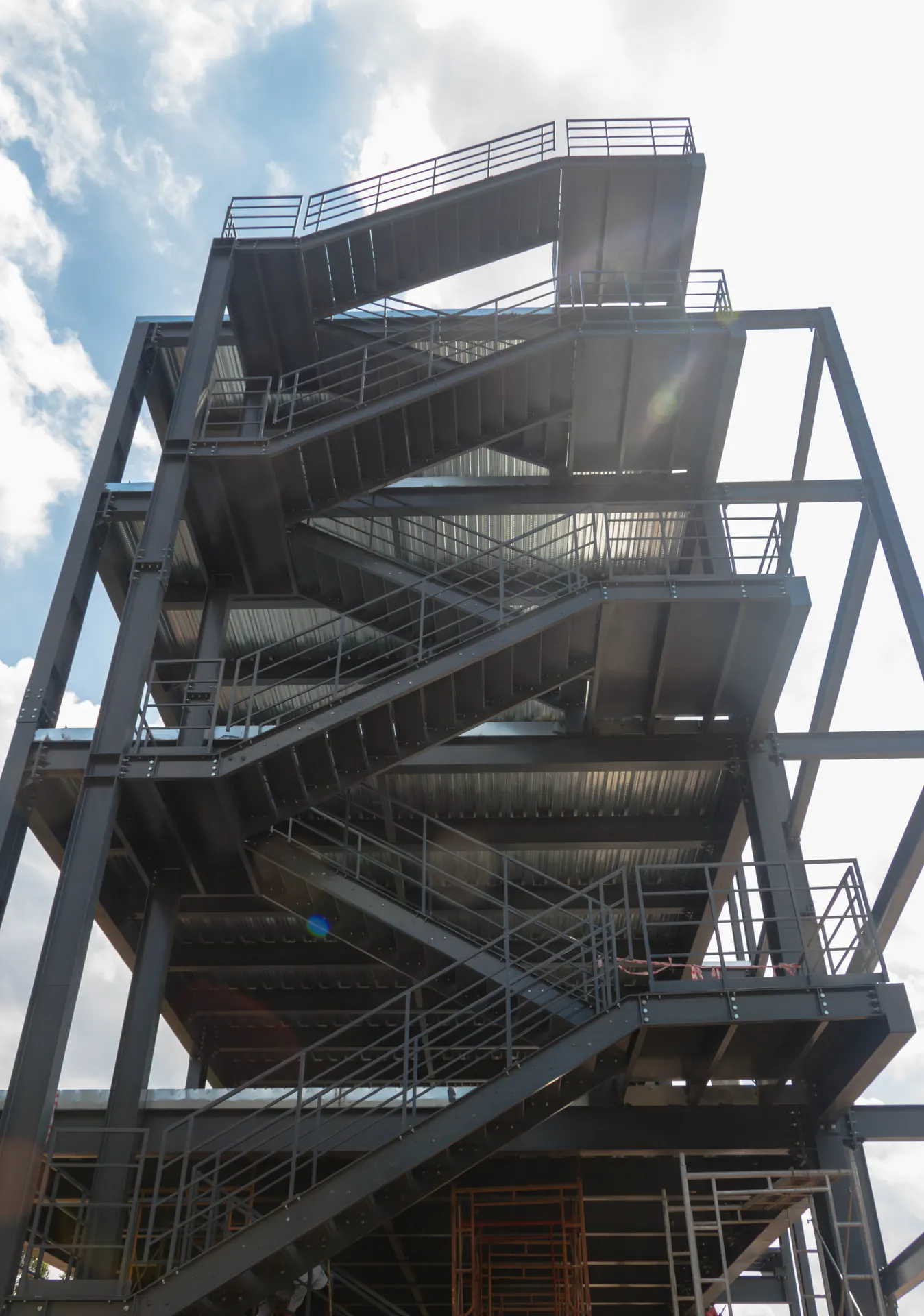
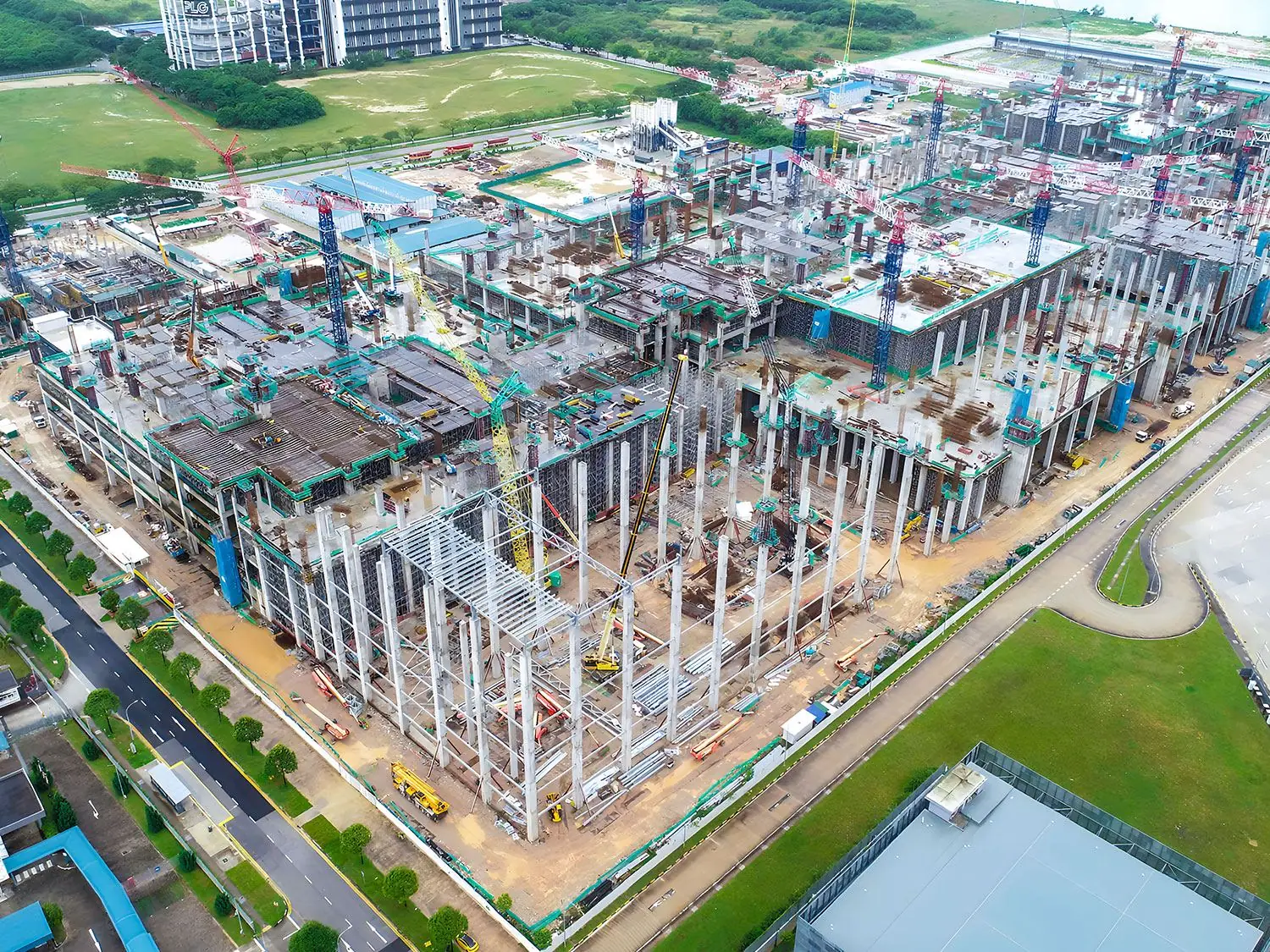
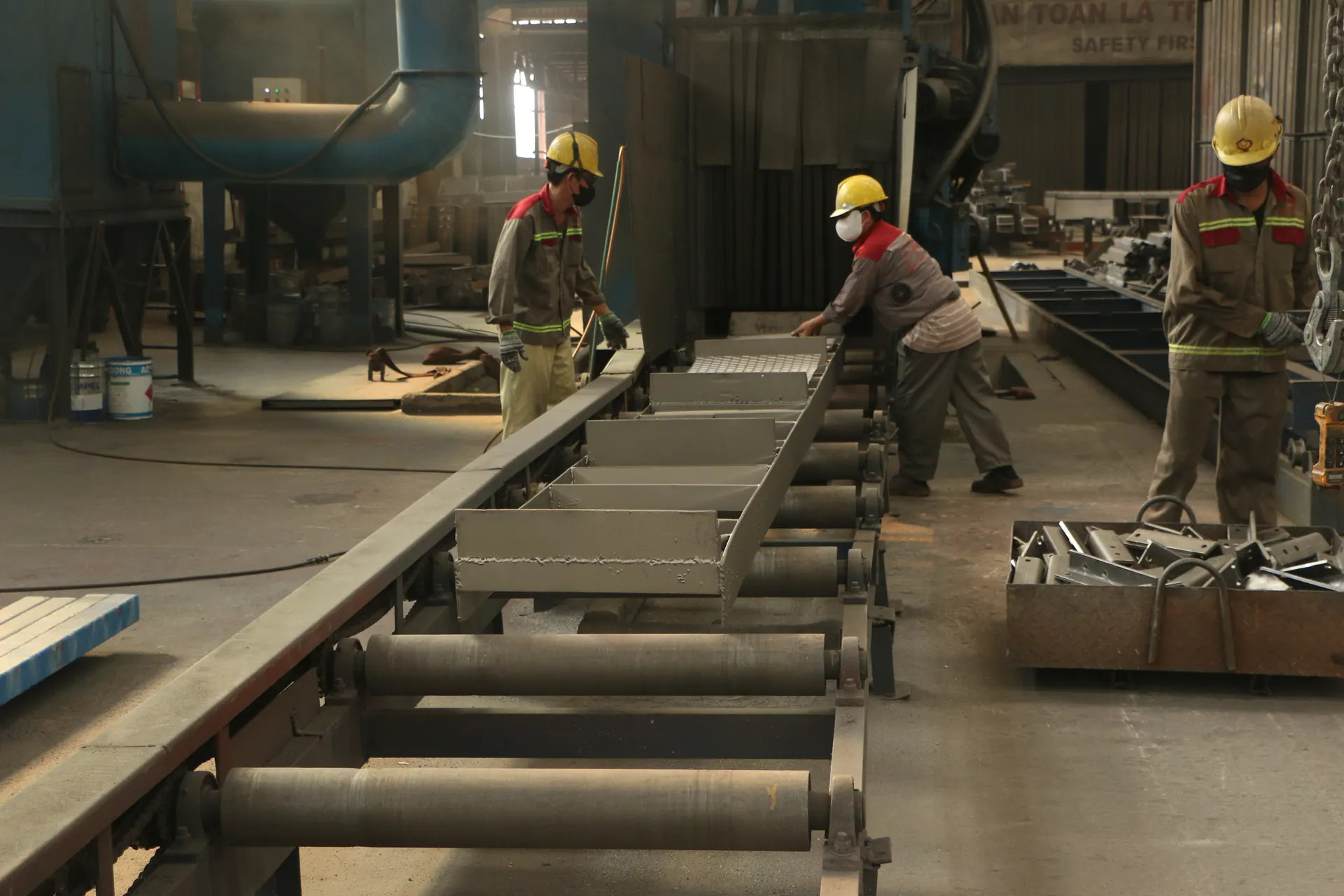
Connections made in the plant, bolted on site
Photographed in our own plant in Tay Ninh Province, Vietnam, and on World Steel jobs. Not stock images.
Connections never works alone
The standards and guides it works with
Each link opens the full page, with its own questions and answers.
Approval
Our connection calculations go to your Engineer of Record for review and approval. Any PE seal your jurisdiction requires stays with the US contractor, our customer, and their engineer.
Who does what
World Steel designs, fabricates and supplies the steel structure from its own plant in Vietnam. The US contractor, our customer, erects it, has the drawings approved and sealed by their Engineer of Record and pulls the permit.
Details confirmed in quote Edition: As your project specifies
Source record: https://worldsteelgroup.com/pre-engineered-buildings/
Last checked: November 8, 2026. Editions change on a cycle, so your Engineer of Record confirms which one your jurisdiction enforces.
All US codes & standardsWant the connection responsibility settled in writing?
Send your specification or contract draft. We confirm which option applies, what our engineers design and what goes to your Engineer of Record for review.