Tolerance
Tolerances you can build containment on
Unless your specification asks for tighter values, members are fabricated to the tolerances in the AISC Code of Standard Practice, with mill tolerances on the rolled and plate material under ASTM A6. Where containment, busway or equipment support needs more, we agree the tighter tolerance with you and put it on the shop drawings so it is measured, not assumed.
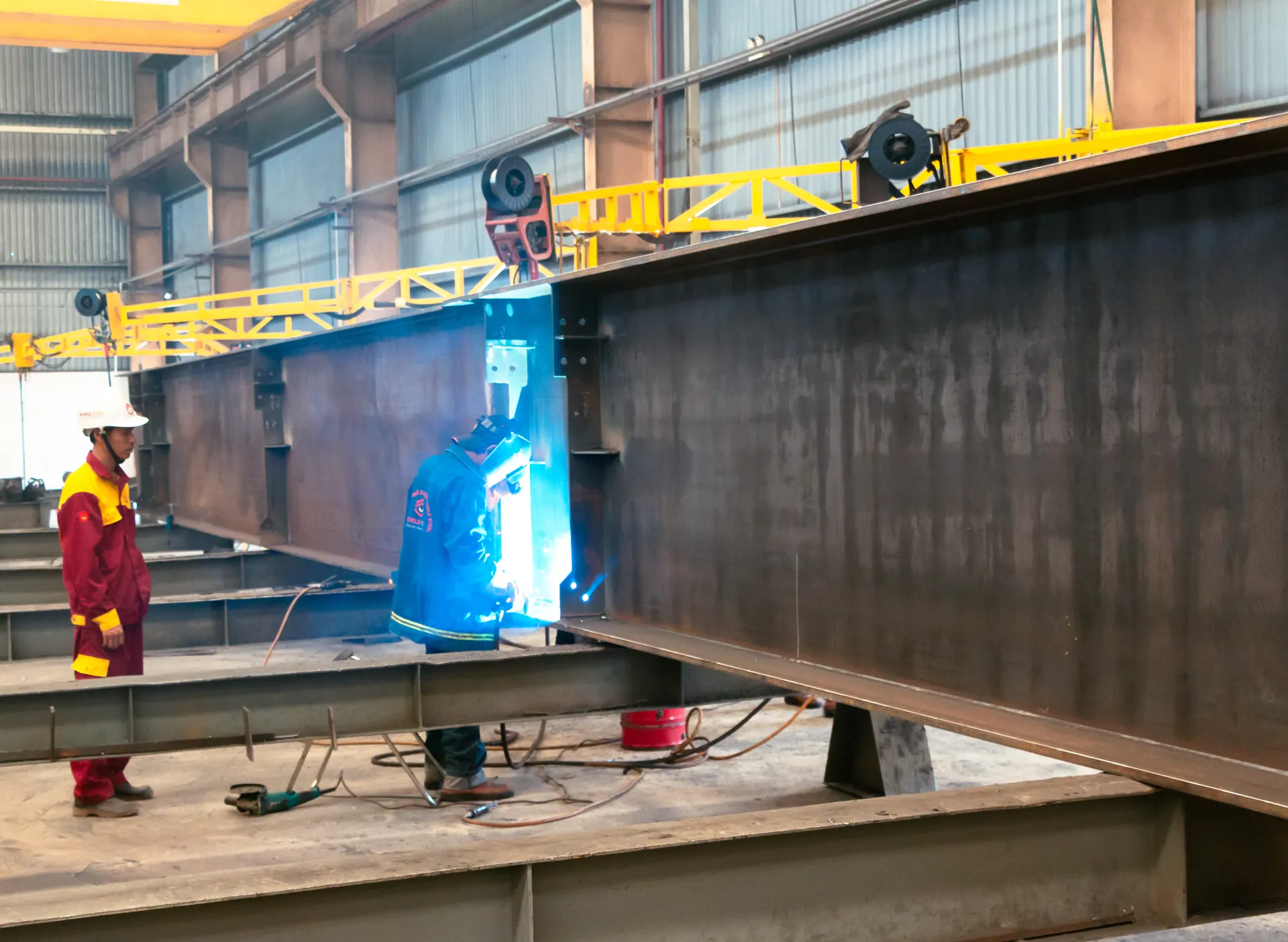
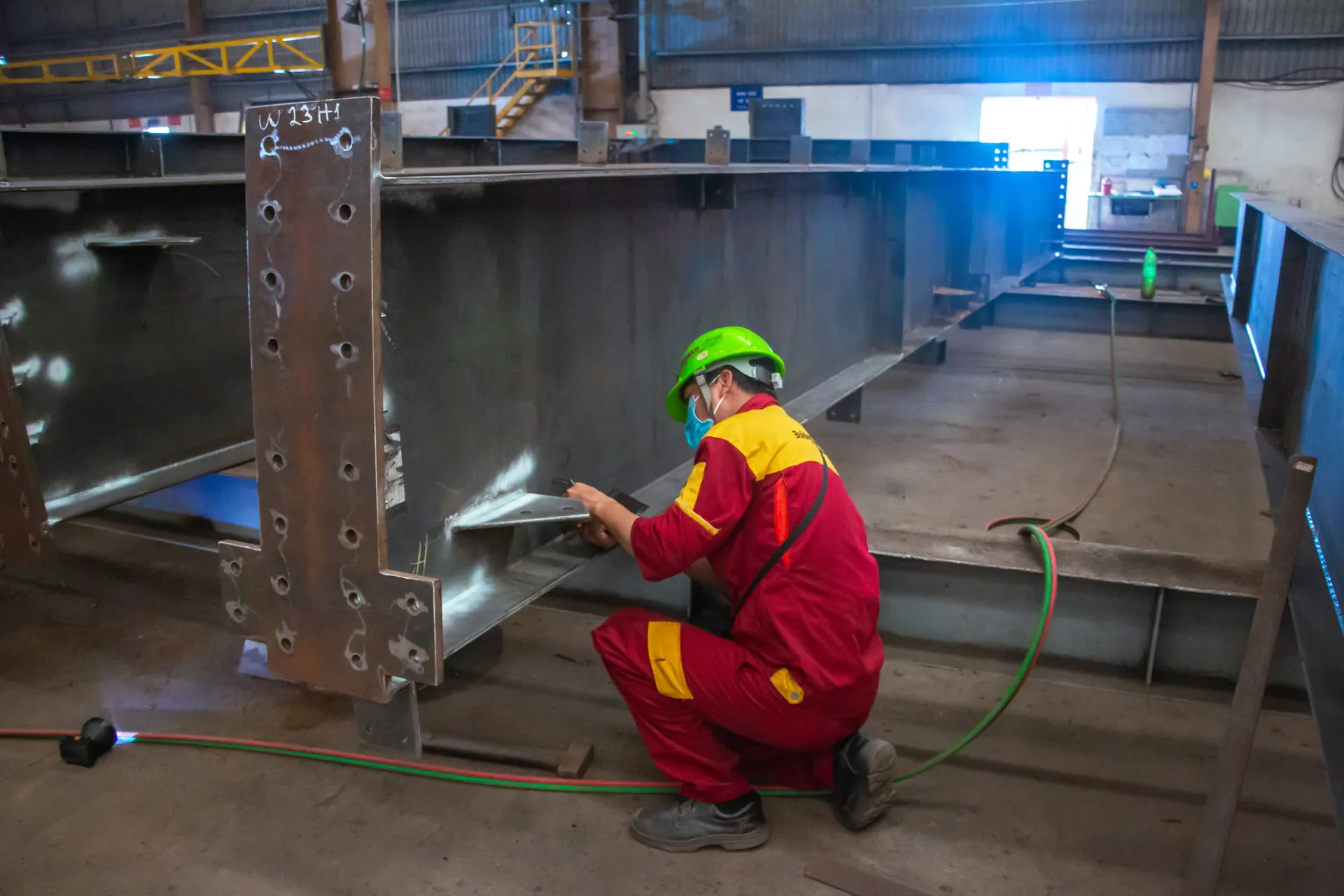
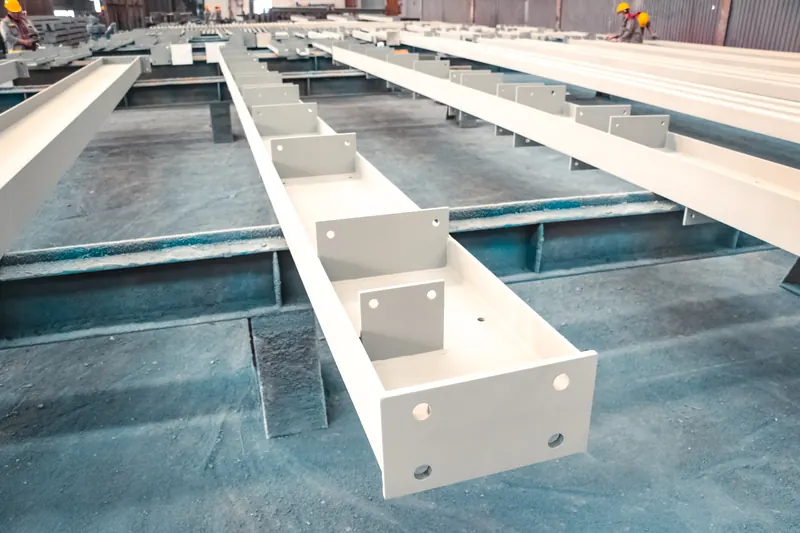
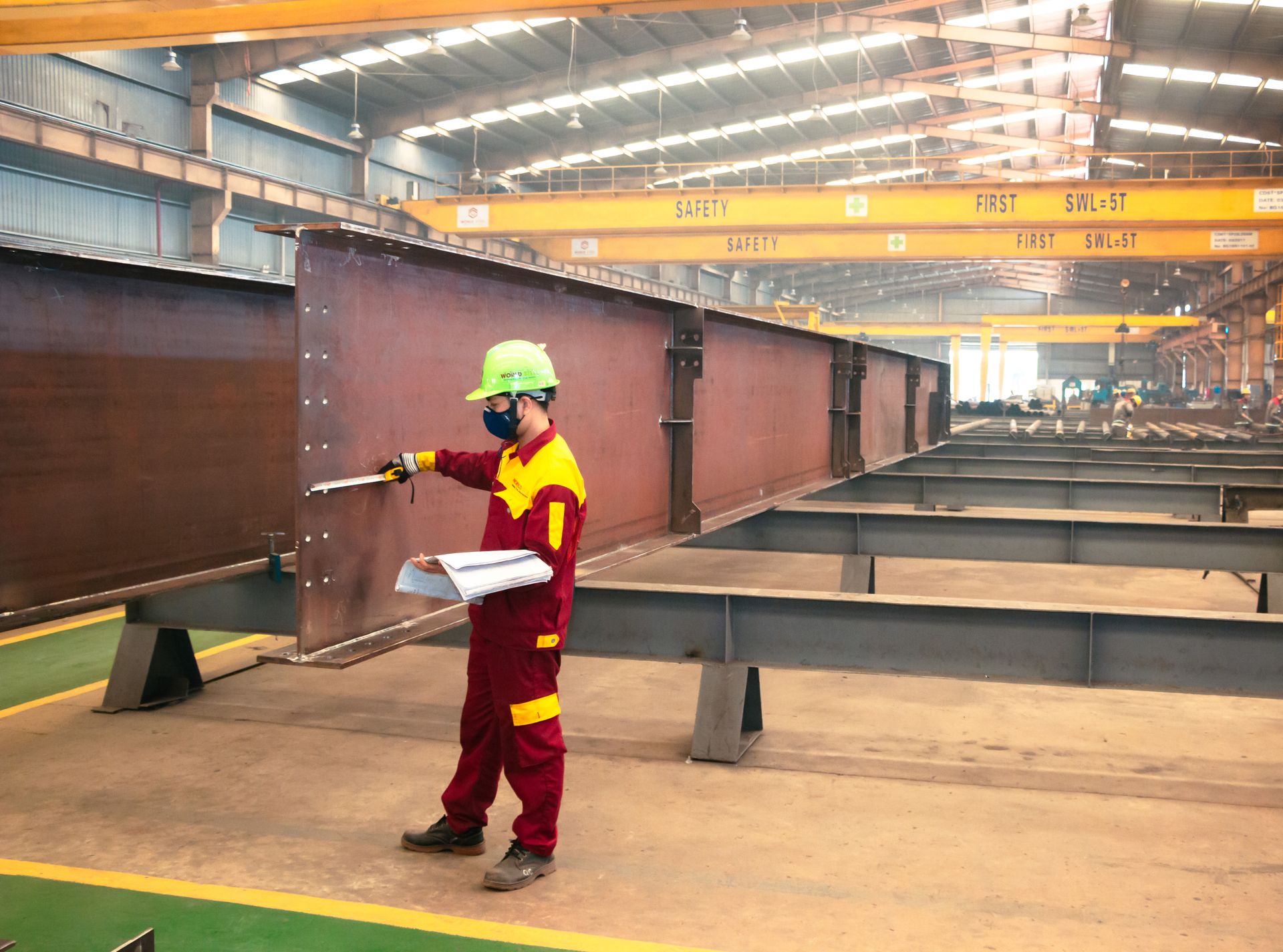
Every member is checked against its shop drawing before release: length, camber and sweep, hole positions and end-plate squareness. The results go into the Manufacturing Data Record and are visible in PEB Studio.
Who holds what
Tolerance is shared between the plant and the site
| Item | Held by | How |
|---|---|---|
| Member length, holes, camber and sweep | World Steel, in the plant | Dimensional QC against the shop drawing, recorded per member |
| Base plate and connection geometry | World Steel, in the plant | Drilled and checked to the detailing model |
| Anchor rod position and elevation | The US contractor, on site | Set and surveyed to the anchor rod plan we issue |
| Plumb, line and level of the erected frame | The US contractor, on site | Erection tolerances under the AISC Code of Standard Practice |
Vibration and deflection
Stiffness where the equipment needs it
Floor vibration
Where the owner sets a floor vibration criterion for sensitive equipment, framing is sized and checked for it, often using the methods in AISC Design Guide 11.
Equipment supports
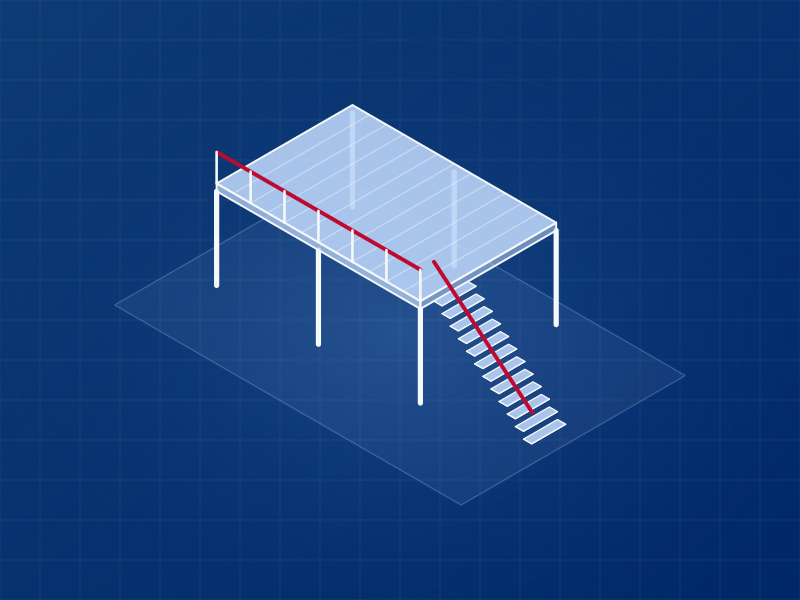
Supports for fans, chillers and air handlers are made stiff enough for the isolation your MEP engineer specifies, so the isolators do the work.
Hung services
Deflection limits for busway, containment and ceilings are agreed with your Engineer of Record and checked with the roof design.