
The process
From the shop floor to the vessel
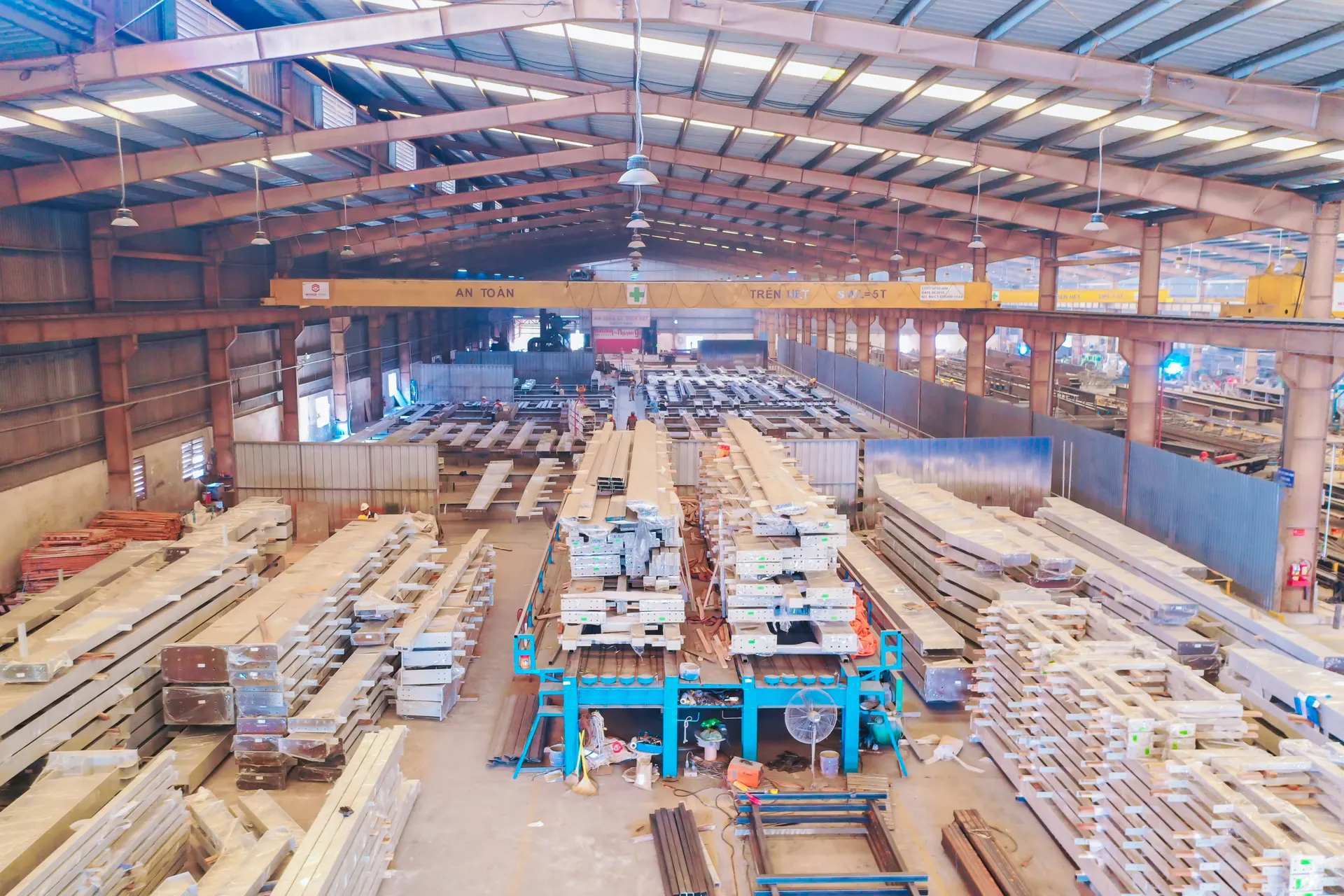
Seven stations every bundle passes through. Each one leaves a record in PEB Studio you can open from your office in the US.
Planned in detailing
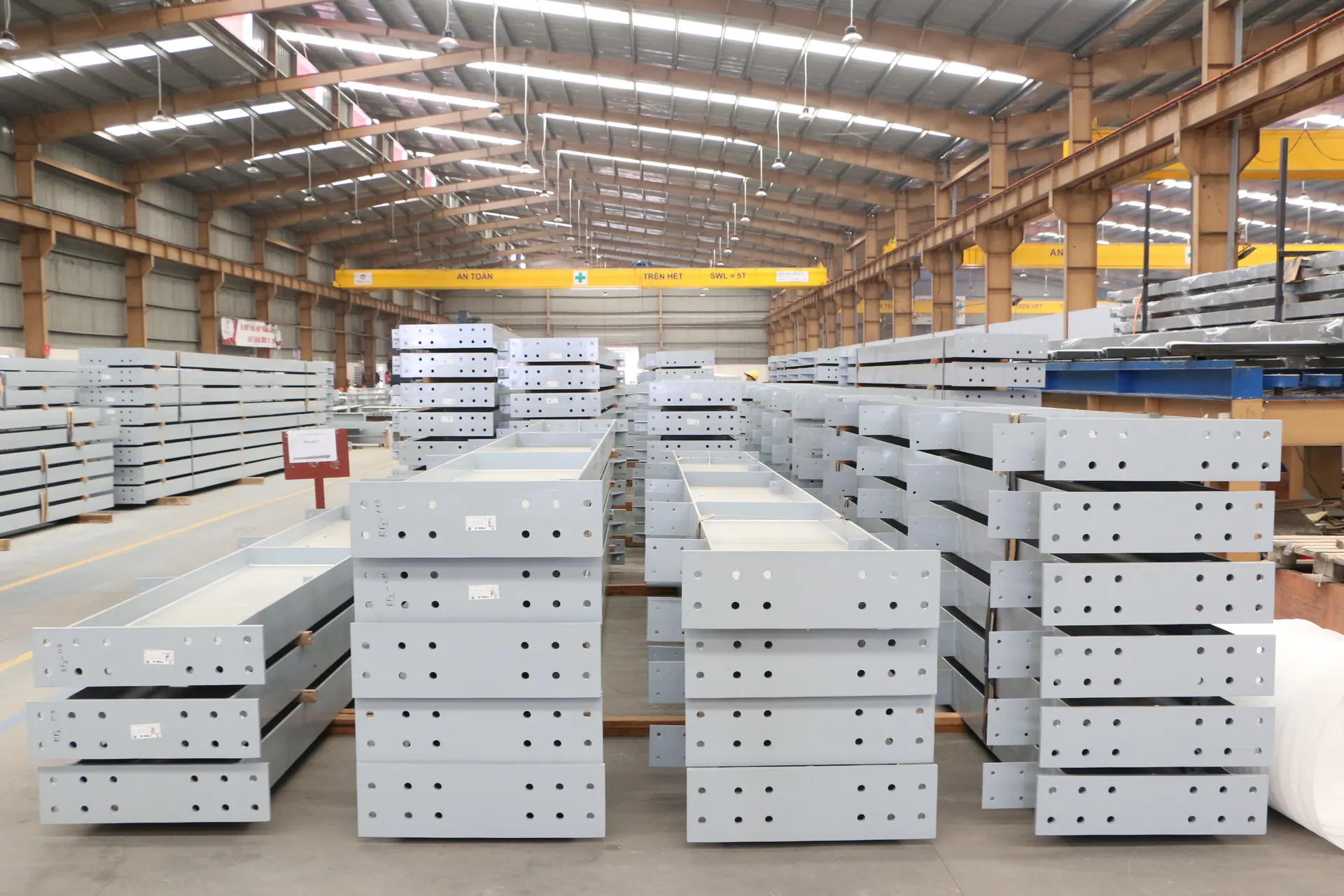
Member lengths and splice points are set so pieces fit 20 ft and 40 ft containers or flat racks, or are planned as breakbulk with the forwarder when they are long.
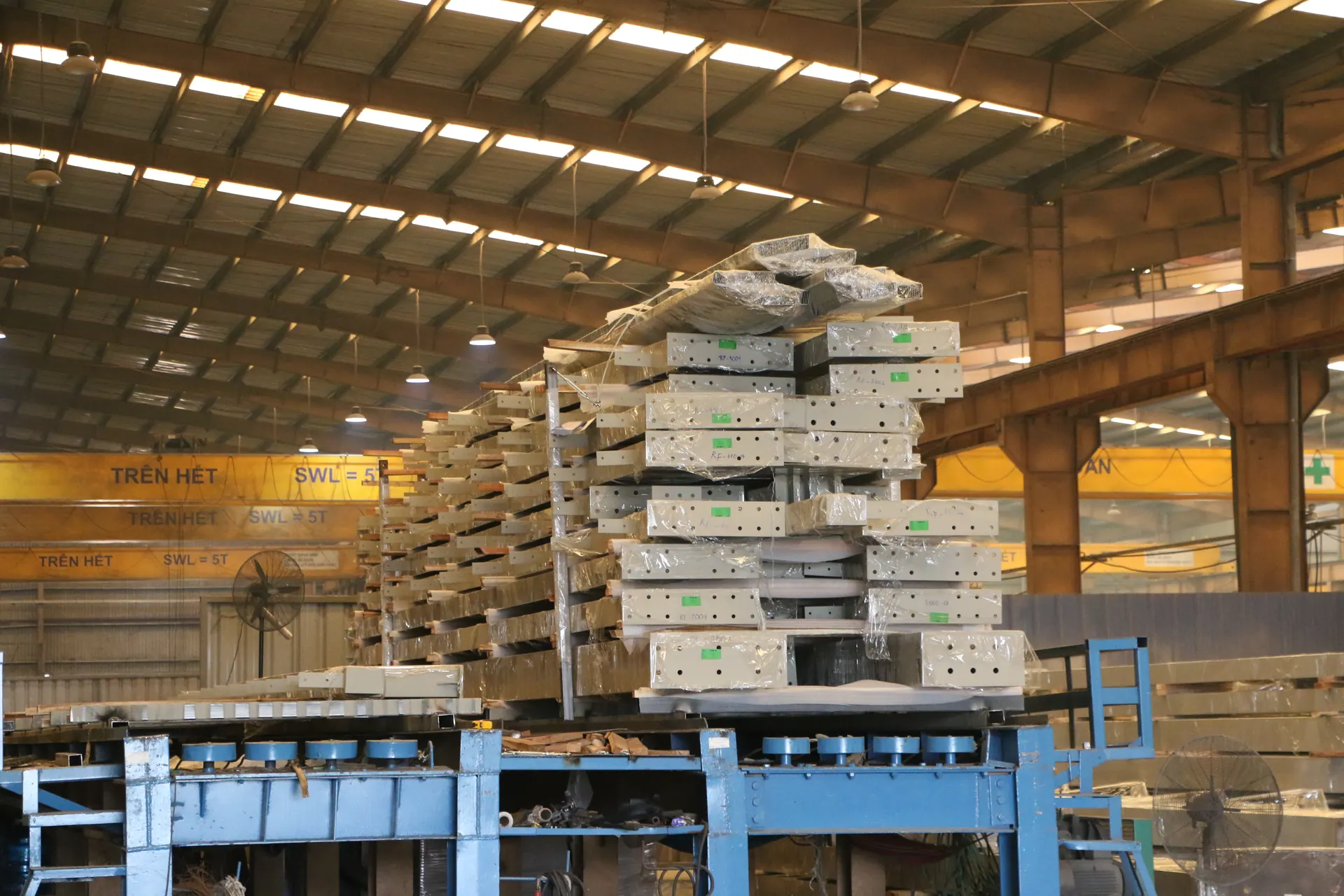
Packed by erection sequence
Bundles follow the order your crew will set steel, so the first loads delivered hold the first columns and rafters needed.
Scanned into bundles
A packer scans every member’s QR label into its bundle record in PEB Studio, and the system refuses any piece QC has not released.
Strapped and protected
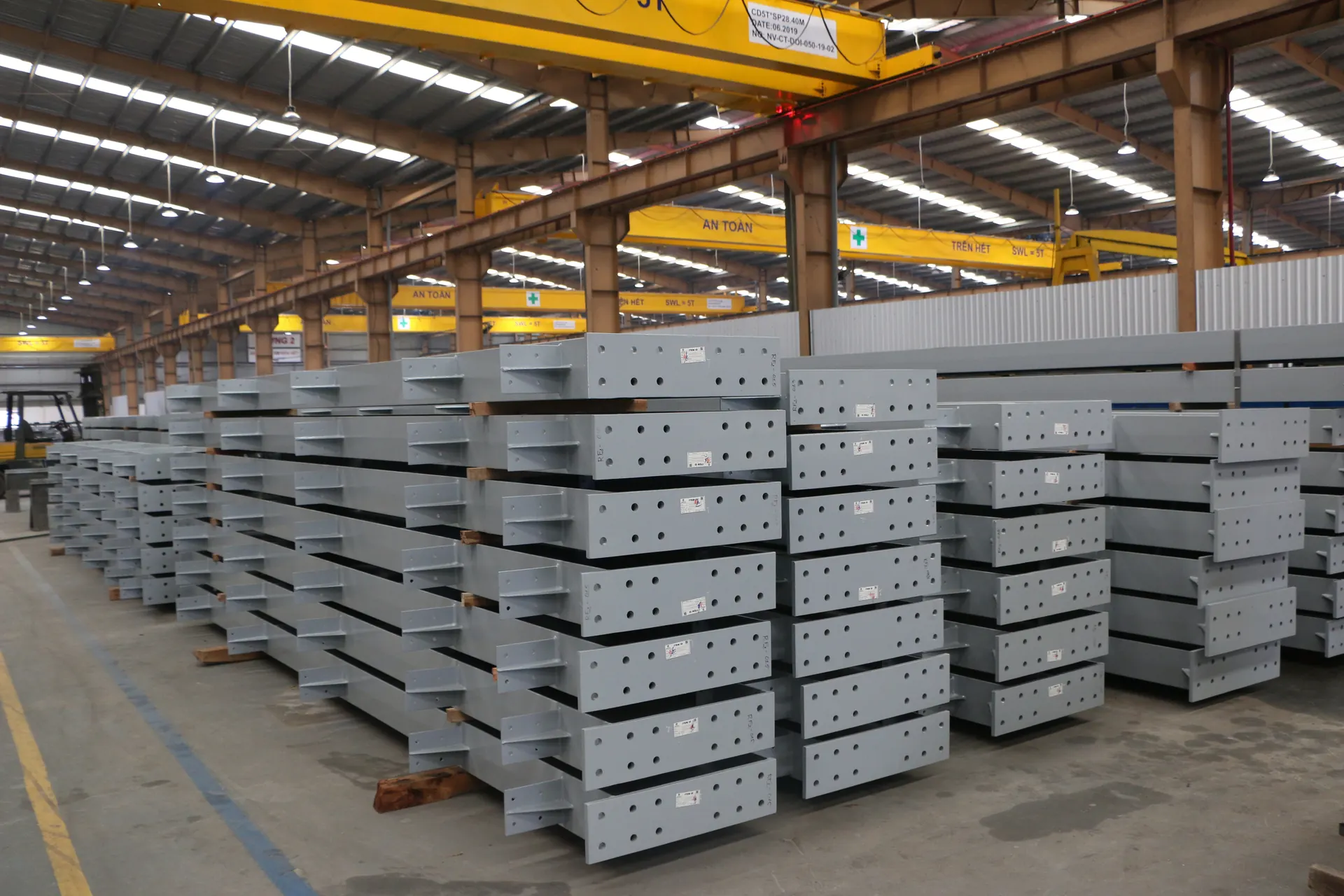
Bundles are strapped, blocked and separated with ISPM 15 heat-treated dunnage so coatings arrive undamaged.
The ISPM 15 rule explainedLoad plan, photos and seal
Each container or hold follows a load plan; loading is photographed and filmed, and the ISO 17712 seal number is recorded.
Locked packing list
The packing list is frozen when the container is sealed, so your receiving check compares against exactly what shipped.
Departure from southern Vietnam
Cargo sails from Cat Lai or Cai Mep to the US port chosen with you, and inland trucking to site is coordinated with you or your broker.
Watch it in PEB Studio
Bundle lists, container photos and video, VGM and seal numbers for every shipment.
US gateways
You order the steel. We plan the route to your site.
Our logistics team knows US gateway ports, customs entries, rail ramps and trucking rules. We plan backward from the date your site needs steel and pick the port and inland route with the least risk.
West Coast
Gateways for California, the Pacific Northwest and the Intermountain West, with rail ramps inland.
Gulf Coast
Gateways for Texas, Louisiana and the South Central states.
East Coast
Gateways for the Southeast, the Mid-Atlantic and the Northeast.
Labels
Markings on every bundle
Piece marks
Each member is marked to match the erection drawings.
QR label
Opens the member’s PEB Studio passport, inspections included, on a phone.
Bundle code
Ties the bundle to the packing list and its place in the erection sequence.
Shipping marks
Consignee, destination port and handling symbols for the terminal, the trucker and your crew.
Documents
Shipping documents for US entry
- Commercial invoice
- Packing list by container and bundle, in your crew’s language
- Bill of lading
- Certificate of origin
- Data your customs broker needs for the Importer Security Filing
- Loading photos, seal and verified gross mass (VGM) records
Dunnage and crating are heat treated and stamped to ISPM 15, the standard US Customs and Border Protection enforces for wood packaging. How ISPM 15 works
Seller, manufacturer, stuffing location and consolidator details go to your customs broker as soon as containers are booked, for the Importer Security Filing due 24 hours before loading. ISF filing explained
Wood packaging · ISPM 15
The timber under your steel has to pass US Customs too
Every board in the container is inspected for the ISPM 15 mark, and one bad piece can hold the whole shipment. Here is the rule in short; the full guide covers the mark, the heat treatment and what CBP does at the port.
Every board counts
Dunnage, skids, blocking and crates are all wood packaging. CBP checks each piece for the mark.
Heat treated, then stamped
HT means the wood core held at least 56 °C (133 °F) for 30 minutes before the facility stamped it.
What we use
ISPM 15-stamped heat-treated wood, sourced from certified suppliers, for every US shipment.
Why it matters
Wood without a valid mark can stop the whole shipment at the US port and send it back out.
At your site
Receiving the steel
Because every piece is recorded against a bundle and a container, a missing or damaged item is pinned down from data, not from memory.
Check against the locked list
Scan the QR labels as trucks arrive and compare with the packing list that froze when the container was sealed.
Photograph before the driver leaves
Any shortage or damage goes to your project manager with photos, logged by piece mark, bundle and container.
Store on dunnage, open in sequence
Keep bundles off the ground, keep coated members dry with airflow, and open them in erection order.
Watch for trapped water
Standing water and condensation do more harm to stored steel than anything on the voyage.
We do not publish transit times or landed costs; the carrier, route and season decide them, and the schedule is confirmed at booking. Each quote states the Incoterm and who is importer of record. Imported steel can be subject to US duties, and customs clearance, duties and inland trucking are by the buyer or its broker unless the quote includes them. Incoterms and responsibilities
Asked by US contractors
Questions on packing & shipping
How long does shipping to the US take?
It depends on the carrier, the US port and the season. Your project manager shares the confirmed schedule once the cargo is booked.
Which US ports can you ship to?
We ship to West Coast, Gulf Coast and East Coast ports. The port is chosen with you based on your site, the cargo and the inland trucking route.
Containers or breakbulk?
Most packages ship in 20 ft and 40 ft containers or on flat racks. Very long or heavy members can move as breakbulk, planned with the forwarder during detailing.
Is the wood packaging accepted by US customs?
Dunnage and crating are heat treated and stamped to ISPM 15, the standard US Customs and Border Protection enforces for wood packaging.
Can my crew read the packing list?
Yes. Packing lists can be issued in 19 languages, so your receiving crew reads it in its own language.
What if something is short at the site?
Every member is scanned against a bundle and a container, so a missing piece is traced from data and its replacement tracked by your project manager.
Keep reading
Next in how we work
World Steel designs, fabricates and supplies the steel structure. You, the US contractor and our customer, erect it, and with your Engineer of Record approve the drawings and handle the PE seal and the permit.
Plan the shipment around your site date
Tell us where the site is and when steel must arrive. We plan the packing sequence, the US port and the inland route backward from that date.