Most structural steel is protected by paint or zinc. A588 weathering steel is designed to protect itself. Small additions of copper, chromium, nickel and other elements make the rust that forms on its surface dense and tightly bonded, so after a few years of wetting and drying the corrosion rate drops to a fraction of that of plain carbon steel. Pedestrian bridges, highway structures, architectural frames and some industrial structures are built with it bare. On the wrong site, though, it never forms that protective layer. This article explains how A588 works, where it works, and the details that decide its life.
The values below are a selection from current editions of ASTM A588/A588M, ASTM G101 and AISC 360-22. The editions named in the project specification govern.
What A588 covers
ASTM A588/A588M is the standard specification for high-strength low-alloy structural steel with a minimum yield of 345 MPa (50 ksi), with atmospheric corrosion resistance. It covers shapes, plate and bars for welded, riveted or bolted construction, intended primarily for use in welded bridges and buildings where savings in weight or added durability are important. AISC 360-22 Section A3.1 lists it among the approved structural steels.
The specification offers several chemistries, called grades (A, B, C and K), that reach the same strength and corrosion performance through slightly different alloying. Unless the order names one, the mill chooses.
Related specifications for other products include ASTM A847 for weathering hollow sections and ASTM A709 Grade 50W for bridges, which shares A588's chemistry with bridge-specific toughness rules.
Strength by thickness
| Thickness | Minimum yield | Minimum tensile |
|---|---|---|
| Up to 100 mm (4 in) | 345 MPa (50 ksi) | 485 MPa (70 ksi) |
| Over 100 to 125 mm (4 to 5 in) | 315 MPa (46 ksi) | 460 MPa (67 ksi) |
| Over 125 to 200 mm (5 to 8 in) | 290 MPa (42 ksi) | 435 MPa (63 ksi) |
For the thicknesses most structures use, A588 is a 345 MPa (50 ksi) grade, comparable in strength to A572 Grade 50, with a higher minimum tensile strength.
How the patina protects
When bare A588 is first exposed, it rusts like any steel. Over the next one to several years, depending on the climate, the alloying elements concentrate in the inner layer of rust and make it compact and adherent. Once that layer, the patina, is established, it slows the passage of oxygen and moisture to the steel and the corrosion rate falls sharply.
The specification describes A588's atmospheric corrosion resistance as substantially better than carbon structural steel, approximately two times that of carbon steel with copper. ASTM G101 gives methods to estimate the corrosion resistance of low-alloy steels from their chemistry, and many project specifications ask for a minimum corrosion index calculated under it, with 6.0 a common value.
Two conditions are essential:
- Wet and dry cycles. The patina needs the surface to be wetted and then dried. Steel that stays wet, or that is never wetted, does not develop it properly.
- Clean air without heavy chlorides or aggressive industrial fumes. Chlorides from sea spray or de-icing salts disrupt the patina, and the steel keeps corroding at a high rate.
Where bare weathering steel fails
Bare A588 is not suitable, or needs special care, in:
- Marine and coastal locations with salt spray, typically within a few kilometres of the coast depending on wind and terrain.
- Salt splash zones beside roads that are salted in winter.
- Continuously wet or humid places: members buried in soil, in standing water, under vegetation or against wet masonry.
- Enclosed spaces with condensation and no drying, such as unventilated box members or interiors of closed sections.
- Aggressive industrial atmospheres with strong chemical fumes.
The site's corrosivity, often stated as an ISO 12944 category, is a useful first check. Bare weathering steel performs best in rural, urban and many industrial atmospheres in the lower categories. In high and very high corrosivity sites, a paint or galvanizing system is normally chosen instead, and the ISO 12944 corrosivity article explains how a category is assigned.
Details that decide the life
Weathering steel's performance depends as much on detailing as on chemistry. The details below are standard practice:
- Drain everything. No pockets, troughs or flat ledges that hold water or debris. Stiffeners and gussets get copes or drain holes.
- Let it dry. Keep members ventilated. Avoid tight crevices between plates where moisture is drawn in and stays.
- Seal or protect overlaps. Faying surfaces of bolted joints should be tight; long overlaps can be sealed.
- Protect what it drips on. During the first years, rust runoff stains concrete, masonry and paving. Drip details, gutters or temporary wrapping protect piers and facades.
- Paint where it will stay wet. Members at expansion joints, at ground level or under leaking deck joints are often painted for a set distance.
Surface preparation
Mill scale on weathering steel weathers unevenly, so the patina can look patchy for years. For architectural work and a uniform appearance, the steel is usually blast cleaned to remove mill scale, oil and markings before shipping. Shop marks should be removable, and the drawings should say which surfaces are exposed. Any paint or crayon marks left on exposed faces will show.
Welds and bolts
A weathering frame needs welds and bolts that weather like the steel.
- Welds. AWS D1.1 sets filler metal requirements for exposed, bare weathering steel. In general, multi-pass welds need filler metal with weathering characteristics at least for the cover passes, while some single-pass welds may use ordinary filler because they pick up alloy from the base metal. The welding procedure should state which applies.
- Bolts. High-strength bolts with weathering characteristics, such as ASTM F3125 Grade A325 Type 3, with matching nuts and washers. Galvanized bolts on bare weathering steel are not a good match: zinc next to weathering steel corrodes quickly. The structural bolt article covers bolt types.
Painting or galvanizing A588
A588 can be painted like any steel, and painted weathering steel often lasts longer than painted carbon steel, because corrosion at coating defects spreads more slowly. Galvanizing weathering steel is uncommon; its alloying can affect the coating, and the point of choosing the grade is usually to avoid a coating. Where a project wants both durability and color, paint over blast-cleaned A588 is the usual answer.
Ordering A588: what to write
- ASTM A588/A588M, and the grade (A, B, C or K) if it matters.
- Any minimum corrosion index under ASTM G101.
- Charpy V-notch requirements, especially for exposed structures in cold climates.
- Surface preparation for exposed surfaces, such as blast cleaning to remove mill scale.
- Matching weathering bolts, nuts, washers and filler metal.
- Which members or zones are painted, and the paint system.
Inspecting and maintaining a weathering structure
A bare weathering structure still needs inspection. In the first years, the patina should develop into a uniform dark brown. Signs that it is not protecting include flaking, granular or laminar rust, rust that rubs off as powder, and continued heavy runoff after several years. They usually point to a detail that keeps the steel wet, or to chlorides on the surface.
A simple inspection program, every few years, checks:
- Drainage paths, gutters and holes, cleared of debris.
- Joints and overlaps for pack rust between plates.
- Areas near expansion joints, ground level and under deck drains.
- Bolted connections for loss of section.
Where local corrosion has started, the usual repair is to clean the area and paint it, or to change the detail that keeps it wet. Weathering steel that has been badly detailed will not heal itself.
Common review questions on A588
- "Can A588 replace A572 Grade 50 for a painted member?" Usually, as a substitution, since its strength is at least as high; the benefit is slower spread of corrosion at coating damage.
- "Is A588 heavier or harder to fabricate?" No. It cuts and welds like other 345 MPa (50 ksi) steels, with filler metal chosen for exposed weathering use.
Weathering steel on pedestrian bridges
Pedestrian bridges are one of the most common uses of bare weathering steel in the US. The bridge sits outdoors, wet and dry cycles are natural, and owners value low maintenance. The same details apply: drainage at the deck, no debris traps at the bearings, protection of the abutments from staining and painting of members near deck joints. Many bridge owners also specify AASHTO-style toughness for the main members. Our pedestrian bridges page covers the bridge types we fabricate.
How World Steel supplies weathering steel
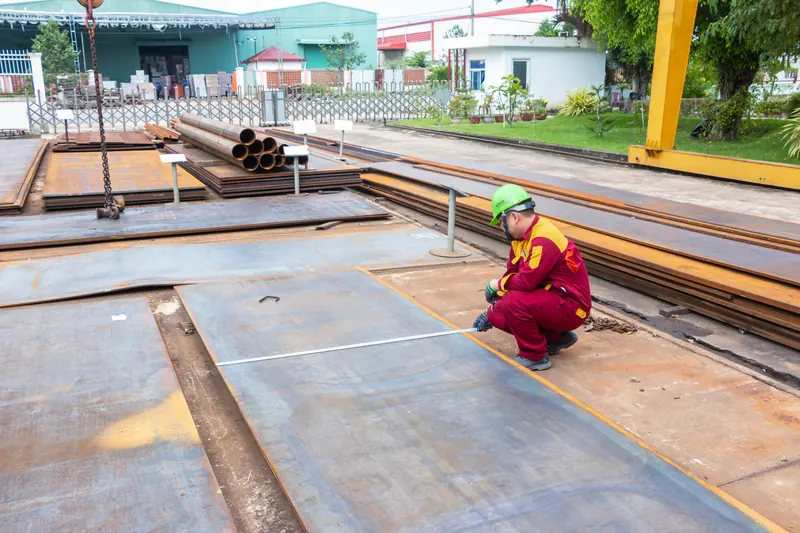
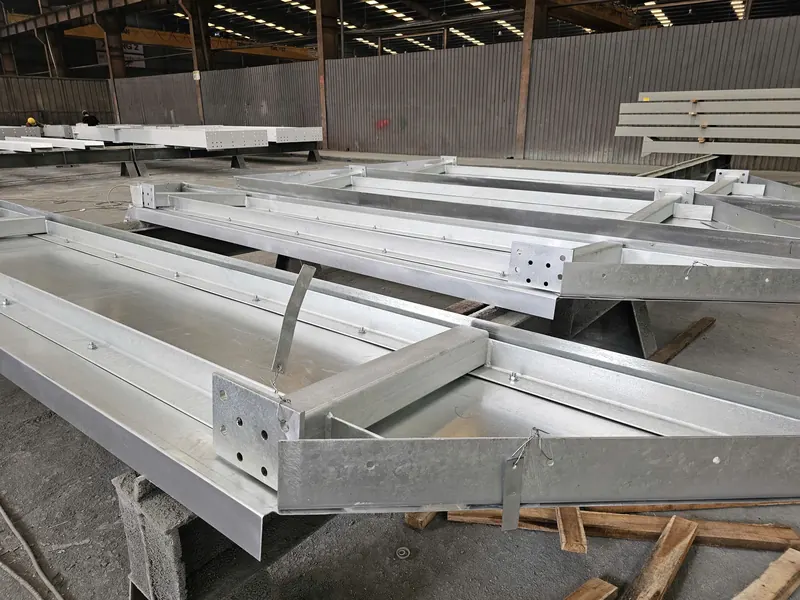
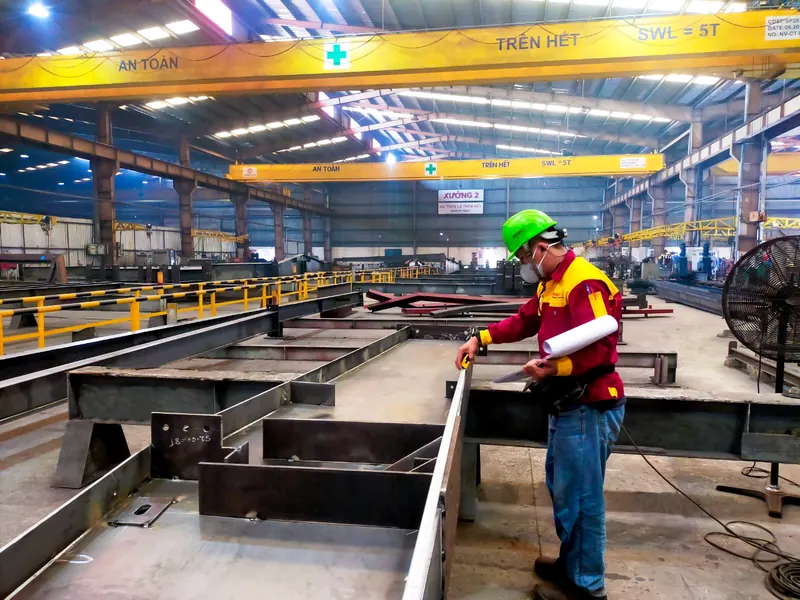
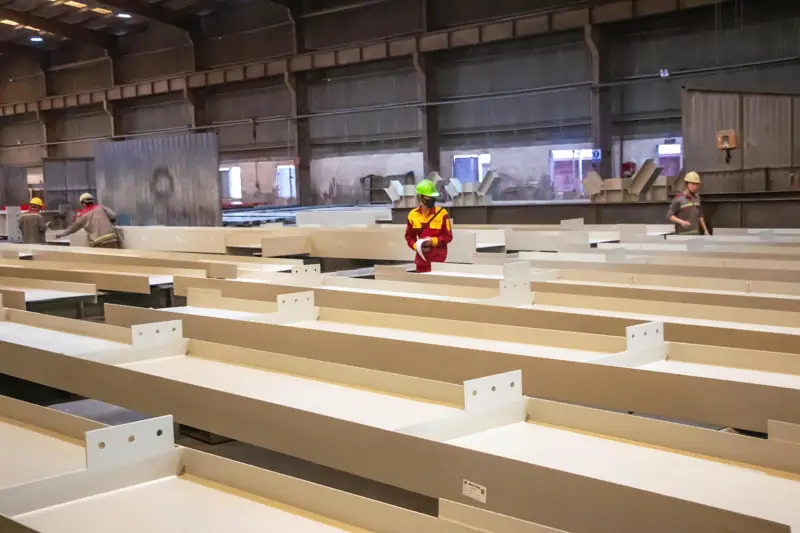
World Steel fabricates 2,500 metric tons of structural steel a month in its own IAS AC472-accredited plant in Vietnam. Weathering grades are not stock in every plate and shape size, so for A588 the sources are chosen per project: mainly Vietnamese mills, with Japan, Korea, Indonesia and Thailand when the grade, size or thickness calls for them. Availability is confirmed before shop drawings are released.
Each heat comes with an EN 10204 3.1 certificate showing the chemistry needed for a G101 corrosion index and any Charpy values your project asks for, and check tests run at an ILAC-recognized ISO/IEC 17025 laboratory or the laboratory you name. Drainage details, blast cleaning and matching bolts are shown on our shop drawings for your engineer's review. Our grades are listed on the structural steel materials page. Next in the series: F3125 structural bolt grades.
Quick answers
What is the yield strength of A588 steel?
345 MPa (50 ksi) for material up to 100 mm (4 in) thick, 315 MPa (46 ksi) over 100 to 125 mm (4 to 5 in) and 290 MPa (42 ksi) over 125 to 200 mm (5 to 8 in).
How much better does A588 resist corrosion?
ASTM A588 describes its atmospheric corrosion resistance as substantially better than carbon structural steel, approximately two times that of carbon steel with copper. Many specifications also ask for a minimum corrosion index under ASTM G101.
Can weathering steel be used near the sea?
Usually not bare. Chlorides from sea spray or de-icing salt prevent a protective patina from forming, so in coastal or salt-splash locations weathering steel is painted or another system is chosen.
What bolts go with weathering steel?
High-strength bolts with weathering characteristics, such as ASTM F3125 Type 3, with matching nuts and washers, so the connection weathers like the members.
Keep building your steel plan
Go further on USPEB.com
On this topic
Across the US market
- US codes and standardsIBC, AISC, AWS and MBMA, designed to
- Seismic steel structuresSDC D to F framing for West Coast jobs
- Crane building designUS crane standards for mill and bay buildings
- Design ReportWhat our US-code design report contains
- Large projects, 2,500 t a monthCapacity for large US general contractors
- Contractor partnershipLong-term supply for US contractors