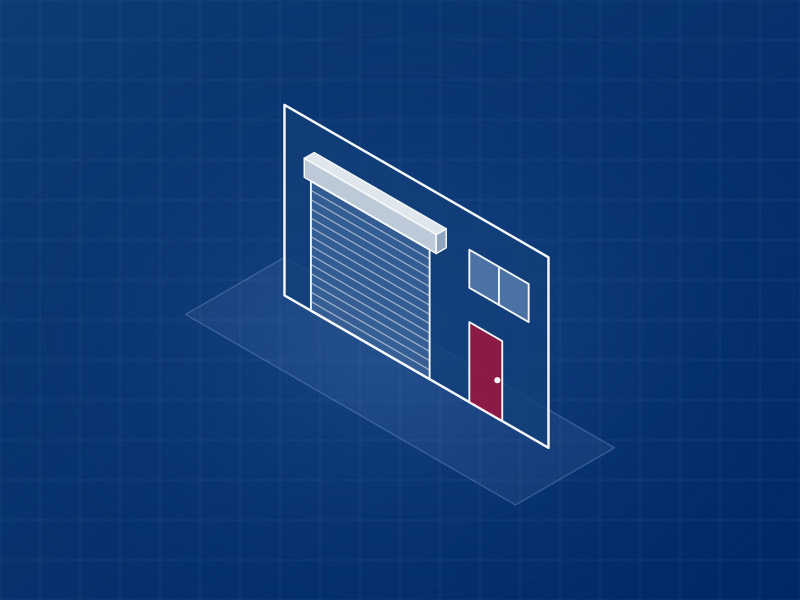
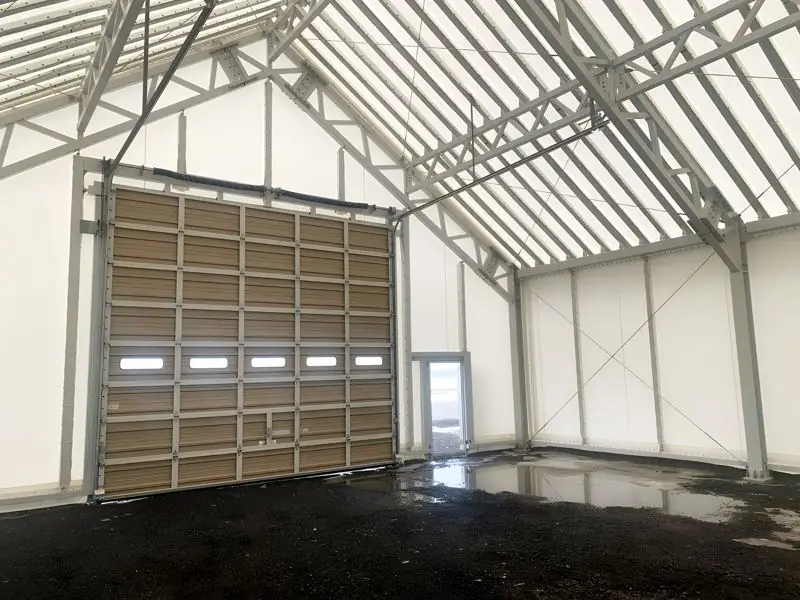
Overhead, roll-up and personnel doors, windows, louvers and skylights, with jambs and headers designed for the loads each door hands to the frame. We frame them in the same plant that fabricates 2,500 t of structural steel a month, so the openings of a large building arrive drawn, framed and ready.
Impact approval for doors in wind-borne debris regions
Inside windborne debris regions, glazed openings and doors need impact test evidence such as ASTM E1886 and E1996, or an approved protection system. We check this for each product and project.
Doors from partner makers, framed by us into the steel
The steel framing, trims and openings are made in our plant. Overhead and rolling doors come from partner manufacturers and are supplied by agreement with the steel.
Dozens of dock and drive-in doors framed on one building
Distribution centers with long door lines are standard work for the plant, which fabricates 2,500 t of structural steel a month and frames openings with the walls.
Large doors move the most wind into the frame. A door that blows in pressurizes the building and can overload the roof.
Jambs and header sized for the door’s wind reaction
Wind load data from the door maker
Track and spring finishes matched to the exposure
Roll-up doors
Compact coil doors for bays, storage units and service openings.
Hood and guide framing in the steel
Seals for wind-driven rain and blowing snow
Routine spring and roller maintenance
Personnel doors
Steel walk doors with hardware suited to the site exposure.
Framed openings with trims
Hardware finish matched to the exposure
Thresholds and sweeps for weather
Windows and louvers
Daylight and air through the walls, coordinated with girt lines.
Sill and head trims to the supplier’s sizes
Impact evidence where windborne debris rules apply
Louvers flashed to shed rain
Skylights
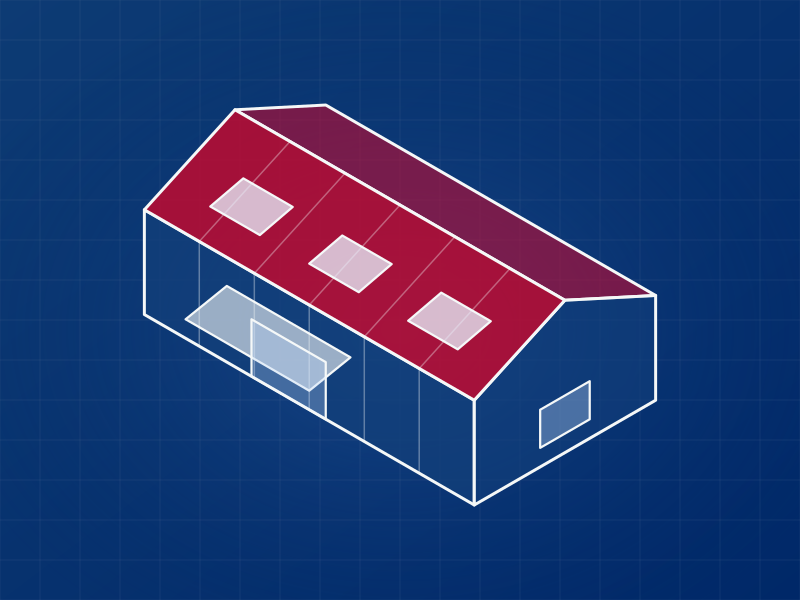
Daylight panels in the roof plane, laid out with the purlins.
Placed between purlin lines
Flashed with the roof panels
Fall protection planned by your team
US codes
How we engineer the openings
Wind pressure
A large door that blows in lets pressure build inside the building and can overload the roof, so door ratings and framing get early attention.
Windborne debris
Inside wind-borne debris regions, glazed openings and doors need impact test evidence such as ASTM E1886/E1996, or an approved protection system.
Corrosion resistance
Tracks, springs and hardware need finishes suited to the site exposure.
Weather sealing
Seals, sweeps and thresholds are chosen for wind-driven rain and blowing snow.
Maintenance
Springs, rollers and operators need routine inspection and lubrication.
Framing around the door
Jambs and headers are designed for the reactions each door transfers under wind load.
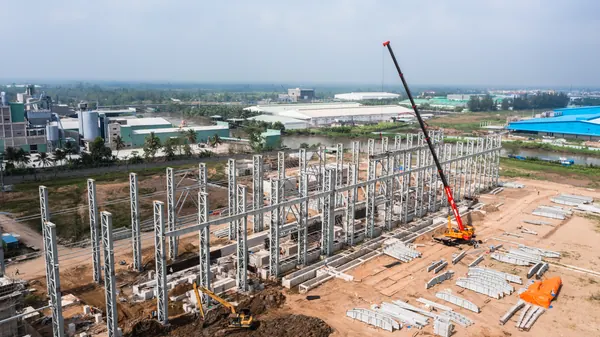
Large-project capacity
Openings on buildings this size are routine
World Steel fabricates 2,500 metric tons (about 2,750 short tons) of structural steel a month in its own IAS AC472-accredited plant in Vietnam, so the steel package of a large US job runs as one order.
Jambs and headers around each door and window take its wind reactions and pass them into the main frames.
Design limit: The frames cannot be finalized until the door supplier gives design pressures and reactions for each opening. · What gets checked: Measure clear opening sizes and check that jambs are plumb.
Jamb, head and sill trims close the cut edges of the wall panels around each opening.
Design limit: Trim profiles are agreed with the door manufacturer so the door seals land on a flat surface. · What gets checked: Hose test the openings where the specification calls for it.
Scope, in writing
What we supply and what stays with your team
World Steel, our plant in Vietnam
Framed openings, jambs, headers and trims designed in the steel
Doors, windows, louvers and skylights from partner makers, supplied by agreement
Shop drawings with every opening, its framing and trims, at no extra cost
The US contractor, our customer
Door and window approvals and impact evidence checked with your building department
Drawing approval, the PE seal and the permit with your Engineer of Record
Door installation, operators and electrical connections by licensed trades
Owner maintenance of springs, rollers and operators
Questions from US contractors
Doors and openings questions and answers
6 answers, grouped by topic.
Wind and approvals3 answers
Why do large doors matter so much in high wind?+
A large door that blows in lets pressure build inside the building, which adds to the roof uplift. Door wind ratings and the framing around them get attention early in design.
Do doors need impact approval?+
Inside windborne debris regions, glazed openings and doors need impact test evidence such as ASTM E1886 and E1996, or an approved protection system. We check this for each product and project.
Are door ratings guaranteed by World Steel?+
Door and window ratings come from their makers and are checked for each product and project, never assumed. World Steel designs the steel framing that carries the door’s loads.
Supply2 answers
Do you make the doors?+
The steel framing, trims and openings are made in our plant. Overhead and rolling doors come from partner manufacturers and are supplied by agreement with the steel.
Can openings be added after the design is done?+
Yes, before fabrication. Tell us early, because each opening changes girt layout and frame reactions on the shop drawings.
Large projects1 answer
Can you frame dozens of dock and drive-in doors?+
Yes. Distribution centers with long door lines are standard work for the plant, which fabricates 2,500 t of structural steel a month and frames openings with the walls.