Four kinds of load
What makes mining loads different
Heavy static loads
Bins full of ore, mills, thickeners and tanks put large, concentrated loads on floors and columns.
Impact
Material falling into chutes and pockets and trucks tipping into dump pockets hit the structure.
Vibration
Screens, crushers and feeders shake their supports at set frequencies, all day.
Crane loads
Heavy overhead cranes put vertical, lateral and longitudinal wheel loads into their runways.
Design approach
Strength, stiffness and fatigue in one model
We model the structure with the equipment loads, the load combinations of ASCE 7-22 and the dynamic factors in your design criteria. Members are checked for strength to AISC 360, for deflection and frequency where machines need it, and for fatigue to AISC 360 Appendix 3 where loads repeat. AISC Design Guide 7 for industrial buildings and crane runways, and Design Guide 11 for vibrations, are common references.
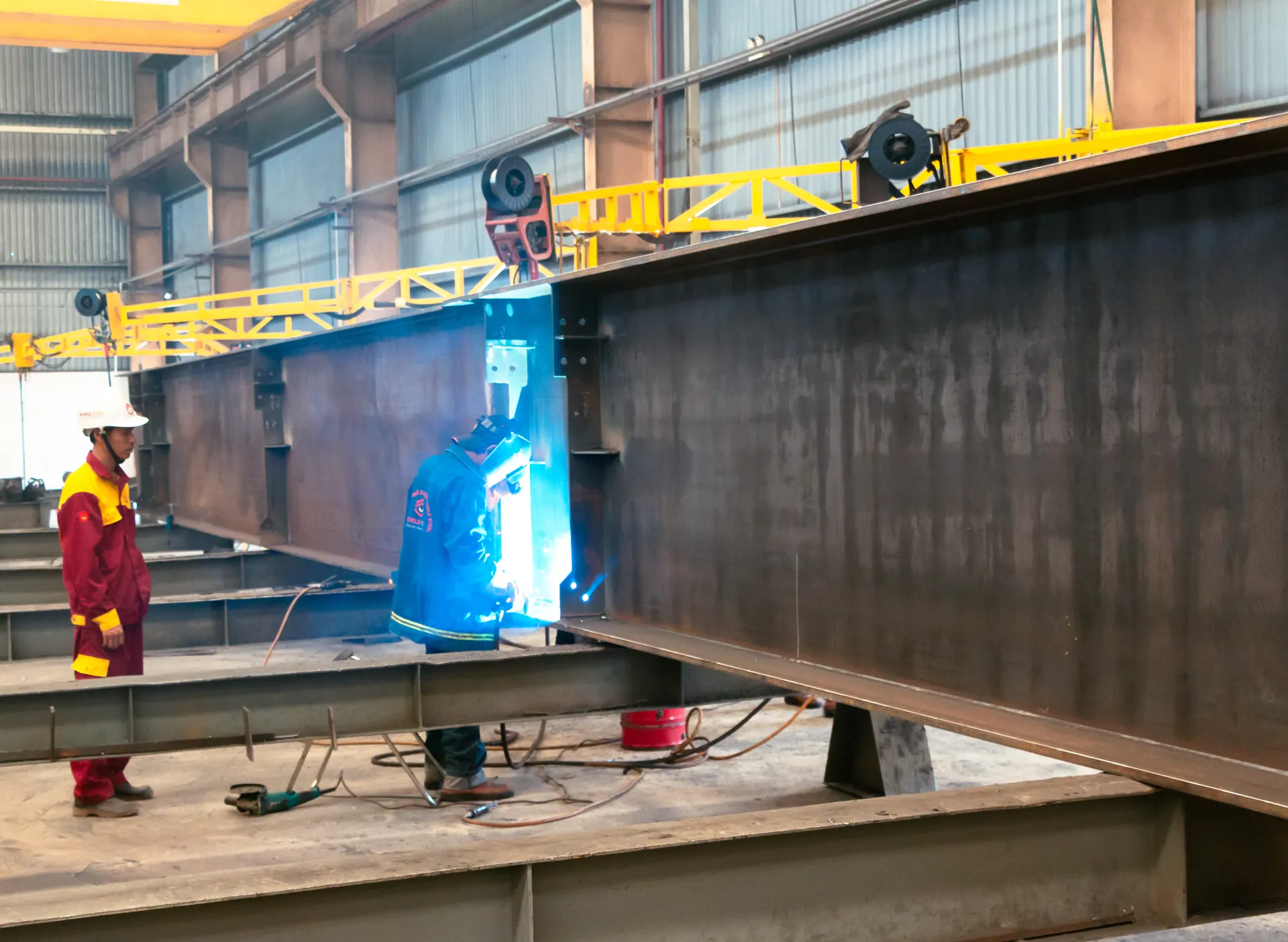
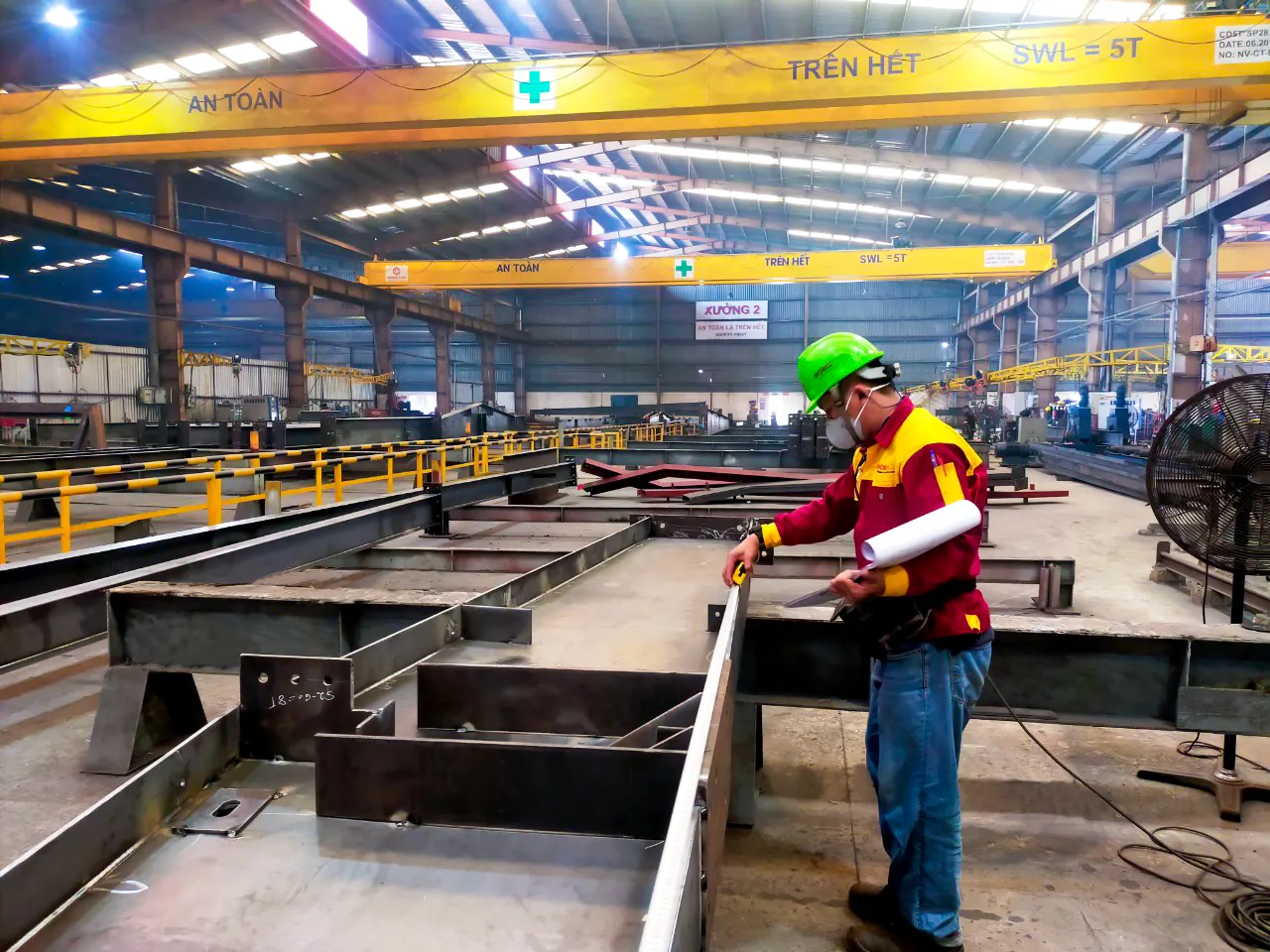
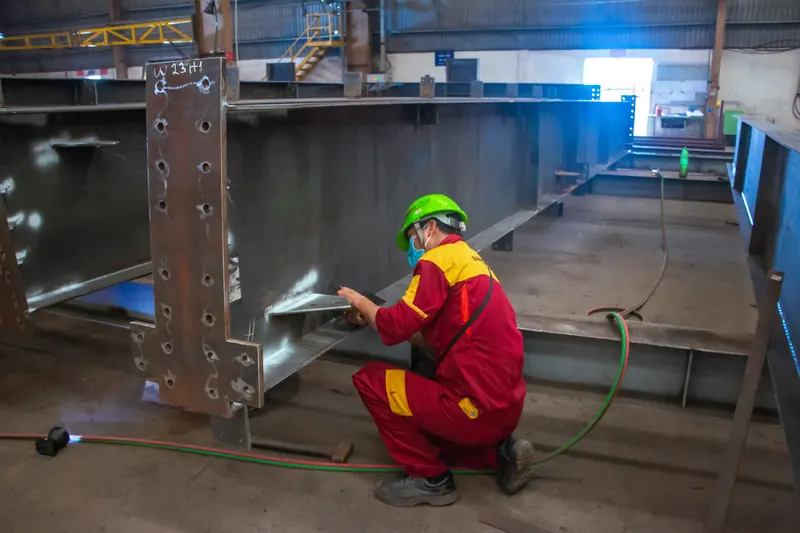
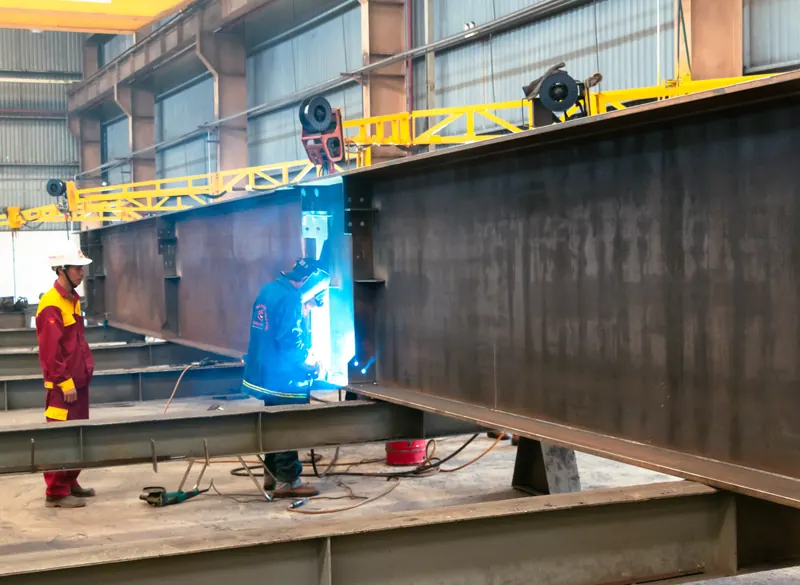
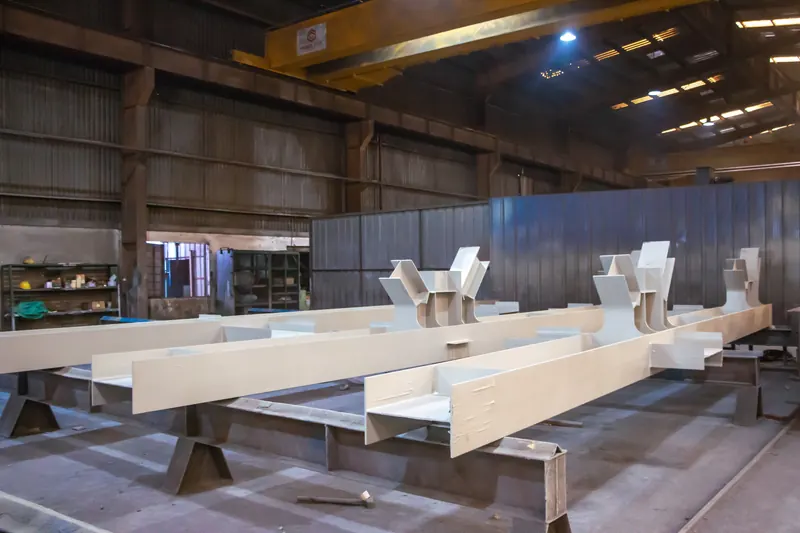
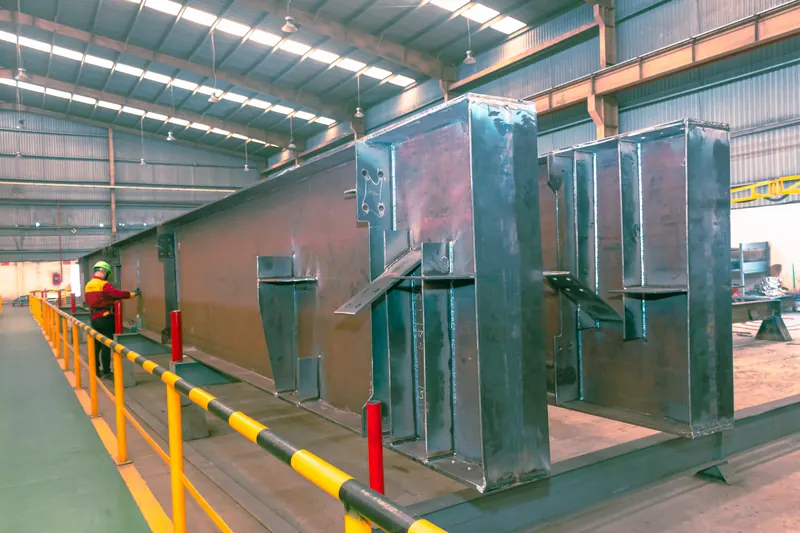
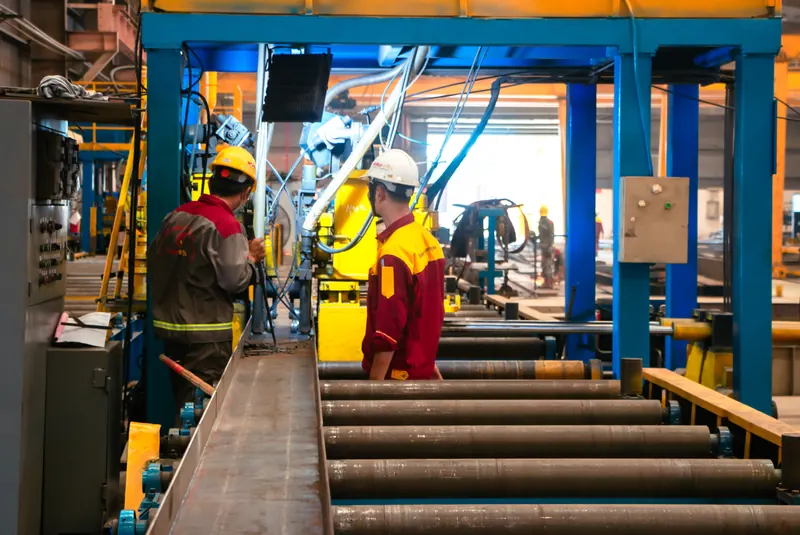
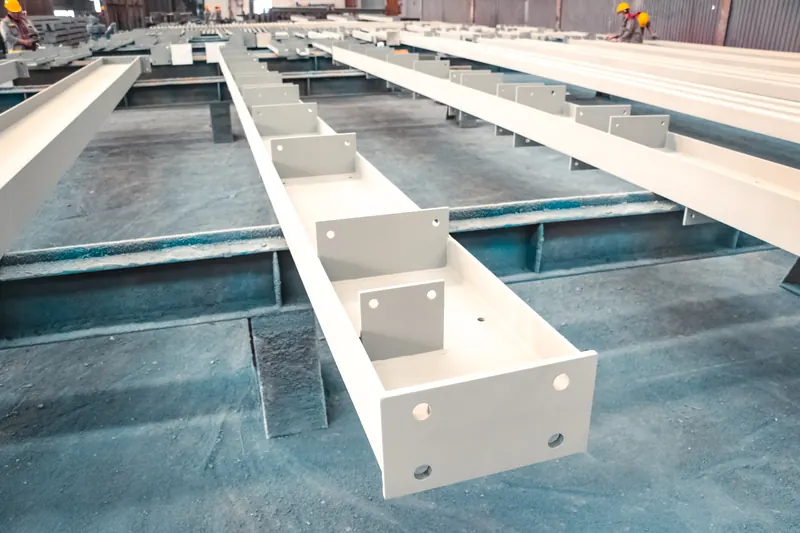
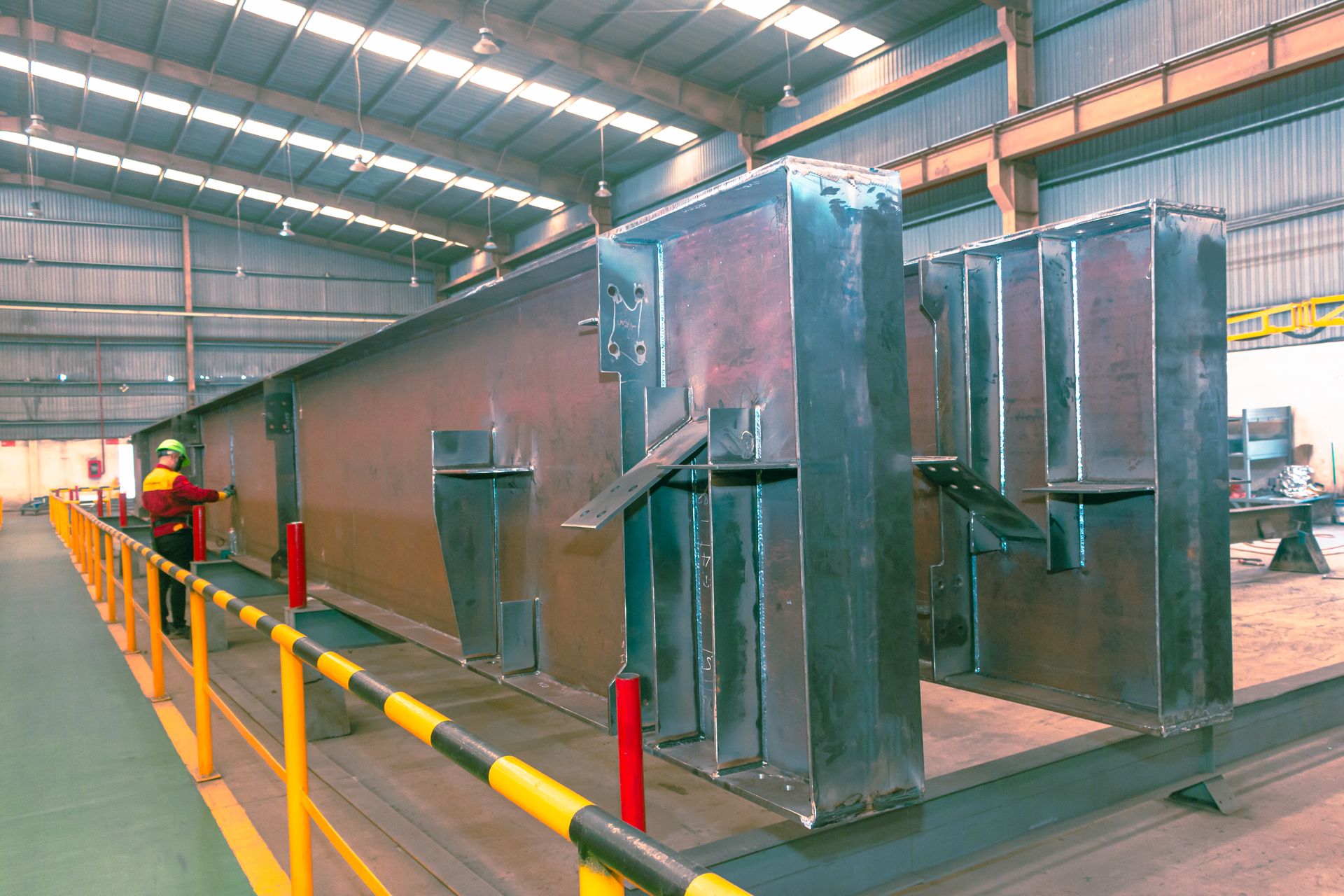
Heavy members are usually built up from plate in our plant: deep plate girders, heavy columns and stiffened beams with the flange and web sizes the load needs, rather than the next rolled shape up. Our automatic beam lines and submerged-arc welding stations are set up for that work.
Details that last
Fatigue-friendly details we prefer
| Detail | Why | Where |
|---|---|---|
| Continuous fillet or full-penetration welds | Better fatigue category than intermittent welds | Crane girders, screen supports |
| Smooth transitions in flange size | Avoids stress concentration at a step | Built-up girders and columns |
| Stiffeners clear of the tension flange | Keeps weld toes out of the highest stress range | Runway girders and heavy beams |
| Pretensioned bolted splices | Slip-critical joints carry cyclic loads well | Field splices to RCSC |
| Ground weld toes or caps | Raises fatigue resistance where specified | Highest stress range details |
In our shop
How we fabricate heavy, cyclic steel
-
Plate traced by heat
Plate and shapes from Vietnam mills with mill certificates, EN 10204 3.1 with Charpy values on request.
-
Welded to qualified procedures
AWS D1.1 procedures and welders, D1.8 where seismic provisions apply.
-
Inspected and tested
Visual inspection and the ultrasonic or magnetic particle testing your specification calls for.
-
Recorded
Results in the Manufacturing Data Record, visible in PEB Studio as each member is released.