
Where it sits in the US code stack
Where it governs in your building
ANSI/AISC 360-22, letter by letter
The chapters of the steel spec, and what each one checks in your frame
AISC 360 is organized by chapter letter. Red letters are the ones that size most of a metal building or a structural steel frame; the rest still apply wherever their members or joints appear.
Design requirements
LRFD or ASD, load combinations from ASCE 7, member classification for local buckling.
Design for stability
Second-order analysis with initial imperfections and reduced stiffness: P-delta in every frame we run.
Tension
Rod and angle bracing, hangers, tension ties; yielding and rupture at bolt holes.
Compression
Columns, struts and braces checked for flexural, torsional and local buckling.
Flexure
Rafters and beams: yielding, lateral-torsional buckling between flange braces, slender-web limits.
Shear
Thin webs of built-up members near supports and knees, with stiffeners where needed.
Combined forces
Axial load and bending together, checked at stations along every tapered column and rafter.
Composite members
Steel beams acting with a concrete slab on multi-story floors, when the design uses composite action.
Connections
Welds, bolts, end plates, base plates and concentrated forces on flanges and webs.
HSS connections
Joints in hollow structural sections: canopies, trusses and braces.
Serviceability
Deflection, drift, vibration and ponding: limits set to suit cladding, cranes and use.
Fabrication and erection
Cambering, cutting, holes, welding and erection tolerances: our plant follows it, your erector follows it on site.
Quality control and assurance
The QC program of the fabricator and erector and the QA by the owner's inspector.
14 answers from our engineers
AISC 360 questions and answers
Answers on how World Steel applies the AISC steel specification: design method, stability, tapered built-up members, connections, serviceability and the paperwork your reviewer receives.
Design method 4 answers
Which stability method do your calculations use?
Whichever AISC 360 method suits the frame, always with second-order effects. Your engineer will find it named in the calculation package.
What does the direct analysis method actually do?
It models the frame with small initial out-of-plumbness (or equivalent notional loads) and reduced stiffness, then runs a second-order analysis. The member checks can then use the actual length, without effective length factors. Chapter C sets it out.
Which software do you use for AISC 360 checks?
SAP2000 for the analysis and member checks, with our own checking sheets for tapered segments, and Tekla Structures for connections and detailing. The calculation package shows inputs and results, not just pass or fail.
Does AISC 360 apply to cold-formed purlins and girts?
No. AISC 360 covers hot-rolled and built-up structural steel. Thin cold-formed members such as Z purlins and C girts are designed to AISI S100, which the IBC names alongside it.
Members and tapered frames 4 answers
How are tapered members checked when AISC 360 is written for uniform ones?
The specification's equations are applied station by station along the member, with stability handled through the analysis model. AISC Design Guide 25 sets out the accepted way to do it, and our checks follow that guide.
What is lateral-torsional buckling, and how do you prevent it?
A deep beam bending one way can twist and buckle sideways if its compression flange is not held. On metal buildings the inside flange goes into compression under uplift, so we place flange braces from purlins and girts where the analysis needs them.
Why do some of your webs have stiffeners and others do not?
Thin webs save steel, but near supports, knees and concentrated loads they may need stiffeners for shear or local crippling under Chapters G and J. We add them only where the check calls for them.
Which steel grades do you design with?
The grades your specification calls for, typically ASTM A572 Grade 50 plate for built-up members and A992 for rolled wide-flange shapes. The material schedule lists the grade of every part.
Connections 3 answers
Which connection types does World Steel design to AISC 360?
Bolted end-plate moment connections at knees and ridges, shear tabs and clip angles, bolted bracing connections, base plates and anchorage, crane brackets and, on multi-story frames, beam-to-column and splice connections. Field joints are bolted.
Does AISC 360 cover bolt pretension?
It references the RCSC Specification for high-strength bolts, which sets when a joint is snug-tight, pretensioned or slip-critical and how the bolts are installed. We label the joint type of every bolt group on the erection drawings.
Who checks the concrete side of a base plate?
We size the base plate, anchor rods and their tension and shear from AISC 360 and give the reactions. Embedment and the concrete breakout checks under ACI 318 belong to your foundation engineer.
Serviceability and records 3 answers
What deflection limits do you use?
The ones your Engineer of Record sets, or limits suited to the cladding, ceilings, doors and any crane where they leave it to us. Chapter L requires that serviceability be checked; the numbers are a design decision we write on the drawings.
Does World Steel hold an AISC fabricator certification?
No. The credential we hold for US work is IAS AC472 accreditation of our design office and plant, a program IBC Chapter 17 recognizes for metal building manufacturers. AISC 360 is still the specification our engineers design your steel to.
What do we receive to show the design meets AISC 360?
A calculation package with the design criteria, the analysis model summary, member and connection checks with their governing load combinations, and the drawings that match. It is ready for your Engineer of Record's review and approval.
More answers on every US code we design to: search all standards questions.
Limit states
Limit states our engineers verify in your frame
| Check | Where it bites | Our approach |
|---|---|---|
| Stability analysis | Slender frames and tall columns | P-delta effects included, via notional loads or stiffness reduction |
| Flexural buckling | Columns and struts | Unbraced lengths read from the actual bracing layout |
| Lateral-torsional buckling | Rafters under uplift or lopsided snow | Flange braces located where the analysis calls for them |
| Local buckling | Slender webs and broad flanges on built-up members | Width-to-thickness checked at stations along each taper |
| Combined forces | Knees, rafters and columns | Axial-bending interaction at every station |
| Connections | End plates, bracing and base plates | Limit states for bolts, welds and plates |
Why tapered built-up frames
Putting steel where the bending is
Depth follows moment
Plate frames grow deep where moment peaks at the knee and slim down toward midspan.
Less to ship
Lighter frames mean fewer containers leaving Vietnam for the same building.
Factory-made seams
Automated submerged arc lines weld the web to the flanges, and the welds are inspected before the frame ships.
Many check points
A tapered section changes every few feet, so the code checks are repeated station after station along the member.
References
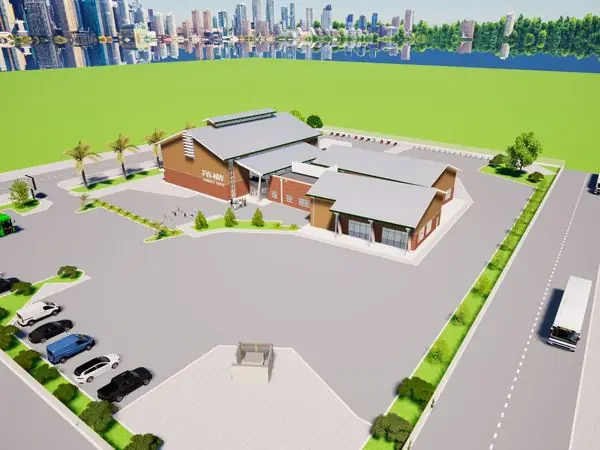
World Steel buildings designed to US codes
Who does what under AISC 360
Design, fabrication, erection and assurance, each with an owner
AISC 360 covers more than member design: Chapter M sets fabrication and erection requirements and Chapter N splits quality control from quality assurance. Here is who holds each part on a World Steel job.
World Steel
- Designs members and shop connections to AISC 360 with a second-order analysis
- Locates flange braces and bracing where the analysis needs them
- Fabricates to the shop requirements of Chapter M
- Runs the fabricator quality control of Chapter N and keeps the records by piece mark
US contractor and Engineer of Record
- Approve the design criteria, calculations and drawings
- Erect the frame and keep temporary bracing until the permanent bracing is in
- Make the field bolted connections to the drawings
- Resolve field fit-up questions with our engineers in writing
Owner's inspector and building official
- Carry out the quality assurance tasks of Chapter N
- Decide on special inspection of shop work under IBC Chapter 17
- Witness hold points at the plant or over video
What a reviewer looks for
Six AISC 360 checks a reviewer looks for, and where they sit in our calculations
A reviewer reading a metal building package has limited time. Each of these checks has a fixed place in our calculations, so it can be found and confirmed quickly.
| The reviewer checks | Where it comes from | What our package shows |
|---|---|---|
| The stability method | AISC 360 Chapter C | The method is named on the first pages, with notional loads or stiffness reduction stated and second-order effects included. |
| Rafter bracing under uplift | AISC 360 Chapter F | Flange brace locations on the drawings match the brace points used in the lateral-torsional buckling checks. |
| Slender webs on tapered members | AISC 360 Table B4.1 | Width-to-thickness ratios checked at stations along each taper, with slender elements flagged and designed for. |
| Axial force and bending together | AISC 360 Chapter H | Interaction ratios at every station of knees, rafters and columns, with the governing ratio reported per member. |
| Connection limit states | AISC 360 Chapter J | Bolt shear and bearing, weld strength, block shear and end-plate bending for each typical connection. |
| Drift and deflection | AISC 360 Chapter L | The serviceability limits agreed in the design criteria, and the computed drift and deflection against each one. |
In your submittal file
The AISC 360 records behind every frame we ship
From the member checks to the shop quality control, each record is issued for your team and posted in PEB Studio.
-
Member check summary
Governing ratio and limit state for every member, station by station along tapered members.
How the design report reads -
Connection calculations
End plates, base plates and bracing connections checked to Chapter J.
Structural connections -
Shop drawings
Each member with its plates, welds and holes, approved by your team before cutting.
Shop drawing coordination -
Quality control records
Material, fit-up, weld and dimensional checks under Chapter N, filed by piece mark.
Weld inspection and NDT
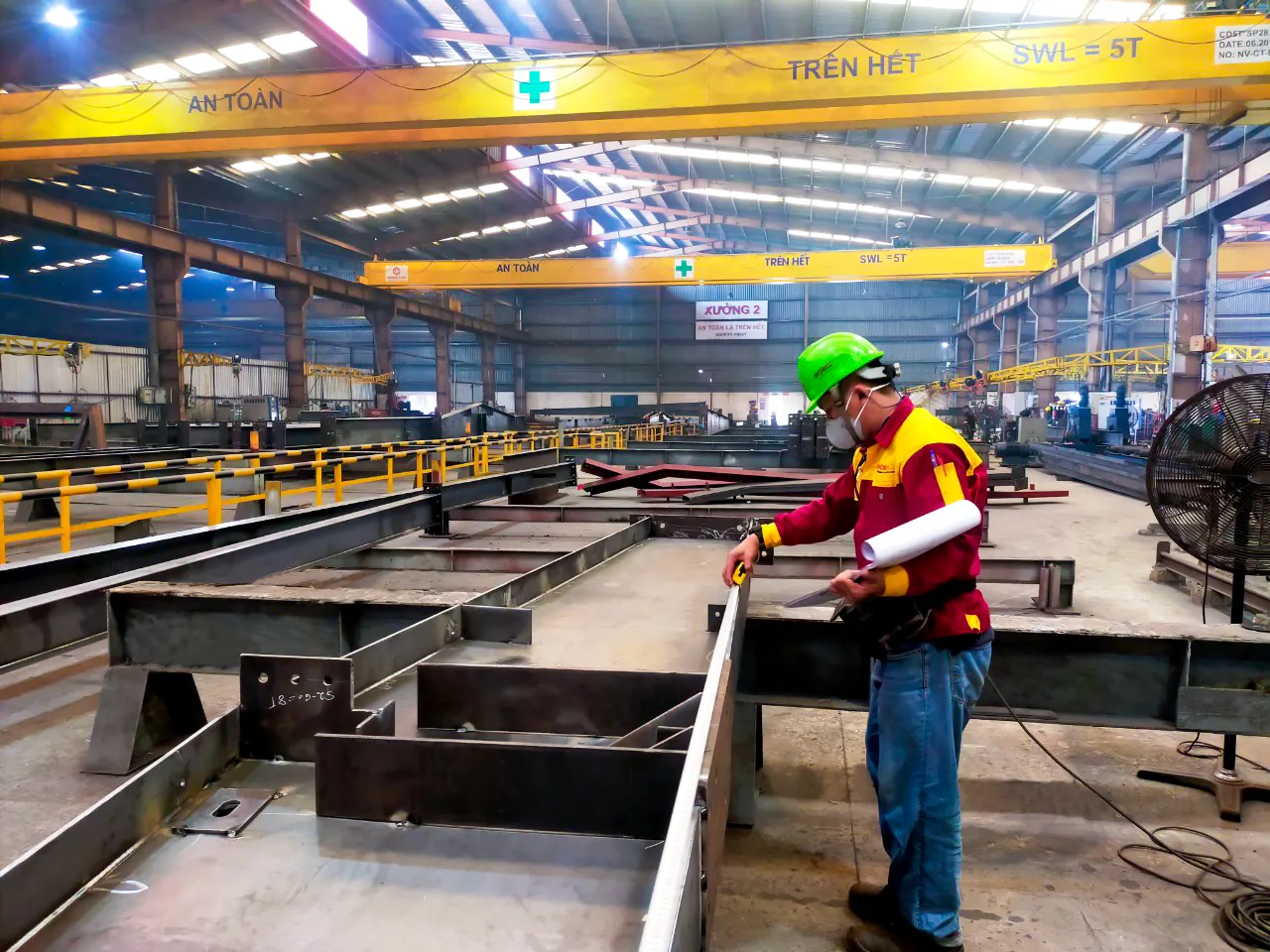
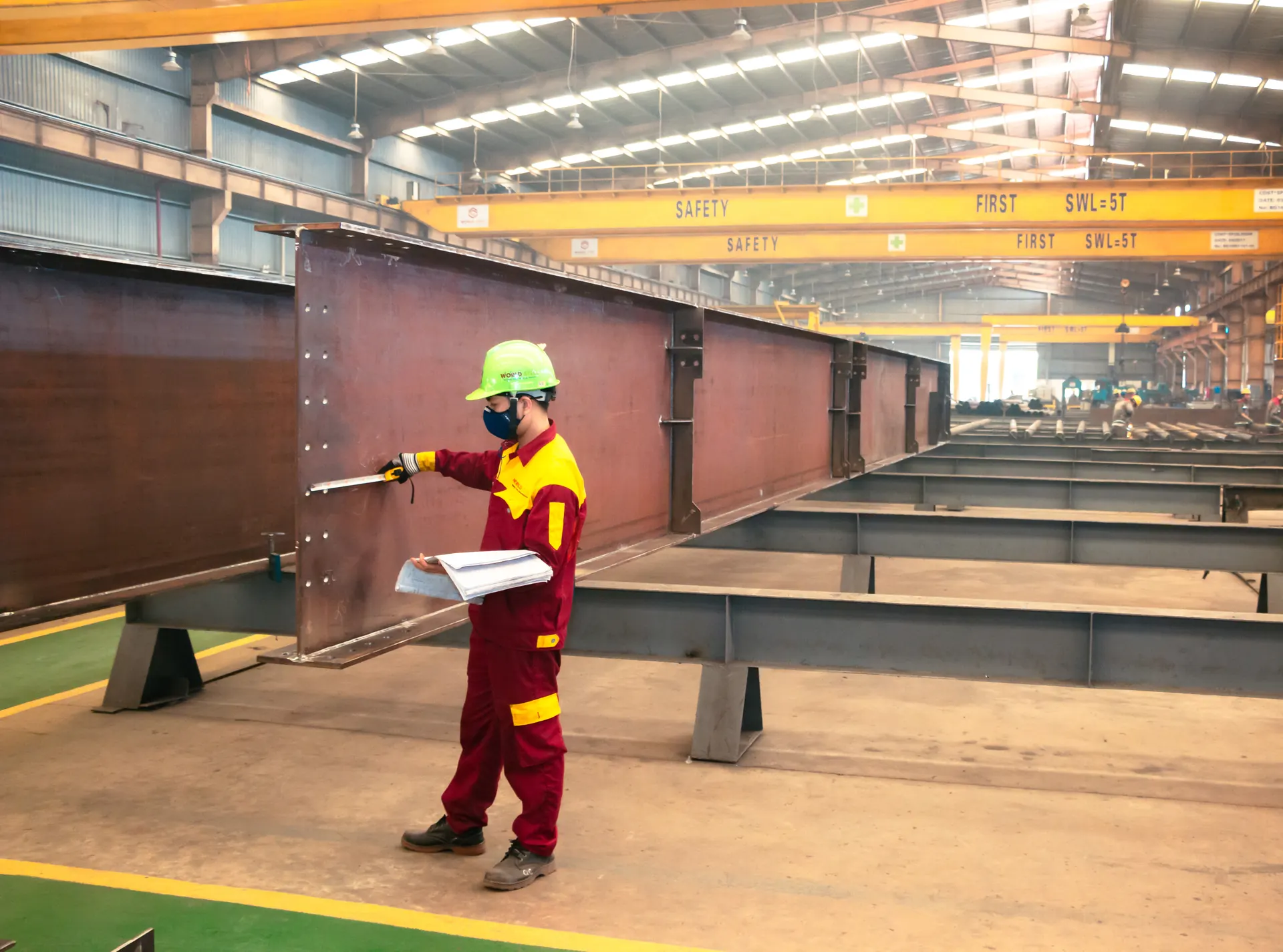
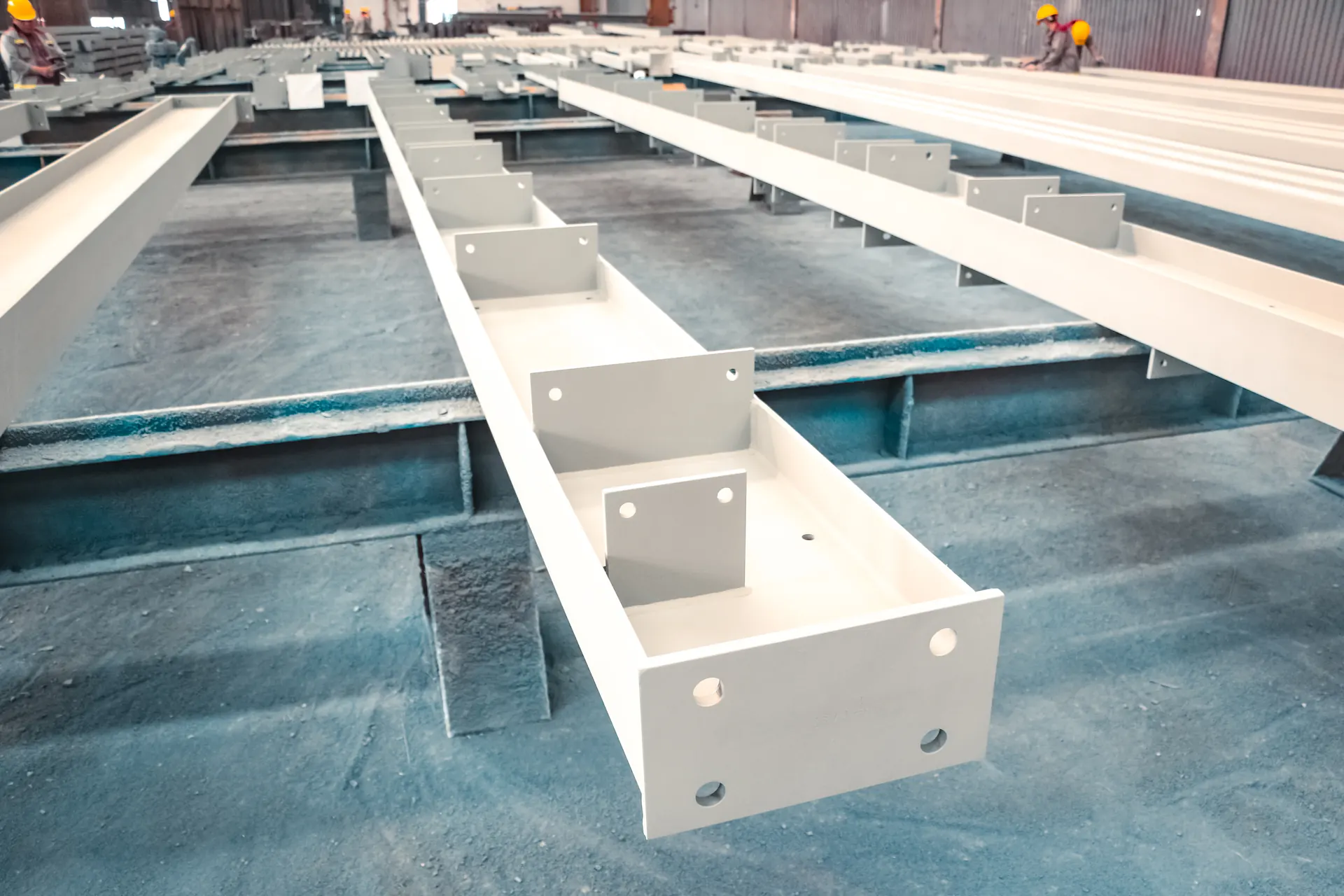
Real photos from World Steel
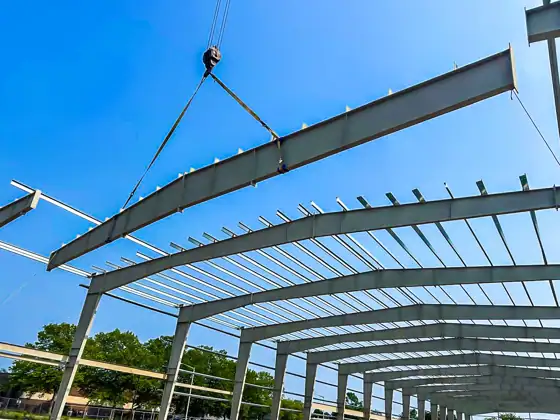
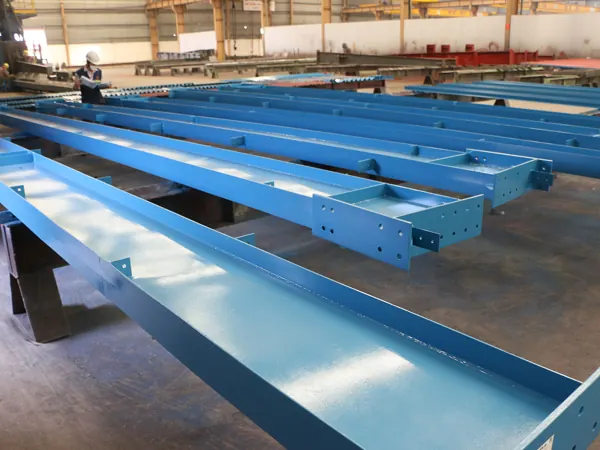
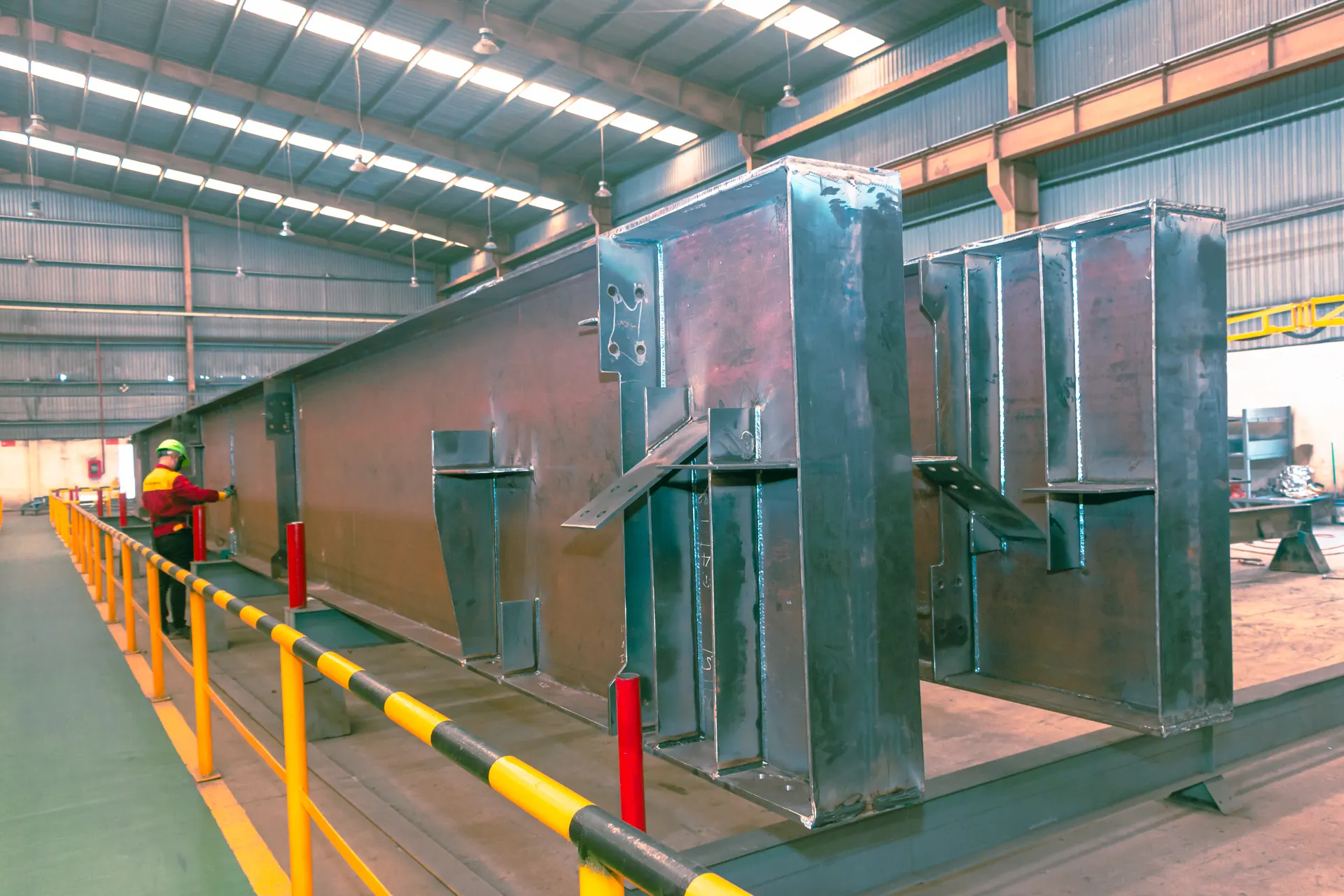
Members checked to AISC 360, then built to the drawing
Photographed in our own plant in Tay Ninh Province, Vietnam, and on World Steel jobs. Not stock images.
AISC 360 never works alone
The standards and guides it works with
Each link opens the full page, with its own questions and answers.
Who does what
World Steel designs, fabricates and supplies the steel structure from its own plant in Vietnam. The US contractor, our customer, erects it, has the drawings approved and sealed by their Engineer of Record and pulls the permit.
Details confirmed in quote Edition: AISC 360-22 (referenced by IBC 2024)
Source record: https://worldsteelgroup.com/about/certifications/
Last checked: November 8, 2026. Editions change on a cycle, so your Engineer of Record confirms which one your jurisdiction enforces.
All US codes & standardsWant your steel frame checked to AISC 360-22?
Send drawings or a footprint with loads. Our engineers design every member and connection to the specification and send calculations your Engineer of Record can follow line by line.