
The code stack
Six questions every US building department asks, and the standard that answers each
Read top to bottom: each layer takes its numbers from the one above it. Pick any standard to see what it asks of a steel building and exactly how World Steel meets it.
-
Adopted building code
Who has authority?
Your state, county or city adopts a model code and amends it. That code, not a catalog, sets the rules for your permit.
-
Design loads
What forces must it resist?
The adopted IBC sends every load to ASCE 7: dead, live, snow, rain, wind, earthquake and, from the 2022 edition, tornado for some buildings.
-
Steel design specifications
How is each member sized?
Hot-rolled and welded plate members are checked to AISC 360, seismic systems to AISC 341, purlins and girts to AISI S100. Metal building practice and AISC design guides fill in the details.
-
Fabrication standards
How is it made and joined?
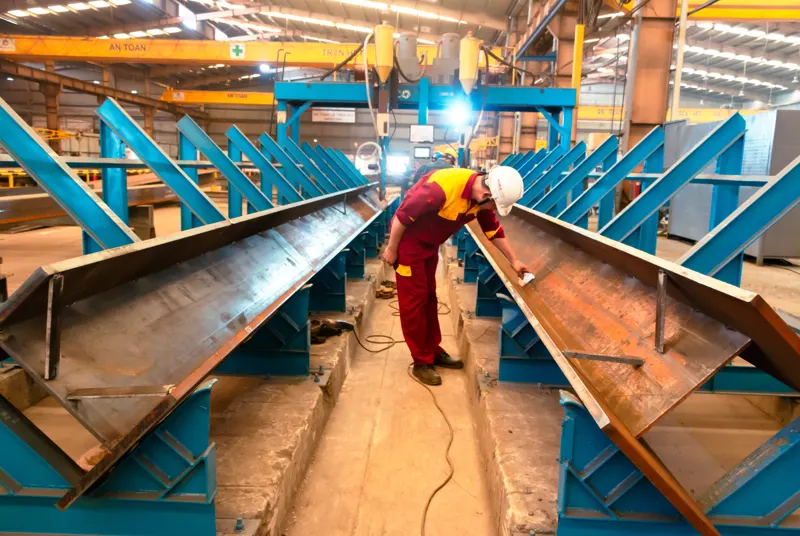
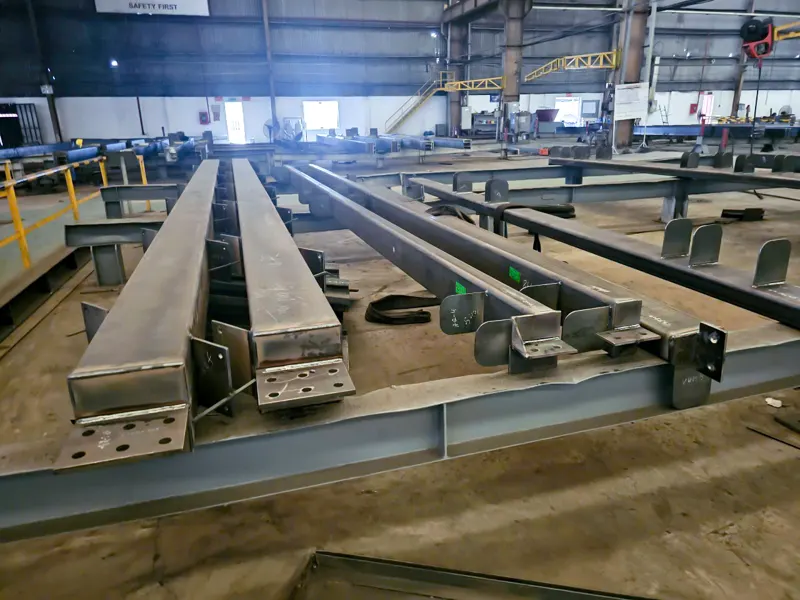
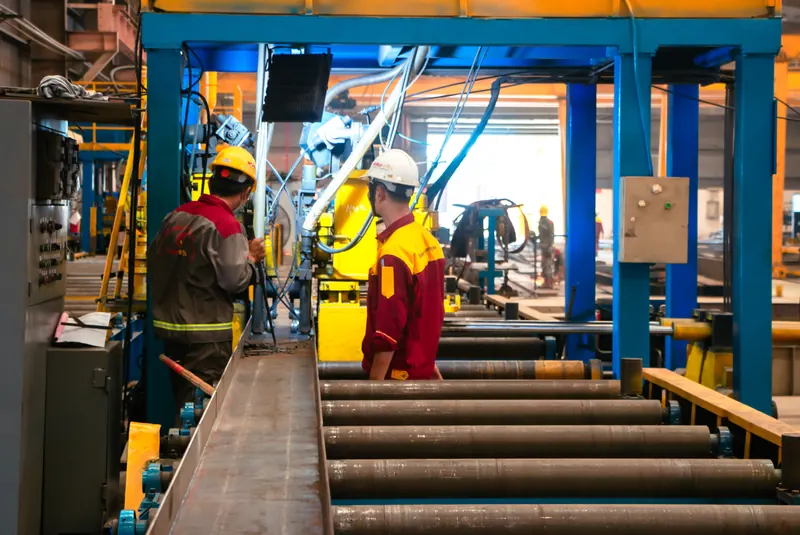
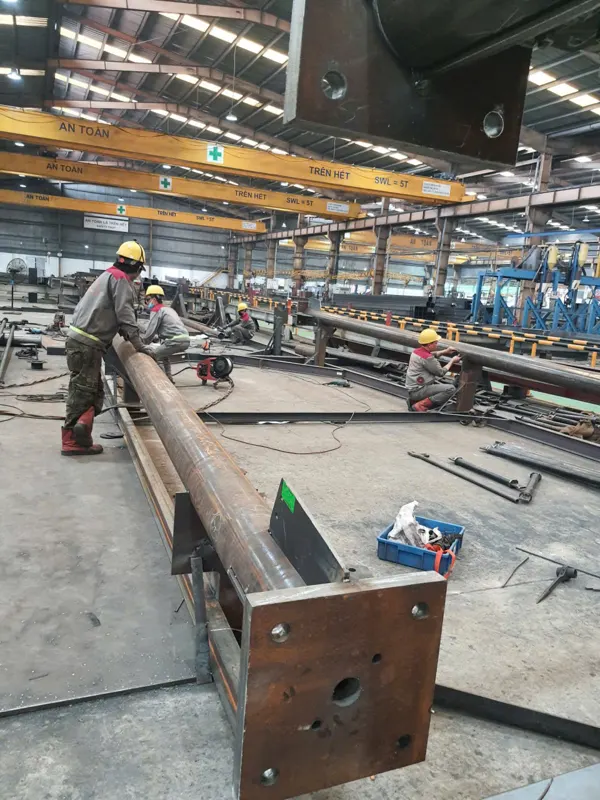
Welds follow AWS D1.1 for structural steel and AWS D1.3 for sheet steel, with the AWS D1.8 seismic supplement added for welds in an AISC 341 seismic system. Bolted joints follow RCSC, and every grade is an ASTM grade backed by a mill certificate.
-
Inspection, approval and seal
Who checks and signs?
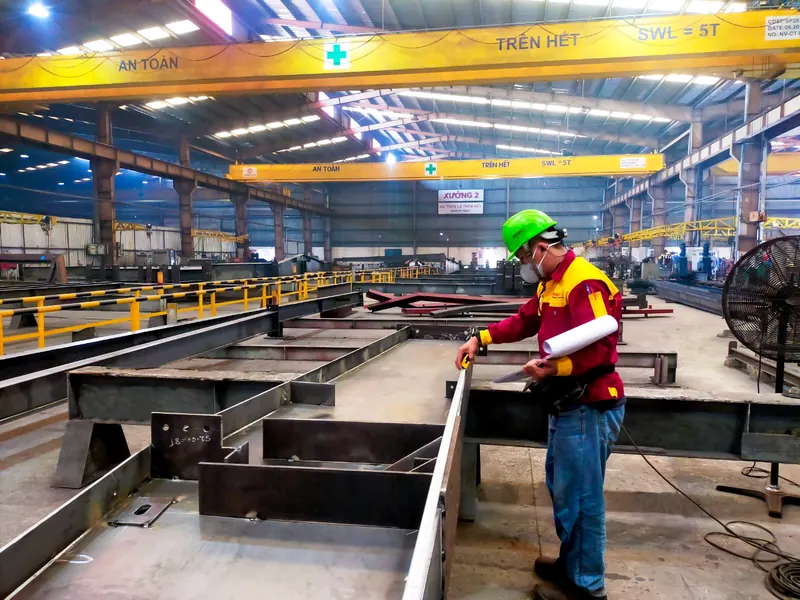
IBC Chapter 17 decides what gets special inspection. IAS AC472 accreditation lets your building official recognize our plant, and your Engineer of Record approves the drawings.
-
Import, delivery and records
How does it reach your site?
Steel made in Vietnam enters the US under the import rules in force, ships in erection order and arrives with its records. You follow every member live in PEB Studio.
All standards, by discipline
37 codes, standards and methods behind a World Steel building
Each card names the edition we work to by default and how we apply it. The badge shows how the claim is backed: verified against a public record, or confirmed in writing in your quote.
Building codes & adoption
The legal frame: which model code applies, as amended where your building stands.
State & Local Codes
Details confirmed in quoteState and Local Building Code Adoption
Edition: Varies by state and jurisdiction; confirmed per project
The IBC is a model code: it has no force until a state, county or city adopts it, often years after publication and usually with local amendments. Some states adopt one c...
Read the State & Local Codes page →11 Q&AIBC
VerifiedInternational Building Code
Edition: 2024 (latest edition)
Every state builds its commercial code on the IBC. For a steel building, three chapters do most of the work: 16 brings in ASCE 7 loads, 22 brings in the AISC and AISI ste...
Read the IBC page →15 Q&AIEBC
Details confirmed in quoteInternational Existing Building Code
Edition: The edition adopted with your IBC
The ICC code for work on buildings that already stand: additions, alterations, repairs and changes of occupancy. It decides how much of the existing structure has to be c...
Read the IEBC page →14 Q&A Not sure which edition applies? Send the site address. An engineer confirms the adopted code and its amendments before any member is sized. Ask an engineer →Loads & site conditions
The forces your frame, purlins and anchor rods must carry at your exact coordinates.
ASCE 7
VerifiedMinimum Design Loads and Associated Criteria for Buildings and Other Structures
Edition: ASCE 7-22 (referenced by IBC 2024)
The US load standard for dead, live, snow, rain, wind, seismic and, since the 2022 edition, tornado loads on certain buildings. Frames and cladding are checked against se...
Read the ASCE 7 page →15 Q&AASCE 7 wind
High-wind steel buildings
Exposure, pressure zones and enclosure, checked for frames and for cladding separately.
Read the guide →ASCE 7 snow
Snow load steel buildings
Ground snow, drift at steps and parapets, and rain-on-snow for northern and mountain sites.
Read the guide →FBC / ASCE 7
Hurricane coast buildings
Hurricane-prone and wind-borne debris regions, opening protection planned from day one.
Read the guide → Not sure which edition applies? Send the site address. An engineer confirms the adopted code and its amendments before any member is sized. Ask an engineer → See it part by part Which standards govern each frame, purlin, bolt and panel we fabricate. Open the map →Steel design
The specifications every member and connection is checked against, from rafter to purlin clip.
AISC 360
Details confirmed in quoteSpecification for Structural Steel Buildings
Edition: AISC 360-22 (referenced by IBC 2024)
The American specification that governs strength and stability checks for structural steel members and their connections.
Read the AISC 360 page →14 Q&AAISC 341
Details confirmed in quoteSeismic Provisions for Structural Steel Buildings
Edition: As referenced
Extra member, connection, welding and material rules for steel systems expected to yield in a strong earthquake.
Read the AISC 341 page →28 Q&AAISI S100
Details confirmed in quoteNorth American Specification for the Design of Cold-Formed Steel Structural Members
Edition: As referenced
How light-gauge steel is designed, which in a metal building means the roof purlins, wall girts and eave struts.
Read the AISI S100 page →14 Q&AMBMA
Details confirmed in quoteMetal Building Systems Manual
Edition: Current edition, as your specification names
The US industry reference for pre-engineered metal buildings: how code loads are applied to a metal building, collateral and crane loads, serviceability guidance, and the...
Read the MBMA page →14 Q&AAISC DG
Details confirmed in quoteAISC Design Guides 7 and 25
Edition: Current editions, as your Engineer of Record accepts
AISC Design Guide 7 covers industrial buildings, crane runways and their columns; Design Guide 25 covers frame design with web-tapered members, the backbone of a pre-engi...
Read the AISC DG page →14 Q&A Not sure which edition applies? Send the site address. An engineer confirms the adopted code and its amendments before any member is sized. Ask an engineer →Welding, bolting & materials
What happens on our shop floor in Vietnam, and the records your reviewer can ask for.
AWS D1.1
Details confirmed in quoteStructural Welding Code — Steel
Edition: Per project specification
The American welding code for structural steel: how procedures are written and proven, how welders qualify and how welds are inspected. Sheet steel falls under AWS D1.3.
Read the AWS D1.1 page →14 Q&AAWS D1.3
Details confirmed in quoteStructural Welding Code — Sheet Steel
Edition: Per project specification
The American welding code for structural sheet steel up to 4.8 mm (3/16 in) thick: arc spot and arc seam welds, fillet and flare-groove welds on cold-formed members and d...
Read the AWS D1.3 page →11 Q&AAWS D1.8
Details confirmed in quoteStructural Welding Code — Seismic Supplement
Edition: AWS D1.8/D1.8M:2021, as referenced by AISC 341-22
The supplement to AWS D1.1 for welds in seismic force-resisting systems designed to AISC 341: notch-tough filler metal, demand-critical welds, weld access holes, backing...
Read the AWS D1.8 page →14 Q&ARCSC
Not yet verifiedSpecification for Structural Joints Using High-Strength Bolts
Edition: As referenced by AISC 360
Sets the rules for installing, pretensioning and inspecting high-strength bolted joints.
Read the RCSC page →14 Q&AASTM
Not yet verifiedASTM Material Standards
Edition: Per specification
The material standards a US steel specification usually names: A992, A572, A36 and A6 for structural steel, A653 and A1011 for strip, F3125 for bolts, F1554 for anchor ro...
Read the ASTM page →14 Q&AConnections
Details confirmed in quoteStructural Connections
Knee and ridge end plates, brace gussets and base plates: the joints that turn separate members into one frame.
Read the Connections page →11 Q&APedestrian bridges
Footbridges, trail bridges and station links follow AASHTO and the bridge owner, not the IBC.
AASHTO Pedestrian Bridges
Details confirmed in quoteLRFD Guide Specifications for the Design of Pedestrian Bridges
Edition: As the bridge owner specifies, with the AASHTO LRFD Bridge Design Specifications
The AASHTO guide specification for bridges that carry people, bicycles and light maintenance vehicles: pedestrian live load, vehicle loads where vehicles can get on, vibr...
Read the AASHTO Pedestrian Bridges page →17 Q&AFootbridges
Pedestrian bridges for US contractors
Truss footbridges fitted up in our plant, shipped in bolted segments and lifted in one closure.
Read the guide →Trail bridges
Trail and park bridges
Light steel bridges for trails and parks, often with a maintenance vehicle on the deck.
Read the guide → Not sure which edition applies? Send the site address. An engineer confirms the adopted code and its amendments before any member is sized. Ask an engineer →Surface preparation & coatings
How the steel is cleaned, coated, measured and inspected in our paint shop before it ships.
SSPC
Details confirmed in quoteSSPC Surface Preparation and Coating Application Standards
Edition: The editions your coating specification names
The US standards for cleaning steel before it is painted and for checking the paint once it is on: solvent, hand-tool, power-tool and abrasive blast cleaning grades from...
Read the SSPC page →17 Q&AAMPP
Details confirmed in quoteAMPP Coating and Corrosion Standards (formerly NACE and SSPC)
Edition: The editions your coating specification names
The body that now publishes the SSPC and NACE coating standards, including the joint surface preparation standards such as SSPC-SP 10/NACE No. 2, and runs the coating ins...
Read the AMPP page →16 Q&AASTM A123
Hot-dip galvanizing
Zinc inside and out after fabrication, with SSPC-SP 16 preparation when a duplex paint system goes on top.
Read the guide →SSPC-PA 2
Coating inspection
Climate, cleanliness, profile and dry film thickness checked and recorded for every coat.
Read the guide →UL 263 · ASTM E119
Structural steel fire protection
Listed fire coatings over a primer the fire coating maker accepts, with thickness by piece mark.
Read the guide →Shop checkpoint
Surface preparation and coating inspection
The hold points your coating inspector can witness, from solvent cleaning to the last coat.
Read the guide →Envelope, energy & durability
The roof, walls and coatings that keep the steel dry and the building inside the energy code.
IECC / ASHRAE 90.1
Energy code building envelopes
Insulation, thermal blocks and air sealing sized for your climate zone and code path.
Read the guide →ASTM A123 / ISO 12944
Coastal corrosion protection
Galvanizing or paint chosen for the exposure, from inland dry to coastal salt and de-icing salt.
Read the guide →Bolts to anchor rods
Connections & load path
One continuous path from roof screw to anchor rod, so uplift and lateral loads reach the foundation.
Read the guide → Not sure which edition applies? Send the site address. An engineer confirms the adopted code and its amendments before any member is sized. Ask an engineer →Inspection, approval & documents
How the work is approved, sealed, drawn and proven before it leaves the plant.
IAS AC472
Metal building systems accreditation
Parts A and C, current to August 1, 2027. Your building official decides how it applies to shop special inspection.
Read the guide →Design package
Steel building design
Calculations and drawings to US codes, ready for your Engineer of Record's review and approval.
Read the guide →Design report
The calculation package, explained
What each section of our design report shows your Engineer of Record, from design criteria to connection checks.
Read the guide →EN 10204 3.1
Mill test certificates
The certificate type behind every heat of plate, coil and section, and how to read it against the ASTM grade.
Read the guide →WPS · PQR
Welding procedures and welder records
How a weld is qualified before production: the procedure, the test behind it and the welder who runs it.
Read the guide →Shop Drawings
VerifiedShop Drawing Coordination
Approval, shop, erection and as-built drawings issued under revision control.
Read the Shop Drawings page →11 Q&ABIM / Tekla
VerifiedBIM and Tekla Structures
Your building modeled in Tekla Structures, joint by joint, before fabrication.
Read the BIM / Tekla page →13 Q&A Not sure which edition applies? Send the site address. An engineer confirms the adopted code and its amendments before any member is sized. Ask an engineer → See it part by part Which standards govern each frame, purlin, bolt and panel we fabricate. Open the map →The submittal file
Eight documents your reviewer receives, and the standard behind each
Standards only help your permit when the paperwork proves them. These are the records that come with a World Steel job, in the order they arrive, each one tied to the code or standard it answers to and posted in PEB Studio as it is issued.
-
IBC · ASCE 7 · AISC 360
Design report
Design criteria, every load with its source, member and connection checks, and the code basis on the first pages.
After the contract, with the approval drawings
How to read it -
Your adopted code
Approval drawings
Anchor bolt plan, frame elevations, bracing and the reactions your foundation engineer designs to.
With the design report, for your Engineer of Record
See a sample set -
AISC 360 · AWS D1.1
Shop drawings and Tekla model
Every piece detailed with its welds, holes and piece mark, released under revision control.
Before production, for your approval
Shop drawing coordination -
IBC Chapter 17 · AWS D1.1
Inspection and test plan
Each check, its acceptance criteria, its frequency and the hold points you or your inspector can witness.
Agreed per project before fabrication
How the ITP works -
ASTM grades · EN 10204 3.1
Mill test certificates
Chemistry and mechanical results for each heat, matched to the piece marks that use it.
As material is received, in PEB Studio
EN 10204 explained -
AWS D1.1 · D1.3 · D1.8
WPS, PQR and welder records
The qualified procedure for each joint, the test record behind it and the welders qualified to run it.
Before production welding starts
WPS and PQR guide -
AWS D1.1 Clause 8 · AISC 341 Chapter J
Weld inspection and NDT reports
Visual inspection of every weld, plus UT or MT where the plan calls for it, with the results by piece mark.
As fabrication runs, before release
Weld inspection and NDT -
Your project specification
Handover data book
Certificates, inspection records, coating reports, packing lists and as-shipped drawings in one file.
At final release and shipping
Handover documents
Part by part
Which standards govern each part we fabricate
The same building answers to different documents in different places. This is the map our engineers and your reviewer work from. Grades shown are the ones US specifications usually name; your specification sets the grade for your job.
| Part of the building | Design | Material | Fabrication & joining |
|---|---|---|---|
| Main frames: columns and raftersBuilt-up steel sections → | Plate to ASTM A572 Grade 50 or as specified | ||
| Seismic frames and bracingRigid frame systems → | Grades with the toughness AISC 341 asks for | ||
| Hot-rolled membersHot-rolled structural members → | W-shapes to ASTM A992; angles and plates to A36 or A572 | ||
| Purlins, girts and eave strutsZ purlins → | Coil to ASTM A653 coated or A1011 uncoated | ||
| Crane runway beams and bracketsCrane runway beams → | Plate and rolled shapes as specified | ||
| Frame connections and end platesConnection plates → | Bolts to ASTM F3125 (A325 / A490) when in our scope | ||
| Anchor rods and base platesAnchor bolts → | Anchor rods to ASTM F1554 | ||
| Roof and wall panelsMetal roof panels → | Coated sheet to the ASTM grade your specification names | ||
| Galvanized steelHot-dip galvanizing → | Zinc coating to ASTM A123 (members) or A153 (hardware) | ||
| Painted steelEpoxy coatings → | Coating systems from Jotun, PPG, Carboline, Hempel, Nippon Paint or International Paint (IP) | ||
| Additions to existing buildingsExpansions & add-ons → | Matched to the existing frame after a site survey |
Edition matters
One building, three possible code editions
The US adopts codes county by county, so two sites an hour apart can be on editions six years apart. When the IBC edition changes, the load standard and the steel specifications change with it. We switch the whole set, not just the loads.
| If your jurisdiction enforces | Loads | Structural steel | Seismic steel | What changes for a metal building |
|---|---|---|---|---|
| IBC 2024Default | ASCE 7-22 | AISC 360-22 | AISC 341-22 | Our default basis. Reliability-targeted ground snow loads, multi-period seismic spectra and tornado loads for Risk Category III and IV buildings in the tornado-prone area. |
| IBC 2021 | ASCE 7-16 | AISC 360-16 | AISC 341-16 | Still enforced in many jurisdictions. We switch the whole calculation set to these editions, not just the loads. |
| IBC 2018 | ASCE 7-16 | AISC 360-16 | AISC 341-16 | Common where a state adopts slowly. Same steel editions as 2021; local amendments often matter more than the edition. |
| State code (CBC, FBC, NCSBC…) | As the state code names | As the state code names | As the state code names | An IBC-based state code with its own amendments. We read the state code's referenced standards list, not the IBC's. |
Each adopted code lists its referenced standards and their editions in its own chapter of referenced standards. Your Engineer of Record confirms the list that applies to your permit; we then design every member to it.
State by state
The code behind the permit, in every US state
Each state guide names the adopted code, the hazard that governs the steel there and the US port your package ships to. Pick a state on the map, or start with the state codes US contractors ask us about most.
Pick your state: adopted code, loads and ports
- Alaska
- Maine
- Wisconsin
- Vermont
- New Hampshire
- Washington
- Idaho
- Montana
- North Dakota
- Minnesota
- Illinois
- Michigan
- New York
- Massachusetts
- Oregon
- Nevada
- Wyoming
- South Dakota
- Iowa
- Indiana
- Ohio
- Pennsylvania
- New Jersey
- Connecticut
- Rhode Island
- California
- Utah
- Colorado
- Nebraska
- Missouri
- Kentucky
- West Virginia
- Virginia
- Maryland
- Delaware
- Arizona
- New Mexico
- Kansas
- Arkansas
- Tennessee
- North Carolina
- South Carolina
- District of Columbia
- Oklahoma
- Louisiana
- Mississippi
- Alabama
- Georgia
- Hawaii
- Texas
- Florida
- California California Building Code (Title 24, Part 2) High Seismic Design Categories, AISC 341 detailing and AWS D1.8 seismic welds
- Texas IBC adopted city by city Gulf Coast wind, expansive soils at the foundation
- Florida Florida Building Code Hurricane wind and wind-borne debris regions
- Washington Washington State Building Code Cascadia seismic with AISC 341 and AWS D1.8, mountain snow
- North Carolina North Carolina State Building Code Hurricane coast to mountain snow
- Louisiana Louisiana State Uniform Construction Code Hurricane wind and coastal corrosion
From quote to handover
Which standard is in charge at each step, and where you watch it happen
Every step below is logged in PEB Studio, so you, your engineer and your inspector see the same record in real time, from the code basis in the quote to the last bolt list.
-
Quote
Code basis, loads and scope agreed in writing before any price is discussed.
-
Design
Frames, purlins and connections analyzed and checked to the agreed specifications.
-
Review & approval
Your Engineer of Record reviews and approves our design report and drawings; we answer comments on our design in writing.
-
Shop drawings
Every piece detailed in Tekla, approved by your team, then released under revision control.
-
Materials
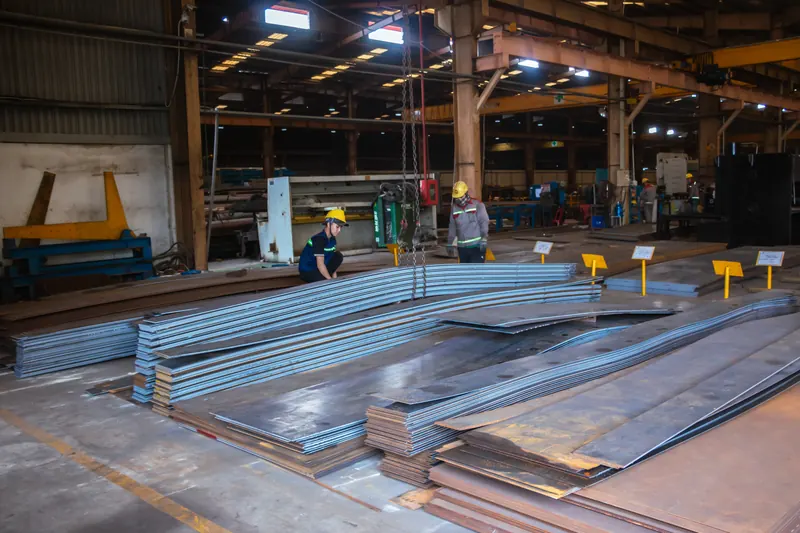
Each heat matched to its EN 10204 3.1 mill certificate and ASTM grade before cutting.
-
Fabrication
Qualified procedures and welders, inspection to your plan, hold points you can witness online. Seismic welds add the D1.8 supplement.
-
Shipping
Packed in erection order, bolts and parts listed per bundle, import paperwork prepared.
-
Erection & records
The US contractor, our customer, erects the frame and installs the bolts to RCSC; the handover data book closes the job.
Credentials
What we hold, and what we will never claim
Standards are what we design and build to. Credentials are what an outside body has audited. We keep the two apart, so your reviewer can check every claim.
Accredited · Parts A and C
IAS AC472 metal building systems
World Steel is the first and only fabricator in Vietnam accredited under IAS AC472, for design and for fabrication. Valid until August 1, 2027.
What it means for your permit →EN ISO 3834-2 Welding Quality
Bureau Veritas Vietnam
EN 1090 EXC3 (CE marking)
BSI Group The Netherlands B.V. (NB 2797)
AS/NZS 5131 CC3
BSI Group ANZ (Benchmark, JAS-ANZ accredited) · valid until Jul 2030
ISO 9001:2015
Guardian Independent Certification Ltd (UKAS accredited) · valid until Sep 2029
ISO 14001:2015
Guardian Independent Certification Ltd (UKAS accredited) · valid until Sep 2029
ISO 45001:2018
Guardian Independent Certification Ltd (UKAS accredited) · valid until Sep 2029
ISO, EN and AS/NZS certificates are held by World Steel Construction JSC for the Vietnam plant. They show how the plant is run; US code compliance is shown project by project.
Not claimed, on purpose
Claims you will not find on this site
- AISC certification of the plant (our fabrication accreditation is IAS AC472)
- AWS certification of the company for D1.1, D1.3 or D1.8 (weld quality is proven per project with procedures, welder records and inspection)
- MBMA membership (the Manual is a practice reference for us)
- UL, FM or Miami-Dade product approvals for panels or doors
- Buy American or BABA eligibility for federal funding
- A shop inspection waiver: only your building official can grant one