Skip to content
Seeking US contractor partners IAS AC472 ACCREDITED ★ METAL BUILDINGS ★ AC472 IAS AC472 accreditedIAS AC472
World Steel USA
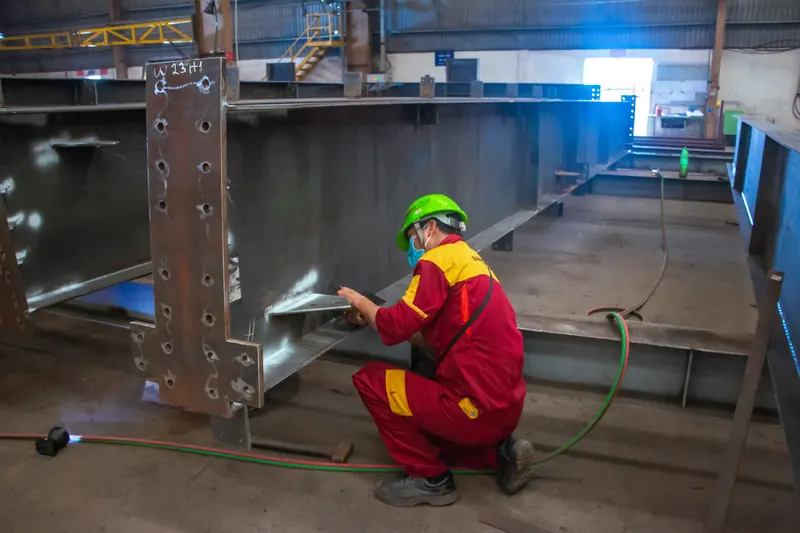
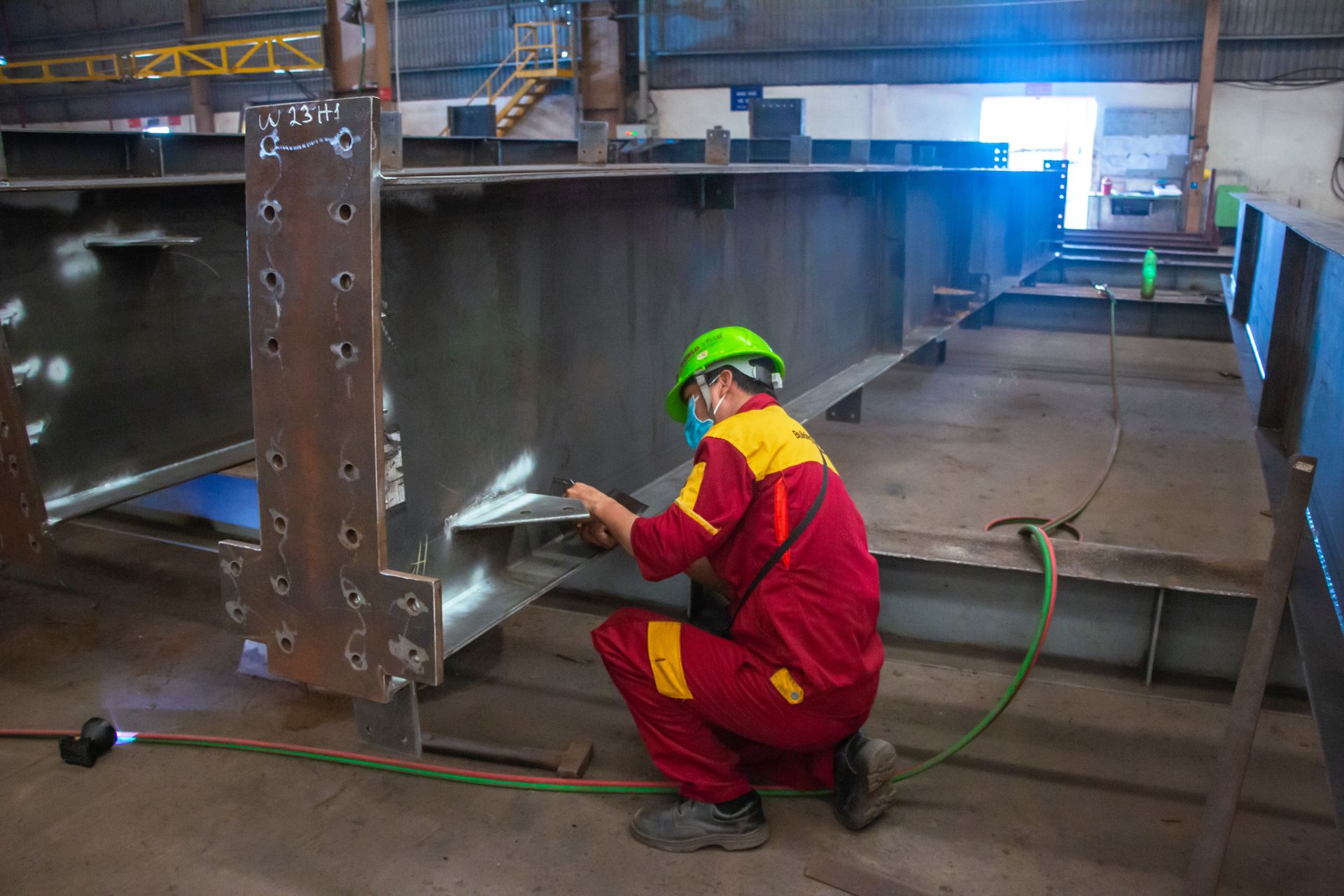
Welder looking over the stiffeners and end plate of a heavy column

Mining steel · Crushing and screening

Crusher and screen steel that takes the hammering every shift

Haul trucks tip into the dump pocket, a feeder pulls the ore, the crusher breaks it and vibrating screens size it. Every one of those machines shakes and loads the steel around it, millions of times a year. We design the support steel for those dynamic loads and fabricate it with welds and details chosen for fatigue.

Three types of station

Where crushing steel works hardest

Primary crusher station

The dump pocket, its retaining structure and the crusher support carry truck impact and the crusher’s own loads. Much of this is concrete; the steel is in the superstructure, crane, feeder support and platforms.

Secondary and tertiary crushing

Cone crushers sit high on steel or concrete with feed bins above. The frame carries the bins, the crusher maintenance crane and the access around them.

Screening buildings

Vibrating screens put repeated dynamic forces into their support beams. Stiffness, the frequencies of the frame and the fatigue details decide the design.

Design for dynamics

Stiff enough, and detailed for fatigue

A vibrating screen or crusher support can be strong enough and still fail if it is too flexible or if its natural frequency sits near the running speed of the machine. We take the dynamic loads and operating frequencies from the equipment supplier, check the frame’s frequencies and deflections, and keep them away from resonance as your Engineer of Record requires.

Repeated loads also need fatigue design. AISC 360 Appendix 3 sets the stress ranges for each detail category; we choose details that rate well, such as full-penetration welds ground where needed, continuous stiffeners and bolted splices away from the highest stress ranges, and we avoid short intermittent welds and abrupt changes in section.

In our shop, the welds on these members are made to AWS D1.1 with qualified procedures and welders, and inspected with the nondestructive testing your specification calls for.

Coordinated with the equipment

What we need from the crusher and screen suppliers

DataWhy it mattersWhere it goes
Static and dynamic loadsSets member sizes and connection forcesDesign calculations for your EOR
Operating frequenciesKeeps the frame out of resonanceFrequency check in the analysis model
Mounting and isolation detailsSets bolt patterns, stiffeners and bearing platesTekla model and shop drawings
Maintenance liftsSizes the crane or monorail and its clearancesRunway and hoist beam design
Liner and chute weightsAdds dead and wear loads to the steelLoad allowances on the calculations

Who does what

World Steel supplies the steel. Your contractor builds.

World Steel, from our plant in Vietnam

  • Support steel design for dynamic loads and fatigue
  • Frequency and deflection checks in the analysis model
  • Welds to AWS D1.1 with qualified procedures and welders
  • Shop drawings at no extra charge

The US contractor, our customer, and others

  • Crushers, feeders, screens and their installation
  • Dump pocket and foundation concrete
  • Erection and field connections
  • Drawing approval, PE seal and permit

Real photos

From World Steel’s plant and jobs

Our own shop floors and past work, shown for the kind of steel on this page. Not stock images, and not a mine.

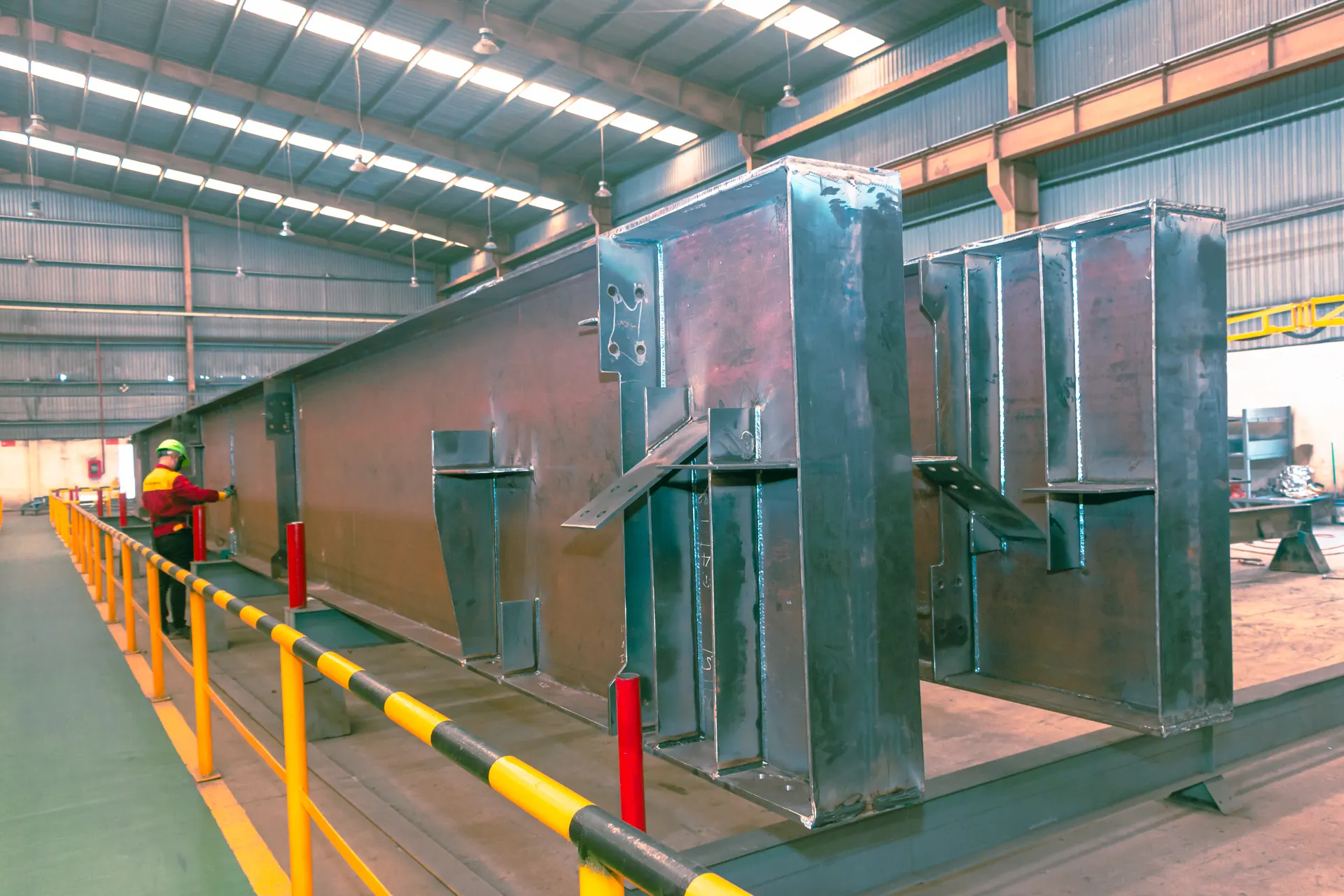
Stiffened heavy plate girders resting on shop supports Photo
Heavy plate girders with stiffeners, fabricated by World Steel in Vietnam.
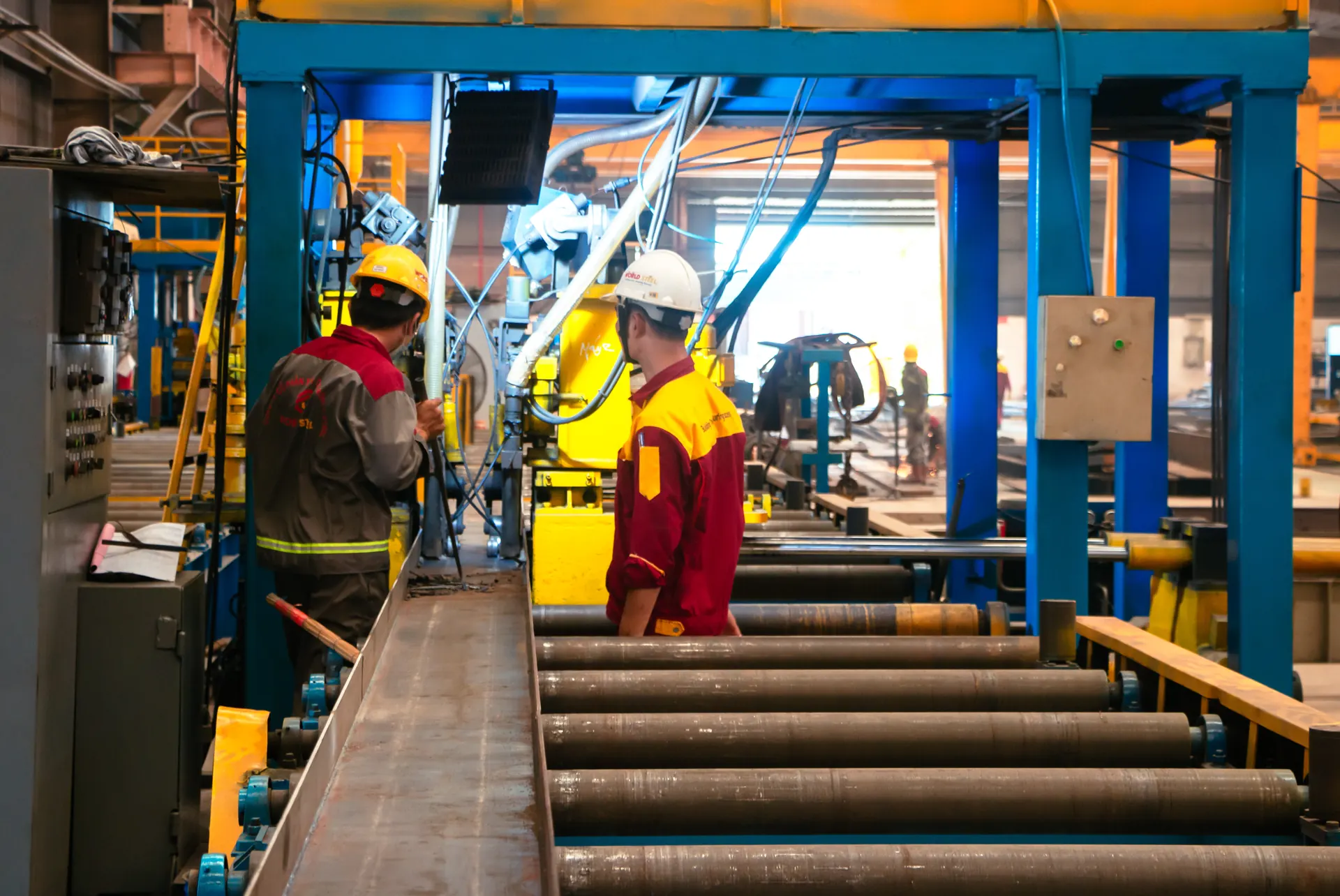
Two welders operating a submerged-arc welding station on a member Photo
Submerged-arc welding of web-to-flange seams in the Vietnam plant.

Standards on this page

Read the standard behind it

Each standard page explains what it covers, the edition we reference and how we apply it. We design and fabricate to these standards; they are not certifications.

Keep reading

Related pages

Questions from US contractors

Crusher & screen buildings: questions we hear

Can you design steel supports for vibrating screens?

Yes. We design screen support steel for the dynamic loads and frequencies from the screen supplier, check stiffness and fatigue, and detail it for fabrication in our plant. Your Engineer of Record approves the design.

Do you test the welds?

Yes. Welds are made to AWS D1.1 and inspected visually and with the nondestructive testing your specification calls for, such as ultrasonic or magnetic particle testing. The records go into the Manufacturing Data Record.

Can the steel take wear liners?

Yes. We design for the liner weight your chute designer gives and detail the bolt holes or studs for them. Liners themselves are usually supplied by the chute or wear specialist.

Does World Steel provide shop drawings for mining steel?

Yes. Shop drawings come with every project at no extra charge. We design and fabricate the steel structure; the US contractor and their Engineer of Record review and approve the calculations and drawings, and handle the PE seal and the permit.

A plain-English summary for US buyers, not the code text and not engineering advice for a specific site. The adopted codes, the owner’s design criteria and the equipment data govern, and your Engineer of Record confirms them for each project. World Steel has no published mining project.

Talk to our mining steel team

Send the general arrangement drawings, the owner’s structural criteria and the area you are pricing. We return a written scope for structural steel designed to US codes, made in our plant in Vietnam and shipped to your US port.