
Where it sits in the US code stack
Where it governs in your building
Every SSPC cleaning grade on one ladder
From solvent wipe to white metal: what each SSPC grade leaves on the steel
An SSPC grade is a promise about what may stay on the surface. Read from the bottom up, each rung removes more, costs more blast time and lets a better coating system bond. The specification picks the rung; we blast to it and record it.
-
SP 5White metal blast
What may remain
Nothing: no mill scale, rust, paint or staining.
Where US specs use it
Immersion service, tank linings, thermal spray zinc.
-
SP 10Near-white blast
What may remain
Light shadows and streaks on up to 5 percent of each 58 cm² (9 sq in).
Where US specs use it
Zinc-rich primers and most high-performance systems for coastal and industrial exposure.
-
SP 6Commercial blast
What may remain
Staining on up to 33 percent of each 58 cm² (9 sq in).
Where US specs use it
Interior and mild exterior steel with epoxy or alkyd primers.
-
SP 11Power tool to bare metal
What may remain
Bare metal with a profile of at least 25 µm (1 mil).
Where US specs use it
Repairs where blasting is not possible, such as field touch-up of damaged areas.
-
SP 14Industrial blast
What may remain
Tightly adherent mill scale, rust or paint on up to 10 percent of each area.
Where US specs use it
Maintenance work where full commercial blasting is not justified.
-
SP 7Brush-off blast
What may remain
Tightly adherent mill scale, rust and old paint; only loose material goes.
Where US specs use it
Sweep blasting sound old coatings before overcoating.
-
SP 2 · SP 3Hand and power tool cleaning
What may remain
Tightly adherent mill scale, rust and paint; loose material removed.
Where US specs use it
The AISC Code of Standard Practice minimum when no grade is specified; small touch-up.
-
SP 1Solvent cleaning
What may remain
Mill scale and rust stay; oil, grease and soil are removed.
Where US specs use it
Before every other grade, because a blast spreads oil instead of removing it.
-
SP 16Brush-off blast of non-ferrous metal
What may remain
Sound galvanizing kept, with a uniform anchor profile cut into it.
Where US specs use it
Galvanized steel that will be painted, the duplex systems on coasts and bridges.
Top: cleanest, most blast timeBottom: least cleaning
The data sheet sits beside the SSPC grade
Coating systems from six worldwide brands
Each product data sheet states the minimum SSPC grade, the surface profile, the recoat window and the film thickness per coat. We follow the stricter of the data sheet and your specification. The products carry UL certification, and our painters are trained and certified by the paint manufacturer.
- JotunNorwayGrade · profile · DFT
- PPGUnited StatesGrade · profile · DFT
- CarbolineUnited StatesGrade · profile · DFT
- HempelDenmarkGrade · profile · DFT
- Nippon PaintJapanGrade · profile · DFT
- International PaintUnited KingdomGrade · profile · DFT
Brand names are trademarks of their owners and are named only to show the coating systems we apply. No partnership or endorsement is implied. The product on each project is the one named in its coating schedule.
17 answers from our engineers
SSPC questions and answers
What specifiers, coating inspectors and US contractors ask about SSPC on steel coated in our plant: which grade to name, how it is checked, film thickness, galvanized steel, faying surfaces and touch-up on site.
Choosing a grade 4 answers
Which SSPC grade should our specification name?
The one the coating system needs. Zinc-rich primers and most high-performance systems for coastal or industrial exposure need SSPC-SP 10 near-white. Interior steel and mild exposures often use SP 6 commercial. The paint manufacturer's data sheet states the minimum, and the specification should never be lower than that.
Is SP 10 worth the extra blast time over SP 6?
Where the system calls for it, yes. Near-white leaves far less staining, and zinc-rich primers need clean metal in contact with the zinc to protect it. On interior steel with a mild exposure, SP 6 is often enough and the specification can say so.
What does the AISC Code of Standard Practice say if the spec names no grade?
It sets a minimum of hand-tool cleaning to SSPC-SP 2 for steel that is to be shop painted. That is rarely what an owner wants on exposed steel, so we ask for the grade in writing before fabrication.
How do SSPC grades compare with ISO 8501-1?
Closely, but they are separate documents. SP 5 matches Sa 3, SP 10 matches Sa 2½, SP 6 matches Sa 2 and SP 7 matches Sa 1. When a specification mixes the two, we confirm which governs.
Inspection and film thickness 4 answers
How is the blast grade checked?
By eye, against the SSPC-VIS 1 reference photographs for the starting condition of the steel, by the shop inspector and by your coating inspector at the hold point. The result is written into the surface preparation record.
How does SSPC-PA 2 measure dry film thickness?
A gauge, checked against known standards to ASTM D7091, takes readings in a small circle that are averaged into a spot. Five spots make an area of about 10 m² (100 sq ft), and members are sampled as PA 2 sets out for beams, girders and other structural shapes. Spot and area results are judged against the specified range.
Why are readings taken for every coat, not only the total?
Because each coat has its own range in the data sheet. A thin primer covered by a thick topcoat can pass on total thickness and still fail early, so each coat is read and logged.
Can our inspector witness the blasting in Vietnam?
Yes. Coating hold points are in the inspection and test plan, and your inspector can attend in person or follow remotely, with the records posted in PEB Studio.
Galvanized steel and special surfaces 4 answers
How is galvanized steel prepared for paint?
With a light sweep blast to SSPC-SP 16, which cuts a profile into the zinc without removing it, or by the other methods in ASTM D6386 the paint manufacturer accepts. That is how duplex systems are prepared for coasts, road salt and bridges.
What happens to slip-critical faying surfaces?
They are blasted and then masked, or coated with a primer qualified for the slip class the design uses, as the RCSC Specification allows. The shop drawings show which faces are masked.
Is steel that will be fireproofed or encased in concrete painted?
Often not, or only with a primer the fireproofing manufacturer accepts. The specification and the listed fire design decide, and we confirm compatibility in writing before fabrication.
What about steel that will be field welded?
The weld zones are left uncoated or given a weld-through primer, as specified, so the field weld is not contaminated. They are marked on the shop drawings.
Paint, touch-up and the site 5 answers
Which paint brands do you apply?
Coating systems from Jotun, PPG, Carboline, Hempel, Nippon Paint and International Paint (IP), as named on the coating schedule. The products carry UL certification, and our painters are trained and certified by the paint manufacturer.
How should transport and erection damage be repaired?
Cleaned to SSPC-SP 11 or SP 3, as the data sheet allows, then recoated with the same product to the scheduled thickness. The touch-up procedure ships with the steel, and the work is the US contractor's scope.
Can touch-up paint be bought in the US?
Yes. The brands we use sell through their own US distributors, so the same product and colour can be bought near the job.
Does World Steel hold an SSPC QP certification?
No. We apply SSPC standards in our own paint shop with full records, and our coating inspectors hold FROSIO Level III and BGAS painting inspector qualifications. If your specification requires a QP-certified shop, raise it before award so we can agree how it is met.
Who inspects the coating in your plant?
Our own coating inspectors, qualified to FROSIO Level III and BGAS painting inspector, check every hold point and sign the records. Your own coating inspector can witness the same hold points on top of ours.
More answers on every US code we design to: search all standards questions.
SSPC and ISO side by side
SSPC blast grades and their ISO 8501-1 counterparts
| SSPC grade | Joint number | ISO 8501-1 | Staining allowed per 58 cm² (9 sq in) |
|---|---|---|---|
| SP 5 White metal blast | NACE No. 1 | Sa 3 | None |
| SP 10 Near-white blast | NACE No. 2 | Sa 2½ | Up to 5 percent |
| SP 6 Commercial blast | NACE No. 3 | Sa 2 | Up to 33 percent |
| SP 14 Industrial blast | NACE No. 8 | Between Sa 1 and Sa 2 | Tightly adherent residue on up to 10 percent |
| SP 7 Brush-off blast | NACE No. 4 | Sa 1 | Tightly adherent mill scale, rust and paint may stay |
Before the first coat
Four checks that decide whether paint will stick
The blast grade is one line in the specification. These four are the others that a coating inspector reads before a primer goes on.
Surface profile
The roughness the blast leaves, measured with replica tape or a depth gauge to ASTM D4417. Zinc-rich primers commonly ask for 50 to 75 µm (2 to 3 mils); the data sheet sets the range.
Soluble salts
Chlorides left on the steel push paint off from below. SSPC-Guide 15 describes how to test for them; the specification sets the limit.
Steel and air
Steel at least 3 °C (5 °F) above the dew point and humidity inside the data sheet limit, read and logged before blasting and each coat.
Edges and welds
Sharp edges rounded, spatter and slag removed and welds dressed before the blast, so the coating can build to full thickness on them.
Through our paint shop
How a member moves from bare steel to coated and measured
-
Solvent clean
Oil, grease and marking residue removed to SSPC-SP 1, because blasting only spreads them around.
-
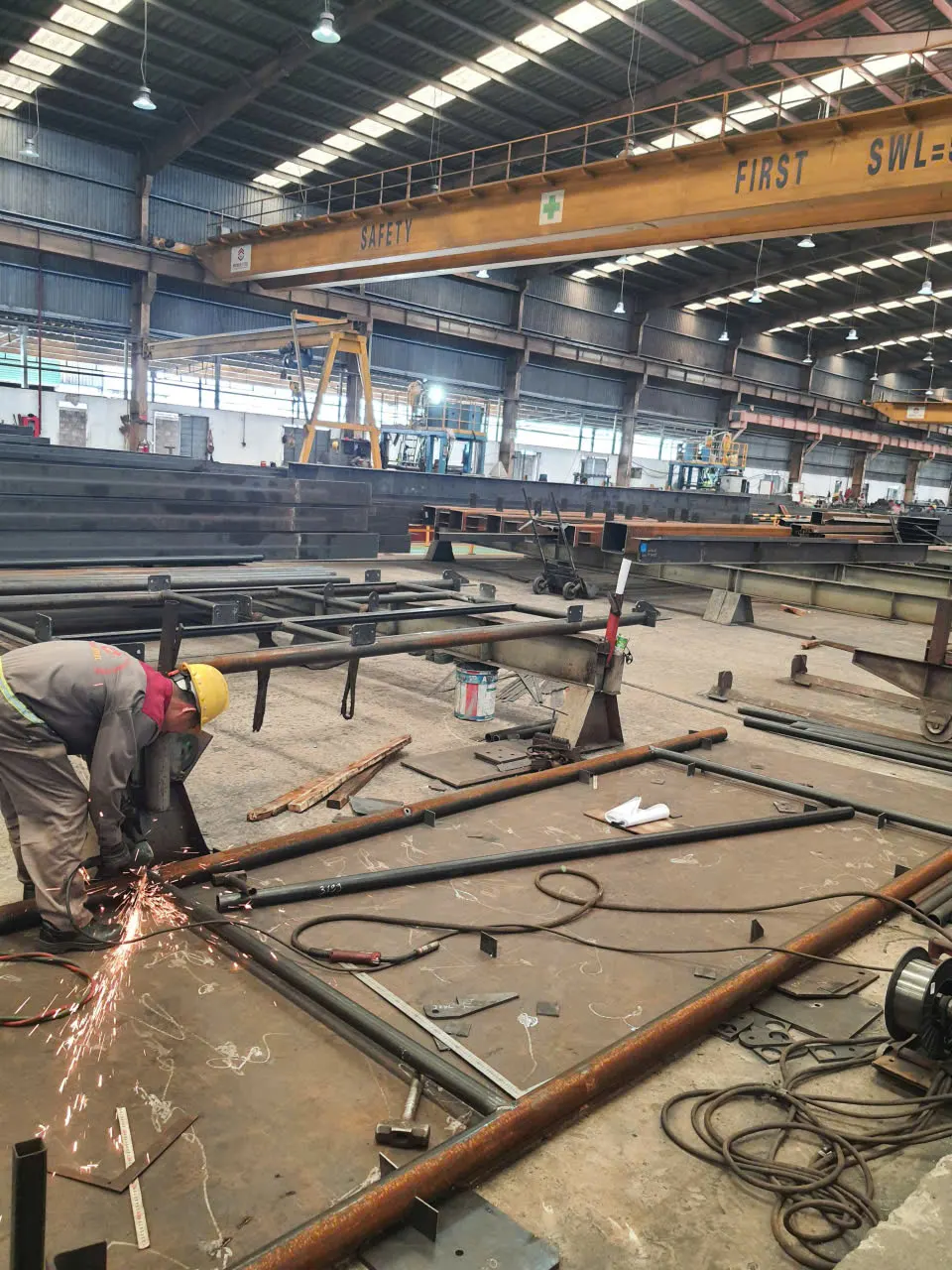
Dress edges and welds
Edges ground, spatter and slag removed, so the blast and the paint can cover every corner.
-
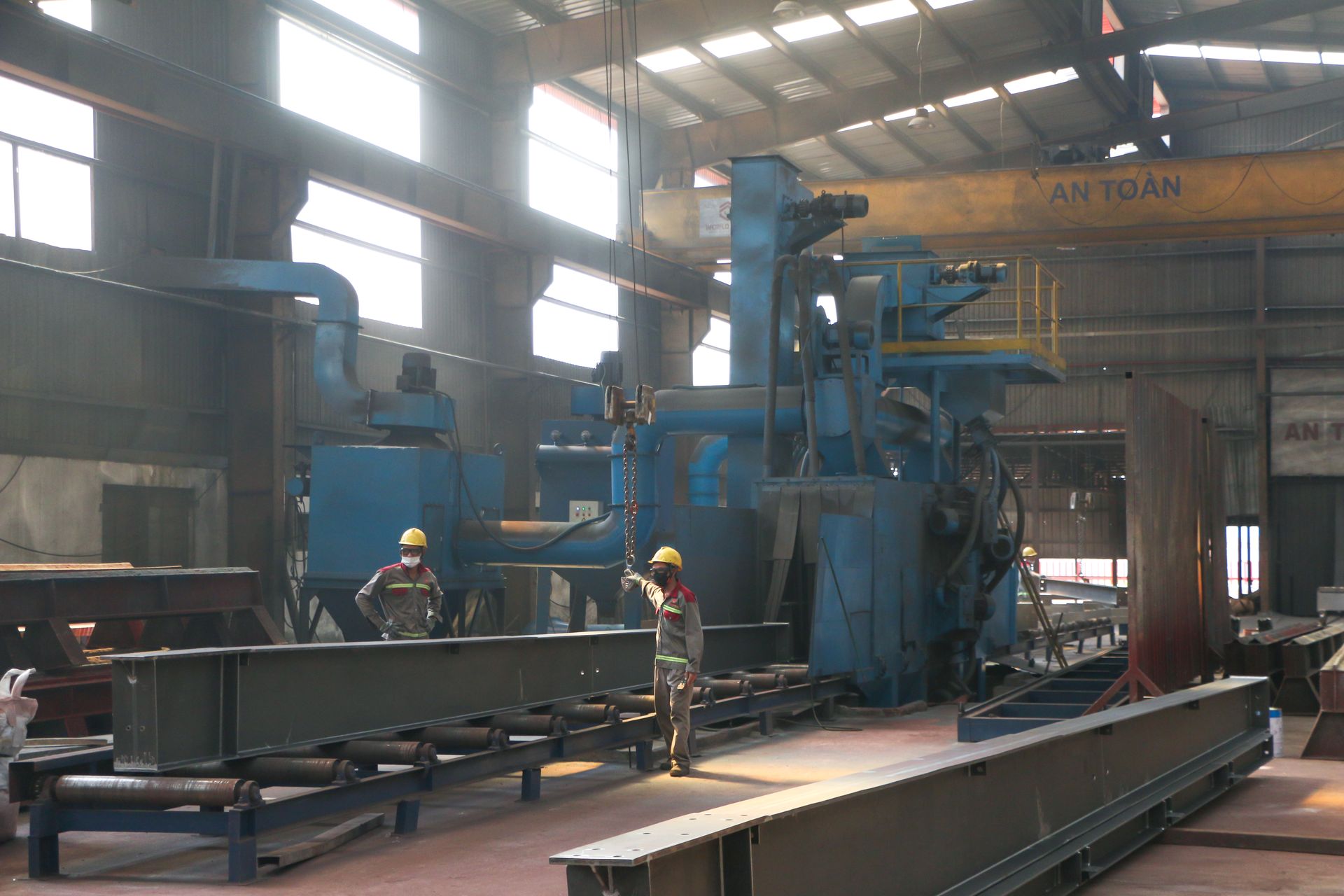
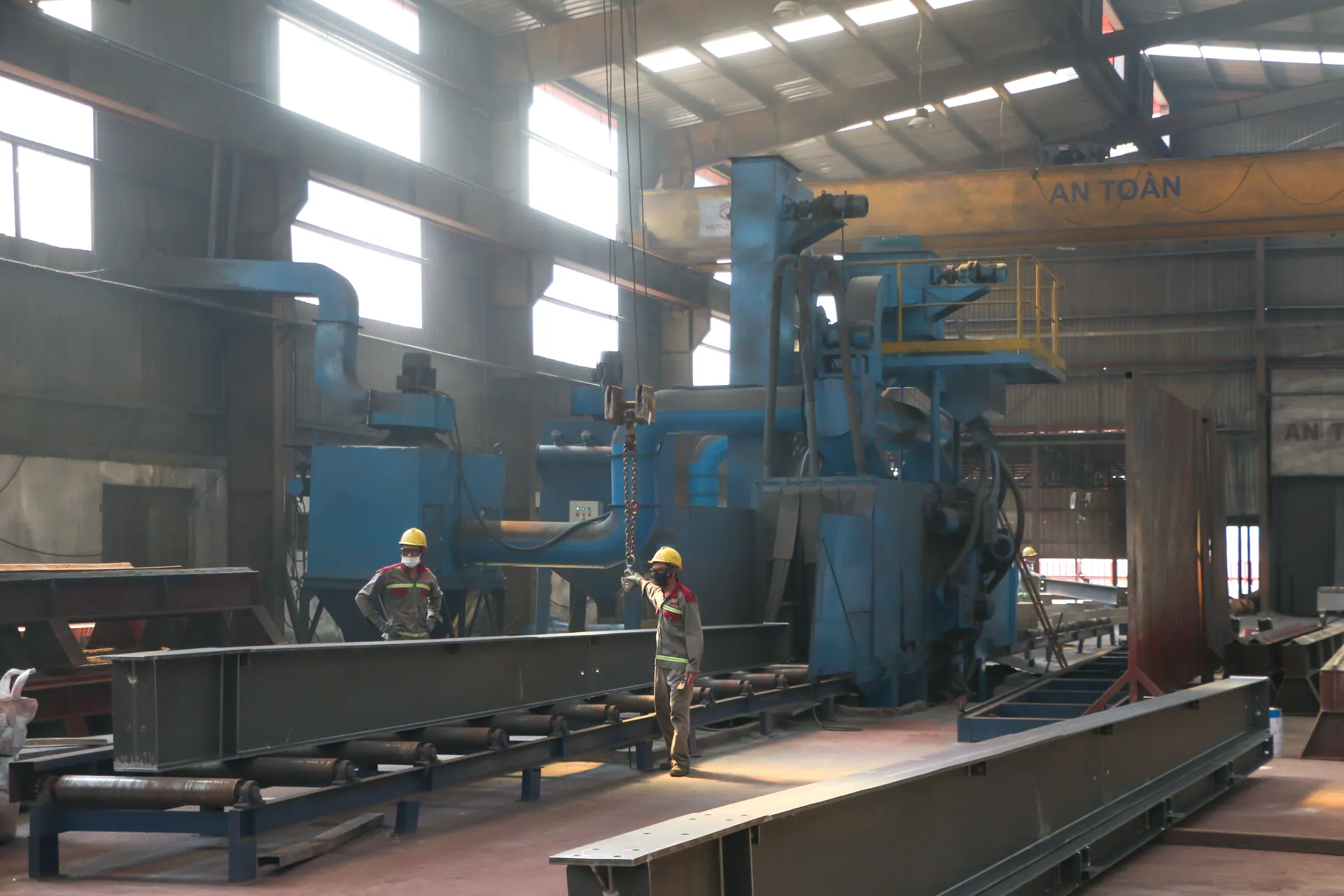
Shot blast
Members run through our shot-blasting machine to the grade named, most often SP 10 near-white or SP 6 commercial.
-
Inspect the surface
Cleanliness compared with SSPC-VIS 1 photographs, profile measured and recorded before priming.
-
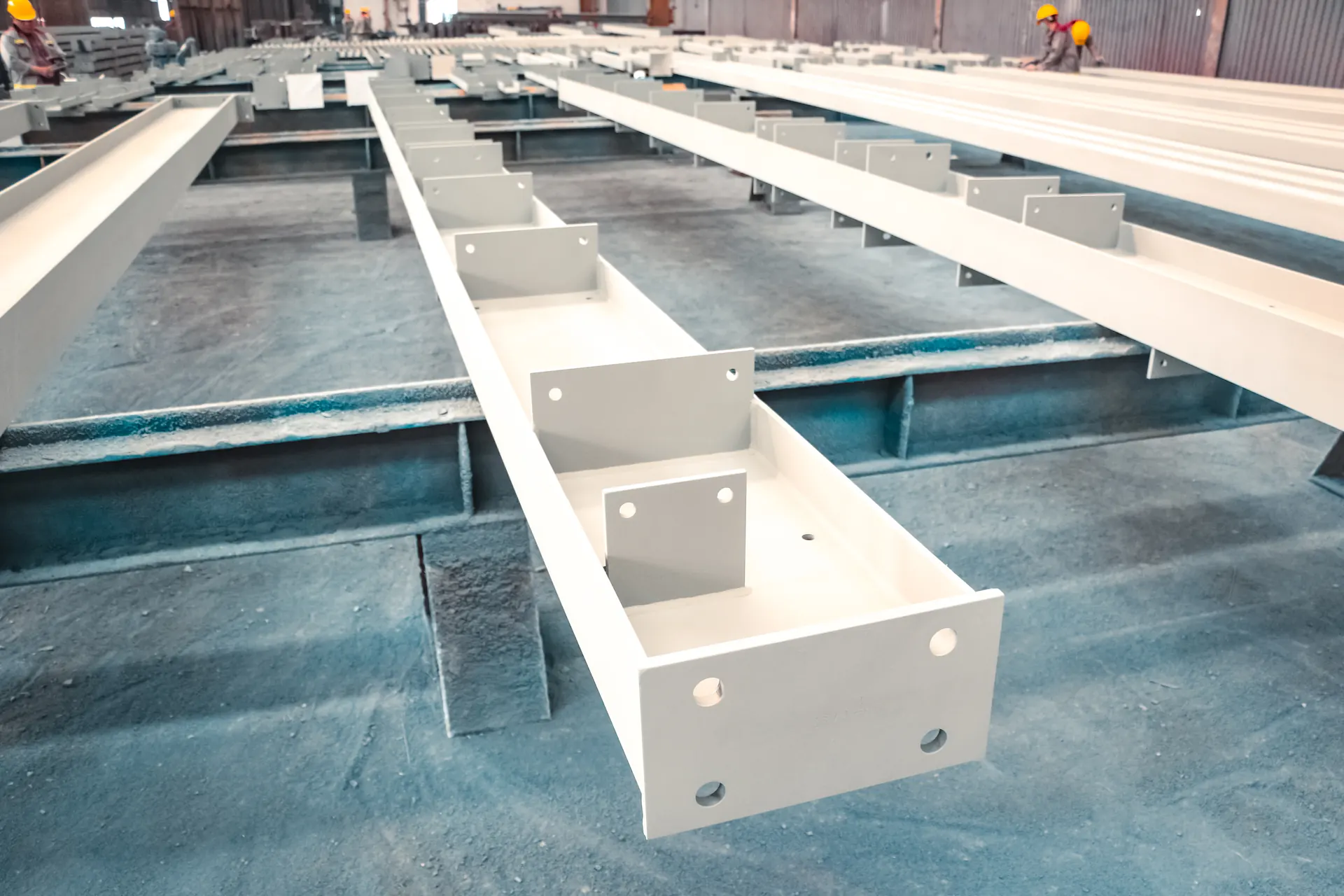
Prime before flash rust
The first coat goes on the same shift, inside the hall, before the fresh steel can rust.
-
Coat and measure
Stripe coats on edges and welds, then each coat read for dry film thickness to SSPC-PA 2 and logged by piece mark.
From World Steel
Coating information included in our submittal
- The coating schedule: blast grade, profile, each coat with its product and film thickness range
- Product and safety data sheets from the paint manufacturer named on the schedule
- An inspection and test plan with the coating hold points your inspector can witness
- Surface preparation records: climate log, cleanliness, profile and salt tests where specified
- Dry film thickness readings to SSPC-PA 2 for every coat, by piece mark
- Masking notes for slip-critical faying surfaces and field-weld zones, with the touch-up procedure
Who does what under SSPC
Your specification picks the grade, we blast to it, your inspector checks it
Surface preparation is shop work on a World Steel job. The field coats and touch-up are the US contractor's, and the paint manufacturer's data sheet sits between them.
World Steel
- Solvent cleans, dresses edges and welds, and blasts to the SSPC grade specified
- Records climate, cleanliness, profile and film thickness for every coat, checked by our FROSIO Level III and BGAS qualified inspectors
- Applies coating systems from Jotun, PPG, Carboline, Hempel, Nippon or International Paint, as scheduled
- Masks slip-critical faying surfaces and field-weld zones, and ships the touch-up procedure
US contractor and Engineer of Record
- Write or accept the coating section, with the grade and the system
- Touch up transport and erection damage to SP 11 or SP 3, as the data sheet allows
- Apply any field coats after erection
Coating inspector
- Witnesses the hold points in the inspection plan, in Vietnam or remotely
- Reviews our readings against the specification and the data sheet
- Accepts or rejects before primer and before shipping
Coating questions on review
Five coating questions a reviewer asks, and where our package answers them
Most coating comments come from a schedule that names a product but not a grade or a range. Ours states both.
-
“Which surface preparation grade is used under the primer?”
SSPC-SP 10 or SP 6, as specifiedWhat our package showsThe coating schedule names the grade for each system, and the inspection record shows it was reached before priming.
-
“What surface profile does the primer need, and was it measured?”
ASTM D4417 · data sheetWhat our package showsThe profile range from the data sheet is on the schedule, with replica tape or gauge readings recorded per lot.
-
“How was dry film thickness measured and accepted?”
SSPC-PA 2 · ASTM D7091What our package showsGauge verification, spot and area readings for every coat, judged against the specified minimum and maximum.
-
“Which surfaces are left unpainted?”
AISC 360 Chapter M · RCSCWhat our package showsFaying surfaces of slip-critical joints and field-weld zones are marked on the shop drawings, masked or coated with a qualified primer.
-
“How is damage repaired on site?”
SSPC-SP 11 or SP 3 · data sheetWhat our package showsA touch-up procedure with the same product, the cleaning grade and the film thickness ships with the steel.
In your submittal file
Four coating records that travel with the steel
Issued as the members leave the paint hall, posted in PEB Studio and bound into the handover file.
-
Coating schedule
Blast grade, profile and each coat with its product and film thickness range.
Coating inspection -
Surface preparation record
Climate log, cleanliness against SSPC-VIS 1, profile and salt tests where specified.
Coating checkpoint -
Film thickness readings
SSPC-PA 2 spot and area readings for every coat, by piece mark.
Inspection and test plan -
Touch-up procedure
The product, cleaning grade and thickness for repairs on site.
Maintenance planning
Real photos from World Steel
Blasted, primed and measured in our own paint hall
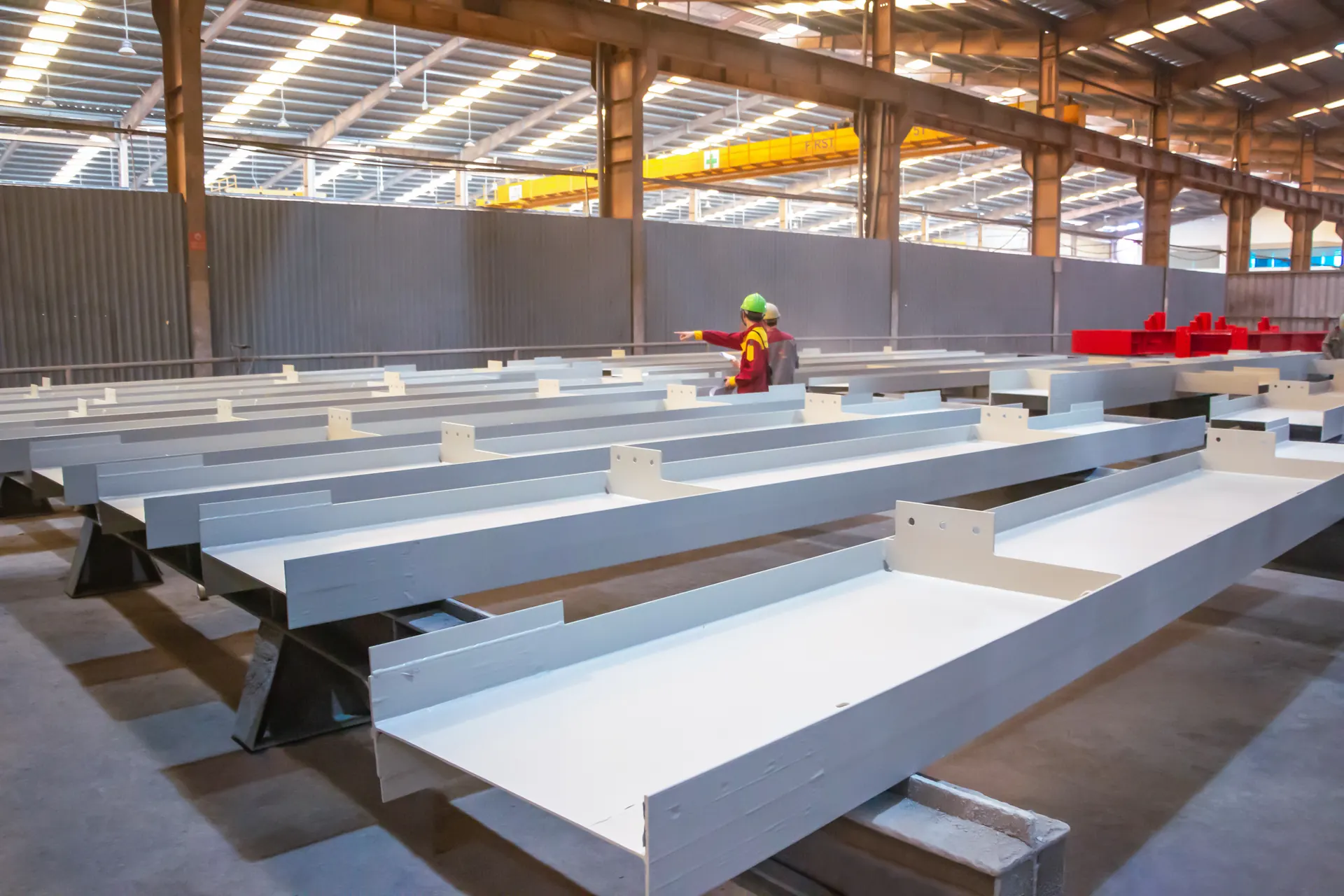
Photographed in our own plant in Tay Ninh Province, Vietnam, and on World Steel jobs. Not stock images.
SSPC never works alone
The standards and guides it works with
Each link opens the full page, with its own questions and answers.
What we do not claim
World Steel applies SSPC standards in its own paint shop, and its coating inspectors hold FROSIO Level III and BGAS painting inspector qualifications. It holds no SSPC QP shop painting certification and no AMPP inspector certification. If your specification requires a QP-certified shop or an AMPP-certified inspector, tell us before award and we settle how it is met, for example with a third-party inspector you appoint.
Who does what
World Steel designs, fabricates and supplies the steel structure from its own plant in Vietnam. The US contractor, our customer, erects it, has the drawings approved and sealed by their Engineer of Record and pulls the permit.
Details confirmed in quote Edition: The editions your coating specification names
Source record: https://www.ampp.org/standards
Last checked: —. Editions change on a cycle, so your Engineer of Record confirms which one your jurisdiction enforces.
All US codes & standardsNeed the coating section of your spec checked?
Send the specification or the exposure. We return the coating schedule with the SSPC grade, profile and film thickness for each coat, and the checks your inspector can hold.