Most of the hot-rolled steel in a US building comes from three ASTM specifications. Wide flange beams and columns are usually ASTM A992. Plate for built-up girders, gussets and base plates is usually ASTM A572 Grade 50 or ASTM A36. Angles, channels and small connection material are often A36, frequently dual-certified with A572 Grade 50. The question of A992 vs A572 vs A36 comes up on every job, and the answer is rarely just "use the strongest one". This article compares the three and explains how the choice is made part by part.
The values below are a selection from the current editions for the products most structural jobs use. The specification and edition named in your contract documents govern.
Three specifications, three different scopes
The first difference is not strength, it is what each specification is written for.
- ASTM A992/A992M covers rolled structural shapes for building framing. It was written in the late 1990s for wide flange shapes and is now the normal grade for W shapes in the US.
- ASTM A572/A572M covers high-strength low-alloy columbium-vanadium steel in shapes, plate, sheet piling and bars, in Grades 42, 50, 55, 60 and 65.
- ASTM A36/A36M covers carbon structural steel shapes, plate and bars of structural quality, with one strength level.
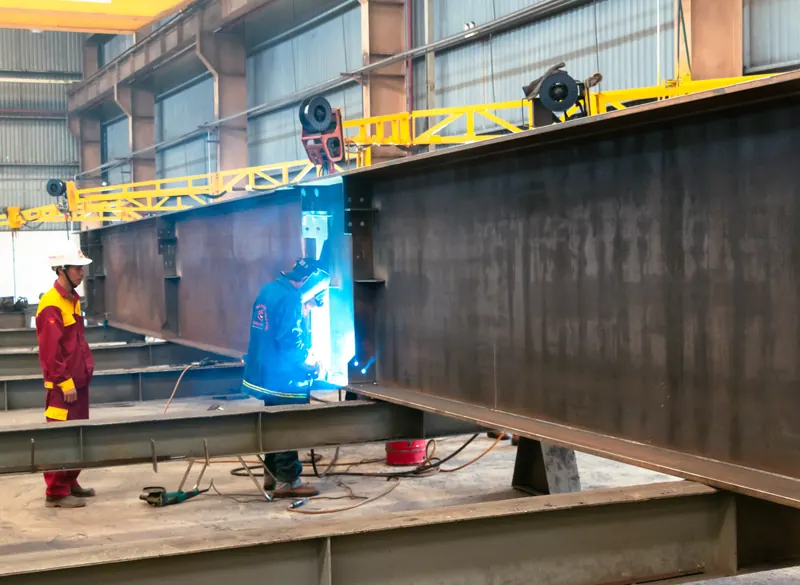
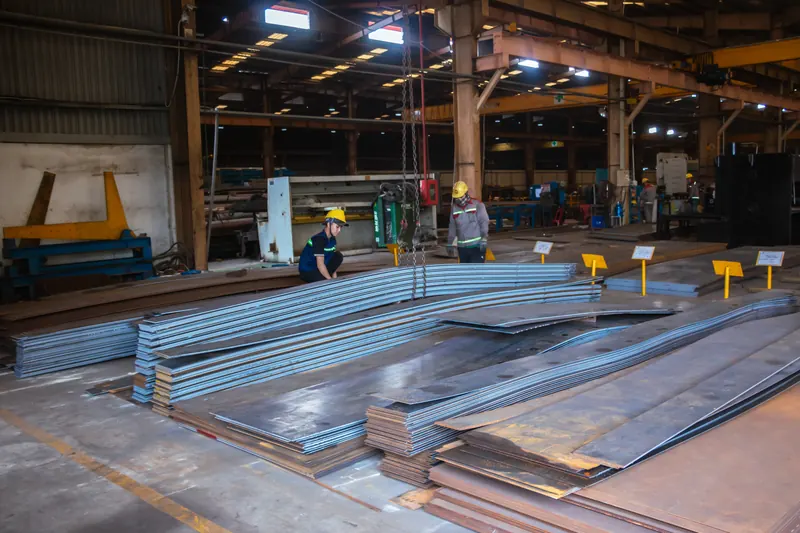
Because A992 is limited to shapes, a plate can never be "A992". A built-up girder that replaces a heavy rolled beam is ordered to A572 Grade 50 (or another plate grade) even though its design strength matches the A992 beams around it.
Strength side by side
| Property | A992 | A572 Grade 50 | A36 |
|---|---|---|---|
| Minimum yield | 345 MPa (50 ksi) | 345 MPa (50 ksi) | 250 MPa (36 ksi) |
| Maximum yield | 450 MPa (65 ksi) | Not limited | Not limited |
| Minimum tensile | 450 MPa (65 ksi) | 450 MPa (65 ksi) | 400 to 550 MPa (58 to 80 ksi) |
| Maximum yield-to-tensile ratio | 0.85 | Not limited | Not limited |
| Elongation in 200 mm (8 in) | 18% | 18% | 20% |
A992 and A572 Grade 50 have the same minimum yield. What A992 adds is a ceiling. A maximum yield and a maximum yield-to-tensile ratio mean a beam cannot come out much stronger than designed, which matters when a frame relies on yielding in a predictable place. That is the reason seismic and moment frame designers prefer it, and the subject of the A992 article in this series.
A36 has a lower yield, 250 MPa (36 ksi) for most thicknesses, with a lower value of 220 MPa (32 ksi) for plate over 200 mm (8 in). Its tensile range is wide. For a member sized by strength, A36 needs more steel than a 345 MPa (50 ksi) grade. For a member sized by stiffness, deflection or minimum thickness, the grade makes little difference, and A36 is often the more available and more weldable choice.
Chemistry and weldability
Strength is only part of the picture. The three grades have different chemistry limits, and chemistry decides how easily a member welds and how it behaves in a galvanizing bath.
- A992 caps carbon at 0.23% and sets a maximum carbon equivalent of 0.45 (0.47 for shapes with flanges over 50 mm [2 in]). It also limits vanadium and columbium. A limited carbon equivalent means welding without unusual preheat in most thicknesses.
- A572 limits carbon by grade and thickness and controls the microalloying elements by "type", from Type 1 (columbium) to Type 5 (titanium and nitrogen). It does not set a carbon equivalent unless the purchaser asks for one through a supplementary requirement.
- A36 limits carbon by thickness, roughly 0.25 to 0.29%, and sets manganese ranges for thicker plate. It has no carbon equivalent limit either.
For a welded frame, this is why engineers often like A992 for the shapes: the chemistry ceiling travels with the grade. For plate, a carbon equivalent limit can be added to the order if the welding procedure depends on it. AWS D1.1 groups all three as prequalified base metals, but the preheat it requires rises with thickness, so heavy plate deserves attention whatever grade it is.
Where each grade goes on a frame
AISC publishes a table of preferred material specifications for each product, and US designers follow it unless there is a reason not to. In practical terms:
| Part of the frame | Usual grade |
|---|---|
| W shapes for beams and columns | A992 |
| HP piles and M or S shapes | A36 or A572 Grade 50 |
| Channels and angles | A36, often dual-certified A572 Grade 50 |
| Plate for built-up girders, columns and rafters | A572 Grade 50 |
| Base plates, cap plates, gussets and stiffeners | A36 or A572 Grade 50, as the design asks |
| Bars and flat bar | A36 |
AISC 360-22 Section A3.1 lists the structural steel specifications approved for use under the specification, and all three are on it. The Engineer of Record chooses among them on the drawings, and the fabricator orders exactly what is written.
Dual certification
Many mills roll shapes and plate that meet more than one specification at once. A common example is an angle certified as both A36 and A572 Grade 50: its yield is at least 345 MPa (50 ksi), which satisfies both, and its chemistry fits both. Wide flange shapes are often certified as A992 and A572 Grade 50 together.
Dual certification is useful, but read it carefully on the mill certificate. The certificate must name each specification it claims, and the test results must meet each one. If a drawing calls for A36 and the steel arrives as dual A36/A572-50, it meets the A36 order. If the drawing calls for A572 Grade 50 and the steel is certified only as A36, it does not.
There is one subtle point. A dual-certified A36/A572-50 piece is stronger than plain A36. In most designs that is harmless. In a seismic frame where a member or connection is meant to yield first, higher actual strength can move the yielding to a place the designer did not intend, which is one reason AISC 341 uses expected strength. That question is covered in the seismic steel materials article.
Choosing by what the member does
A grade choice is easier when it follows the job each member does.
- Strength-governed beams, columns and girders: a 345 MPa (50 ksi) grade saves weight, so A992 for shapes and A572 Grade 50 for plate.
- Stiffness- or deflection-governed members: long-span purlins, crane girders checked for deflection, and members sized by vibration gain little from higher yield. The section matters more than the grade.
- Connection plates and small parts: A36 or A572 Grade 50 as the design calls for. Mixing grades of plate in one connection is common, but every plate should be marked and traced so a reviewer can see which is which.
- Seismic force-resisting members: the grade named in the AISC 341 design, with the expected strength factors that go with it. Substituting a stronger grade is not automatically conservative.
- Members to be galvanized: the grade matters less than the silicon and phosphorus content, which control how the steel reacts in the bath. The ASTM A123 series covers this.
Heavy shapes and thick plate
All three specifications cover heavy material, but heavy sections bring their own checks. AISC 360-22 Section A3.1c asks for Charpy V-notch testing of rolled shapes with flanges over 50 mm (2 in) when they are spliced with complete-joint-penetration groove welds and carry primary tension, and Section A3.1d asks the same of plate over 50 mm (2 in) in built-up members. These requirements apply whichever grade is chosen. They are explained in the Charpy V-notch article.
A572 also has thickness limits by grade. Grade 50 plate is available up to 100 mm (4 in); higher grades stop at thinner limits. A heavy column base or a crane girder flange may push the design toward Grade 42 or A36 for very thick plate, or toward a different specification altogether.
Writing the grade on the drawings
A clear material schedule removes most questions before steel is ordered. For every member type it lists:
- The product: W shape, plate, angle, channel, bar, HSS or pipe.
- The ASTM specification and grade, for example "ASTM A572/A572M Grade 50".
- The edition, if the project specification fixes one.
- Any supplementary requirement: Charpy V-notch at a stated energy and temperature, a carbon equivalent limit, ultrasonic testing of plate, or through-thickness testing.
- Whether dual certification is acceptable.
- Any finish that affects chemistry, such as galvanizing.
"Steel shall be A36 unless noted" is a common general note, and it is fine for small parts. For the main frame, naming the grade on each member type avoids the most common dispute: a substitution the reviewer did not expect.
How the choice affects cost and schedule
Without talking prices, a few patterns are worth knowing. A992 is the default for W shapes, so it is the easiest grade to buy in those sections. A572 Grade 50 plate is widely rolled in the thicknesses structural jobs use. A36 plate and A36/A572-50 dual angles are common stock. Unusual combinations, such as a high A572 grade in a heavy thickness, a weathering grade, or plate with Charpy at a low temperature, narrow the number of mills that can supply them and should be flagged early in the project.
How World Steel orders and checks the grade
World Steel fabricates 2,500 metric tons of structural steel a month in its own IAS AC472-accredited plant in Vietnam. The steel comes mainly from leading Vietnamese mills, with Japan, Korea, Indonesia and Thailand when the project specification calls for a grade, size or thickness they roll. Each member type is ordered to the ASTM specification and grade on your drawings, and where a mill works to another standard the comparison goes to your Engineer of Record before anything is bought.
Every heat is matched to its EN 10204 3.1 mill certificate at our gate, with Charpy V-notch values when the project asks for them, and material tests run at ILAC-recognized ISO/IEC 17025 laboratories or at the laboratory you name. The full list of grades we supply is on the structural steel materials page. The rest of this series goes grade by grade, starting with A992 wide flange shapes.
Quick answers
Is A992 stronger than A572 Grade 50?
Their minimum yield is the same, 345 MPa (50 ksi). A992 adds a maximum yield of 450 MPa (65 ksi), a maximum yield-to-tensile ratio of 0.85 and a carbon equivalent limit, which make its behavior more predictable in a frame. It is written for structural shapes, while A572 also covers plate and bar.
Can A572 Grade 50 replace A36?
Often, because it is stronger, and many angles and channels are dual-certified to both. It is still a substitution: the Engineer of Record should accept it, because a higher grade can change weld procedures, seismic expected strength and galvanizing behavior.
Why are W shapes A992 and plates A572 or A36?
A992 only covers structural shapes, so plate has to be ordered to another specification. AISC lists A992 as the preferred grade for W shapes, A36 for plate, bar, angles and channels, with A572 Grade 50 widely used where higher strength helps.
Which grade goes on a built-up girder?
The flanges and web are plate, so the usual grade is A572 Grade 50, giving the same 345 MPa (50 ksi) minimum yield as the A992 rolled beams beside it.
Keep building your steel plan
Go further on USPEB.com
On this topic
Across the US market
- US codes and standardsIBC, AISC, AWS and MBMA, designed to
- Seismic steel structuresSDC D to F framing for West Coast jobs
- Crane building designUS crane standards for mill and bay buildings
- Design ReportWhat our US-code design report contains
- Contractor partnershipLong-term supply for US contractors
- Solutions by stateState-by-state steel solutions