
Where it sits in the US code stack
Where it governs in your building
One certificate, one heat
How to read the certificate behind your steel, and follow it to the jobsite
Every plate, coil and section we cut arrives with a mill certificate for its heat. Here is what each field tells your reviewer, and how that heat number stays attached to the steel all the way to your site.
Heat number
The batch of steel melted together. It is stamped or stenciled on the plate and is the key that links everything below.
Specification and grade
For example ASTM A572 Grade 50. Your reviewer compares it with the grade in the material schedule.
Chemical analysis
Carbon, manganese, phosphorus, sulfur, silicon and alloys, compared against the grade's limits. Carbon equivalent matters for welding.
Mechanical tests
Yield strength, tensile strength and elongation measured on samples from that heat, compared with the grade minimums.
Charpy V-notch
Impact toughness at a stated temperature, reported when the order requires it, such as thick seismic members.
EN 10204 type 3.1 statement
The mill's inspector, independent of production, validates that the results are for this heat.
Follow one heat number
Mill in Vietnam
Rolls the plate, tests the heat, issues the 3.1 certificate.
Intake at our plant
Plate matched to its certificate at the gate; heat number logged in PEB Studio.
Cutting and fit-up
Each cut part inherits the heat number of its plate.
Piece mark
The finished member's label links to every heat in it.
Your jobsite
Scan the label: the member opens with its certificates.
14 answers from our engineers
ASTM questions and answers
Questions US reviewers and buyers ask about the steel itself: grades, certificates, Charpy tests, substitutions, coatings, fasteners and traceability. Every answer is open below.
Grades and substitutions 4 answers
Will you furnish A992 shapes and A572 Grade 50 plate?
We confirm grades job by job. List the grades in your specification with your RFQ, and the proposal will say how each is supplied and which certificates come with it.
Our spec says ASTM, but your mill works to JIS or EN. Now what?
If the material meets the ASTM requirements, we put its chemistry and mechanical properties next to the ASTM limits and submit the comparison for your engineer's approval before ordering. Nothing is assumed.
Where does the steel come from?
Mainly from leading mills in Vietnam. When your specification calls for a grade, size or thickness not rolled in Vietnam, it comes from mills in Japan, Korea, Indonesia or Thailand, with the same ASTM grade and 3.1 certificate. The structure is always fabricated in our own plant in Vietnam.
Why is A992 used for wide flanges but A572 for plate?
A992 was written for wide-flange shapes, with a maximum yield and a yield-to-tensile limit that suit seismic and capacity design. Plate for built-up members is usually ordered to A572 Grade 50, which gives the same 345 MPa (50 ksi) minimum yield.
Certificates and tests 4 answers
What is an EN 10204 3.1 certificate?
It is the mill's own report of measured chemistry and strength for the specific heat you receive, signed off by inspectors who do not report to production.
Can you supply Charpy V-notch results for thick members?
Yes, on request. Our plate mills in Vietnam report Charpy impact results at the temperature your specification sets, which AISC 341 requires for thick material in seismic systems.
Can our engineer ask for independent tests of the steel?
Yes. Every material we supply is already tested at an ILAC-accredited laboratory, and samples can instead go to an independent laboratory chosen by you or your inspector, witnessed in person or remotely. The extent is agreed in the proposal.
How do we receive the certificates?
Indexed by heat number in the material submittal before fabrication, and again in the Manufacturing Data Record at closeout. In PEB Studio, each piece mark links to its certificates.
Coatings and fasteners 3 answers
Can high-strength bolts be galvanized?
Grade A325 can be hot-dip galvanized, provided the nuts and washers are galvanized to match. Grade A490 must not be, so it gets a different protection.
Which anchor rod grade should we specify?
Your foundation engineer chooses, usually ASTM F1554 Grade 36, 55 or 105 depending on the tension they carry. We size the rods for our reactions and show the grade on the anchor rod plan.
What does ASTM A123 require of hot-dip galvanizing?
A minimum zinc coating thickness that rises with steel thickness, plus finish and adherence requirements. Where members are galvanized, the galvanizer's certificate goes into the record.
Traceability 3 answers
Can each member be traced back to its steel?
Yes. Plate and sections are stored by grade and heat number, cut parts keep the heat number, and each finished piece mark lists every heat in it. Scan the label on site to see them.
What happens if a certificate does not match the specification?
The material is quarantined at intake and not used for your job until the issue is resolved: replaced, re-tested or, if your engineer accepts it in writing, used with the deviation recorded.
Are the certificates in metric or US units?
Mill certificates from Vietnam report in SI units: MPa, millimeters and joules. Our material schedule shows each grade minimum in both systems, for example 345 MPa (50 ksi), so your reviewer can compare without converting.
More answers on every US code we design to: search all standards questions.
Component by component
ASTM references common in US metal building specs
A typical list for US-code work. Where your specification differs, it wins.
| Component | Usual ASTM reference | Note |
|---|---|---|
| Rolled wide-flange shapes | A992 | Standard for wide-flange columns and beams in the US |
| Plate for built-up members | A572 Grade 50; some angles and minor plates in A36 | Everything cut from plate for a welded frame |
| Hot-rolled strip | A1011 SS or HSLAS | Gussets, clips and similar light pieces |
| Hollow structural sections | A500 or A1085 | Columns, braces and canopy framing |
| Purlins and girts | A653 galvanized, or A1011 | Zinc coating weight chosen for the exposure |
| Roof and wall panels | A792 (Al-Zn coated) or A653 sheet, prepainted | In corrosive sites the coating class matters more than the base steel |
| High-strength bolts | F3125 (A325 or A490), nuts to A563, washers to F436 | A490 is never hot-dip galvanized |
| Anchor rods | F1554 Grade 36, 55 or 105 | Your foundation engineer picks grade and embedment |
| Hot-dip galvanizing | A123 for members, A153 for hardware | Required zinc thickness rises with steel thickness |
Material control
How the right grade reaches the cutting table
-
Extract from the spec
The grade required for each component goes into the material schedule that accompanies the approval drawings.
-
Approval before purchase
Material rolled to a non-ASTM standard is only used after your engineer approves a written comparison of its chemistry and strength. Equivalence is proven, never presumed.
-
Inspect on arrival
Plate and coil are matched to their certificates at the gate, and PEB Studio records every heat number.
-
Carry the heat forward
Because each cut part inherits its heat number, a column on your site leads straight back to its mill certificate.
-
Deliver the paperwork
Your engineer, inspector and owner get every mill certificate in one place: the Manufacturing Data Record.
Harsh sites
Material decisions for coastal, road-salt and farm exposure
Coating beats grade
Where corrosion is the threat, the coating sets service life far more than the steel grade, so it is chosen from the exposure.
Panel base metal
The aluminum-zinc sheet and its paint are selected for the site, with cut edges and laps detailed to shed water.
Hardware to match
An unprotected screw in a galvanized panel becomes the first rust streak, so hardware gets equal protection.
Mixed metals
Copper, aluminum and stainless trim never sit directly on carbon steel; an isolating layer goes between.
Submittal
Paperwork to request with the material submittal
- A schedule naming the grade of every part we supply
- Structural steel mill certificates indexed by heat number
- Fastener and anchor rod certificates
- Coating and galvanizing certificates
- Comparison sheets for any substitute material, sent before it is ordered
- Trace from heat number to piece mark
Who does what with ASTM grades
The grade is specified by your team and proven by ours
ASTM sets the chemistry and the strength; the project specification names the grade; the certificate proves the steel meets it.
World Steel
- Lists the ASTM grade for every part in a material schedule
- Buys plate, coil and sections with EN 10204 3.1 certificates, mainly from Vietnam mills
- Checks every heat at our gate and keeps stock by grade and heat
- Ties each heat number to the piece marks cut from it
US contractor and Engineer of Record
- Name the grades in the specification and on the drawings
- Approve the material schedule and any substitution in writing
- Ask for Charpy results where the design needs toughness
Inspector and reviewer
- Compare the certificates with the grades specified
- Spot-check heat numbers on the steel against the records
- Accept the material before fabrication goes too far
Material review
Four material questions a reviewer asks, and the paper that answers each
Every answer is a document on file before the steel is cut.
Does the steel meet the specified grade?
The 3.1 certificate shows chemistry and tensile results against the grade on the material schedule.
Can this heat be traced to the member?
The heat number links the certificate to the piece marks in PEB Studio.
Was any grade substituted?
Substitutions are made only with your written approval, and the schedule is revised to match.
Is the coated sheet the right grade and coating?
The coil certificate shows the grade and coating designation named in the specification.
In your submittal file
Three material records your reviewer can check
Issued as material arrives, and kept with the job.
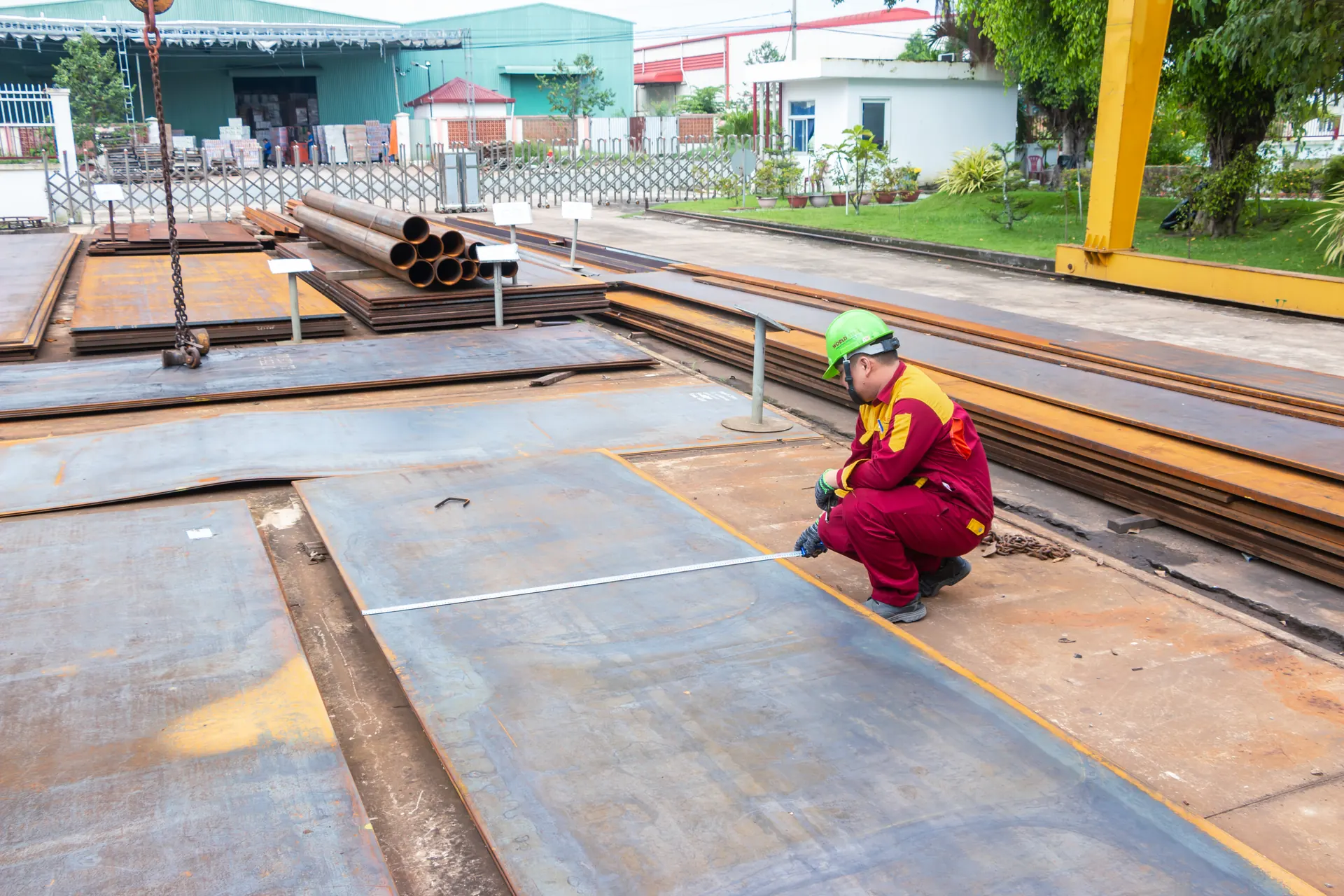
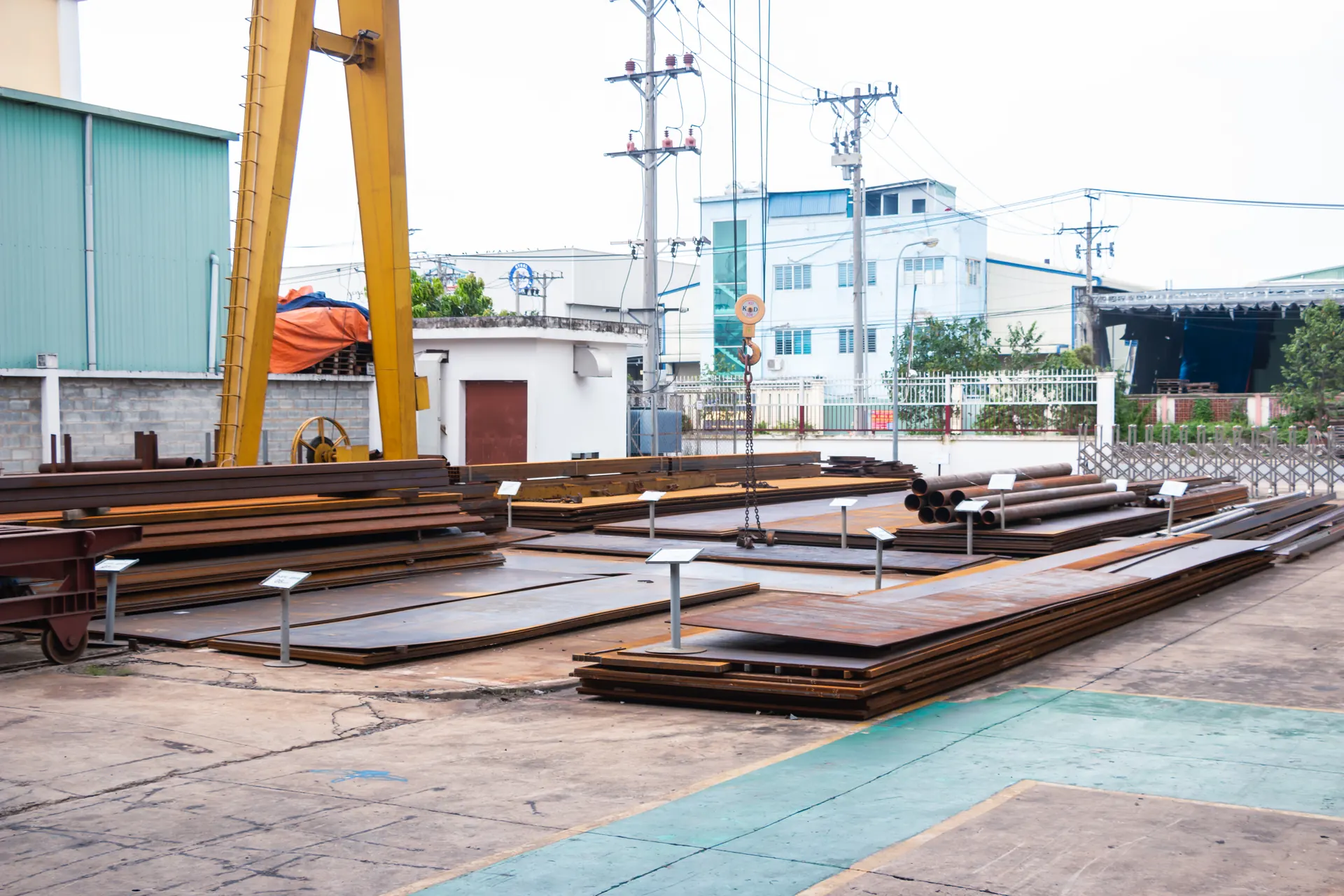
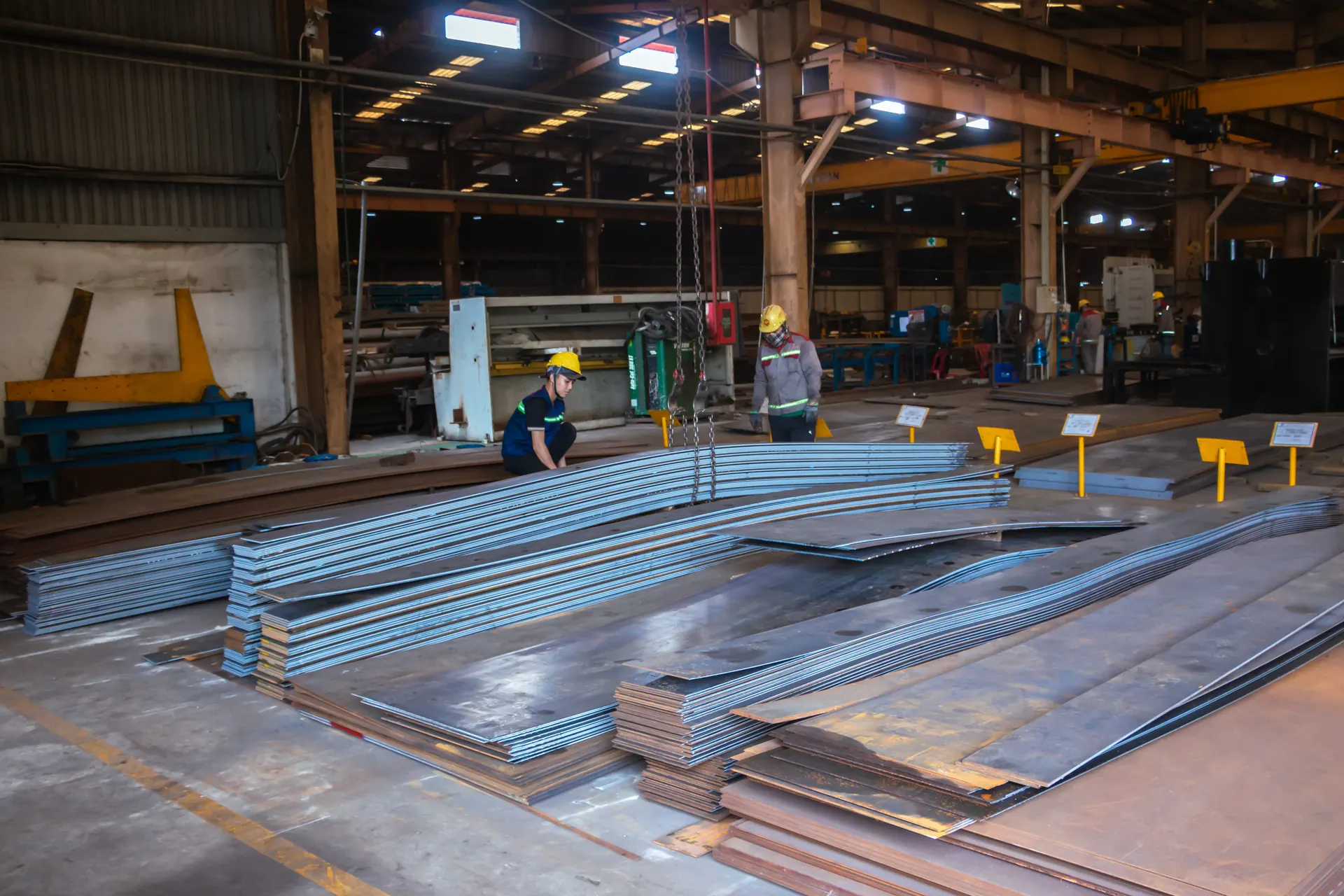
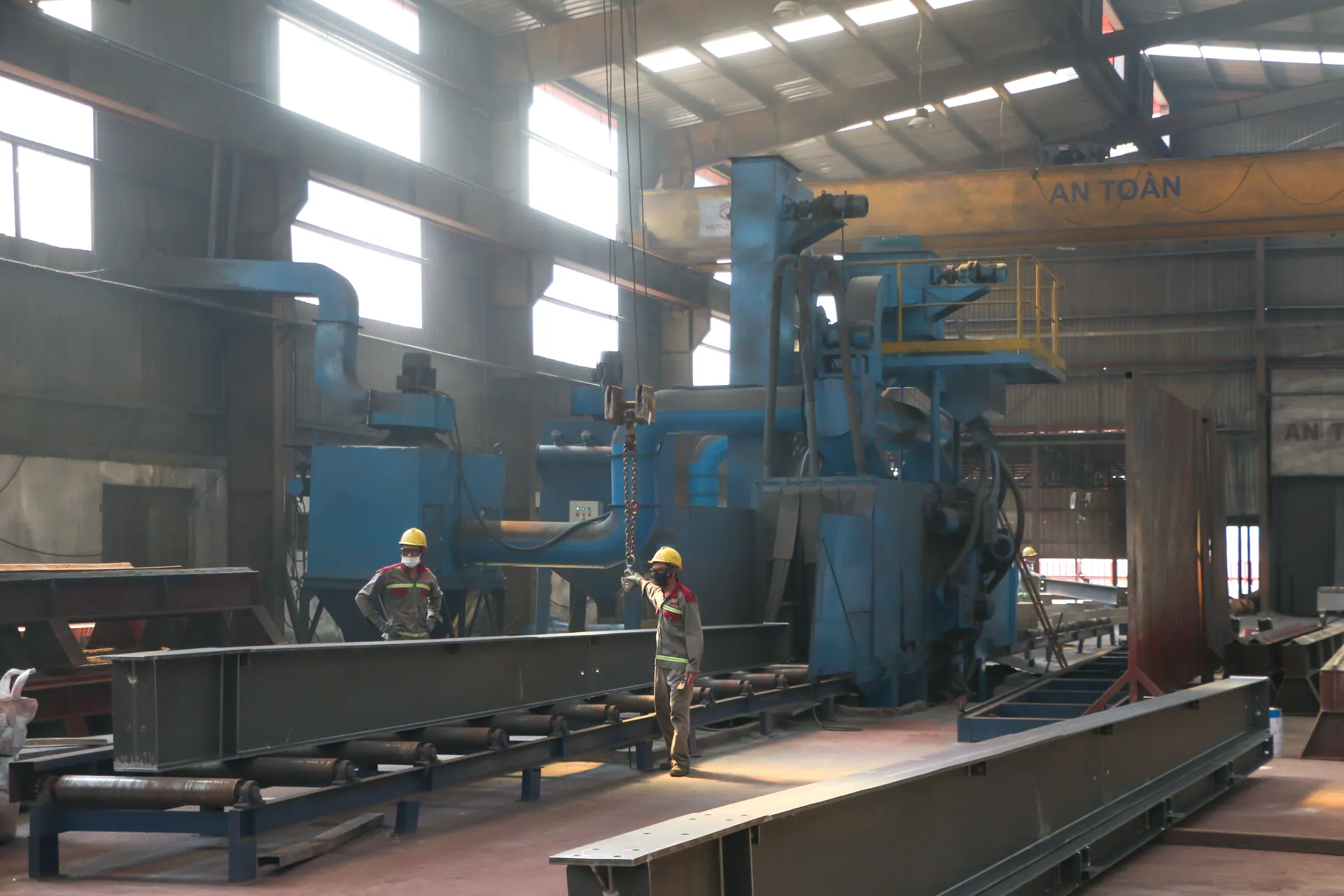
Real photos from World Steel
Steel intake, storage by grade and heat, and preparation
Photographed in our own plant in Tay Ninh Province, Vietnam, and on World Steel jobs. Not stock images.
ASTM never works alone
The standards and guides it works with
Each link opens the full page, with its own questions and answers.
Honest status
The standards on this page are ones US projects commonly specify; naming a standard here does not mean World Steel products carry certification to it. For your job, the grades and their proof go into the submittal, and your Engineer of Record signs off before anything is cut. Domestic-content requirements on public work are confirmed by the buyer, and we make no eligibility claim.
Who does what
World Steel designs, fabricates and supplies the steel structure from its own plant in Vietnam. The US contractor, our customer, erects it, has the drawings approved and sealed by their Engineer of Record and pulls the permit.
Not yet verified Edition: Per specification
Source record: Not recorded yet
Last checked: November 8, 2026. Editions change on a cycle, so your Engineer of Record confirms which one your jurisdiction enforces.
All US codes & standardsWant to see a sample certificate set?
Ask with your RFQ. We send sample EN 10204 3.1 certificates and the material schedule format, so your reviewer knows exactly what will come with your steel.