
Why stronger is not always better
Expected strength drives seismic design
In a capacity-designed frame, the connections, columns and anchors are sized for the force the yielding member can really deliver. If a beam or brace turns out much stronger than assumed, the yielding moves into a weld or a bolt group that was never meant to take it. AISC 341 handles this with Ry and Rt, the ratios of expected to minimum yield and tensile strength for each listed steel specification.
That makes the mill certificate part of the seismic design. The grade, the measured yield and tensile strength and the chemistry on the certificate show that the steel in your frame matches the grade the engineer designed for.
AISC 341 material rules
What the seismic provisions ask of the steel
Listed specifications
Steel in the seismic force-resisting system must meet one of the ASTM specifications AISC 341 lists, with a specified minimum yield no higher than the code allows for that use.
Expected yield and tensile strength
Ry and Rt for each listed grade come from AISC 341 Table A3.2. Your Engineer of Record applies them in the capacity design.
Heavy sections
Hot-rolled shapes with flanges 38 mm (1½ in) and thicker, and plates 50 mm (2 in) and thicker in built-up members and yielding connection plates, need Charpy V-notch toughness of 27 J at 21 °C (20 ft·lbf at 70 °F).
Weld metal toughness
Filler metal for seismic welds meets its own Charpy requirements, set out on our demand-critical welds page.
Weldability
Chemistry and carbon equivalent on the certificate guide the preheat and welding procedure for thick plate.
Bolts and anchor rods
High-strength bolts to ASTM F3125 and anchor rods to the grade on the drawings, each with its own certificate.
Reading the paperwork
What an EN 10204 3.1 certificate shows
A 3.1 inspection certificate is issued by the mill’s authorized inspection representative, independent of the production department, with test results from the delivered product.
| Item on the certificate | Why it matters for a seismic frame |
|---|---|
| Product standard and grade | Shows the steel is a specification AISC 341 accepts for the seismic system. |
| Heat number | Links the certificate to the plate, and the plate to every piece cut from it. |
| Yield and tensile strength | Confirms the strength is in the range the capacity design assumed. |
| Elongation | Evidence the steel stretches before it breaks. |
| Chemical composition | Sets the carbon equivalent that guides preheat and welding. |
| Charpy V-notch results | Required for heavy material in the seismic system and whenever the drawings call for it. |
| Country of melt and pour | Supports the origin documents your customs broker needs at US entry. |
Traceability
How a heat number follows your steel
-
Receiving check
Certificates are checked against the purchase order and the drawings before plate enters the plant.
-
Heat number transfer
Heat numbers are transferred to cut parts and recorded against piece marks.
-
Built-up members
Every flange and web plate in a seismic member is recorded by heat in the cut list.
-
Records released
Certificates and traceability reports go into the Manufacturing Data Record and PEB Studio.
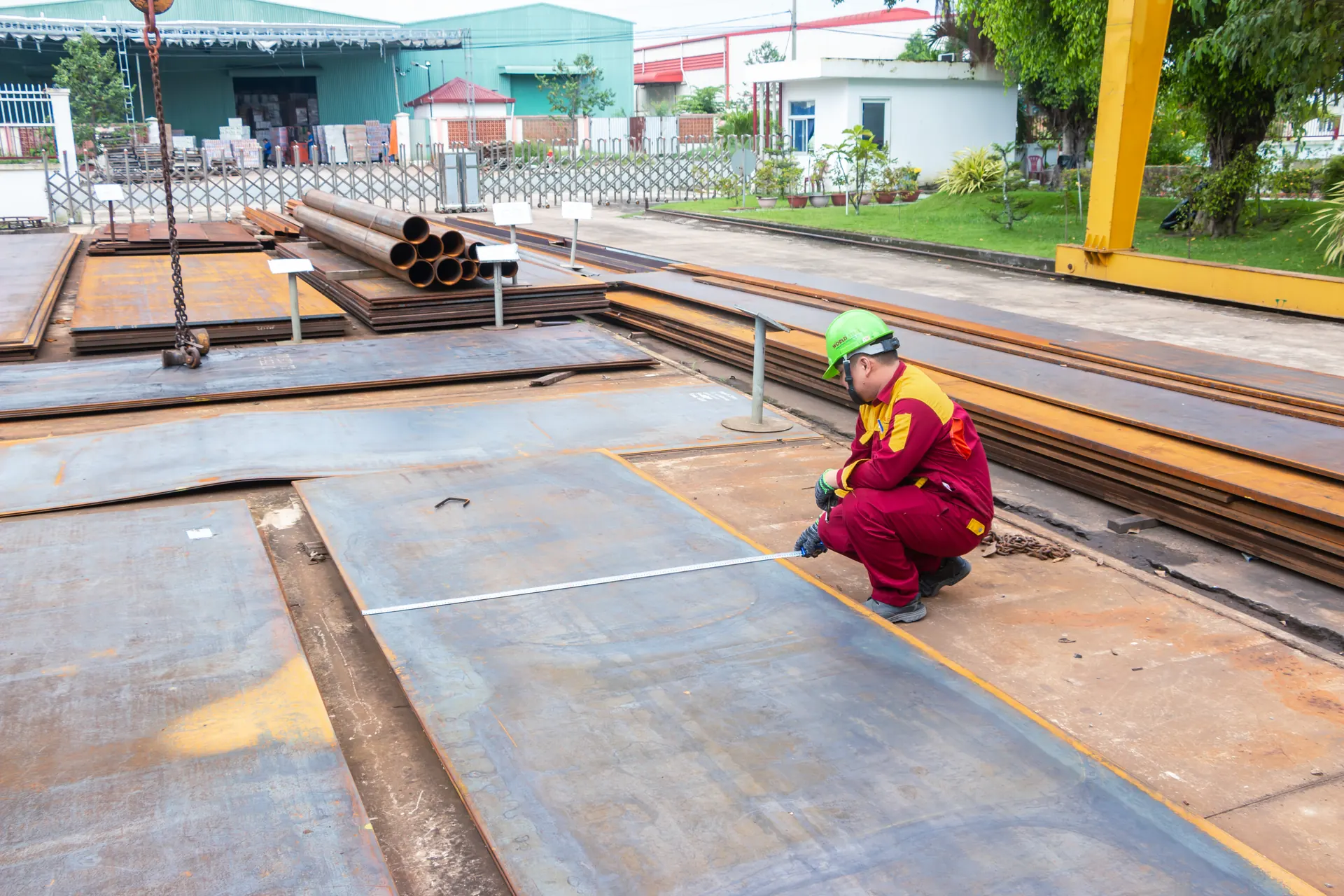
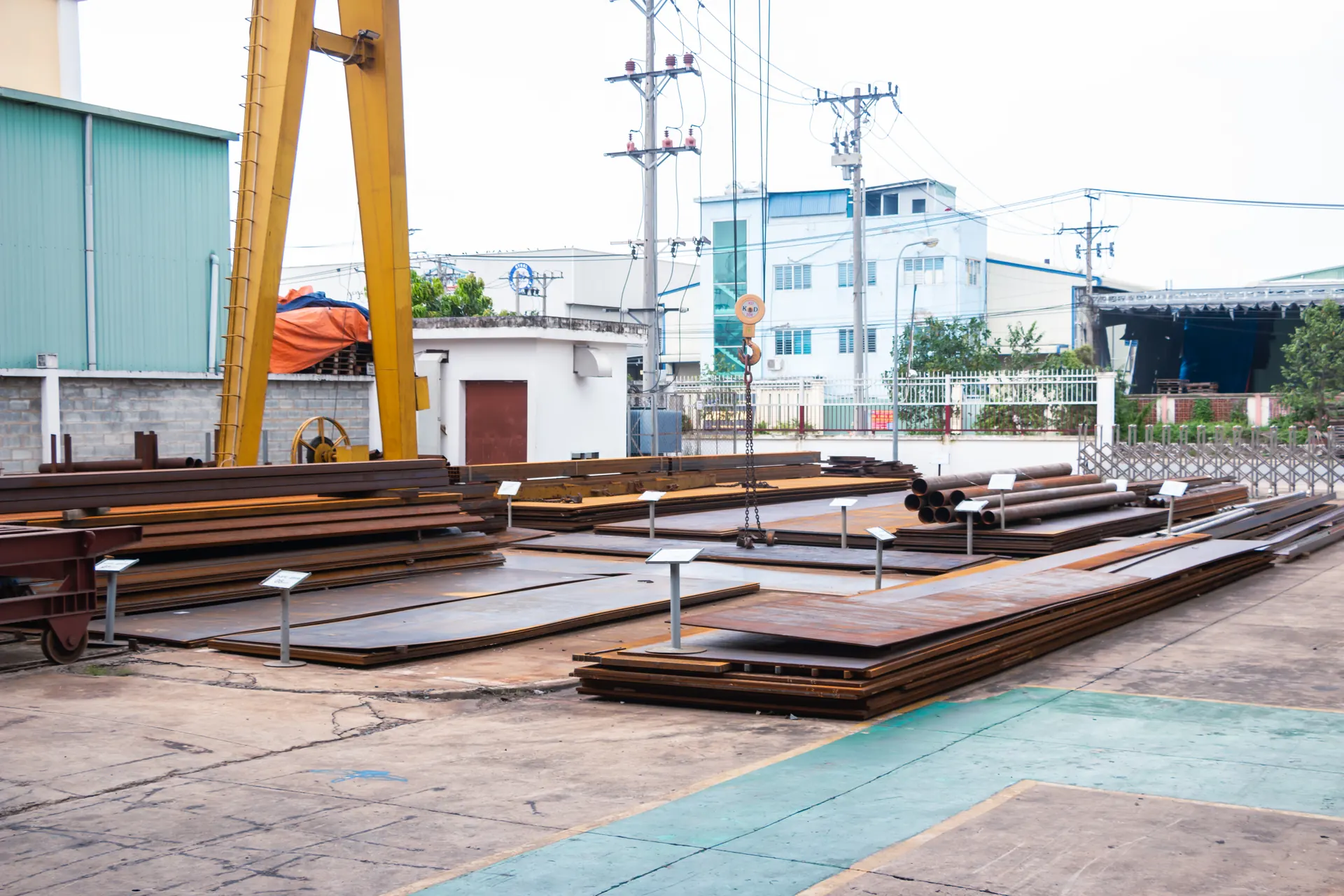
Real photos
From our plant in Vietnam
World Steel’s own shop floors and jobs, where the steel for US projects is made. Not stock images.
How World Steel supports this
Designed to US codes, made in our plant in Vietnam
Materials on record
Steel for your building comes mainly from mills in Vietnam, with Japan, Korea, Indonesia or Thailand when the specification calls for it, each heat on record.
3.1 certificates by heat
EN 10204 3.1 certificates with strength, chemistry and Charpy results where required.
Online before arrival
Certificates released in PEB Studio to your engineer, inspector and customs broker.
The seismic solution ecosystem
Products and solutions behind this guide
The products we make for this part of a seismic structure, the services that come with them and past World Steel projects, all one click away.
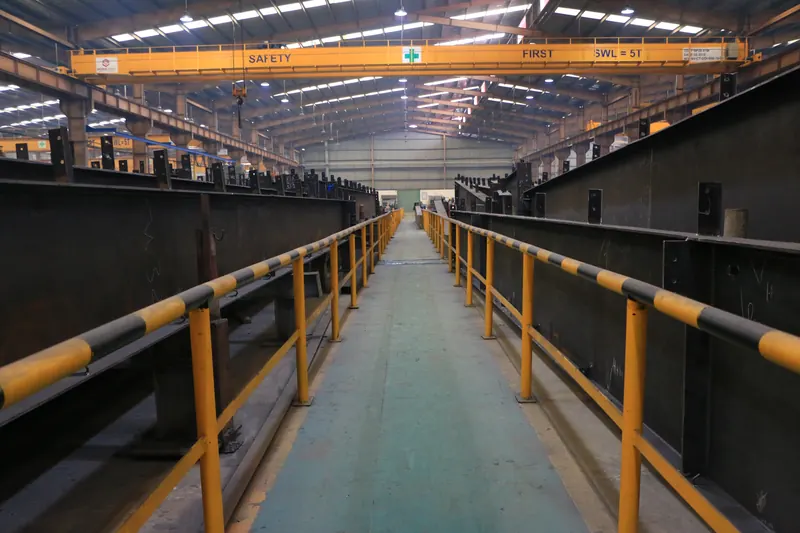
Products made in our plant in Vietnam
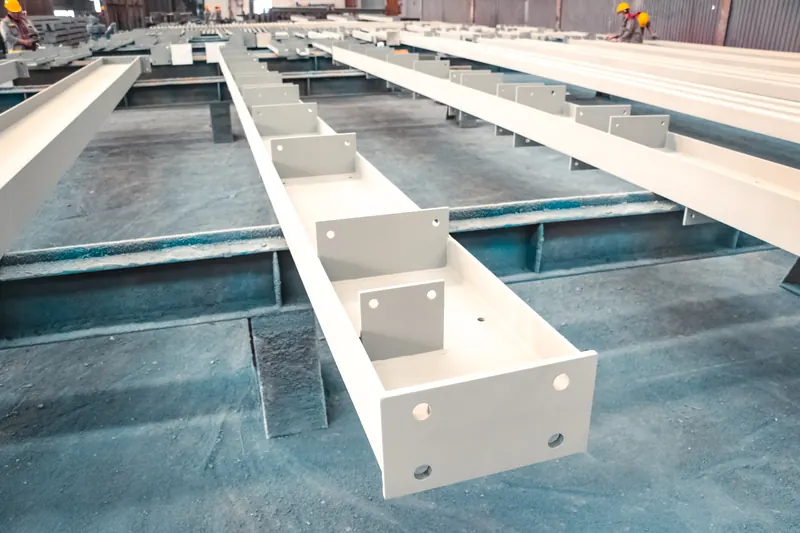
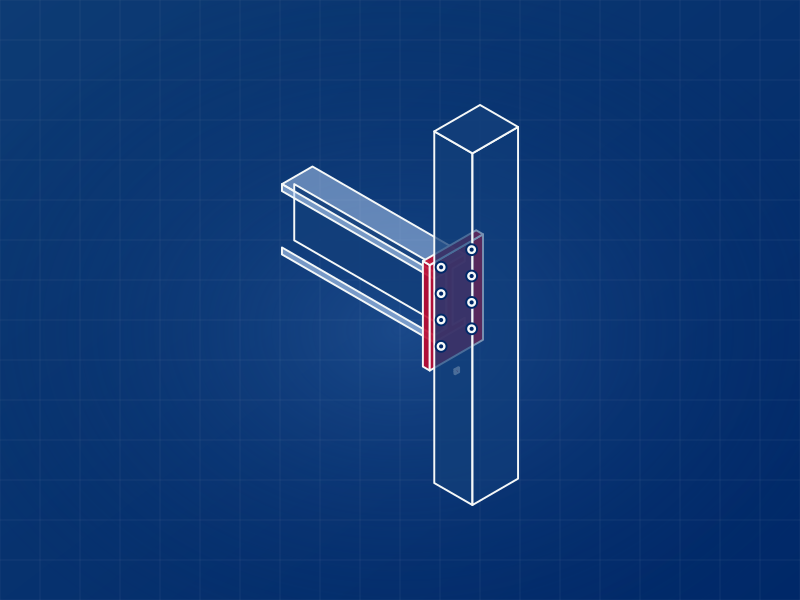
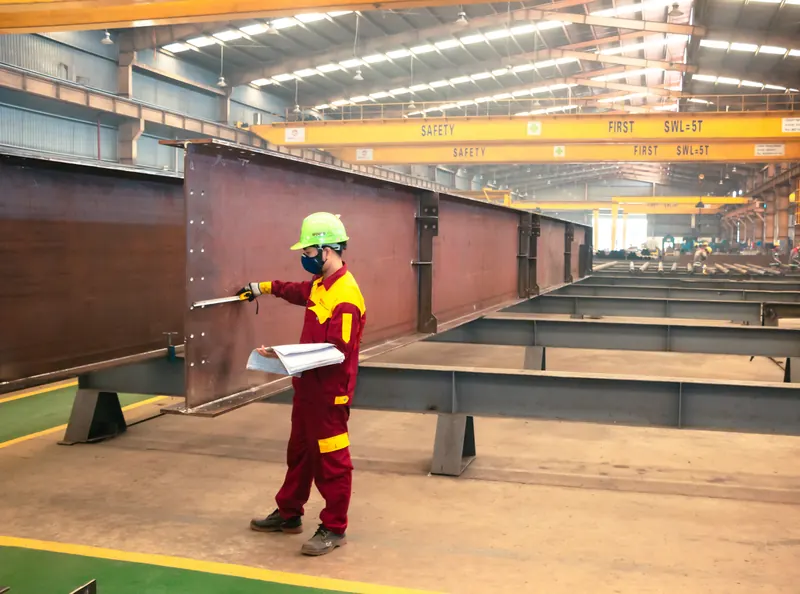
Solutions that come with it
World Steel projects: US codes, Guam, Japan and beyond
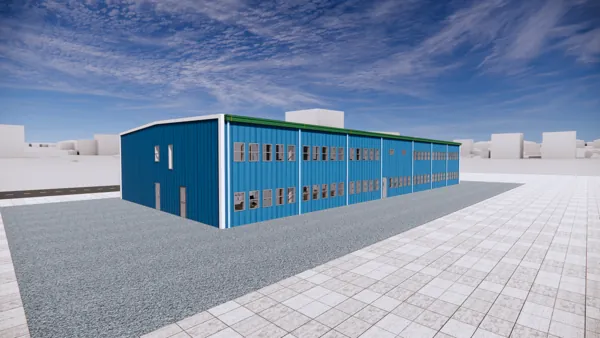 3D model
 Photo
 3D model
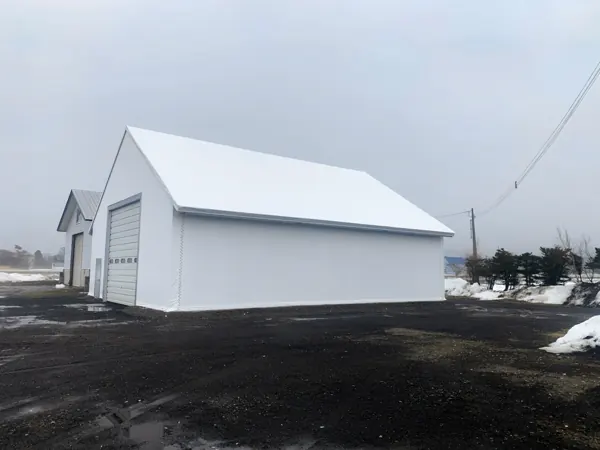
Past World Steel work, shown for the structure type. It does not describe the seismic criteria of any one project.
Standards on this page
Read the standard behind it
Each standard page explains what it covers, the edition we reference and how we apply it. We design and fabricate to these standards; they are not certifications.
Keep reading
Related solutions
Questions from US buyers
Toughness & mill certs: questions we hear
Do my plates need Charpy testing?
Only where AISC 341 or your drawings require it. Most plates in a metal building’s tapered frames are well below the 50 mm (2 in) threshold, so the requirement usually applies to heavy base plates, connection plates or industrial frames.
Is EN 10204 3.1 accepted in the US?
It is widely used for imported steel and gives the mill test results by heat that US engineers and inspectors expect. Your Engineer of Record and building official confirm acceptance for your project.
Why does the certificate matter for Section 232?
The country where the steel was melted and poured is part of the import documentation. Our Section 232 page summarizes the current rules from official sources.
Does World Steel provide shop drawings for seismic work?
Yes. Shop drawings come with every project at no extra charge. We design and fabricate the steel structure, and your Engineer of Record reviews and approves the calculations and drawings.
A plain-English summary for US buyers, not the code text and not engineering advice for a specific site. The adopted codes and standards govern, and your Engineer of Record confirms the criteria for each project.
Talk to a seismic engineer
Send the site address, the soil report if you have one, and what the building is for. We confirm the seismic criteria with your Engineer of Record and return a written scope for steel designed to US codes and made in our plant in Vietnam.