
Where it sits in the US code stack
Where it governs in your building
One beam-to-column joint, every D1.8 detail
Where a seismic weld is won or lost
The 1994 Northridge earthquake showed that small details at a moment connection decide whether it bends or cracks. Each callout below is a D1.8 or AISC 358 requirement we draw on the shop drawings and check in the plant.
Demand-critical CJP weld
Beam flange to column flange. Notch-tough filler, qualified procedure, supplemental welder test, UT after welding.
Weld access hole
Shaped and finished to the D1.8 and AISC 358 profile so it does not become the notch where a crack starts.
Backing removed or reinforced
Bottom flange backing removed, back-gouged and finished with a reinforcing fillet; top flange backing fillet-welded where permitted.
Weld tabs removed
Run-off tabs cut away and ground smooth, then checked by magnetic particle testing where required.
Protected zone
The length of beam meant to yield: no welds, holes, shot pins or attachments, marked on the steel on request.
Continuity plates and doublers
Stiffeners and web doubler plates welded to the column panel zone with their own D1.8 rules.
14 answers from our engineers
AWS D1.8 questions and answers
The questions engineers, special inspectors and contractors in seismic regions ask about AWS D1.8: when it applies, demand-critical welds, filler toughness, welder testing, inspection and records. Pick a topic on the left.
When D1.8 applies 4 answers
Does every steel building in a seismic state need AWS D1.8?
No. D1.8 applies to welds in a seismic force-resisting system designed to AISC 341. Many one-story metal buildings use systems that do not trigger it, even in California. Your Engineer of Record decides from the Seismic Design Category and the system chosen.
Which welds in a braced frame fall under D1.8?
Those the Engineer of Record places in the seismic force-resisting system: typically brace gusset welds, beam-to-column joints in the braced bay and column splices. The drawings must identify them; we confirm the list in writing before fabrication.
Why was D1.8 written after Northridge?
Cracks found at moment-frame joints after the 1994 earthquake traced back to low-toughness filler, backing left in place, notches at weld tabs and sharp access holes. D1.8 collects the rules that came out of that research so every fabricator applies them.
Are any seismic welds made on our site?
The frame is shop welded and field bolted, so the welds in the seismic system are made and tested in the plant. Field welding by other trades sits outside our contract.
Demand-critical welds 4 answers
What is a demand-critical weld?
A weld the Engineer of Record expects to see large, repeated strains in a major earthquake, such as a complete-joint-penetration weld joining a moment-frame beam flange to its column. It needs notch-tough filler, a qualified procedure and more testing.
What Charpy toughness must filler metal show for demand-critical welds?
At least 27 J at −29 °C (20 ft·lbf at −20 °F) from the filler classification, plus 54 J at 21 °C (40 ft·lbf at 70 °F) proven for the heat input range actually used. Filler certificates showing both go into the record.
What is the supplemental welder test?
A D1.8 test for welders making complete-joint-penetration demand-critical welds, using a joint with a restricted-access plate that mimics welding a beam bottom flange through the access hole. Only welders who pass it make those welds on your job.
What is the heat input envelope, and why does it matter?
Toughness of the deposited weld depends on how much heat goes in per length of weld. D1.8 requires the filler to be proven at the low and high ends of the heat input used in production, and welders stay inside that range.
Inspection and testing 3 answers
Which tests do seismic welds receive?
Every weld is inspected visually. Complete-joint-penetration welds in the seismic system receive ultrasonic testing as AISC 341 Chapter J assigns, and magnetic particle testing is applied at weld tab and backing removal areas where required.
Can our inspector check the seismic welds in Vietnam?
Yes. Hold points for seismic welds can be witnessed in person at the plant or live over Zoom or Microsoft Teams, by you, your special inspector or a third-party agency, and the video is archived.
What is lamellar tearing, and how is it controlled?
A crack parallel to the surface of thick plate under a heavy weld pulling through its thickness. It is controlled by joint detailing, by ultrasonic checks of the base metal near large T-joints where specified, and by the welding sequence.
Records and status 3 answers
Does World Steel hold an AWS certification for D1.8?
No AWS company certification is claimed. Seismic welds are fabricated to D1.8 where your design requires it, and the proof is project-specific: procedures, filler certificates, welder qualifications and test results your reviewer can check.
Are your welding procedures and welders qualified to D1.8?
Yes. Our shop welding procedures and welders are qualified to AWS D1.8 for seismic work, and the qualification records for the procedures and welders on your joints go into the submittal.
What seismic welding records go into the Manufacturing Data Record?
The confirmed list of seismic and demand-critical welds, the procedures, filler certificates with Charpy results, welder qualifications including supplemental tests, UT and MT reports, and the shop drawings marking protected zones.
More answers on every US code we design to: search all standards questions.
The code in brief
Why seismic welds have their own supplement
After the 1994 Northridge earthquake, inspectors found cracked welds at beam-to-column joints in steel moment frames that had looked perfect on paper. The research that followed showed the cause was not one bad welder but a combination of low-toughness filler metal, backing bars left in place, notches at weld tabs and sharp weld access holes. AWS D1.8, the Structural Welding Code Seismic Supplement, collects those lessons into rules a fabricator follows.
D1.8 never stands alone. Every weld is still made to AWS D1.1, and D1.8 adds requirements to the welds the Engineer of Record places in the seismic force-resisting system. AISC 341 names D1.8 for those welds, and ASCE 7 decides through the Seismic Design Category and the chosen system whether AISC 341 applies at all.
Who welds to what
D1.1, D1.3 and D1.8 on one metal building
| Weld | Base code | D1.8 added? |
|---|---|---|
| Web-to-flange seams on gravity frames | AWS D1.1 | No |
| Purlin clips and light-gauge accessories | AWS D1.3 | No |
| Welds in braced frames and moment frames of the seismic system | AWS D1.1 | Yes, where the system is designed to AISC 341 |
| Demand-critical welds the drawings designate | AWS D1.1 | Yes, with notch-tough filler and added testing |
| Column splices and base plate welds in the seismic system | AWS D1.1 | Yes, as the Engineer of Record designates |
What D1.8 adds
Six requirements a seismic weld must meet
Notch-tough filler metal
Filler for seismic welds must show Charpy V-notch toughness. For demand-critical welds that means at least 27 J at −29 °C (20 ft·lbf at −20 °F) and 54 J at 21 °C (40 ft·lbf at 70 °F), proven for the heat input actually used.
Demand-critical welds
The welds the Engineer of Record marks as demand-critical, such as beam-flange to column joints in moment frames, get the tightest filler, procedure and inspection rules.
Weld access holes
Access hole shape and finish follow D1.8 and AISC 358 so they do not become the notch where a crack starts.
Backing and weld tabs
Steel backing and run-off tabs are removed or reinforced as D1.8 requires, and the removal areas are ground and checked.
Protected zones
Nothing is welded, shot or tacked in a protected zone, the stretch of a beam or brace that must yield cleanly.
Extra welder testing
Welders making complete-joint-penetration demand-critical welds pass a supplemental test that copies the restricted access of the real joint.
On the shop floor
How we apply D1.8 on your job
-
Read the seismic drawings
We list every weld your Engineer of Record places in the seismic force-resisting system and every demand-critical weld, and confirm the list in writing.
-
Procedures for seismic joints
Each seismic joint type gets a welding procedure built on a D1.1 procedure, with the filler toughness and heat input range D1.8 asks for.
-
Welders qualified for the joint
Only welders with the supplemental qualification make demand-critical complete-joint-penetration welds.
-
Detailing in Tekla
Access holes, backing, tabs and protected zones are drawn on the shop drawings, so the shop floor sees them before cutting.
-
Inspection to the plan
Visual inspection of every weld, plus the UT and MT that AISC 341 and D1.8 assign to seismic welds, at hold points you can witness online.
-
Records under the piece mark
Filler certificates, procedures, welder records and test results are filed per piece in PEB Studio and closed into the Manufacturing Data Record.
Where it shows up
States where D1.8 welding is routine
California
Much of the state falls in Seismic Design Category D or higher, so braced and moment frames often fall under AISC 341 and D1.8.
Washington and Oregon
The Cascadia subduction zone puts Seattle, Tacoma and Portland sites in high categories with long-duration shaking.
Alaska
Anchorage and the southern coast sit on one of the most active plate boundaries in the world.
Utah and Nevada
The Wasatch Front and northern Nevada lie in the Intermountain Seismic Belt, where seismic detailing is common on industrial buildings.
Buildings that need it most
Where seismic welds carry the most weight
Warehouses with high racking
Heavy storage and tall racks raise the seismic mass, so braced bays and their connections work harder.
Plants with cranes and mezzanines
Crane runways and mezzanines add weight high in the frame and often call for special braced or moment frames.
Hangars and long spans
Large door openings leave fewer bays to brace, so the welded frames that remain carry more of the earthquake.
Essential facilities
Risk Category IV buildings such as fire stations and emergency centers face the highest design forces and the strictest review.
Request these
Seismic welding records for your submittal
- The list of seismic and demand-critical welds, confirmed by your Engineer of Record
- Welding procedures for each seismic joint, with the D1.1 qualification behind them
- Filler metal certificates showing the Charpy toughness D1.8 requires
- Supplemental qualification records for welders on demand-critical joints
- UT and MT reports for the welds AISC 341 and D1.8 single out
- Shop drawings marking protected zones, access holes and backing removal
Who does what under AWS D1.8
Seismic welds start with the drawings, not the welding machine
D1.8 only applies to welds the Engineer of Record marks as demand critical or part of the seismic force-resisting system. The work behind them splits three ways.
World Steel
- Welds seismic joints with AWS D1.8-qualified procedures and welders
- Uses filler metals with the toughness the supplement calls for
- Handles weld tabs, backing and access holes as the drawings and D1.8 require
- Files each seismic weld result under its piece mark
US contractor and Engineer of Record
- Mark the seismic force-resisting system and demand critical welds on the drawings
- Set the protected zones and any extra testing
- Approve the shop drawings that carry those marks
Quality assurance agency
- Carries out the quality assurance tasks of AISC 341 Chapter J
- Reviews the seismic welding records
- Witnesses hold points at the plant or over video
Seismic plan review
Four comments a seismic reviewer writes, and the record that answers each
On a seismic job, the reviewer wants to see the supplement applied to the right welds and only those.
-
“Identify the demand critical welds.”
AISC 341 and AWS D1.8What our package showsDemand critical welds are flagged on the shop drawings as your Engineer of Record marks them, and tracked separately in the records.
-
“Show the filler metal toughness.”
AWS D1.8 filler metal requirementsWhat our package showsThe filler metal classification and its toughness certification are listed in each seismic WPS.
-
“Are the welders qualified for seismic work?”
AWS D1.8 qualificationWhat our package showsWelder records show the D1.8 qualification for the joints they weld.
-
“Keep the protected zones clear.”
AISC 341What our package showsProtected zones are marked on the drawings and kept free of attachments; marking on the steel is available on request.
Go deeper
Four pages that sit beside D1.8 on a seismic job
The seismic design, the procedures and the certificates each have their own page.
AISC 341 seismic provisions
The seismic design rules that trigger D1.8.
AISC 341 →WPS and PQR
How seismic welding procedures are qualified.
WPS and PQR guide →Charpy-tested plate
EN 10204 3.1 certificates with impact results on request.
EN 10204 explained →Seismic steel structures
Seismic systems we supply, from design to delivery.
Seismic steel structures →
In-depth articles
Seismic fabrication under AWS D1.8, step by step
Twenty in-depth articles that follow a seismic weld from the drawings to the last test report. Each one explains a part of AWS D1.8:2025 in plain terms and lists the checks a general contractor can ask the fabricator about.
What the code covers, which welds are Demand Critical, and the data the drawings must carry.
Toughness, heat input, cold service, lots, moisture and mixed processes.
The WPS, the restricted access welder test and the bottom flange sequence.
Access holes, backing, weld tabs, k-area details, Protected Zones and repairs.
Who inspects what, inspector qualifications, and UT and MT done the D1.8 way.
Real photos from World Steel
Seismic frames and heavy welds from our plant
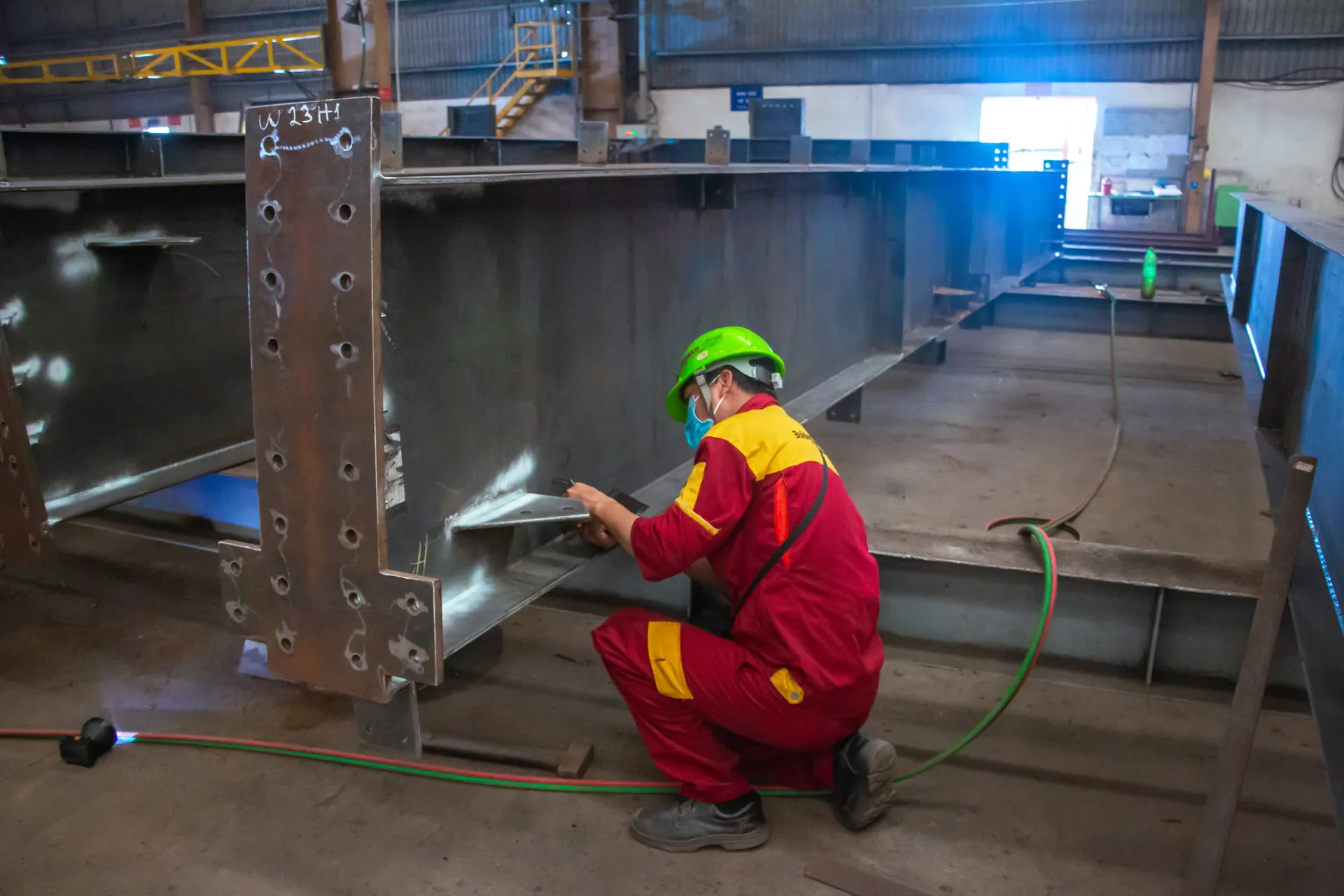
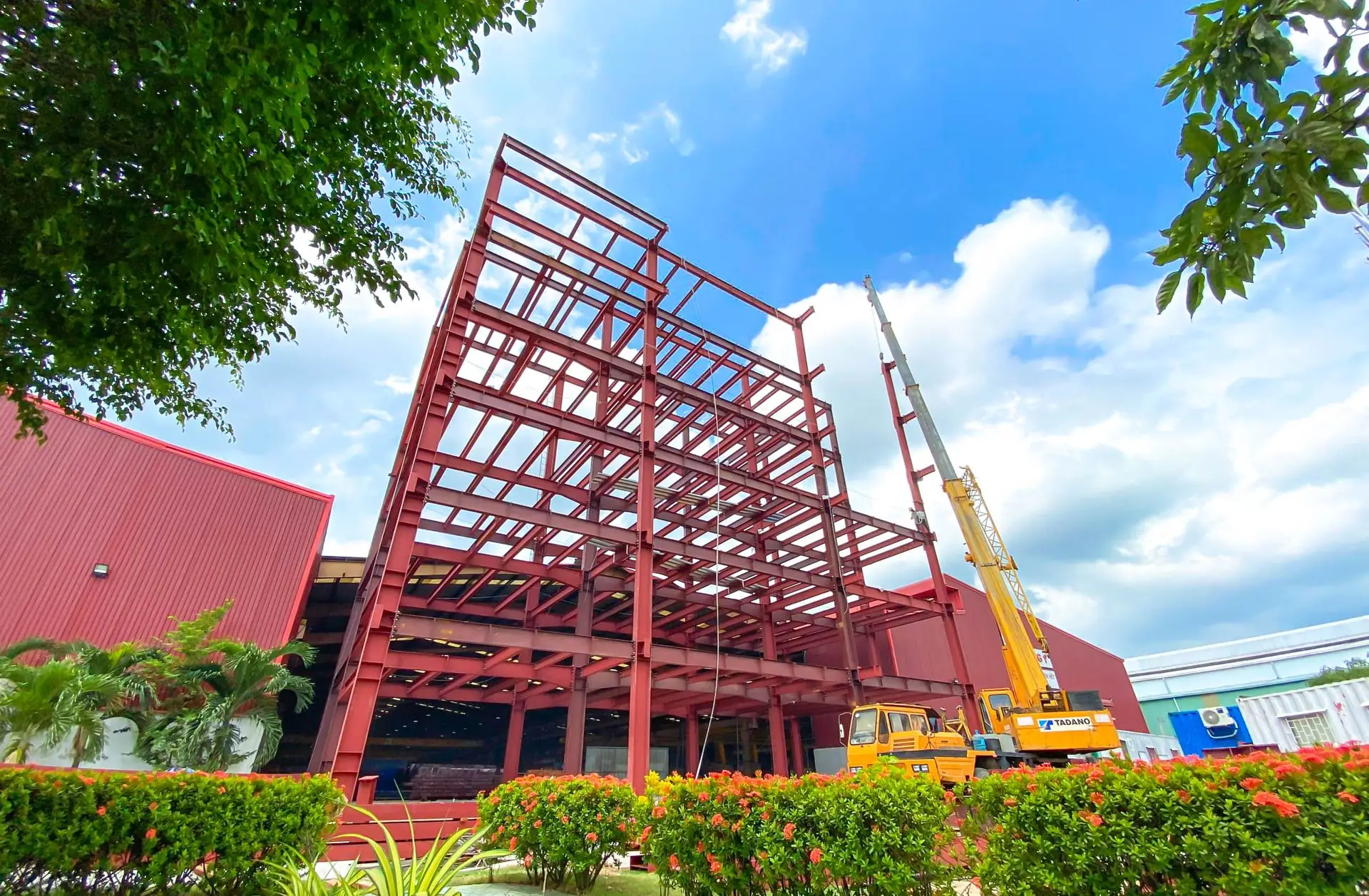
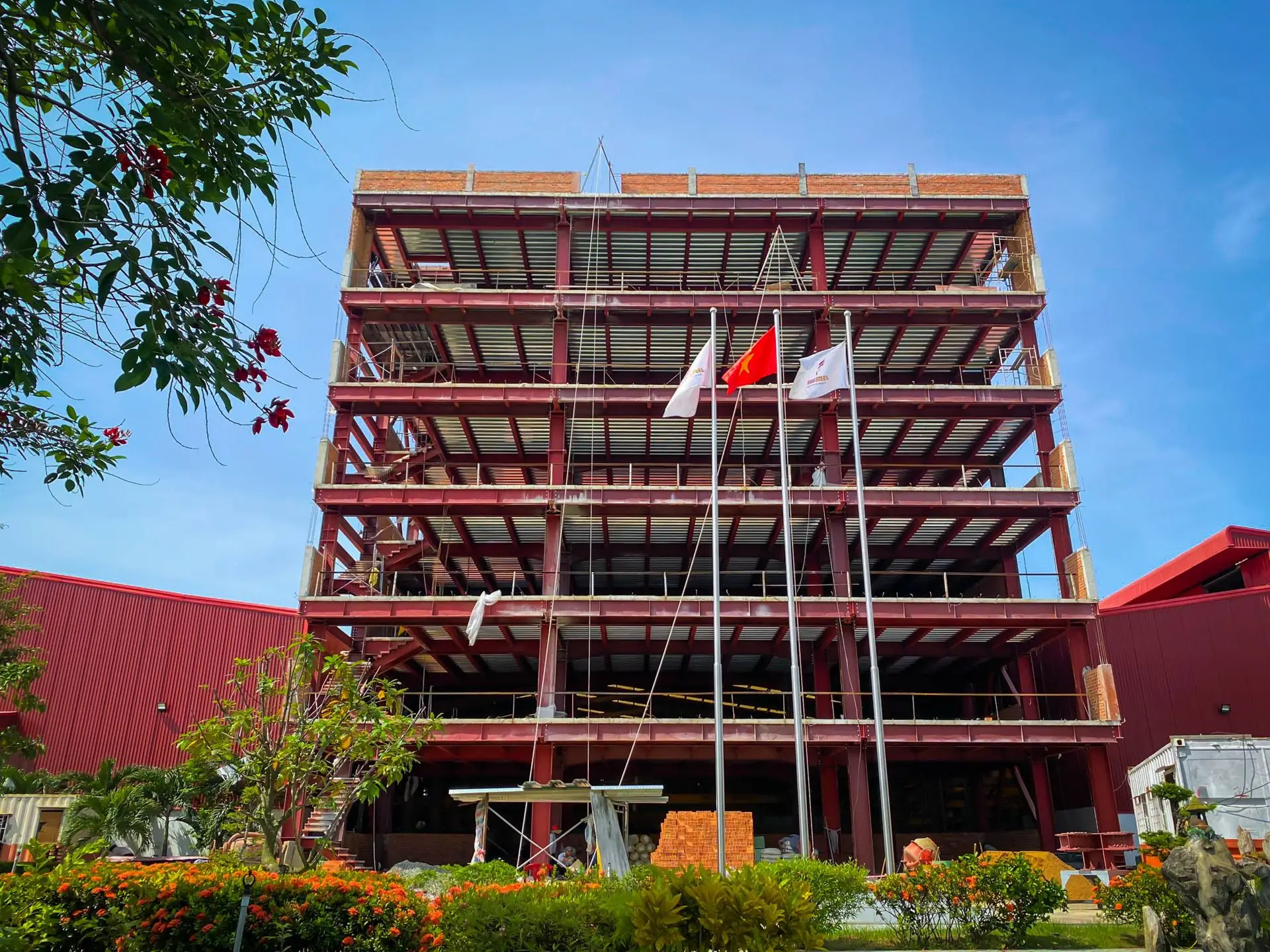
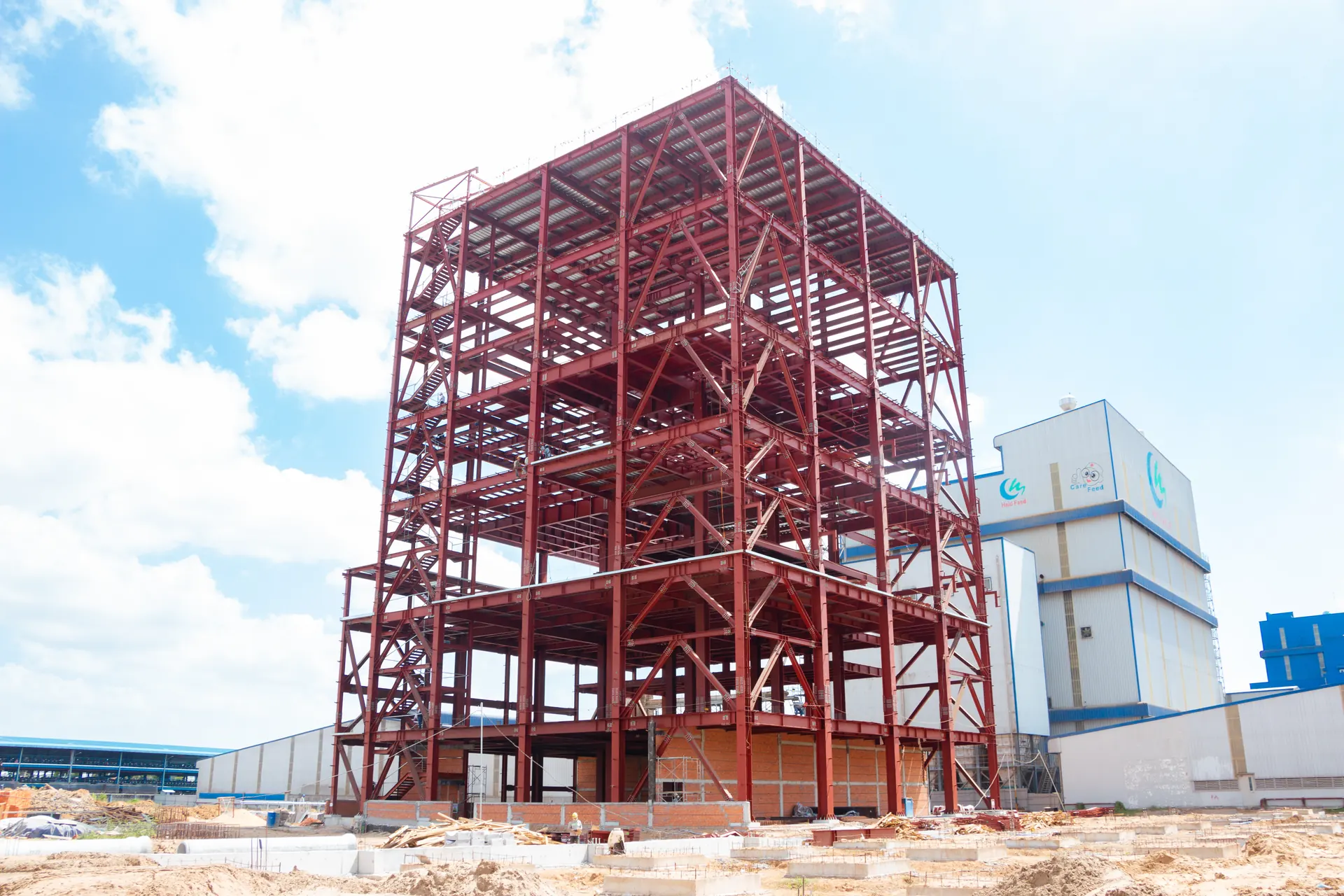
Photographed in our own plant in Tay Ninh Province, Vietnam, and on World Steel jobs. Not stock images.
AWS D1.8 never works alone
The standards and guides it works with
Each link opens the full page, with its own questions and answers.
Honest status
World Steel fabricates seismic welds to AWS D1.8 where your project's seismic design requires it, proven per project by procedures, filler certificates, welder records and inspection results. No AWS company certification is held or claimed. Whether D1.8 applies, and to which welds, is set by your Engineer of Record under ASCE 7 and AISC 341.
Who does what
World Steel designs, fabricates and supplies the steel structure from its own plant in Vietnam. The US contractor, our customer, erects it, has the drawings approved and sealed by their Engineer of Record and pulls the permit.
Details confirmed in quote Edition: AWS D1.8/D1.8M:2021, as referenced by AISC 341-22
Source record: https://www.aws.org/
Last checked: —. Editions change on a cycle, so your Engineer of Record confirms which one your jurisdiction enforces.
All US codes & standardsHave a braced or moment frame in a high seismic category?
Send the seismic drawings. We list every seismic and demand-critical weld, confirm the list with your Engineer of Record and fabricate them with D1.8-qualified procedures and welders.