
The warm side moves
Pick a climate. Watch the wall reorder.
Condensation forms where warm, moist air meets cold steel. Which side is warm depends on the climate, so the vapor retarder moves with it.
Bar shows the warm side for most of the year. Illustration only.
Zones 1–2
Hot-humid
Gulf Coast, Florida, south Texas
Humid outdoor air is the moisture source, so the vapor control sits toward the outside and the inside can dry.
Bar shows the warm side for most of the year. Illustration only.
Zone 3
Warm
Georgia, the Carolinas, southern California
Moisture drives both ways over the year. The design team places the retarder for the building’s use.
Bar shows the warm side for most of the year. Illustration only.
Zone 4
Mixed
Virginia, Tennessee, Kansas
Heating and cooling seasons are close in length, so the assembly is checked for both.
Bar shows the warm side for most of the year. Illustration only.
Zone 5
Cool
Ohio, Illinois, Colorado
Warm, moist indoor air is the risk in winter, so the vapor retarder sits on the warm inside face.
Bar shows the warm side for most of the year. Illustration only.
Zones 6–7
Cold
Minnesota, Wisconsin, Maine
Long heating seasons: a continuous retarder on the inside face and sealed laps keep condensation out of the steel.
Label versus assembly
The wall is rated, not the roll
- Product label versus finished assembly
- An R-value or fire classification printed on a product is not the rating of the finished wall or roof. Energy and fire compliance are judged on the assembly.
- Condensation control
- Where the warm side of the wall sits depends on climate and use: a heated shop in Minnesota and a cooled warehouse in Texas need the vapor retarder in different places.
- Project code requirements
- IECC or ASHRAE 90.1 envelope values depend on climate zone and occupancy and are confirmed by the design team.
Large-project capacity
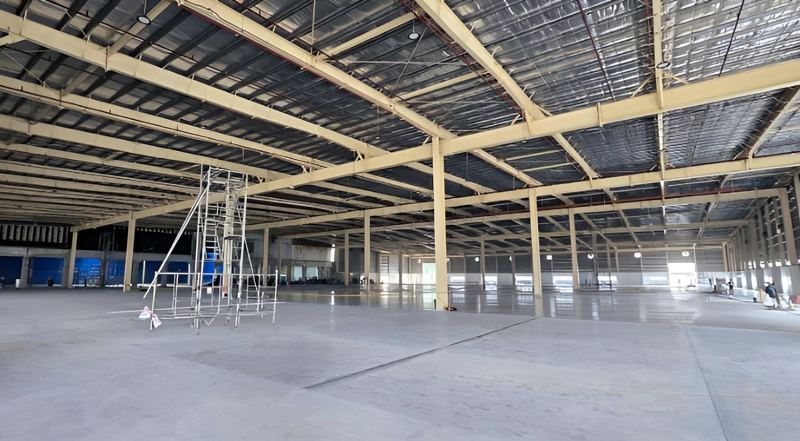
Envelopes for large, conditioned buildings
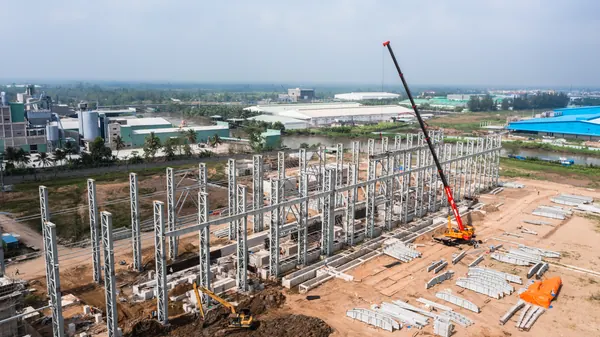
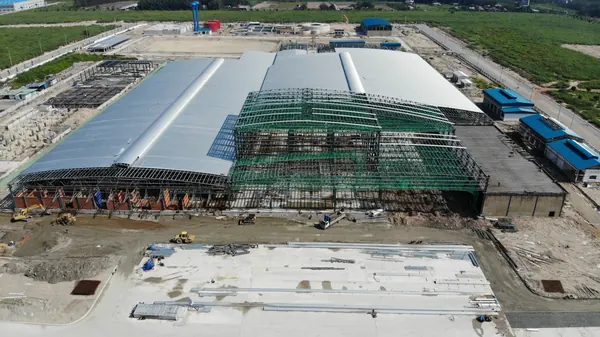
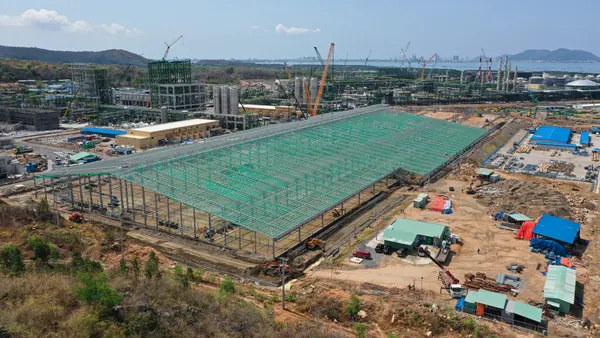
World Steel fabricates 2,500 metric tons (about 2,750 short tons) of structural steel a month in its own IAS AC472-accredited plant in Vietnam, so the steel package of a large US job runs as one order.
2,500 metric tons a month
In the catalog
Insulation items in the catalog
 Illustration
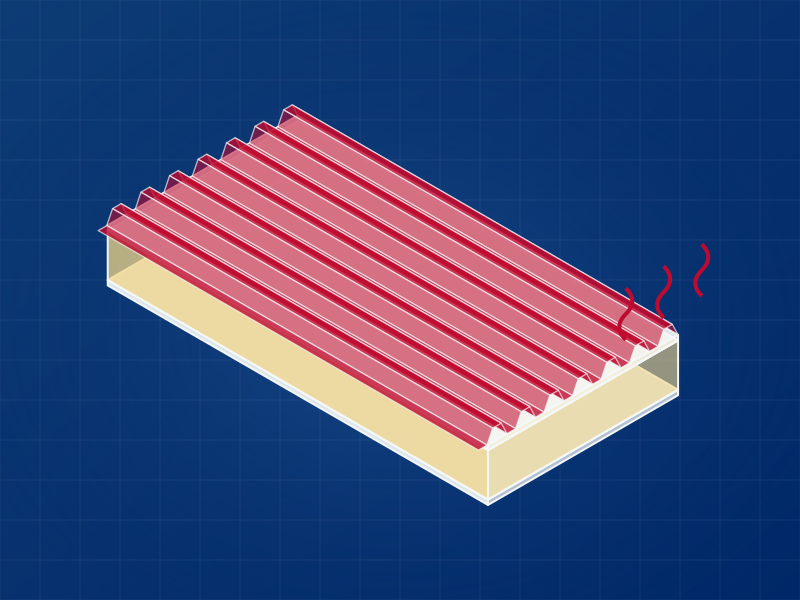
Vapor Control Layers
Facings and membranes placed on the warm side of the insulation to keep moist air out of the roof and wall cavities. Made by World Steel in Vietnam Verified
Illustration
Thermal Breaks
Insulating strips or spacers set between panels and purlins or girts to cut heat flow through the steel. Made by World Steel in Vietnam Verified
Illustration
Acoustic Insulation
Sound-absorbing insulation and liners for gyms, workshops and plants where echo or machinery noise matters. Made by World Steel in Vietnam Verified
Illustration
Condensation Control Systems
Anti-drip membranes and detailing that stop moisture forming under roof sheets and dripping onto stock or equipment. Made by World Steel in Vietnam Verified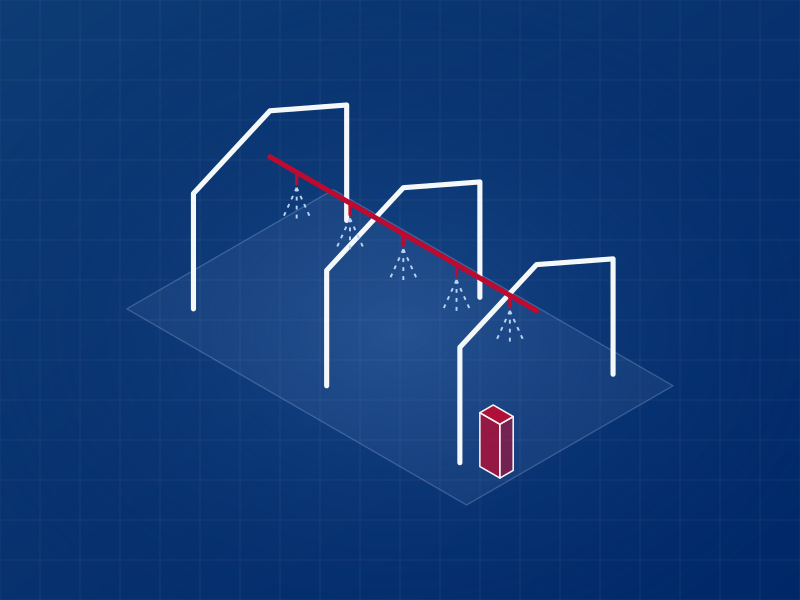 Illustration
Selected Fire-Rated Assemblies
Roof and wall build-ups that can carry a fire-resistance rating only when they match a tested, listed design. Made by World Steel in Vietnam VerifiedWhere it meets the other systems
Roof insulation sits over the purlins under the sheets, or comes built into insulated panels.
Design limit: Thicker insulation needs longer screws and can change the panel standoff or clip height. · What gets checked: Look for an unbroken vapor retarder with every facing seam taped.
Wall insulation goes behind the wall sheets, unless insulated metal panels are used instead.
Design limit: Screw length and trim depth follow the insulation thickness, the same as on the roof. · What gets checked: Insulation and vapor retarder run unbroken around doors, windows and louvers.
Scope, in writing
What we supply and what stays with your team
World Steel, our plant in Vietnam
- Insulation, facings and liner panels supplied with the roof and walls
- Assembly details for laps, edges and penetrations drawn on the shop drawings
- Product data for the design team’s energy code check
The US contractor, our customer
- The energy code compliance path (IECC or ASHRAE 90.1) with your design team
- Drawing approval, the PE seal and the permit with your Engineer of Record
- Installation at site and air sealing by your crew
- Fire-resistance requirements set by occupancy and construction type
Questions from US contractors
Insulation questions and answers
6 answers, grouped by topic.
Energy code 2 answers
Which energy code does the insulation follow?
The one adopted where the building stands, usually the IECC or ASHRAE 90.1. Envelope values depend on the climate zone and occupancy and are confirmed by the design team.
Is the R-value on the label the value of the wall?
No. An R-value printed on a product is not the rating of the finished wall or roof. Energy and fire compliance are judged on the whole assembly, including the steel and fasteners.
Condensation 2 answers
Where does the vapor retarder go?
On the warm side of the assembly, which changes with climate and use. A heated shop in Minnesota and a cooled warehouse in Texas need it in different places.
How do you stop condensation dripping from a metal roof?
With the right insulation thickness, a continuous vapor retarder on the warm side and sealed laps and penetrations, all shown on the shop drawings.
Large projects 2 answers
Do you supply insulation for cold storage?
Yes, alongside the steel. Our cold-storage work includes New Era in Vietnam, where the first phase was about 1,000 t of steel. Insulated panels and their values are confirmed with your design team.
Can a fire rating be included?
Only where an approved, listed assembly applies to your project. Ratings are never assumed from a product label.
Keep reading
Related pages
Price it or partner with us
Tell us the climate and the use.
Send the site address and what happens inside. We supply the insulation and vapor control with the roof and walls, detailed for your design team’s energy check.
Why US contractors price with us
2,500 t / month
Own plant capacity, about 2,750 short tons
IAS AC472
Accredited since 2019, audited twice a year
Up to 5,000 t
Largest single job: Sunpro Steel, 2024
Short project form
Have this system engineered for your site
Ask an engineer directly, or drop the basics below. You get a written scope of supply for a US-code building, checked by engineering first.
Or call +84 902 881 833