Skip to content
Seeking US contractor partners IAS AC472 ACCREDITED ★ METAL BUILDINGS ★ AC472 IAS AC472 accreditedIAS AC472
World Steel USA

US site conditions · Corrosion

Coatings specified for your exposure, not copied from a catalog

What eats steel in Galveston is not what eats it in Buffalo or on an Iowa hog farm. Coastal sites fight salt spray and humidity, northern sites fight de-icing salt thrown up around docks and drive aisles, and livestock buildings fight ammonia and constant moisture. We pick the protection for the exposure you actually have, apply it in our own plant and log every coat before the steel ships.

A typical shop paint system, layer by layer

  1. TopcoatPolyurethane: color, gloss and UV resistance
  2. IntermediateEpoxy build coat: barrier thickness
  3. PrimerZinc-rich: sacrificial protection at the steel
  4. Blast profileAbrasive-blasted surface the primer grips
  5. SteelMember or plate, traced by heat number
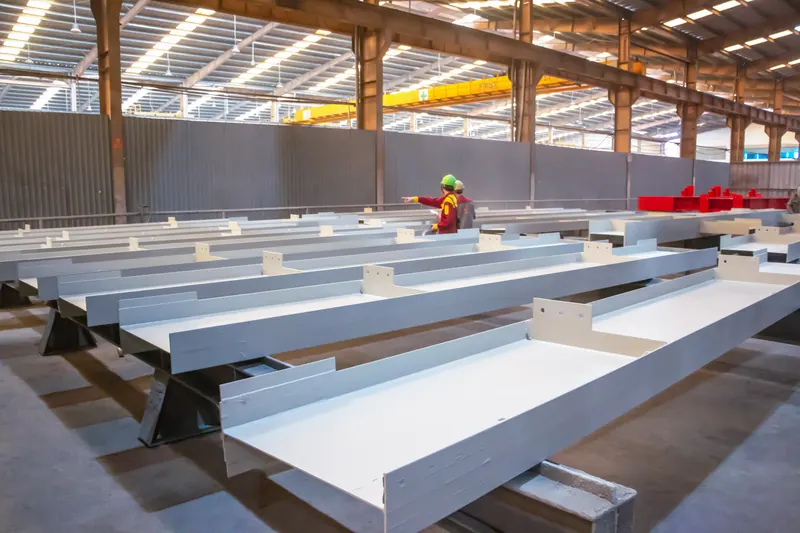
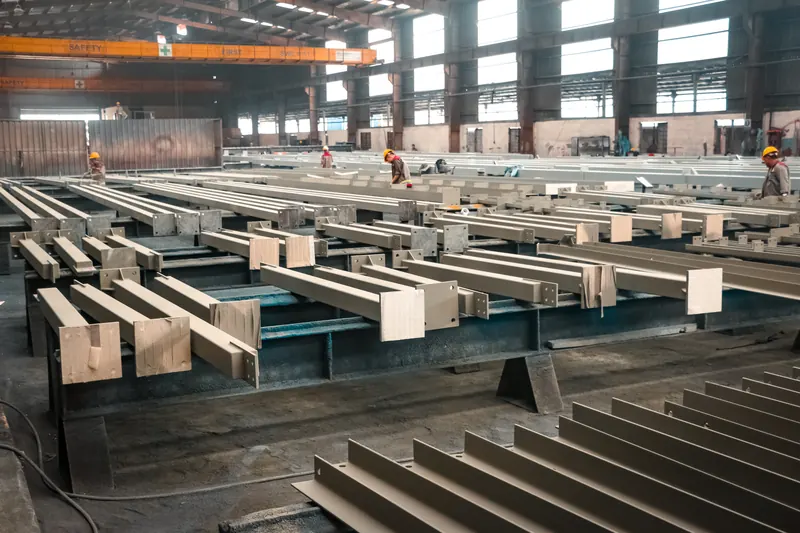
Coated members drying in rows on stands in the paint hall

Exposure, ISO 9223 and ISO 12944-2

How harsh is the air around your building?

ISO 12944-2 lists typical settings for each corrosivity category. The true category depends on salt, moisture, chemicals and shelter, so treat the bands below as a first guess an engineer confirms.

  1. C1–C2

    Closed, heated and dry interior

    Condensation or doors left open push it higher

  2. C2–C3

    Rural or suburban site inland

    Industry and heavy traffic nearby raise it

  3. C4–C5

    Gulf or Atlantic shoreline, livestock barns, road-salt zones

    Salt or ammonia drives the rate

  4. C5–CX

    Waterfront, port, chemical or fertilizer plant

    Needs a specialist system and closer inspection

Not sure where your site falls? The Site Durability Advisor gives a first estimate from distance to the shore, de-icing salt and process fumes.

ISO 12944 paint system ladder

One in-depth guide for every corrosivity category

Climb from the dry interior to the surf line. Each guide explains the environment, the first-year loss of bare steel and zinc, and the paint systems, film thickness, preparation grades and inspection the ISO 12944 series points to for that rung.

New to the scale? Start with ISO 12944 categories at a glance. Figures are the ISO 9223 / ISO 12944-2 category limits; system builds are typical and the coating maker's data sheet governs.

Protection

Three ways to keep structural steel from rusting

Each system is written into a coating specification for your approval before a single member is blasted.

Factory paint system

ISO 12944-5 type systems

Abrasive blasting followed by zinc-rich primer, an epoxy mid-coat and a polyurethane topcoat, with the number of coats and film builds set by the exposure and the durability your specification names.

Best for: Most buildings, any color, interior and exterior steel
Hot-dip galvanizing

ASTM A123 members, A153 hardware

A metallurgically bonded zinc layer that shrugs off ocean freight and rough handling on site, with the galvanizer's certificate in your records.

Best for: Exposed members, canopies, galvanized purlins and girts

Duplex

Paint over ASTM A123 galvanizing

Paint applied over galvanizing for the harshest coastal or farm exposure. The two layers shield each other, so together they outlast either one alone.

Best for: Shoreline, ports, livestock and fertilizer buildings

The coating products we apply carry UL certification, and our painters are trained and certified by the paint manufacturer. Products and film builds are named in the coating specification for your approval before production.

Detailing

Design moves that help any coating last

A coating fails first where water sits, where two plates trap salt or where two metals meet. Our detailers design those places out in the Tekla model.

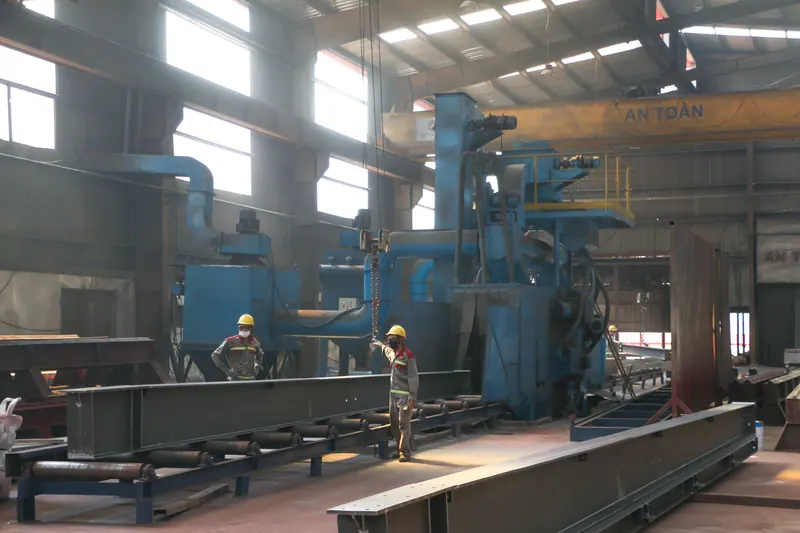
Inside our blasting and coating station
  • Let water escape

    Members and joints are drained or sealed so rain, snowmelt and washdown water never sit on the steel.

  • Close the gaps

    Plate-to-plate crevices are sealed or welded shut because they hold salt and moisture against the steel.

  • Keep metals apart

    Wherever stainless, aluminum or copper meets carbon steel, a nonconductive separator breaks the galvanic circuit.

  • Plan for repairs

    Touch-up products and methods are specified up front for scuffs from shipping and erection.

Large coastal project · Flagship project · Oil and gas

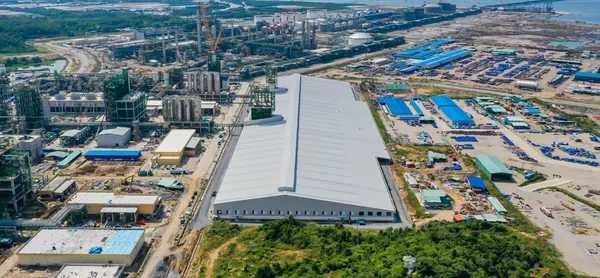
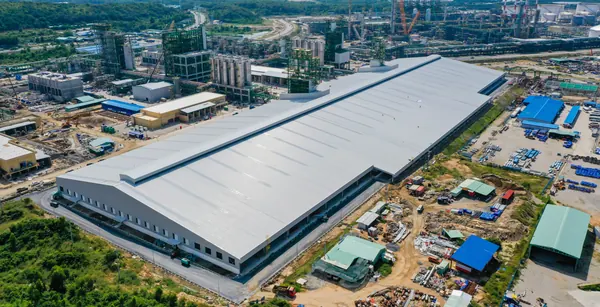
Long Son petrochemical complex: more than 56,000 m² of steel structures

At the Long Son petrochemical complex in Ba Ria–Vung Tau, Vietnam, World Steel designed, fabricated and supplied about 2,000 metric tons of steel structures covering more than 56,000 m² (about 600,000 sq ft) for the oil and gas sector. Process plants like this hold steel to strict owner specifications: traceable materials, full inspection records and close coordination with the piping and equipment contractors on a crowded site.

The site sits on the Ba Ria–Vung Tau coast. Our plant fabricates 2,500 metric tons of structural steel a month, so a coastal package of this size is a normal month.

  • SectorOil and gas, petrochemical
  • Structural steelAbout 2,000 t (2,200 short tons)
  • Covered areaMore than 56,000 m² (about 600,000 sq ft)
  • LocationLong Son, Ba Ria–Vung Tau, Vietnam
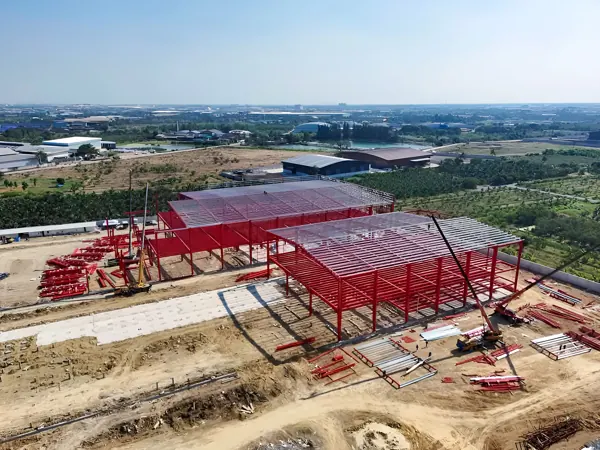
Long Son petrochemical complex, steel structures by World SteelLong Son petrochemical complex, steel structures by World Steel

Our paint hall

Blasted, coated and measured in our own plant

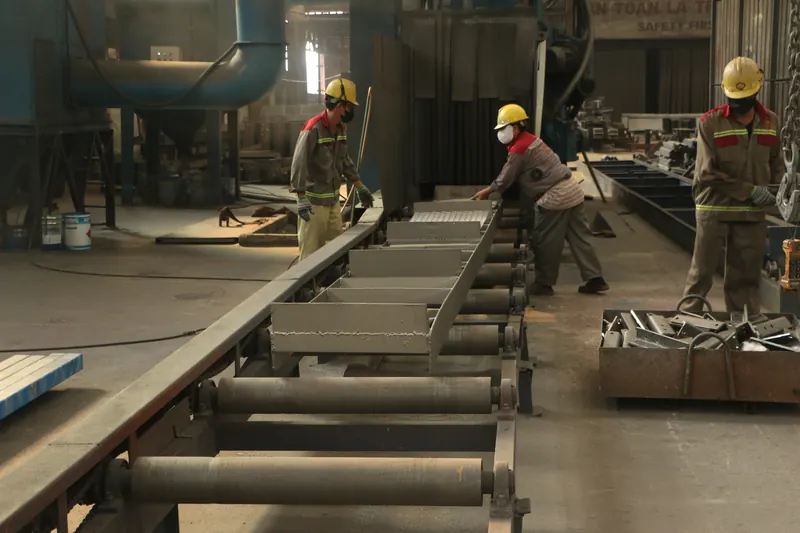
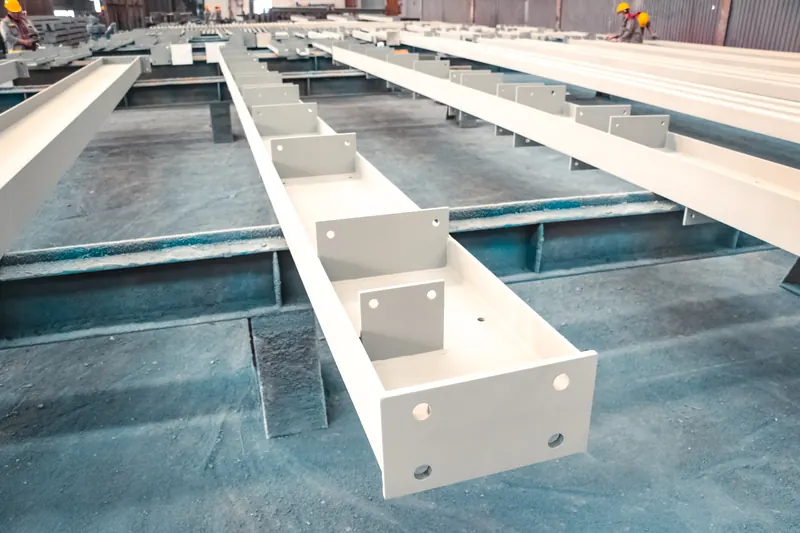
Real photos from the World Steel blasting line and paint hall.

Crew loading steel parts onto the shot-blasting conveyor
Roller conveyor carrying members into a shot-blasting machine
Primed column with its bolted end plate set on painting stands
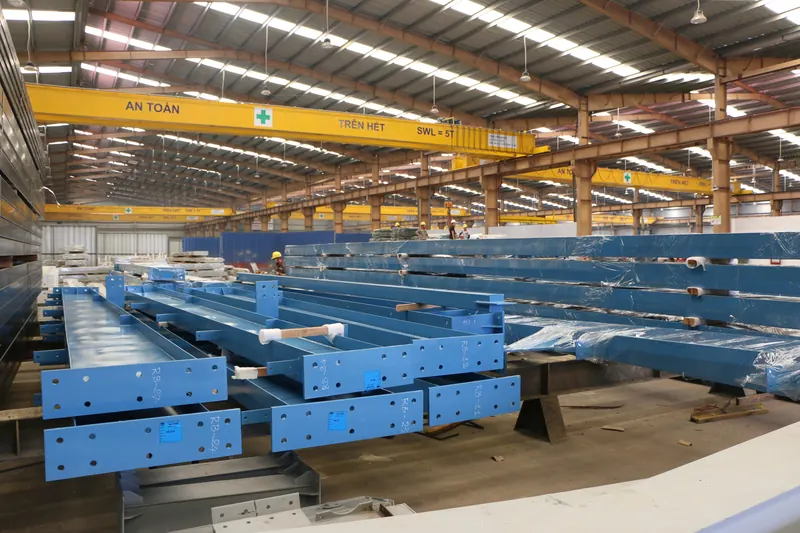
Blue-coated frames waiting under the shop crane to be packed
Members in gray finish paint laid out in the paint hall
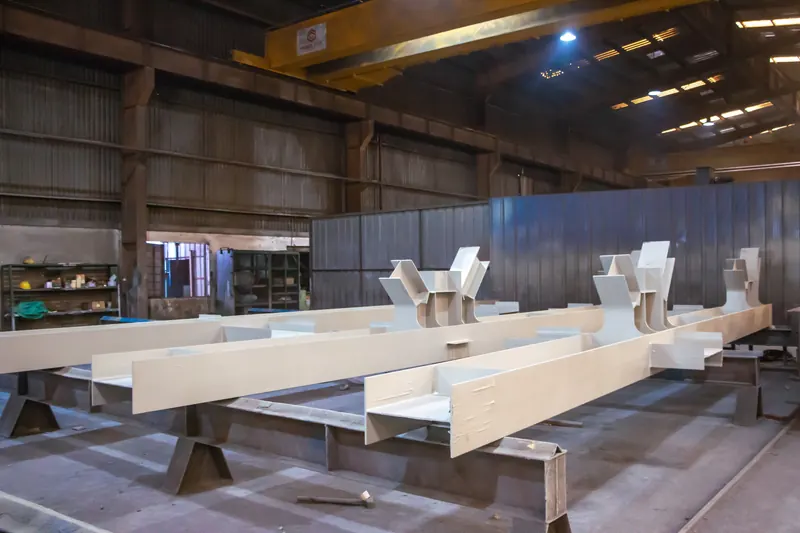
Coated frame parts with welded brackets in the paint hall

Coating records at handover

Coating specificationBlast standard, products and number of coats
Blast profile readingsMeasured surface profile before priming
Dry film thicknessReadings for each coat, member by member
Adhesion testsWhere your specification asks for them
Galvanizer's certificatesFor every galvanized item
Touch-up methodStep-by-step field repair for the system chosen

Every coat, every member

Readings go into the Manufacturing Data Record and are visible in PEB Studio while your job is in production. You can witness the coating hold point live by video.

Asked by US project teams

Corrosion protection questions

11 answers from our engineers, grouped by topic.

Reading your exposure 4 answers

Is galvanizing always the answer near the ocean?

Not always. It suits many coastal members, but in the harshest settings owners often step up to a duplex system. Appearance, the exposure and how easily the steel can be reached for upkeep all weigh in.

Does road salt really affect a metal building?

It does around loading docks, wash bays and parking in the Snow Belt. Salty slush splashes onto columns, base plates and the bottom of wall panels, so those areas may need heavier protection than the rest of the building.

What about barns and other agricultural buildings?

Ammonia, moisture and manure make livestock interiors hard on steel. We specify protection for that interior exposure and assume ventilation and regular washdown are part of the owner's plan.

How far from the shore does salt matter?

Salt deposition falls off quickly in the first few hundred meters from the water and depends on prevailing wind, surf and shelter. Our quote form asks your distance to the shoreline; the Site Durability Advisor gives a first estimate before an engineer confirms it.

Choosing a system 4 answers

Can different parts of one building get different coatings?

Yes, and on large jobs it often saves money. Interior frames in a dry, heated space may need a lighter system than exposed canopies, dock columns or members in a washdown area. The coating specification lists each zone.

Are the coating products certified?

The coating products we use carry UL certification, and our painters are trained and certified by the paint manufacturer. The products for your job are named in the coating specification you approve.

Do bolts and screws get the same protection?

They get protection compatible with the members around them, such as hot-dip galvanized hardware to ASTM A153 or coated fasteners matched to the panel system, so the hardware is not where rust starts.

Can you match a coating system our owner already specifies?

Yes. Send the specification and we price and apply that system, or tell you where a different product or film build would fit our process better, for your approval.

Records and warranty 3 answers

How do we know each coat was applied as specified?

Blast profile and dry film thickness are measured and logged member by member in our plant. The readings sit in the Manufacturing Data Record and can be seen in PEB Studio, and you can witness the paint hold point by video.

Will you guarantee how many years the coating lasts?

No. ISO 12944 durability ranges help plan maintenance, but they are not a warranty. Life depends on the real exposure, prompt touch-up of damage and how the building is kept.

Who repairs coating damaged during shipping or erection?

The erector touches up on site with the products and method named in our touch-up procedure, which comes with the drawings. Bundles are packed with dunnage and edge protection to keep that work small.

Keep reading

Related engineering guides

Each one goes deeper on a part of the design this page touches.

All eight US site-condition guides, the standards we design to and the IAS AC472 program are on the engineering & standards hub.

Get an engineer’s eyes on your US building

Share drawings, a sketch or the footprint and site address. We agree the design criteria with your Engineer of Record, then send a written scope and the list of submittals, from a plant that fabricates 2,500 metric tons of structural steel a month.