
The case for shop application
What shop-applied fire protection gives a US project
Controlled conditions
Steel temperature, air temperature, humidity and dew point are kept inside the manufacturer’s limits for every coat, so cure is predictable.
Consistent thickness
Members are coated at a comfortable working height and turned as needed, which gives more even film build than spraying overhead from a lift.
Records by piece mark
Surface preparation, batch numbers and thickness readings are tied to each member and handed over with the steel.
A faster, simpler site
Fewer lifts and scaffolds, no fireproofing crew waiting for the frame, and more room for the trades that follow.
Weather taken out
Rain, cold and humidity on site no longer stop or spoil the coating work.
Less site containment
Less overspray, masking and cleanup around finished work, and fewer solvent-bearing coatings applied on site.
How it runs in our plant in Vietnam
From bare steel to a coated, wrapped member
-
Blast
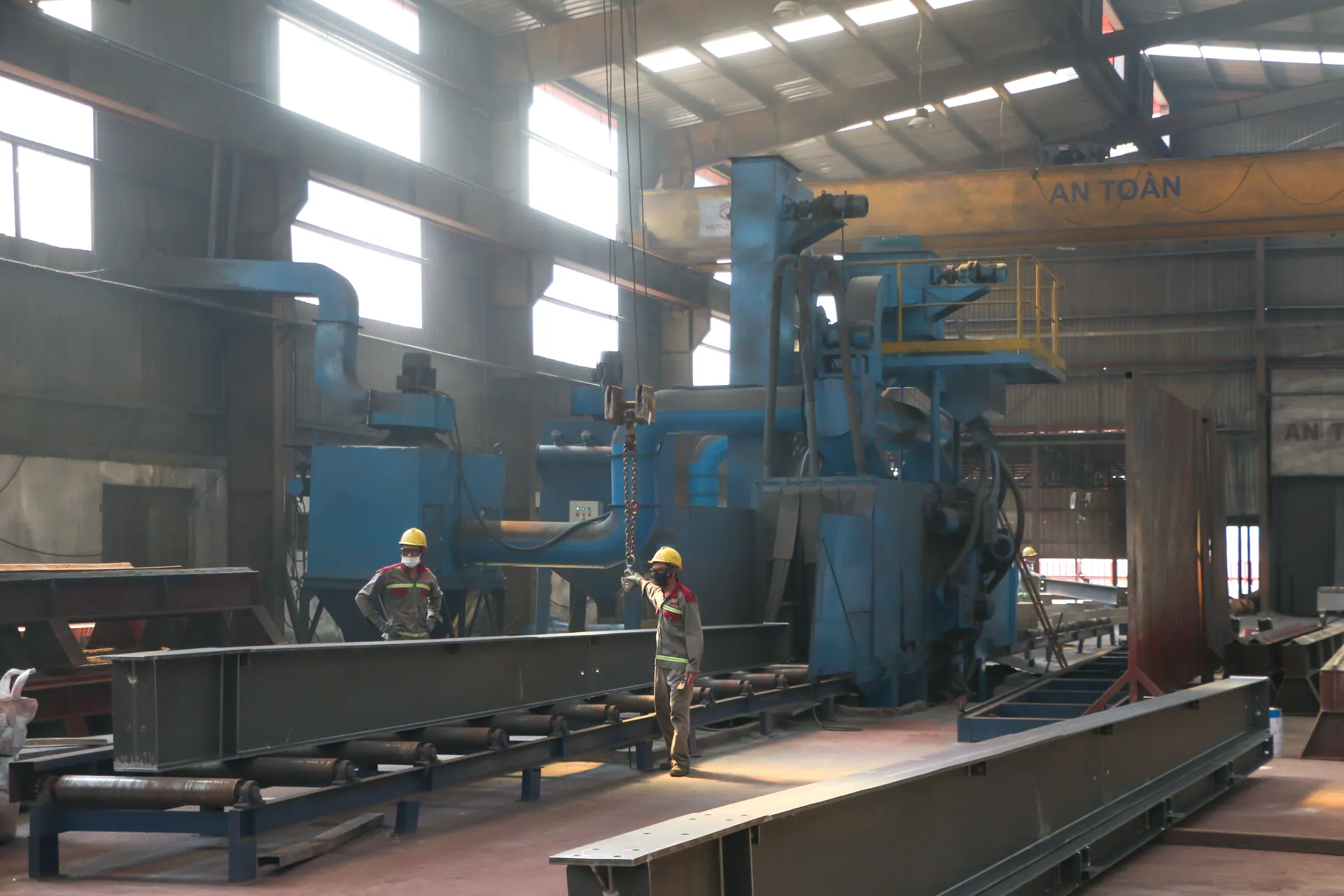
Members go through the automatic shot blaster to the cleanliness and profile the coating manufacturer specifies.
-
Prime
The primer accepted for the listed system goes on within the time allowed after blasting.
-
Mask
Slip-critical faying surfaces, bolt holes and field-weld zones are masked as the shop drawings show.
-
Coat
The listed intumescent is built up in coats to the thickness in the schedule, each coat checked before the next.
-
Seal
An approved topcoat or sealer goes on where the system or the voyage calls for one.
-
Cure
Members stay on stands until the coating is hard enough to handle and stack, by the manufacturer’s data.
-
Measure
Dry film thickness readings are taken and recorded before QC releases the piece.
-
Pack
Soft slings, padded dunnage and wrapping protect the coating for the trip to your US port.
Plan for these
The realities of coating before shipping
Shop application works when these are planned from the start, not discovered at the port.
Connections stay open
Slip-critical faying surfaces, bolts and field welds cannot be coated in the shop. They are coated on site after erection, and the area is often larger than people expect.
Handling damage
Chains, forks and steel-on-steel contact chip coatings. We use soft slings, edge protectors and dunnage, and the erector needs the same care.
The voyage
Ocean shipping means weeks of humidity and condensation. The product, topcoat and packing must be suited to transit, and the manufacturer confirms it.
Touch-up on site
Repairs use the same listed product, by an applicator the manufacturer approves, and are inspected like the original work.
Inspection at the shop
The building official may want the shop-applied coating inspected at the plant or verified on arrival. Agree the approach before coating starts.
Not every product suits it
Some thin-film products are made for site application indoors. Shop and export use favors robust, fast-curing systems, chosen with the manufacturer.
Clear split of work
Who does what with shop-applied fire protection
| Task | Who does it |
|---|---|
| Ratings, listed designs and product selection | Architect, fire protection engineer and Engineer of Record |
| Thickness schedule from the listing | Coating manufacturer, with the design team; we link it to piece marks |
| Blasting, priming and shop coating to the schedule | World Steel, in our plant in Vietnam, to the manufacturer’s instructions |
| Shop thickness records and Manufacturing Data Record | World Steel |
| Erection, connection coating and touch-up | The US contractor, our customer, and its applicator |
| Firestopping at penetrations and joints | The US contractor’s firestop installer |
| Special inspection and final acceptance | Inspectors approved by the building official, and the fire marshal |
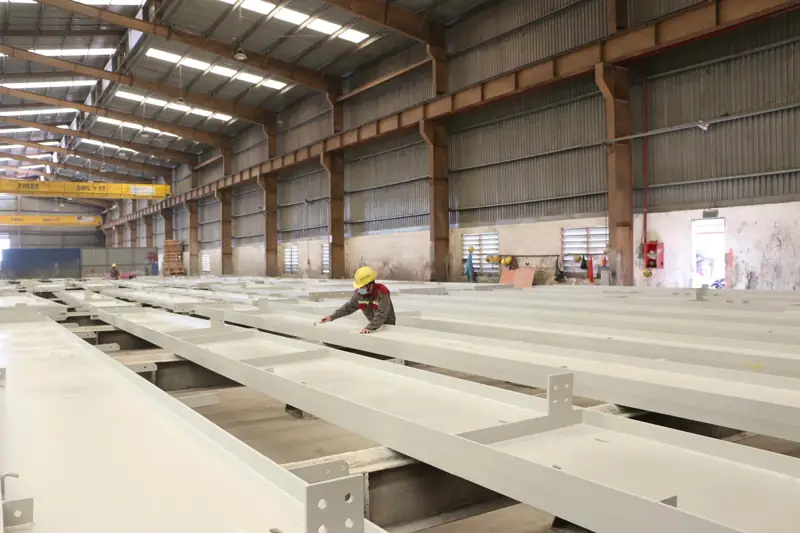
Real photos
From our plant in Vietnam
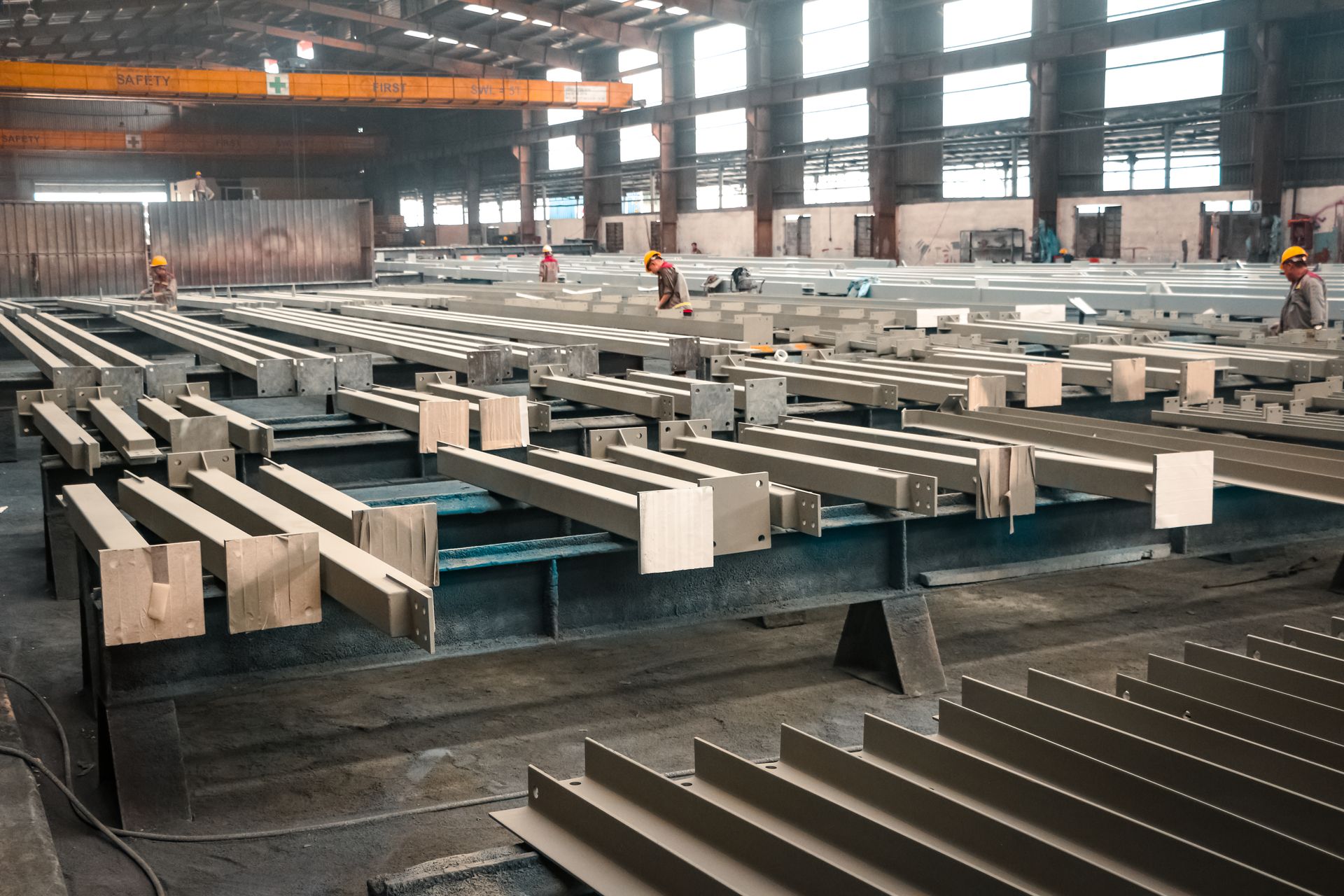
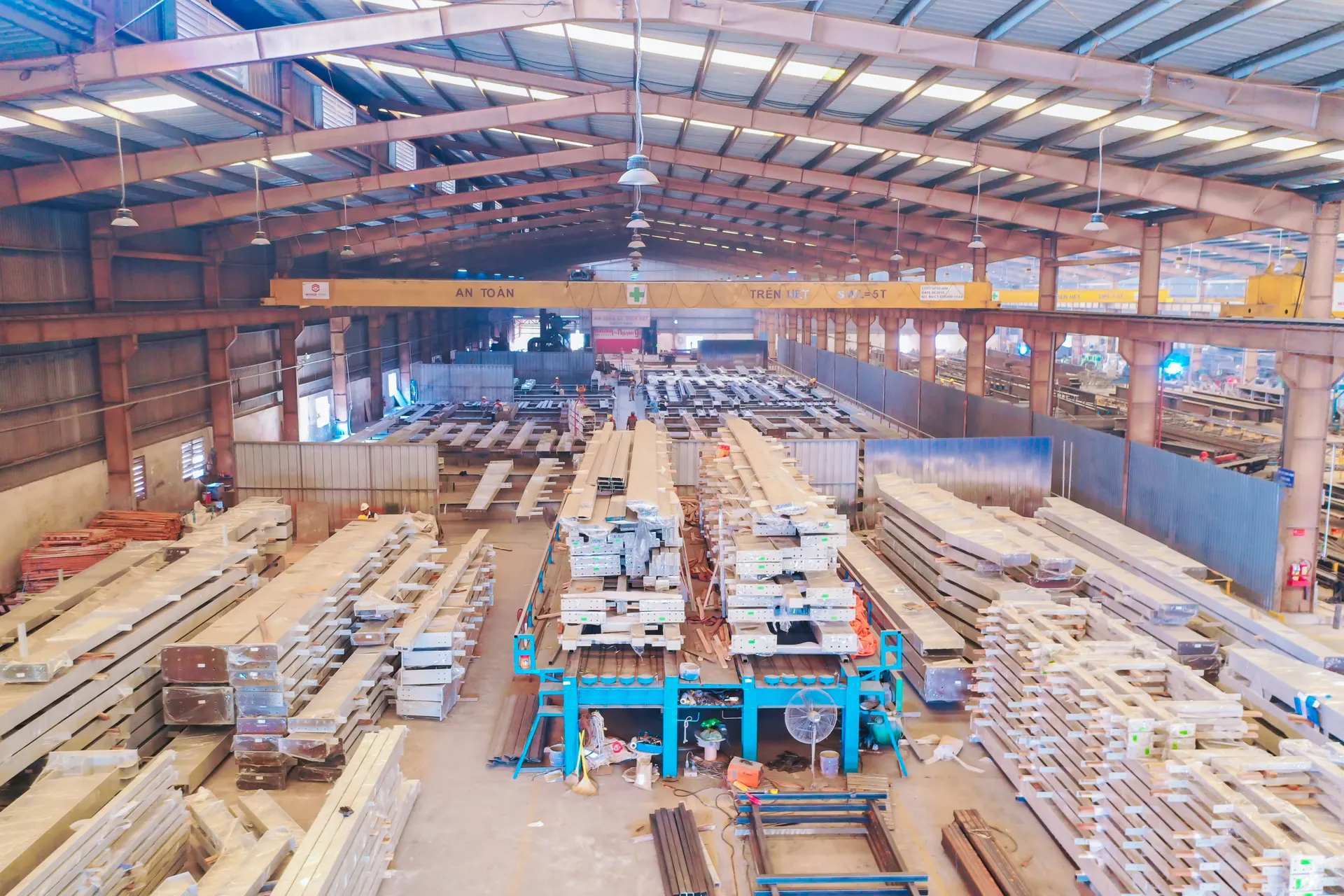
World Steel’s own shop floors and jobs, where the steel for US projects is made. Not stock images.
How World Steel supports this
Designed to US codes, made in our plant in Vietnam
Covered paint hall
Blasting, priming and coating in one controlled line in our plant in Vietnam.
Tracked in PEB Studio
Follow blasting, coating and QC release of each member in real time.
Packed for the voyage
Soft slings, dunnage and wrapping chosen to protect coated steel at sea.
The fire protection ecosystem
Products and solutions behind this guide
The products we make for this part of a seismic structure, the services that come with them and past World Steel projects, all one click away.
Products made in our plant in Vietnam
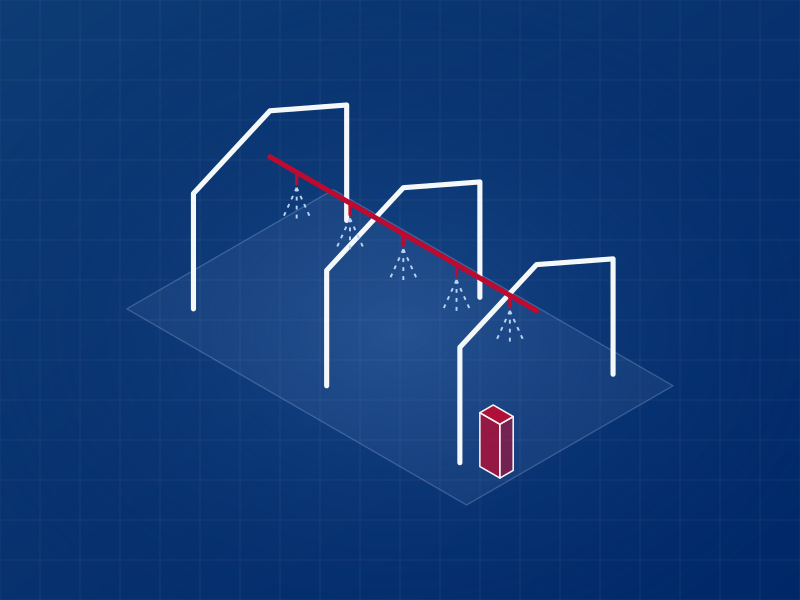
Solutions that come with it
World Steel projects: process plants, healthcare, multi-story
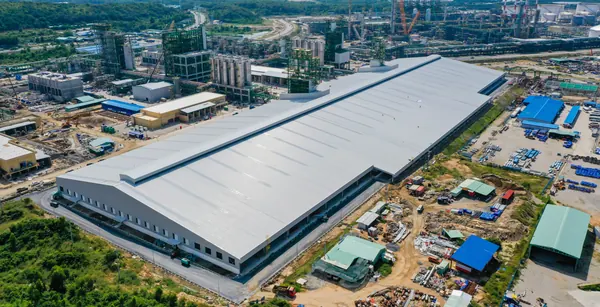 Photo
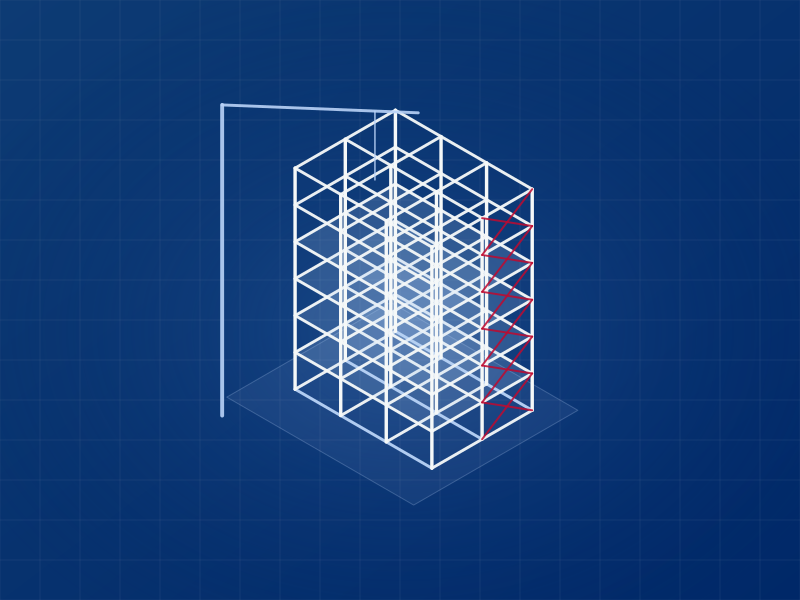 Illustration
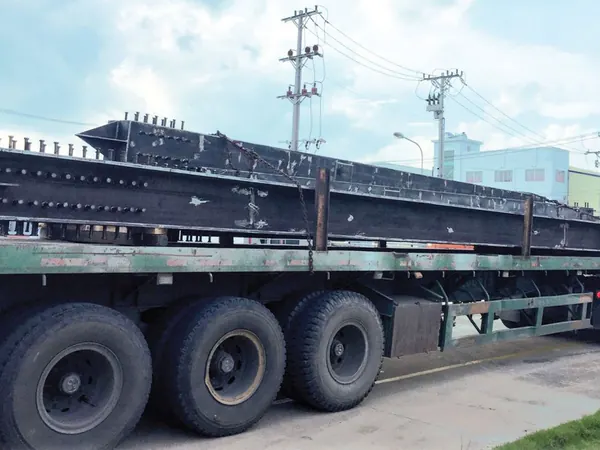 Photo
Past World Steel work, shown for the structure type. It does not describe the seismic criteria of any one project.
Standards on this page
Read the standard behind it
Each standard page explains what it covers, the edition we reference and how we apply it. We design and fabricate to these standards; they are not certifications.
Keep reading
Related solutions
Questions from US buyers
Shop-applied intumescent: questions we hear
Does shop-applied intumescent save money?
It often saves site time and trades, which matters most on large and congested sites. Whether it saves overall depends on the product, the amount of connection touch-up and the site, so we compare both routes for your project.
Will the coating survive an ocean voyage?
With the right product, topcoat and packing, it is planned to. The manufacturer confirms the system for transit, and any damage is repaired on site with the same listed product.
Are bolted connections coated in the shop?
No. Slip-critical faying surfaces and bolts are left uncoated and are coated on site after the bolts are tightened, as the listing and the specification require.
Who inspects shop-applied fire protection?
The special inspector the building official approves, either at the plant, through remote access or on arrival, as agreed before coating begins. We provide the shop records.
Are shop drawings included for fire-rated steel?
Yes. Shop drawings come with every project at no extra charge, with the rating, protection system and listed design shown for each rated member. Your Engineer of Record reviews and approves the structural drawings.
A plain-English summary for US buyers, not the code text and not engineering advice for a specific site. The adopted codes and standards govern, and your Engineer of Record confirms the criteria for each project.
Planning fire-rated structural steel?
Send the drawings, the specification and the fire protection schedule. We confirm the listed systems and primer with your team and return a written scope for steel designed to US codes, made in our plant in Vietnam and prepared, or coated, for its fire protection.