
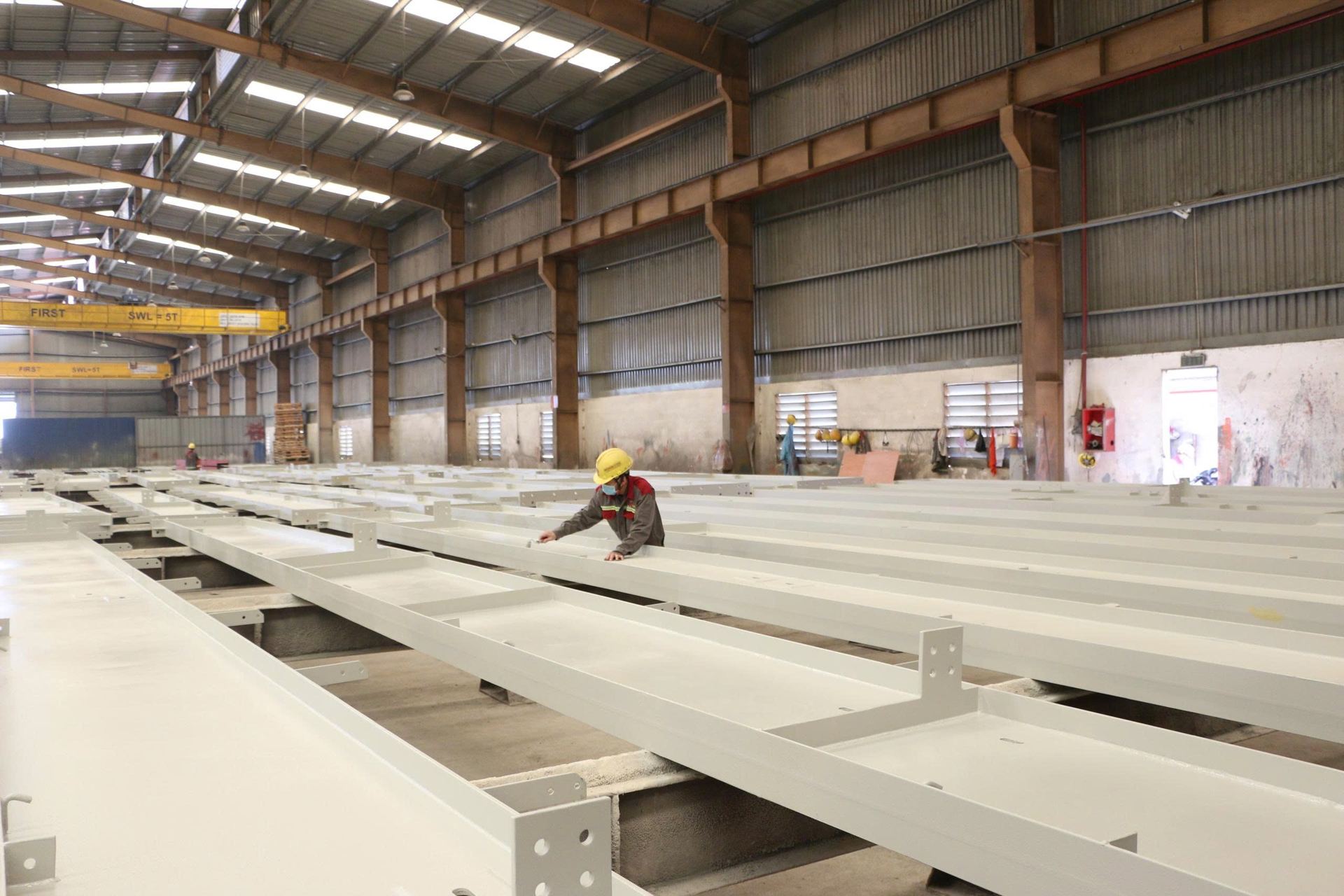
Where they are
Protected zones by system
Special and intermediate moment frames
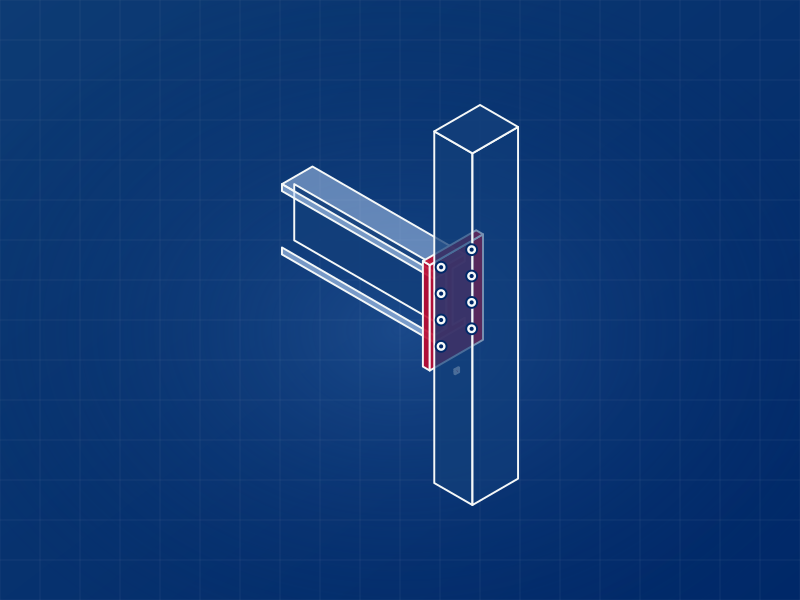
The beam ends where the plastic hinge forms, as defined for each prequalified connection in AISC 358.
Special concentrically braced frames
The parts of each brace expected to buckle and yield, and the elements that connect braces to beams and columns.
Eccentrically braced frames
The link, the short beam segment designed to yield in shear or bending.
Buckling-restrained braced frames
The yielding core of each brace and the brace connections as designated.
Ordinary moment frames
AISC 341 designates no protected zones for ordinary moment frames, which covers many tapered metal building frames.
Your drawings decide
The Engineer of Record shows every protected zone on the design drawings, and that is the boundary we fabricate to.
Not allowed in a protected zone
What stays out, unless your Engineer of Record approves it
- ✓ Welded attachments, clips and erection aids
- ✓ Tack welds and arc strikes
- ✓ Holes for pipe, duct or electrical hangers
- ✓ Powder-actuated pins and screws
- ✓ Welded shear studs
- ✓ Sharp notches and flame-cut gouges left unrepaired
- ✓ Facade, partition and edge-angle connections
- ✓ Field changes without a written repair procedure
How we keep them clean
From the design drawing to the steel on site
-
On the shop drawings
Protected zones are hatched on member details and erection drawings, so the shop and the field see the same boundary.
-
In the shop
Clips, holes and shop attachments are placed outside the zones, and QC checks every seismic member before release.
-
Marked on the steel
Where the specification asks for it, we mark protected zones on the member so later trades can see them.
-
Repairs by procedure
Any discontinuity found in a zone is repaired to a procedure your Engineer of Record accepts, and the repair is recorded.
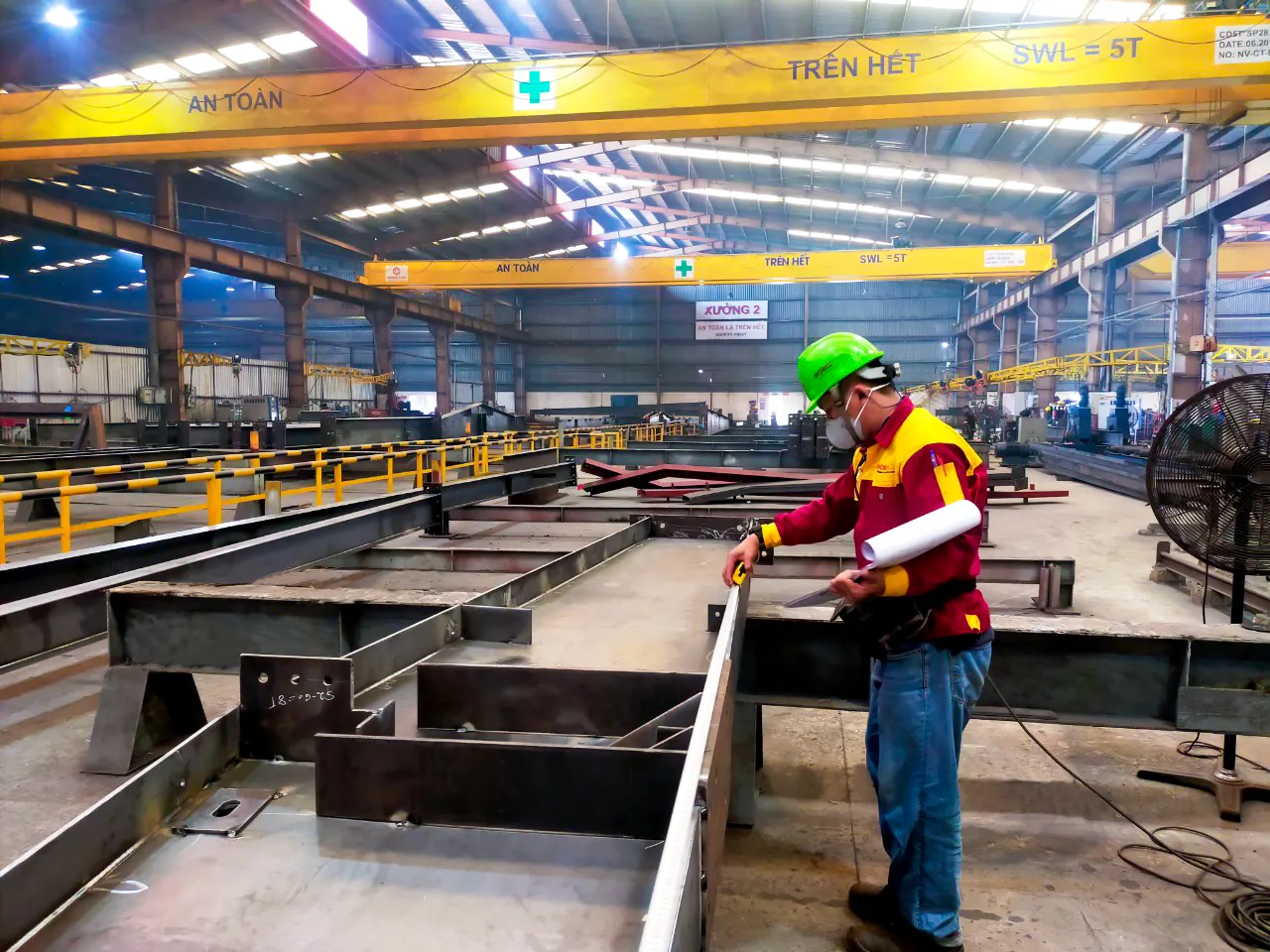
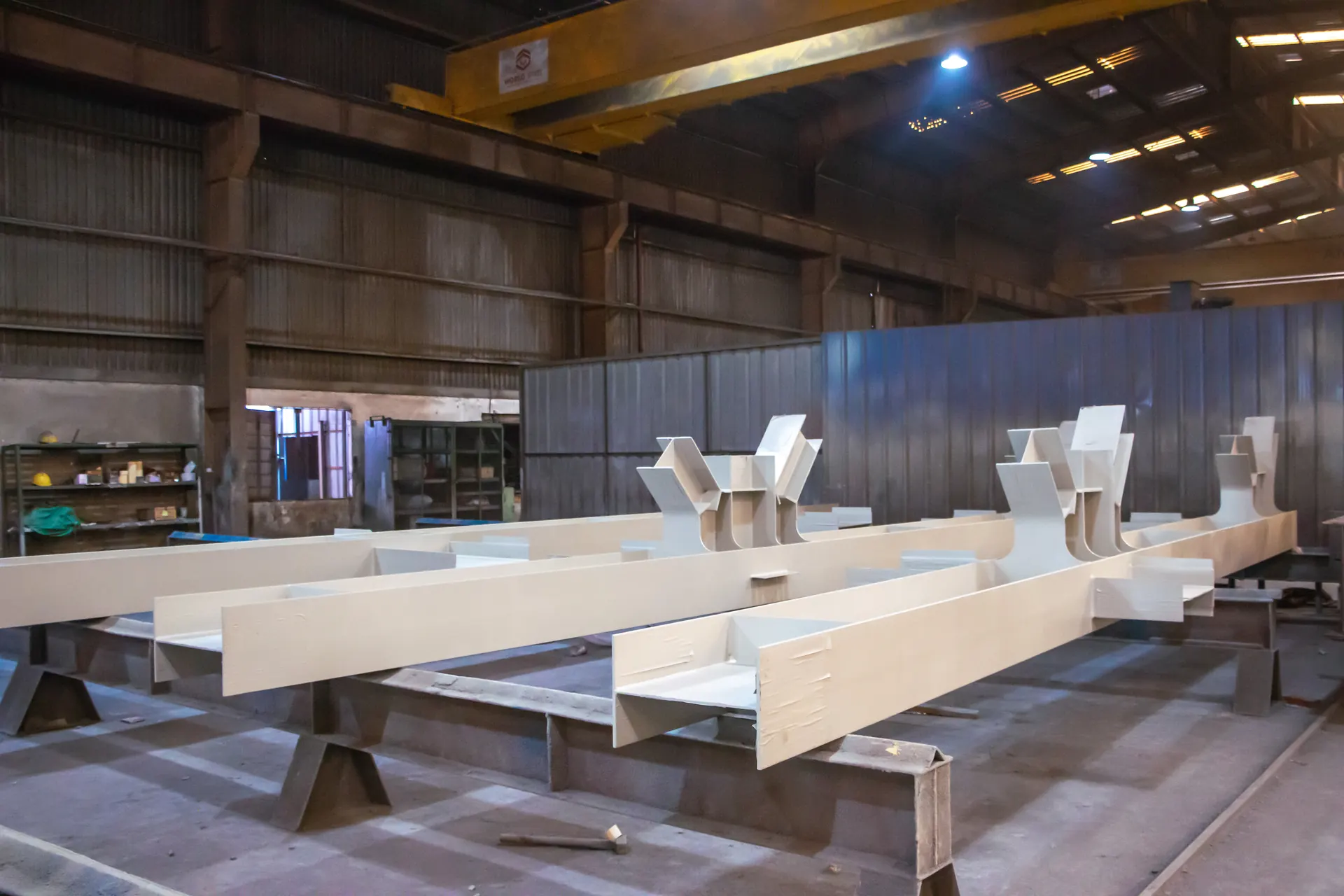
Real photos
From our plant in Vietnam
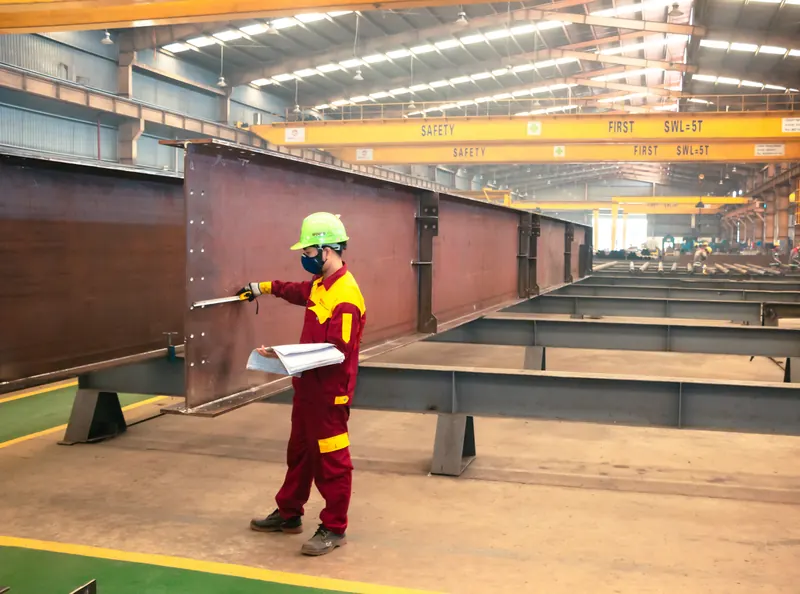
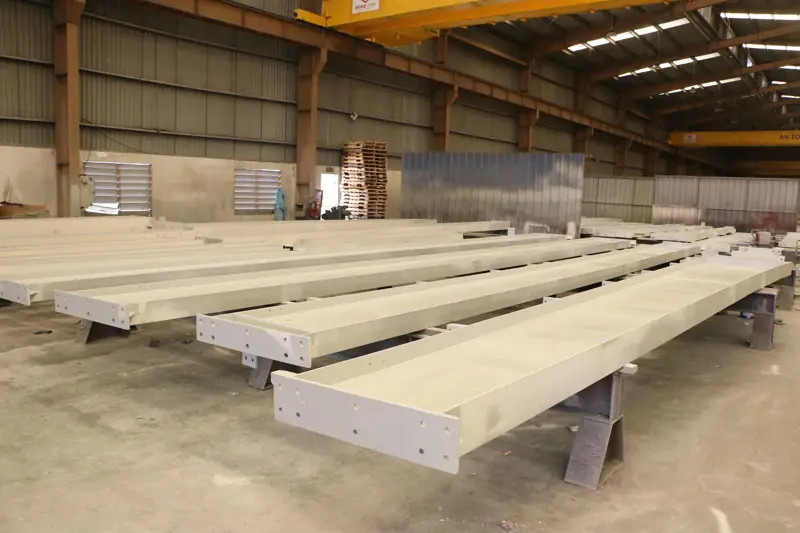
World Steel’s own shop floors and jobs, where the steel for US projects is made. Not stock images.
How World Steel supports this
Designed to US codes, made in our plant in Vietnam
Zones on every drawing
Hatched on Tekla shop and erection drawings, included at no extra charge for every project.
Shop QC check
Seismic members are checked for attachments and notches before QC release.
Photos in PEB Studio
Release photos of seismic members you can review online before shipment.
The seismic solution ecosystem
Products and solutions behind this guide
The products we make for this part of a seismic structure, the services that come with them and past World Steel projects, all one click away.
Products made in our plant in Vietnam
Solutions that come with it
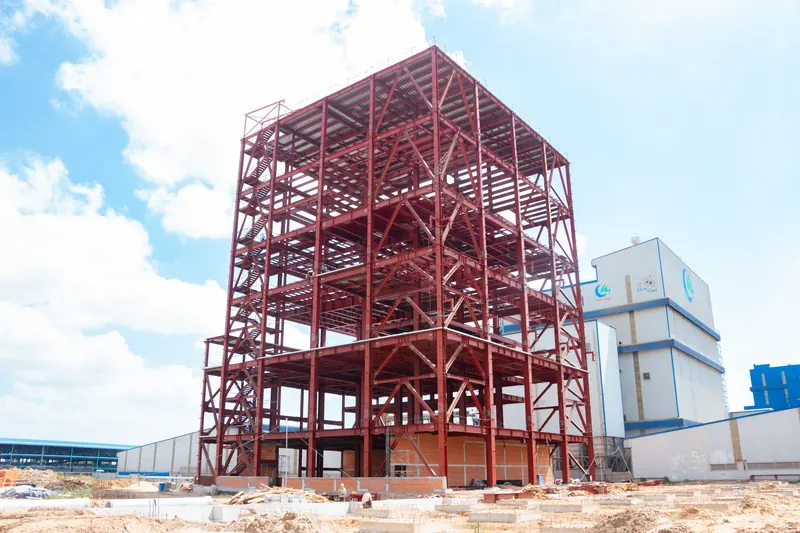
World Steel projects: US codes, Guam, Japan and beyond
 3D model
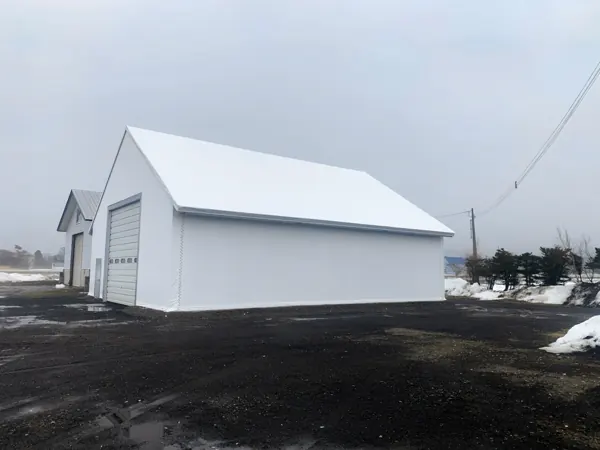 Photo
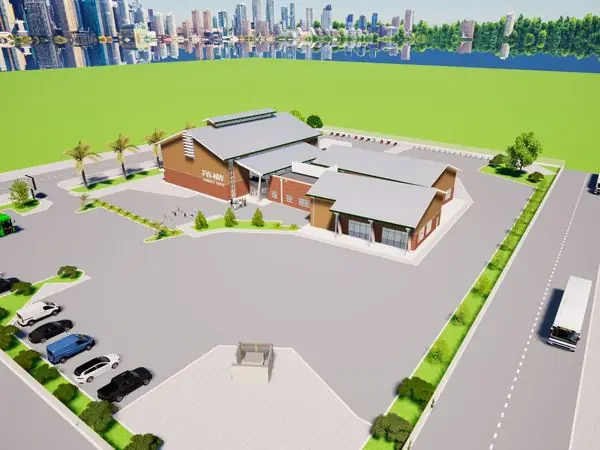 3D model
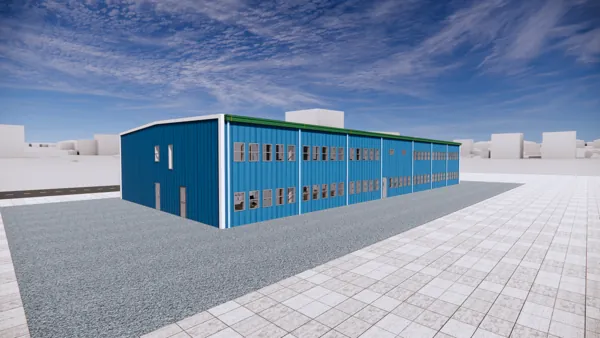
Past World Steel work, shown for the structure type. It does not describe the seismic criteria of any one project.
Standards on this page
Read the standard behind it
Each standard page explains what it covers, the edition we reference and how we apply it. We design and fabricate to these standards; they are not certifications.
Keep reading
Related solutions
Questions from US buyers
Protected zones: questions we hear
Does my metal building have protected zones?
If its frames are ordinary moment frames and its braces are ordinary braced frames, usually not. Special and intermediate moment frames, special braced frames and eccentrically braced frames do. Your drawings will show them.
Can the sprinkler contractor hang pipe from a protected zone?
Not without the Engineer of Record’s approval. Hangers should be placed outside the zone or on members that are not part of the seismic system.
What if someone welds in a protected zone on site?
Tell the Engineer of Record. The attachment is removed and the area repaired to an accepted procedure, then inspected.
Does World Steel provide shop drawings for seismic work?
Yes. Shop drawings come with every project at no extra charge. We design and fabricate the steel structure, and your Engineer of Record reviews and approves the calculations and drawings.
A plain-English summary for US buyers, not the code text and not engineering advice for a specific site. The adopted codes and standards govern, and your Engineer of Record confirms the criteria for each project.
Talk to a seismic engineer
Send the site address, the soil report if you have one, and what the building is for. We confirm the seismic criteria with your Engineer of Record and return a written scope for steel designed to US codes and made in our plant in Vietnam.