
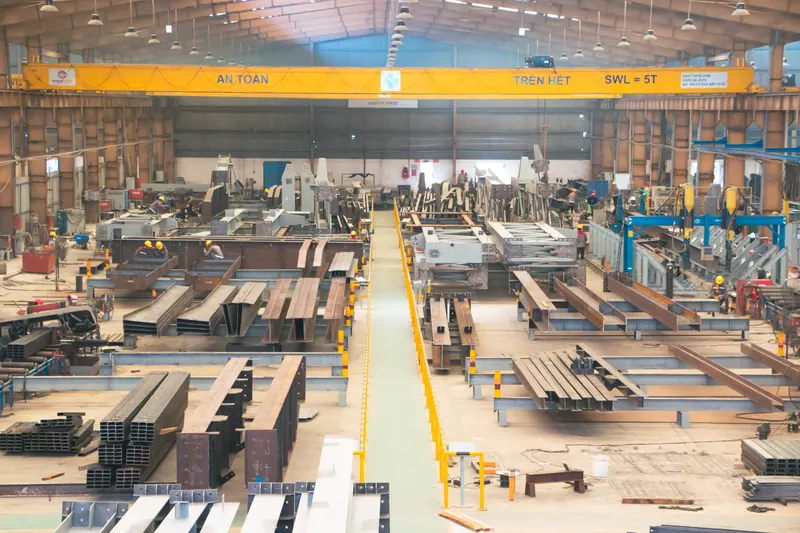
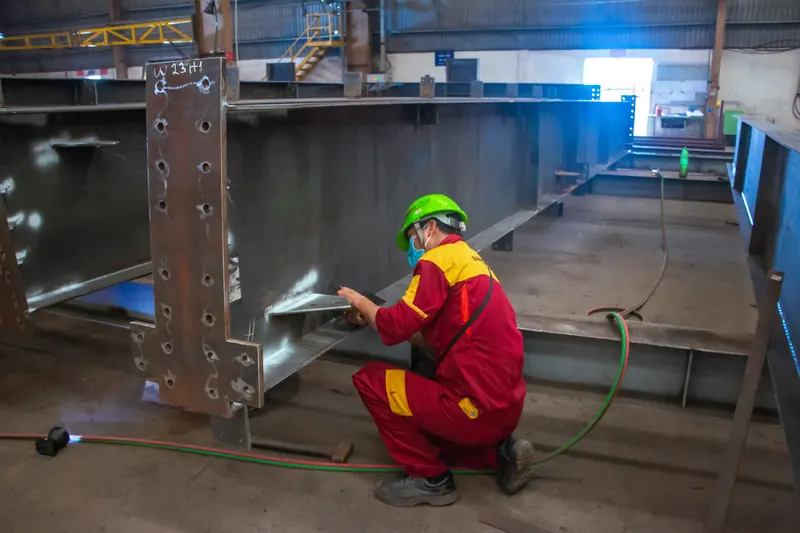
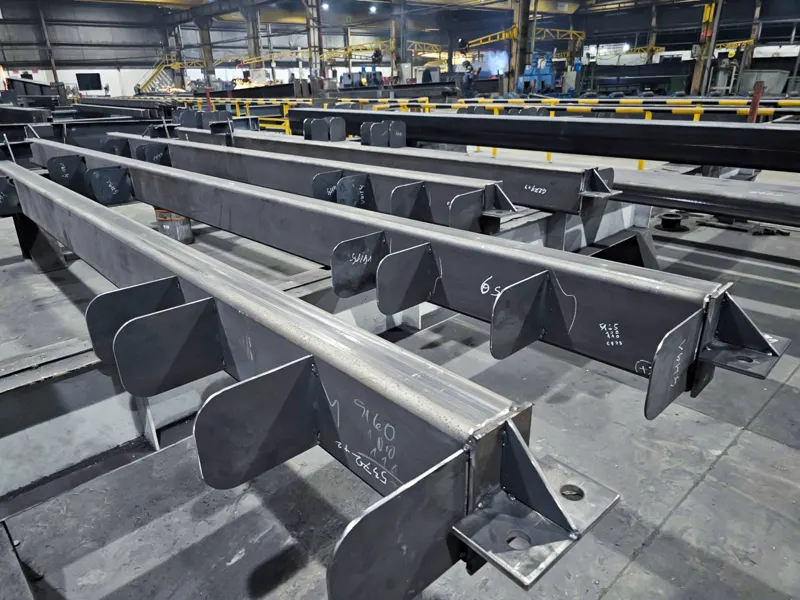
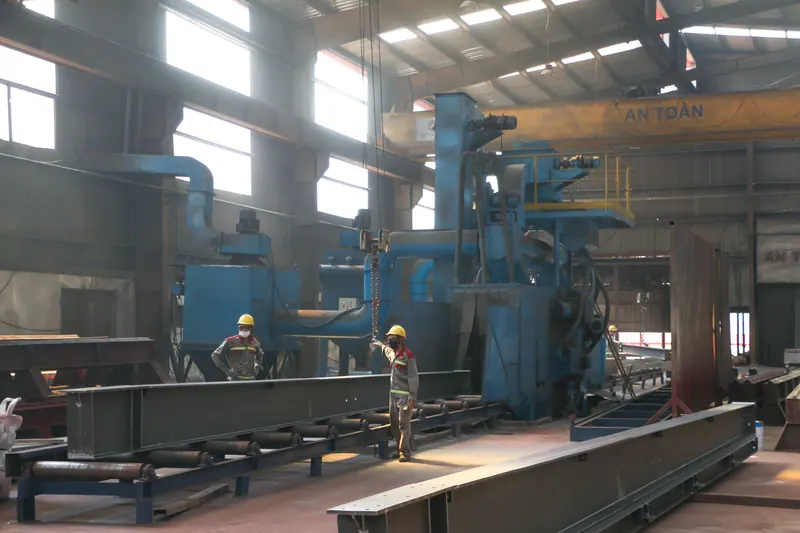
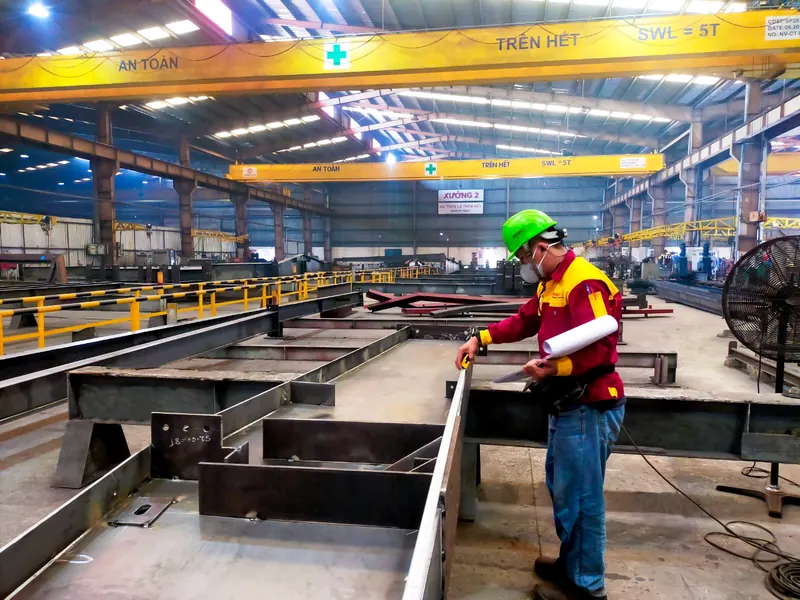
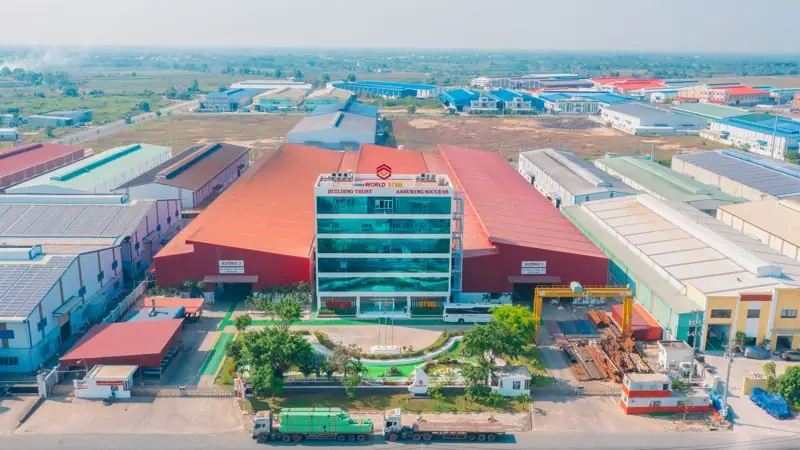
One of the World Steel fabrication halls in Vietnam where US orders are built.
Products · Process modules and skids
Turnkey process modules and skids, built in Vietnam and shipped ready to set
Steel frame, piping, equipment, cable tray and wiring put together in our own plant, tested, preserved and shipped to your US port, so your crew sets and connects modules instead of building a plant piece by piece.
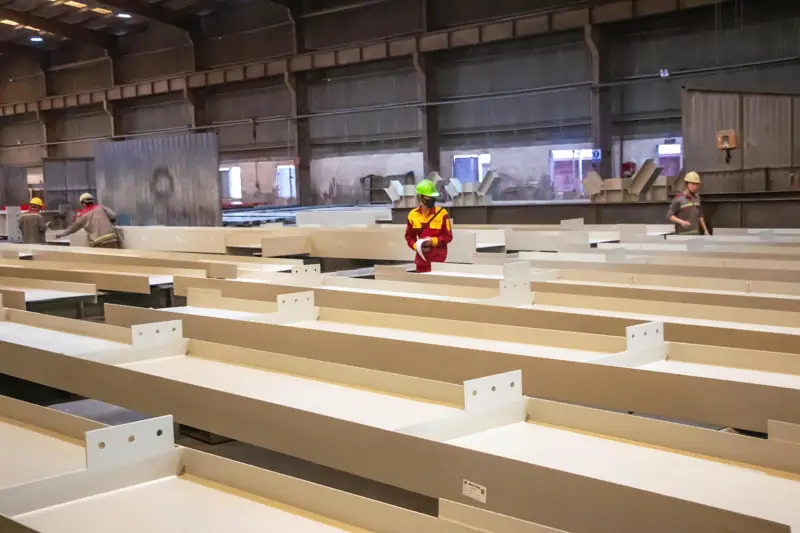
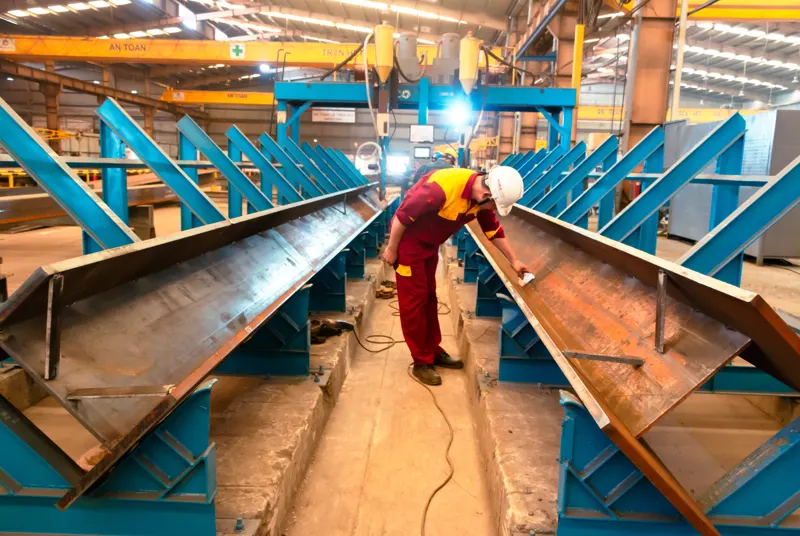
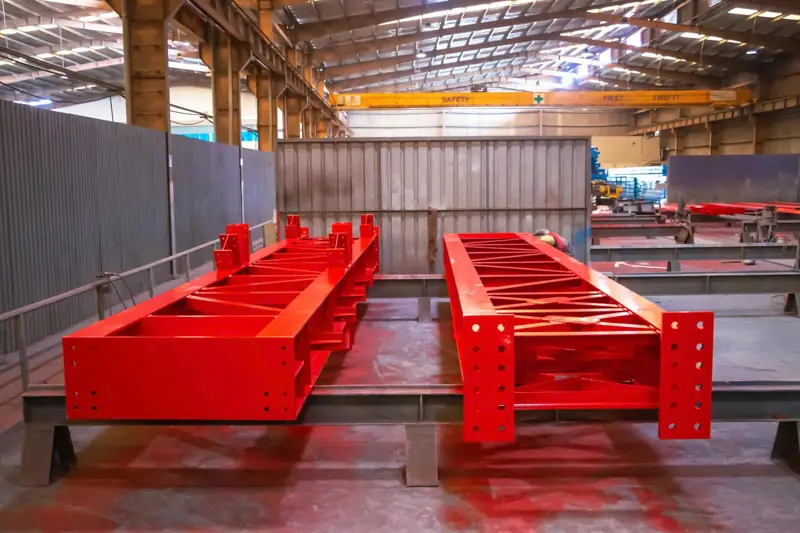
Capacity behind every module
Modules come out of a plant built for large structural steel packages
Why modularize
Build the plant in our halls, set it on your site
On a busy US site every field hour is expensive and hard to staff. A module moves most of those hours into a fabrication plant that does this work every day.
Fewer hours on a crowded site
Welding, bolting, pipe fitting and wiring move into our covered halls, so fewer trades work at height, in weather or beside live units.
Plant and site work in parallel
Modules are built while your civil crew pours foundations, instead of waiting for the steel to be erected before the piping can start.
Shop-controlled quality
Jigs, overhead cranes and inspectors on the same floor, in a plant accredited under IAS AC472 since 2019 and audited twice a year.
Tested before it ships
Pressure tests, wiring checks and a final walk-down happen in our plant, so faults are fixed before the module is on a vessel.
Module types
From a single pump skid to a multi-level process module
Pipe rack modules
Rack bays with process lines, utilities, cable tray and walkways installed, joined end to end on site.Process modules
Multi-level steel frames carrying vessels, exchangers, pumps and their piping as one unit of the plant.Pump and compressor skids
Rotating equipment on a stiff base frame with suction and discharge piping, instruments and local wiring.Utility and water treatment skids
Filtration, cooling water, compressed air and nitrogen packages for plant utilities.Chemical dosing and injection skids
Tanks, metering pumps, valves and controls for dosing chemicals into process or water systems.Metering and analyzer skids
Flow measurement, sampling and analyzer frames with their piping, tubing and enclosures.
Need the rack steel only, as loose bents and struts? See steel pipe racks, from the fabricator of the Long Son racks.
Turnkey scope
Six trades, one module, one plant
Each layer below is built, inspected and recorded in our plant before the next goes on. The module ships complete; only the joints to other modules and the plant are left for site.
Testing and preservation
Hydrotest, continuity and loop checks as agreed, then nozzles capped, equipment preserved and panels sealed for the voyage.Insulation and coating
Steel coated to the plant’s exposure, piping insulated and jacketed where specified, with joints left open for site hook-ups.Electrical and instruments
Cable tray, cable, junction boxes, instruments and tubing installed and terminated to your electrical and instrument drawings.Equipment setting
Vessels, pumps, exchangers and packages set, leveled and bolted down, whether you free-issue them or we buy them to your list.Piping
Spools fabricated, welded and installed to your isometrics and the piping code your specification names, such as ASME B31.3, then pressure tested.Steel frame
Main frame, floors, grating, stairs and handrails designed for in-service, lifting and transport loads, welded to AWS D1.1.
Built to be moved
Designed for the lift, the voyage and the road
A module is checked for every load it will see between our plant and its foundation, not only the loads it carries in service.
Envelope set before design
Module length, width, height and weight are fixed against your transport plan, the US port and the road route your heavy-haul carrier permits.
Lift points engineered
Lifting lugs and spreader points are designed for the lift, load-tested where specified, and the center of gravity is marked on every module.
Sea fastening and bracing
Temporary bracing and sea-fastening points are designed for vessel motions, then removed on site after setting.
Preserved and protected
Open ends are capped, exposed equipment is wrapped, electrical enclosures are dried and sealed, and loose items travel in tagged crates.
Codes we build to
US codes and the owner’s specification, trade by trade
Codes apply when your specification names them. Our engineers prepare calculations and drawings for your Engineer of Record’s review and approval.
- AISC 360 · ASCE 7
- Module frame design for in-service, wind and seismic loads at your site.
- AWS D1.1
- Structural welding of frames, lugs and supports.
- ASME B31.3
- Process piping fabrication, examination and pressure testing, when your specification names it.
- ASME Section IX
- Welding procedure and welder qualification for pressure piping.
- NFPA 70 (NEC)
- Electrical installation to your drawings, reviewed by your engineer and inspected at site.
- ISO 12944 · SSPC
- Coating systems and surface preparation for the plant’s exposure.
Manufacturing record book
Every module ships with its records filed
Records are filed against the module tag in PEB Studio as work progresses, so your inspector and the owner see the same book we do, and the final copy travels with the module.
- Material certificates traced to each spool and piece
- Weld maps with welder identification
- NDT reports by method and extent
- Pressure test records and certificates
- Dimensional reports at tie-in points
- Coating and insulation reports
- Electrical continuity and loop check sheets
- As-built drawings and the punch list, closed
World Steel
What we build, test and ship
- Module frame design or design check, with calculations for your Engineer of Record
- Fabrication of the frame, piping spools and supports in our own IAS AC472-accredited plant
- Equipment setting, electrical and instrument installation inside the module, to your drawings
- Pressure tests, wiring checks and factory acceptance with your inspector
- Coating, insulation where specified, preservation, transport bracing and packing
- Records filed per module tag in PEB Studio, and shipping to your US port
The US contractor, our customer
What your team does on site
- Engineer of Record approval and any seal the jurisdiction requires
- Foundations and anchor bolts
- Heavy haul from the port, setting and leveling of modules
- Hook-ups between modules and to the existing plant
- Final electrical inspection, permits and special inspection
- Commissioning and start-up
Where modules go
Modules and skids for US plants
- Refining and petrochemicalsUnit additions and debottlenecking where site hours are scarce.
- LNG and gas processingPipe rack modules and utility skids for coastal terminals.
- Battery and EV plantsSolvent recovery, process water and utility skids.
- Semiconductor fabsUtility modules for water, gases and chemicals.
- Food and beverage plantsClean utility, CIP and water treatment skids.
- Data center central plantsChilled water and pump modules for the plant yard.
- Mining and mineralsReagent dosing and water treatment skids.
- Power and utilitiesFuel gas, cooling water and auxiliary skids.
How to order
What to send for a module quote
Send what you have. Our engineers will propose the module split if you have not made one, and list every assumption in the proposal.
- Plot plan with the module split, or the area you want modularized
- P&IDs, piping isometrics and line list
- Equipment list, with what you free-issue and what we should buy
- Electrical and instrument drawings and cable schedule
- Owner and EPC specifications: piping class, NDT, coating, insulation
- Transport plan or limits: US port, road route and lift capacity
- Inspection and test requirements, and who witnesses
- Bid date and the order you need modules on site
Questions from US contractors
Process modules and skids, answered
What does turnkey mean for a World Steel module?
The module leaves our plant with its steel frame, piping, equipment, cable tray, wiring, instruments, coating and agreed insulation installed and tested. Your crew sets it, makes the connections to other modules and the plant, and commissions it.
Who supplies the equipment inside the module?
Either way works. You can free-issue vessels, pumps and packages to our plant, or we buy them to your equipment list and specifications. The split is agreed in the quote, item by item.
Which piping code do you build to?
The one your specification names. For process plants that is usually ASME B31.3, with welding procedures and welders qualified to ASME Section IX, examination to the extent the line class requires and hydrostatic or pneumatic testing as specified.
Is the electrical work done to US rules?
Electrical and instrument work inside the module follows your drawings and specifications, which your engineer writes to NFPA 70 (NEC). Listed components are installed as specified, and the final electrical inspection is made at site by the authority having jurisdiction.
How big can a module be?
As big as your transport plan allows. Size and weight are fixed early against the vessel, the US port, the road route your heavy-haul carrier can permit and the crane that will set the module, and the design follows those limits.
Can our inspector witness the tests?
Yes. Hold points for welding, pressure testing, wiring checks and the final walk-down are agreed in the inspection and test plan. Your inspector can attend in our plant in Vietnam or witness remotely over live video, with every record logged in PEB Studio.
Can you show module projects you have built?
World Steel builds complete modules, and module references can be shared during prequalification. For pipe racks, our published reference is the Long Son petrochemical complex in Vietnam, where we fabricated the pipe racks.
Do you erect or commission the modules?
No. World Steel builds, tests and ships them. Setting, hook-ups, final inspection, permits and commissioning are the scope of the US contractor, our customer.
Do you design the modules?
Our engineers design or check the module frames, lifting and transport cases from your process and layout drawings, and we detail the piping from your isometrics. The calculations and drawings go to your Engineer of Record for review and approval; World Steel does not provide a PE seal.
Can you build smaller skids as well as large modules?
Yes. Single pump and dosing skids, analyzer frames and utility packages go through the same plant, records and testing as large process modules.
Planning to modularize part of a US plant?
Send the plot plan, P&IDs and equipment list. Our engineers propose the module split, the transport envelope and the turnkey scope, built in a plant that fabricates 2,500 metric tons of structural steel a month.