Skip to content
Seeking US contractor partners IAS AC472 ACCREDITED ★ METAL BUILDINGS ★ AC472 IAS AC472 accreditedIAS AC472
World Steel USA

Connections & anchorage

Follow the load, link by link

When steel buildings fail in high wind, damage usually starts at a connection. We design every link from the panel screw to the anchor rod for the same load, then fabricate the plates, clips and assemblies in a plant that turns out 2,500 t of structural steel a month. Every site joint is bolted.
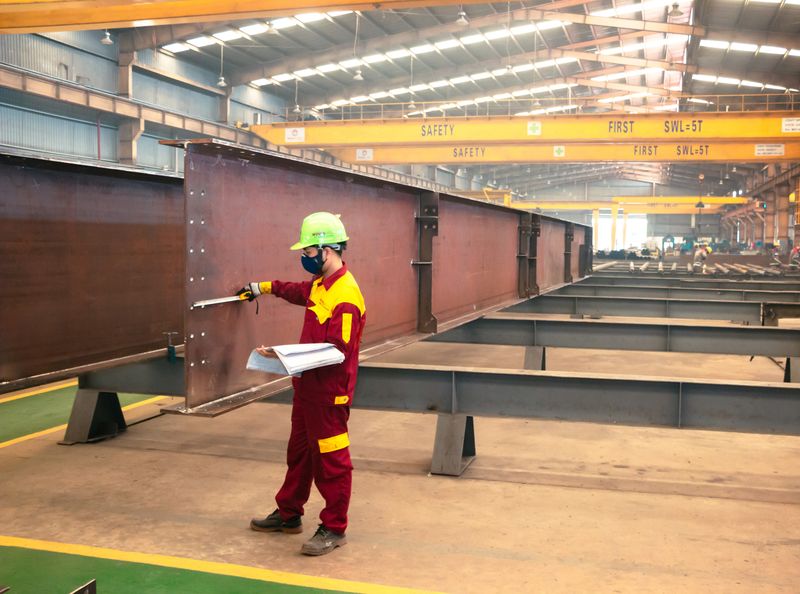
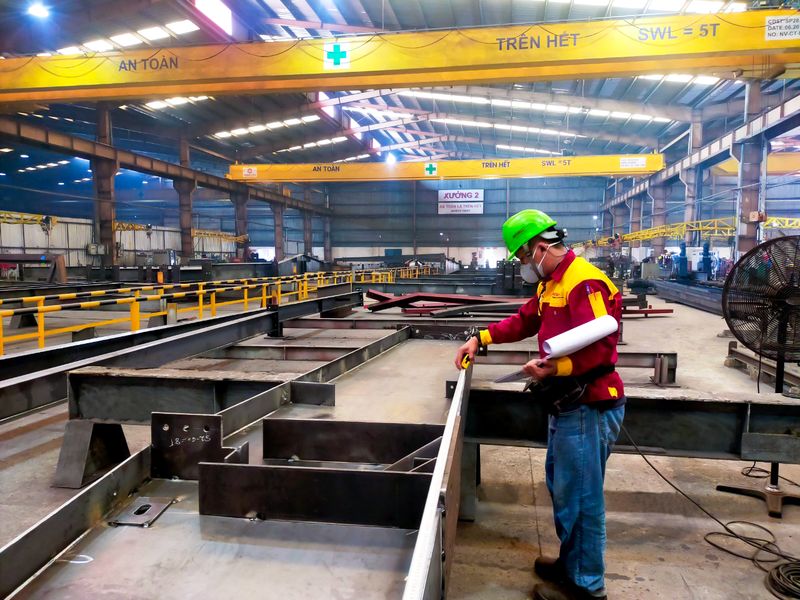
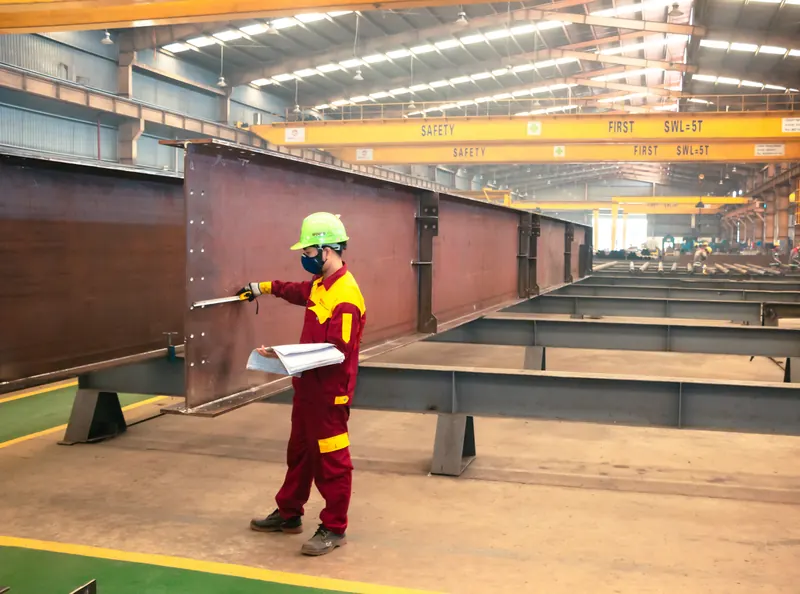
Inspector checking the fit-up of a built-up steel member before welding
Fit-up checked before welding

The load chain

Pick a link in the load path

Link in the load path

PanelPanel capacity for the zone pressure, from tested data.

ScrewScrew type, pattern and pull-out value for the purlin gauge.

PurlinPurlin bending and the bolts at each lap.

ClipShop-welded clips that hand purlin load to the rafter.

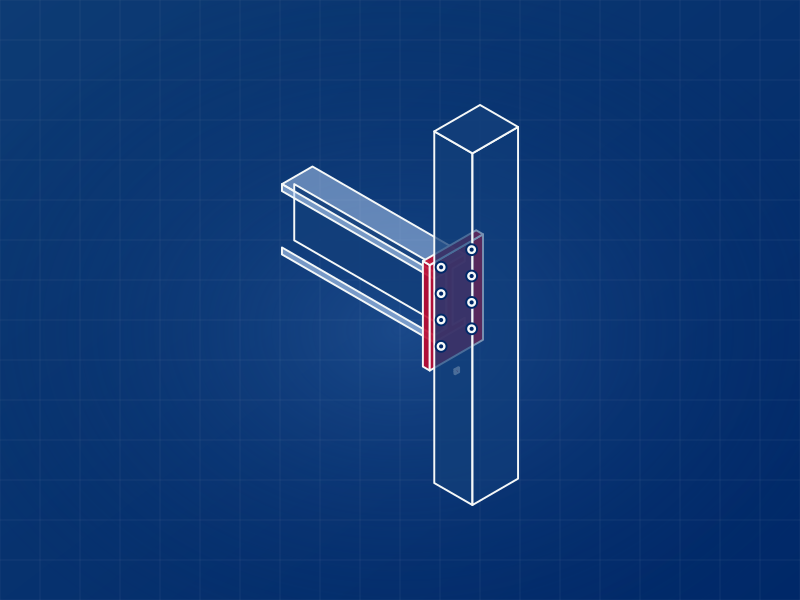
RafterRafter strength and its bolted ridge splice.

KneeEnd-plate knee connection where roof load turns into the column.

ColumnColumn strength and the bracing that steadies it.

Base platePlate thickness and welds for the column reactions.

Anchor rodRod size and setting plan; embedment by the foundation engineer.

RCSC Specification

Three kinds of bolted joint, named on the drawings

Nothing is welded in the field. Which joints are snug-tight, pretensioned or slip-critical, and how they are inspected, is set under the RCSC Specification for each project.

Snug-tight

Where

Most secondary connections and joints in bearing.

How it is checked

Plies in firm contact after a few impacts of an impact wrench or the full effort of a worker with a spud wrench.

Pretensioned

Where

Joints with load reversal, vibration or where the design calls for it.

How it is checked

Bolts tensioned by turn-of-nut, calibrated wrench or tension-indicating methods, as the RCSC Specification lists.

Slip-critical

Where

Joints that must not slip in service, such as some bracing and crane connections.

How it is checked

Faying surfaces prepared to the specified class and bolts pretensioned; surfaces masked in the shop.

Where steel meets concrete

Anchorage: our reactions, your footing

Why connections matter in high wind
When steel buildings fail in high wind, damage usually begins at a connection rather than in the middle of a member. Uplift has to be followed from panel screws through purlin clips and frame joints to the base plates and anchor rods.
Complete load path
Panel → screw → purlin → clip → rafter → knee joint → column → base plate → anchor rod → footing.
Bolted site connections
Nothing is welded in the field; every site joint is bolted. Which joints are snug-tight, pretensioned or slip-critical, and how they are inspected, is set under the RCSC Specification.
Anchorage
Anchor rod embedment in concrete is designed by the foundation engineer. World Steel provides column reactions and anchor rod setting plans.
FOOTING · BY YOUR FOUNDATION TEAM COLUMN BASE PLATE ANCHOR RODS

We provide column reactions and the anchor rod setting plan, and ship rods when your contract lists them. Embedment design and casting stay with your foundation team.

AWS D1.1 and D1.8

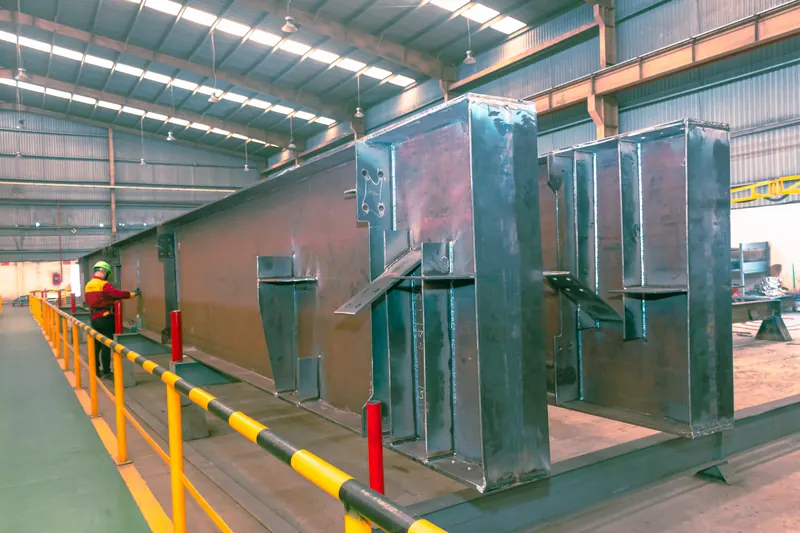
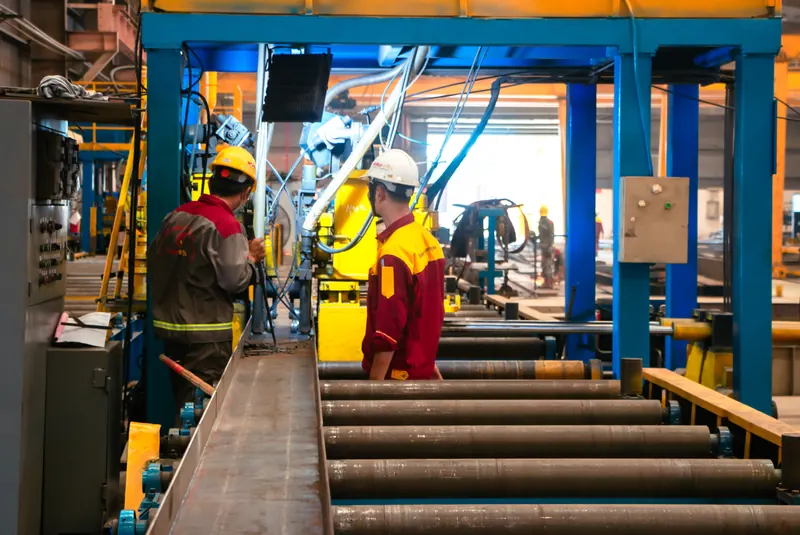
Connections made and checked in our plant

Plates, clips and welded assemblies are fitted, welded and inspected under qualified procedures. Tap a photo to open it full size.
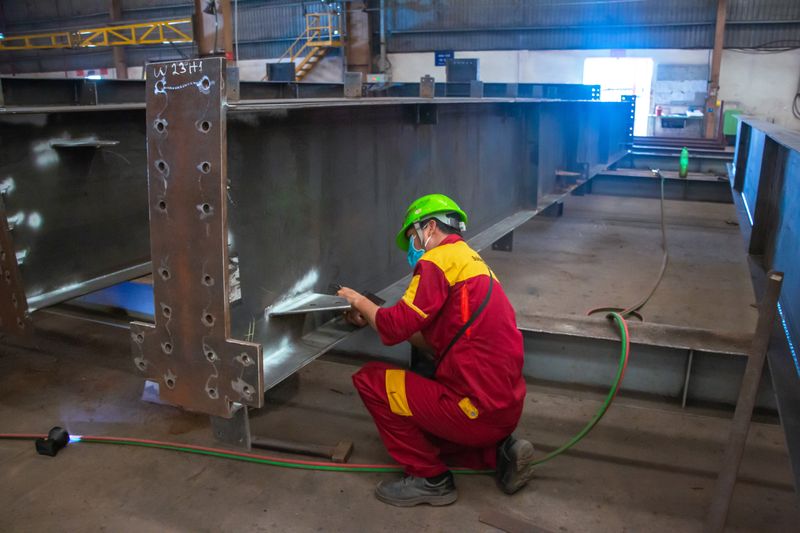
Welding inspector checking a welded steel connection in the shop Photo
Technician measuring a fabricated steel member against the drawing Photo
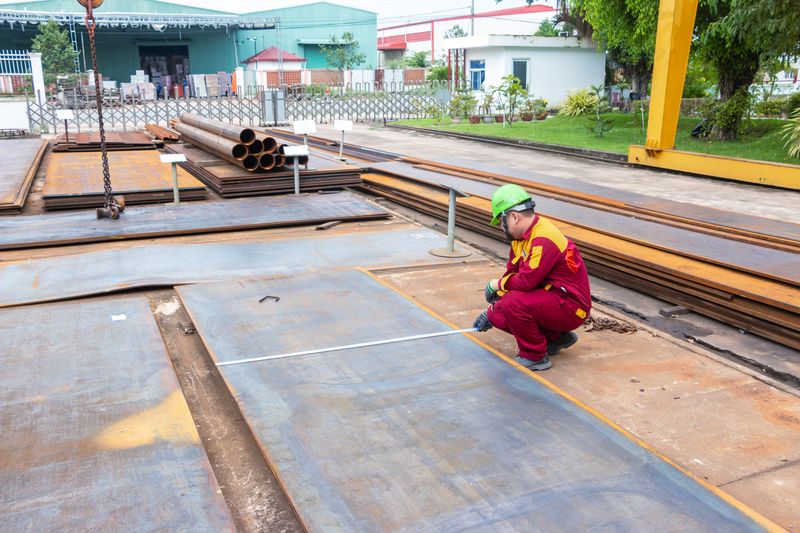
Incoming steel plate being checked at the World Steel plant Photo
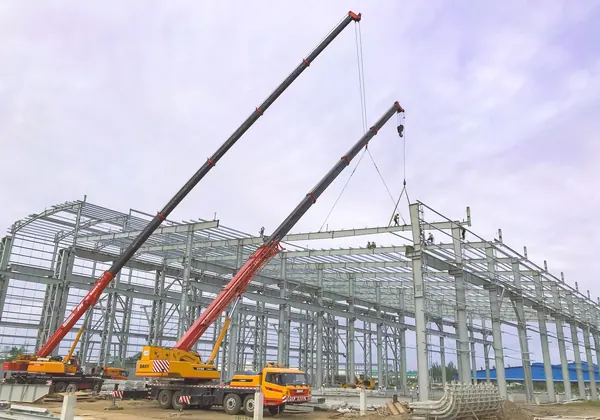
Mobile crane lifting bolted steel frames at the Sunpro Steel factory Photo

Large-project capacity

Every connection of a large job, marked and packed

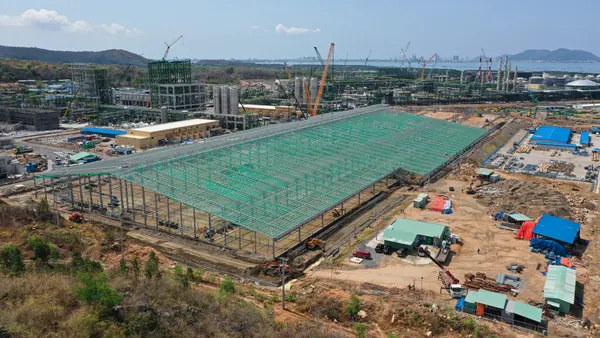
World Steel fabricates 2,500 metric tons (about 2,750 short tons) of structural steel a month in its own IAS AC472-accredited plant in Vietnam, so the steel package of a large US job runs as one order.

2,500 metric tons a month

In the catalog

Connection items in the catalog

Drawn illustration of connections & anchorage, standing in for a photo of this product Illustration

Anchor Bolts

Threaded rods cast into the footing that hold each column base plate down against uplift and shear. Made by World Steel in Vietnam Verified
Drawn illustration of connections & anchorage, standing in for a photo of this product Illustration

Structural Bolts

High-strength bolts, nuts and washers that join frame members and bracing in the field. Made by World Steel in Vietnam Verified
Primed column with its bolted end plate set on painting stands Photo

Base Plates

Plates welded to the foot of each column that spread its load into the concrete and take the anchor rods. Made by World Steel in Vietnam Verified
Fitter comparing a built-up beam with its shop drawing Photo

Gusset Plates

Plates that collect bracing rods or angles and connect them to the frames. Made by World Steel in Vietnam Verified
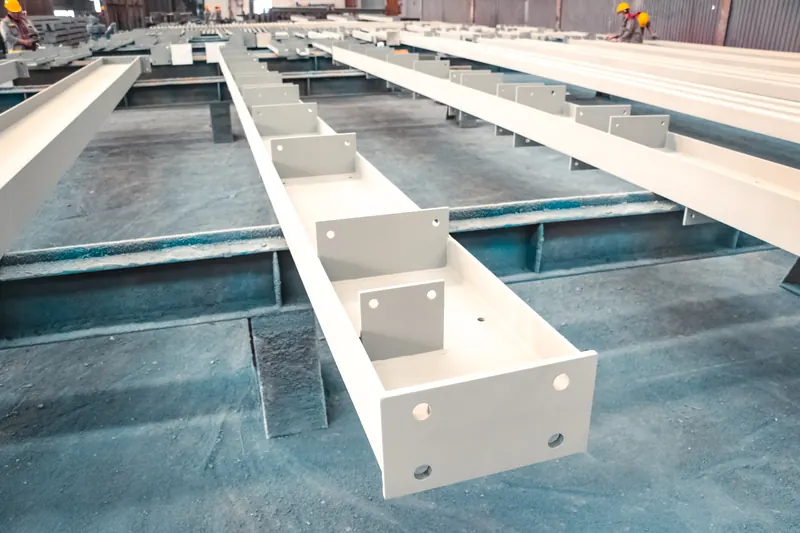
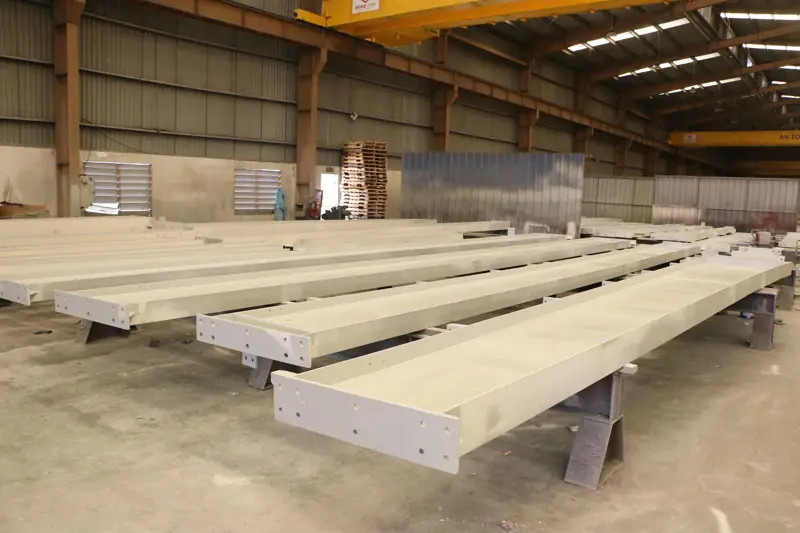
Painted beams with bolted end plates resting on stands below an overhead crane Photo

Connection Plates

End plates, splice plates and cap plates that let frame pieces bolt together on site. Made by World Steel in Vietnam Verified
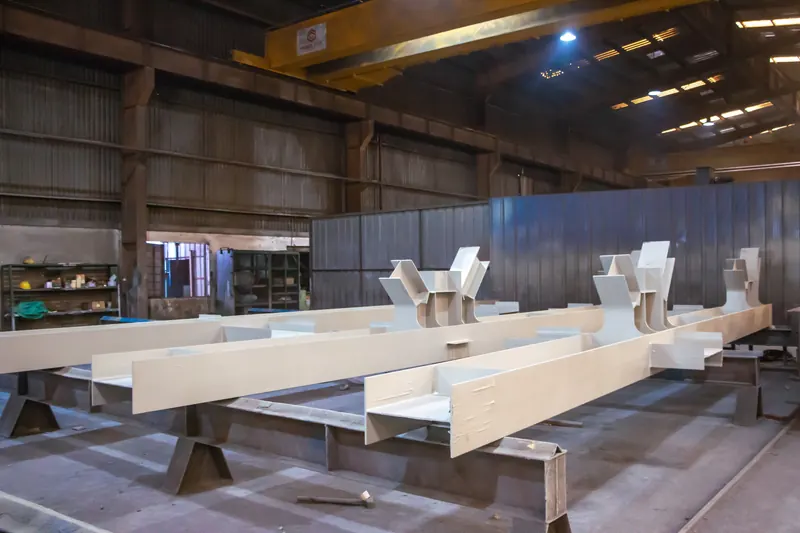
Coated frame parts with welded brackets in the paint hall Photo

Brackets

Shop-welded brackets on columns and rafters that carry crane runways, canopies and other attachments. Made by World Steel in Vietnam Verified
Drawn illustration of connections & anchorage, standing in for a photo of this product Illustration

Cleats

Small plates or angles welded to a member to give another piece a bolting point. Made by World Steel in Vietnam Verified
Stiffened heavy plate girders resting on shop supports Photo

Stiffeners

Plates welded across a beam or column web to stop it buckling under concentrated loads. Made by World Steel in Vietnam Verified
Two welders operating a submerged-arc welding station on a member Photo

Welding Assemblies

Members welded together in the shop under qualified welding procedures so the field crew only bolts. Made by World Steel in Vietnam Verified
Drawn illustration of connections & anchorage, standing in for a photo of this product Illustration

Bracing Connections

The ends, plates and fittings that fix rod or angle bracing to columns and rafters. Made by World Steel in Vietnam Verified

Where it meets the other systems

Primary Structural System

Column base plates sit on anchor rods that carry the column reactions into the concrete.

Design limit: Rod positions and projection above the concrete must agree with the foundation drawings to the tolerance shown. · What gets checked: Survey rod locations and elevations before steel arrives, then grout under the base plates.

Corrosion Protection

Bolts and anchor rods get a finish that works with the coating on the steel they connect.

Design limit: Keep metals alike: galvanized steel takes galvanized bolts, so no galvanic couple forms. · What gets checked: Fastener certificates checked against the bolt list.

Scope, in writing

What we supply and what stays with your team

World Steel, our plant in Vietnam

  • Connection design for every joint in the load path, with column reactions for the foundation engineer
  • Plates, clips, gussets, stiffeners and welded assemblies made and inspected in our plant
  • Structural bolts and anchor rods when your contract lists them, with the anchor rod setting plan
  • Weld procedures and welders qualified to AWS D1.1, and AWS D1.8 where seismic work needs it

The US contractor, our customer

  • Anchor rod embedment design by the foundation engineer and casting the rods into the footings
  • Bolting and pretensioning at site, and special inspection where the building department requires it
  • Drawing approval, the PE seal and the permit with your Engineer of Record

Questions from US contractors

Connections and anchorage questions and answers

7 answers, grouped by topic.

Bolting 3 answers

Is any structural welding needed at site?

No. Every site joint is bolted. Which joints are snug-tight, pretensioned or slip-critical, and how they are inspected, is set under the RCSC Specification and shown on the drawings.

Do you supply the structural bolts?

Yes, when your contract lists them. Bolts are packed with the members they belong to, with bolt lists on the shop drawings.

How are slip-critical faying surfaces protected?

They are prepared to the specified surface class and masked during coating in the shop, so the friction surface arrives as designed.

Anchorage 2 answers

Who designs the anchor rod embedment?

The foundation engineer. World Steel provides the column reactions and the anchor rod setting plan; casting the rods into the footings is your foundation contractor’s work.

Why do connections matter more than members in high wind?

Damage in high wind usually begins at a connection, not in the middle of a member. That is why uplift is followed from panel screws through clips and frame joints down to the anchor rods.

Quality and capacity 2 answers

Are your welders qualified for seismic work?

Yes. The shop has weld procedures and welders qualified to AWS D1.8 for seismic work, alongside AWS D1.1 for structural welding.

Can you handle the connection count of a large job?

Yes. The plant fabricates 2,500 t of structural steel a month, and jobs like the 5,000 t Sunpro Steel factory were detailed and shipped with every connection piece marked.

Keep reading

Related pages

Price it or partner with us

Send the loads. We follow them to the ground.

We design every connection in the load path, ship the plates, bolts and rods your contract lists, and give your foundation team the reactions.

Why US contractors price with us

2,500 t / month

Own plant capacity, about 2,750 short tons

IAS AC472

Accredited since 2019, audited twice a year

Up to 5,000 t

Largest single job: Sunpro Steel, 2024

See our largest jobs →

Short project form

Have this system engineered for your site

Ask an engineer directly, or drop the basics below. You get a written scope of supply for a US-code building, checked by engineering first.

Or call +84 902 881 833
Or leave your project details