Built from repeated spans
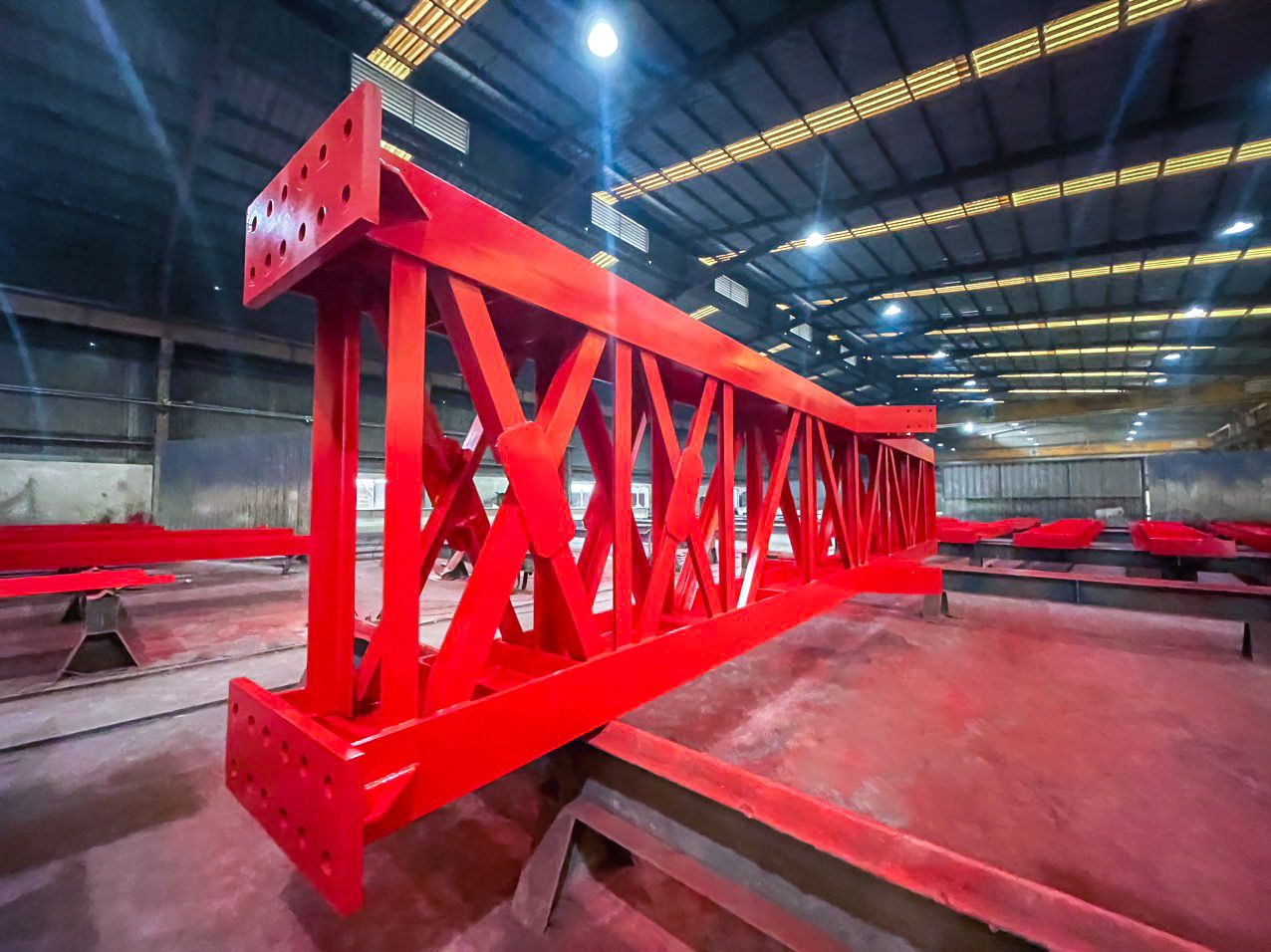
A gallery is a repeated truss, so design it once
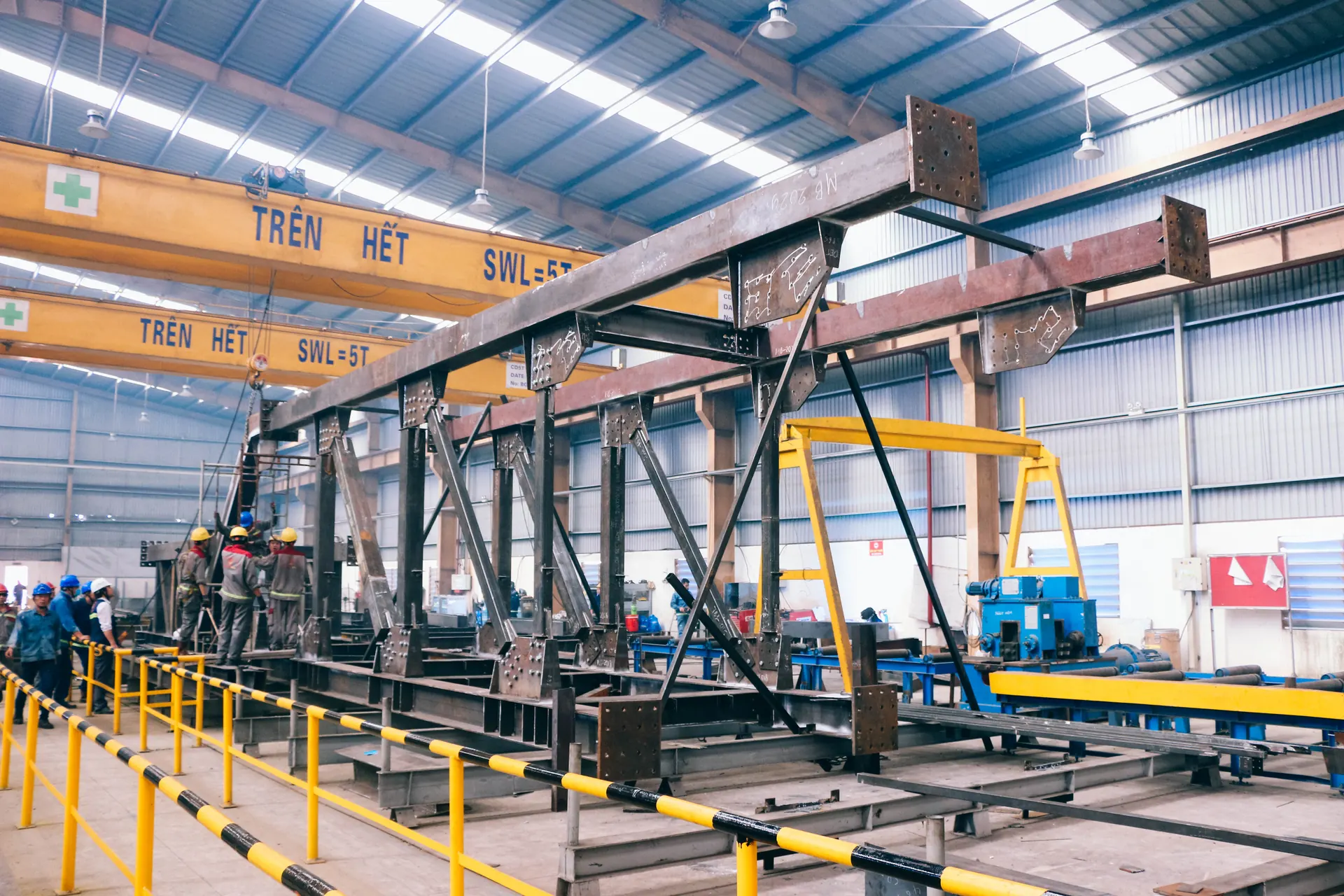
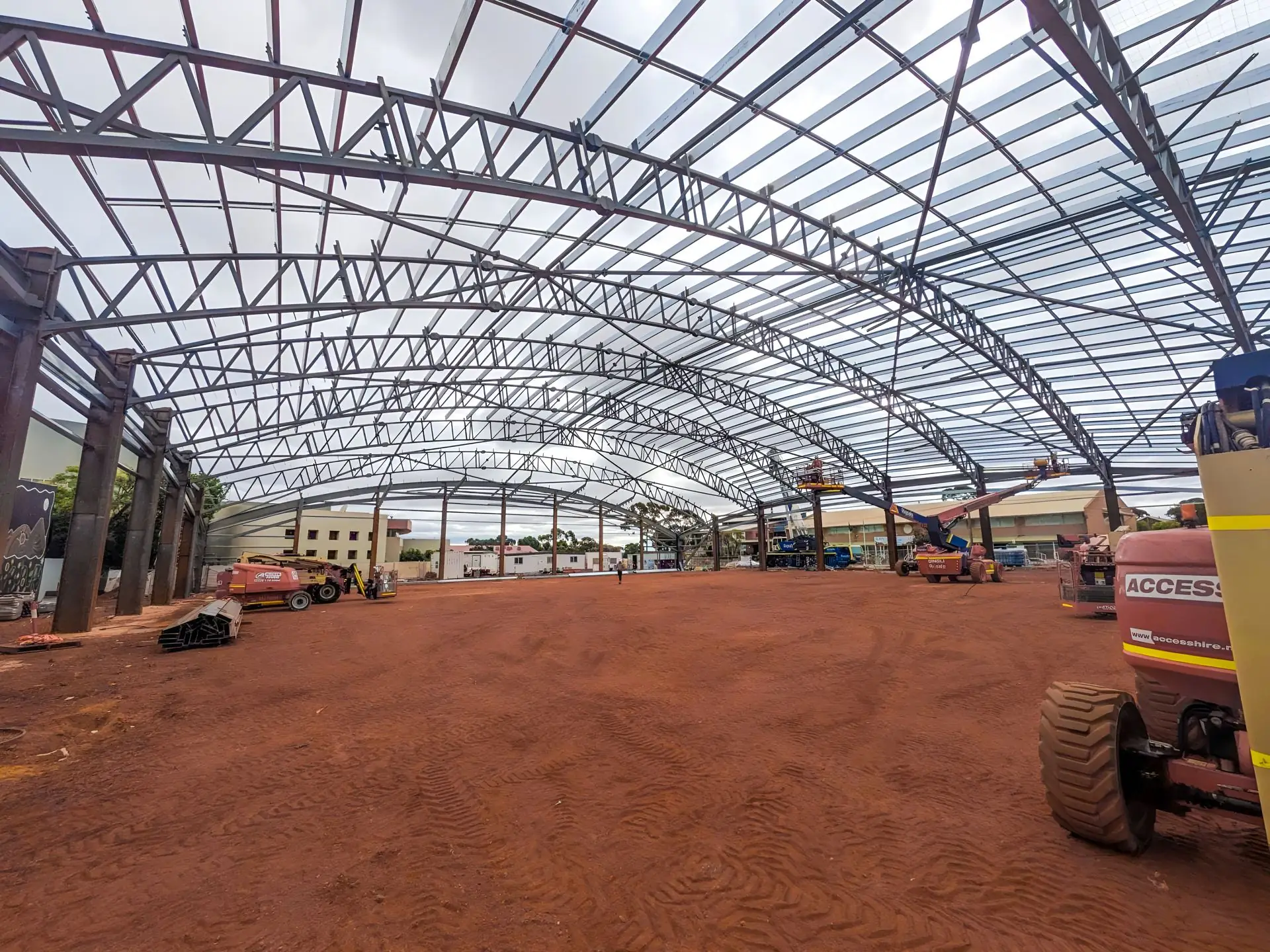
Most conveyor routes are made of a few standard gallery spans, a few trestle bent heights and special pieces at the drives, the transfers and the crossings. We design a typical span and bent for the loads in your criteria, then the special pieces, so the whole route is fabricated from a small family of repeated spans and bents with consistent piece marks.
Belt loads, material loads, belt tension at the drive and take-up, and idler spacing come from the conveyor designer, who usually follows the CEMA guidance for belt conveyors. We add the structure’s own weight, walkways, covers, wind, snow, ice and seismic forces to ASCE 7-22, and check the gallery for deflection limits the conveyor needs.
Galleries are usually galvanized, because they are exposed for decades and hard to repaint over a running belt. Our hot-dip galvanizing option is listed in the corrosion products, and coatings can be specified instead where the owner prefers.
Parts of a conveyor route
What the conveyor package includes
Truss galleries
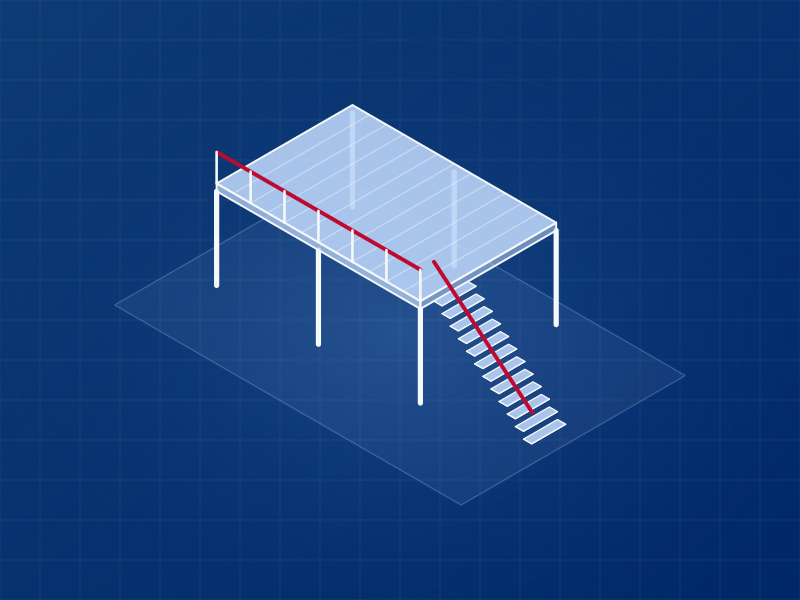
Box or open trusses carrying the stringers, idler supports and walkways between bents.
Trestle bents and towers
Braced bents at regular centers, taller towers at road and river crossings, with fixed and sliding bearings.
Walkways and access
Walkways on one or both sides, crossovers, stairs and ladders, handrails and toe plates.
Covers and hoods
Belt covers, wind screens or fully clad galleries where the owner needs dust and weather control.
Checks on every route
Design checks for a conveyor gallery
| Check | Why | What we do |
|---|---|---|
| Deflection between bents | Keeps idlers aligned and the belt tracking | Limits agreed with the conveyor designer and your EOR |
| Thermal movement | Long galleries grow and shrink with the seasons | Expansion joints and sliding bearings at set intervals |
| Wind and snow on covers | Covers and screens can double the wind on a gallery | Load cases to ASCE 7-22 for the cover you choose |
| Seismic drift at bents | Tall bents move under earthquake loads | Bracing and bearings checked for the site seismic data |
| Drive and take-up loads | Belt tension concentrates at the head and tail | Local frames and bracing designed for the drive data |
From route to containers
How a conveyor package moves through our plant
-
Route and loads in
Profile, bent locations and conveyor data from your conveyor designer.
-
Typical spans designed
Standard gallery span and bents designed and approved first.
-
Repeated in Tekla
The route modeled from the approved spans and bents, specials added at drives and crossings.
-
Fabricated in sequence
Members galvanized, piece-marked and packed in the order the route is erected.