Skip to content
Seeking US contractor partners IAS AC472 ACCREDITED ★ METAL BUILDINGS ★ AC472 IAS AC472 accreditedIAS AC472
World Steel USA

Building package · Manufacturing & crane bays

The crane drives the frame.

In a plant with cranes, the crane drives the frame: its wheel loads set the runway, the runway sets the columns and the columns set the foundations. World Steel, a structural steel fabricator producing 2,500 t (5.5 million lb) a month in our own plant in Vietnam, designs that chain, welds the heavy members from plate and ships them to your US contractor.

HOOK HEIGHT SPAN
Capacity
2,500 t (5.5 million lb) a month
Heavy members
Welded from plate, AWS D1.1
Runways
AISC Design Guide 7 practice
Plant
IAS AC472 accredited
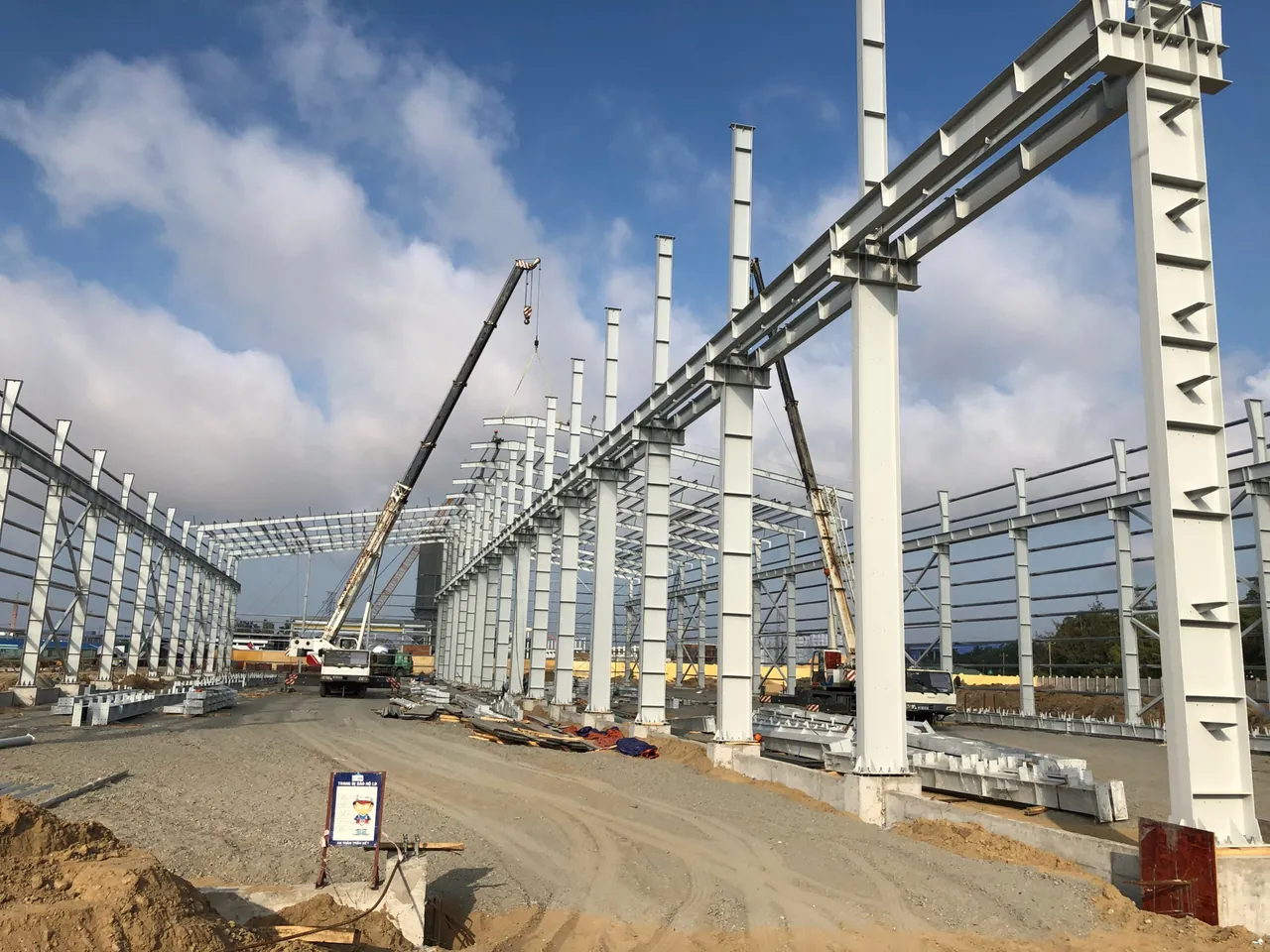
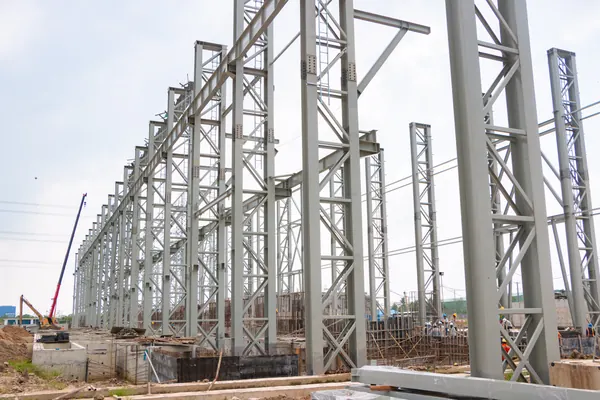
Laced steel crane columns of the Hoa Phat factory, Vietnam, during erection Photo · Hoa Phat

The crane drives the frame

Choose the crane. See the column change.

The heavier and busier the crane, the more of the frame is built around it. Pick a crane duty to see the column type we would start from.

Crane duty
LIGHT SERVICE
PRODUCTION CRANE
HEAVY AND FREQUENT LIFTS

Light service

Maintenance hoists and light cranes used now and then.

  • Crane brackets bolted or welded to the building columns
  • Runway beams from rolled or built-up sections
  • The lightest frame for the job

Production crane

A bridge crane working every shift.

  • Stepped columns: a crane leg under the runway, a roof leg above
  • Runway girders checked for fatigue
  • Runway alignment tolerances set out on the drawings

Heavy and frequent lifts

Big loads, long hours, often two cranes on one runway.

  • Separate laced crane columns carry the runway on their own
  • Heavy built-up girders welded from plate
  • Base plates and anchor rods sized for crane and wind together

Illustration only. The crane maker’s data and your Engineer of Record’s loads decide the real column type; we compare options by steel weight in the proposal.

The crane bay ecosystem

Follow the load from the hook to the ground

Every link in this chain is designed together. Each one opens the products and pages behind it.

  1. Crane

    Supplied on request or by your crane maker.

  2. Runway beam

    Carries the wheel loads along the bay.

  3. Column

    Bracket, stepped or laced crane column.

  4. Base plate and anchor rods

    Where the steel meets the concrete.

  5. Foundation

    Designed by your Engineer of Record, built by the US contractor, our customer.

Beyond the crane

A plant hangs its whole process on the steel

Fans on the roof, pipes under it, platforms between the columns, conveyors overhead. Each one is a load the frame must know before it is designed, so we ask for them at the start.

FAN MONITOR PIPES · DUCTS LIGHTS MONORAIL MEZZANINE GROWS THIS WAY
  • Makeup air and exhaust fans

    Roof dunnage or framed roof openings sized for each unit.

    We need: Unit weights, sizes and locations
  • Process piping and utilities

    Pipe supports from the roof frames, or a pipe rack along the columns.

    We need: Pipe routes, sizes and operating weights
  • Mezzanines and platforms

    Steel platforms, stairs and handrails framed with the building.

    We need: Live load, equipment on it and access
  • Conveyors and monorails

    Hung from the roof frames or carried on their own support steel.

    We need: Hanging points, spans and loads
  • Lights, sprinklers and ducts

    A collateral load designed into every roof member.

    We need: The allowance from your MEP designer
  • Room to grow

    One end wall framed as a full frame, so the plant grows by bays.

    We need: Which way the plant will grow

Large projects

Steel mills, process plants, whole complexes

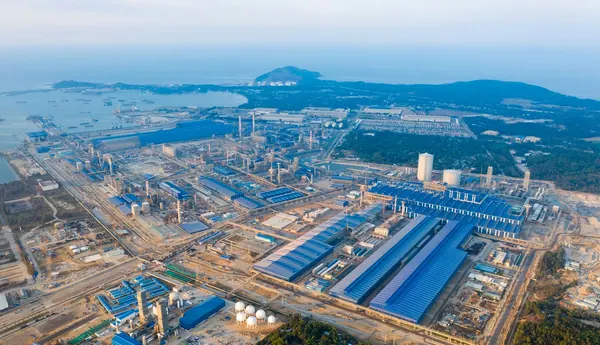
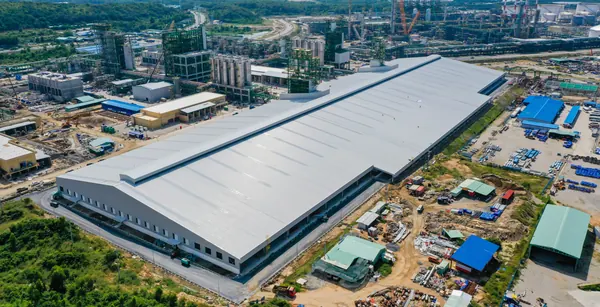
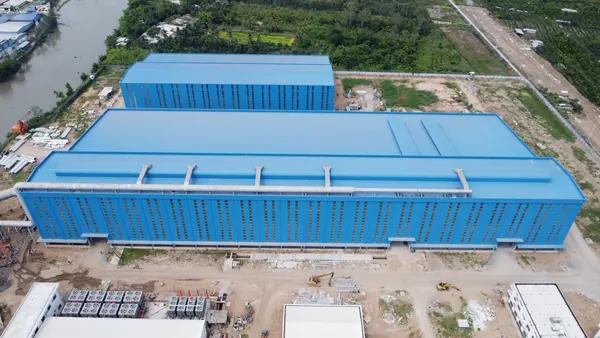
World Steel frames buildings at industrial scale: a steel group’s factory complex, a steel mill on the Mekong delta framed with about 5,000 t and more than 56,000 m² (600,000 sq ft) of steel structures at the Long Son petrochemical complex. A US plant gets the same shop.

Drone view of the Hoa Phat industrial complex by the sea Photo Hoa Phat, Quang Ngai
Long steel building at the Long Son petrochemical complex seen from a drone Photo Long Son petrochemical complex
Drone view of the Sunpro Steel factory buildings by a river Photo Sunpro Steel, about 5,000 t
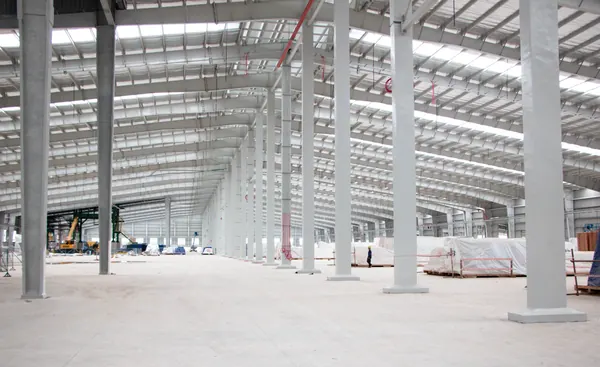
Inside a long steel building with grey columns and a clear floor Photo Inside at Long Son

Projects outside the US, shown for their scale; they are not US sites.

Fabrication capacity

Heavy steel, on a large plant’s schedule

2,500 metric tons a month

About 2,750 short tons of structural steel fabricated every month in World Steel’s own plant in Vietnam.

Big tonnage does not have to queue behind other work. The plant is sized to take the steel package of a large US job, from heavy frames and built-up girders to multi-story framing, and to ship it to your US port in the order your erector needs it.

Largest jobs delivered: Sunpro Steel 5,000 t · CPV Food 2,500 t · Long Son petrochemical 2,000 t · M&D Thailand 2,000 t →

Real World Steel frames

Laced crane columns, standing in rows

Heavy crane bays framed by World Steel, from laced columns going up to the roof over the bay. Tap a photo to open it full size.

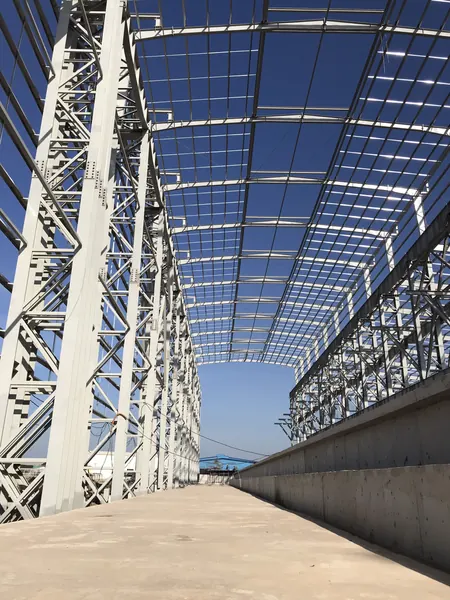
Tall laced steel crane columns under a roof frame Photo Laced crane columns
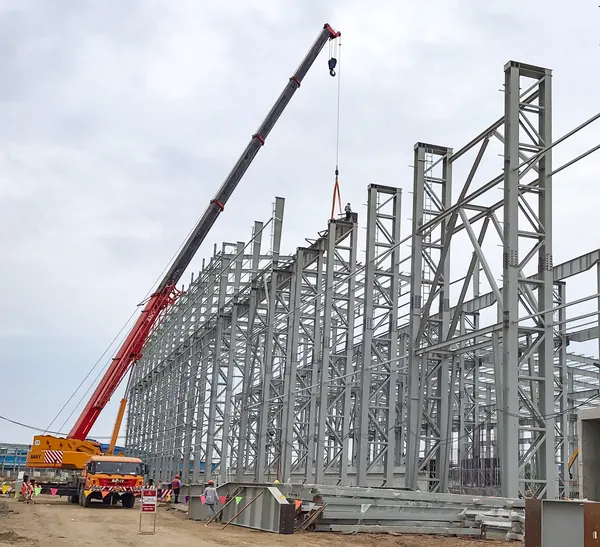
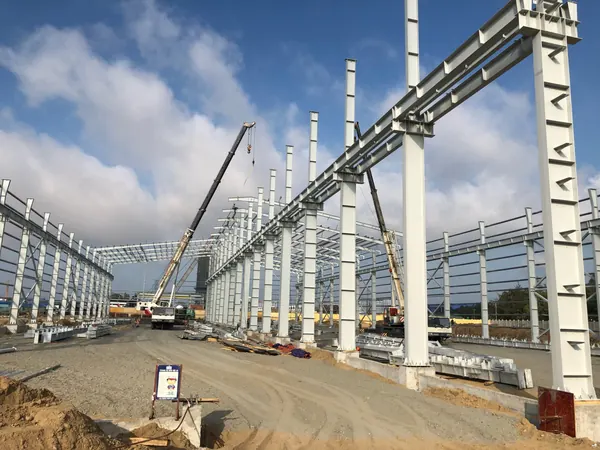
Mobile crane lifting laced steel columns into place Photo Columns going up
Row of laced crane columns standing on site Photo A row of crane legs
Steel roof frame over laced columns seen from inside Photo Roof over the crane bay
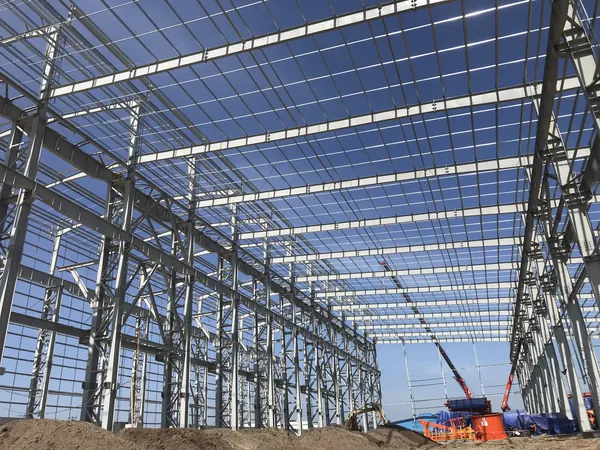
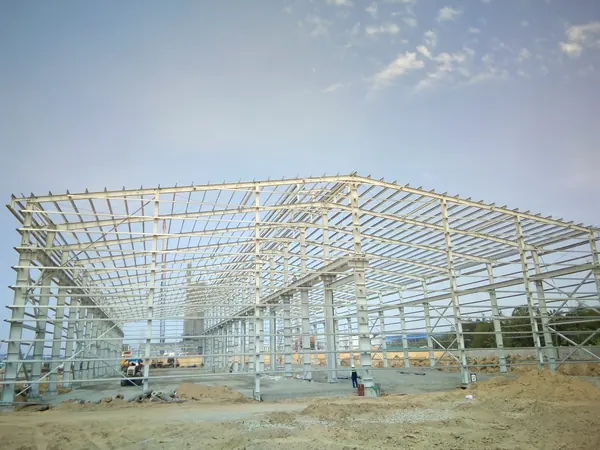
Long steel factory frame with trusses during erection Photo Hoa Phat frame

Projects outside the US, shown for the structure type; they are not US sites.

Buying steel from outside the US

Every worry about an overseas fabricator, answered in writing

US buyers ask us the same ten questions before they order steel made in Vietnam. Here is what we do about each one, and where you can check it for yourself.

The worry: “Will steel designed overseas pass US plan check?”

Designed to US codes, ready for your engineer’s review

We design to the code your jurisdiction enforces: IBC 2024 and ASCE 7-22 by default, AISC 360 and AISC 341 for steel, plus state codes such as the California Building Code. Our calculations and drawings go to your Engineer of Record for review and approval, and the PE seal and permit stay with the US contractor, our customer.

The worry: “I can’t see the quality from across the Pacific.”

An accredited plant you can inspect, live

Our plant is the first and only fabricator in Vietnam accredited under IAS AC472, with written inspection procedures audited by IAS. Your special inspector or owner’s representative can visit, or inspect remotely over live video, and every QC release is logged with photos.

The worry: “Will the materials be traceable to the grade on the drawings?”

Mill certificates by heat number

Steel is ordered to the ASTM grades you specify, mainly from mills in Vietnam. Plate and sections are stored by grade and heat number, and you receive EN 10204 type 3.1 mill certificates traced to the members they went into, with Charpy V-notch results when your project asks for them.

The worry: “What if pieces don’t fit when they reach the site?”

Modeled, approved, then measured

Every member is modeled in Tekla Structures and cut only after you approve the shop drawings, which are included at no extra charge. QC checks dimensions, holes and end plates against the drawing before a piece is released.

The worry: “How will I know where my order really is?”

Real-time tracking in PEB Studio

You follow your own members through cutting, welding, coating, QC release, packing and loading in PEB Studio, online, at any hour. No waiting for a weekly email to find out what happened.

The worry: “Ocean freight scares me: damage, missing pieces, a port I don’t know.”

Packed in erection order, listed per container

Steel is bundled and tagged in your erection sequence, with a packing list and photos for every container or breakbulk load. The quote names the US port of discharge, and the shipment is planned backward from your site date.

The worry: “Who handles customs and duties?”

Incoterm and importer of record in writing

Every quote states the Incoterm and who acts as importer of record, so nobody is surprised at the port. Our Section 232 page explains how US import rules apply to fabricated steel, from official sources only.

The worry: “Time zones and language will slow everything down.”

One English-speaking project manager

Our engineers and project managers work in English and in US units on request. One project manager owns your job from approval drawings to the last container, and our US office is in Westminster, California.

The worry: “Who erects it, and who stands behind the field work?”

Your US contractor erects, with our drawings

World Steel supplies the steel structure only; we never erect. Our customers are US contractors: erection and field work are their scope, done from our erection drawings and piece marks, with our engineers on call for questions from the field.

The worry: “Who is responsible for the design?”

Scope split agreed before you sign

We put the split in writing: full design by World Steel, or a delegated design such as connections under your Engineer of Record, who keeps overall responsibility. You see exactly what we design and what stays with your team.

  • First and only IAS AC472 plant in Vietnam
  • Designed to US codes
  • Shop drawings at no extra charge
  • Live production in PEB Studio
  • Supplied to US contractors

What the package contains

Components in this package

A plant is designed around what moves inside it. We start from the crane: its capacity, span, hook height and duty, then size the columns, brackets and runway beams in the same analysis model as the frame, so wheel loads and lateral thrust travel straight to the foundation. Future bays and a removable end wall are drawn in from day one, and the cranes and hoists themselves can come from our plant in Vietnam with the steel.

standard = in the base scope · optional = add if you want it · confirm = depends on your design

Primary Structural System

Secondary Framing

Roofing System

Wall & Cladding System

Doors & Building Openings

Mezzanines & Floor Systems

Connections & Anchorage

Drainage & Weather Protection

Crane Runway & Industrial Supports

Not included

  • Foundations, slabs-on-grade, anchor rod setting and other sitework.
  • Steel erection and field labor, provided by your erector or general contractor.
  • Permit applications and plan review fees, unless agreed in writing.
  • Mechanical, electrical and plumbing design and installation.
  • US customs duties, tariffs, port charges and inland trucking, unless the stated Incoterm includes them.
  • Crane electrification, controls and load testing on site are by the crane installer and the owner.

Talk to an engineer

Send the layout and the crane data.

Our engineers work in English. We design the runway, the columns and the frame as one chain and send a written scope for the steel.

Asked by plant owners and contractors

Crane bay questions and answers

12 answers on cranes, runways, large plants and scope.

Cranes and runways 3 answers

What do you need to know about the crane?

Capacity, span, hook height, the number of cranes on the runway, the duty or service class and the crane maker’s wheel loads and end-truck geometry. With those we size the runway beams, brackets and columns and check fatigue where the crane works often.

Can you supply the crane as well as the building?

Yes, on request. Overhead cranes and hoists can ship with the steel package; their rating, testing and certification come from the crane maker and are confirmed per product.

When do you use laced or stepped crane columns?

Light cranes hang on brackets from the building columns. Heavier or more frequent cranes get stepped columns or separate laced crane columns that carry the runway on their own leg, as in the photos on this page.

Large plants 2 answers

How large a plant can World Steel supply?

Our plant in Vietnam fabricates 2,500 t (5.5 million lb) of structural steel a month and has framed steel mills, process plants and food factories. Large plants are split into packages by building or by erection zone with production slots confirmed in the quote.

Do you fabricate heavy built-up members?

Yes. Crane columns, runway girders and long rafters are welded from plate in our plant, to AWS D1.1 for structural welding, with procedures and welder qualifications on file.

Design and codes 2 answers

Which codes do you design crane buildings to?

IBC 2024, ASCE 7-22 and AISC 360 by default, with AISC Design Guide 7 practice for crane runways and the CMAA or crane maker’s data for crane loads. Standards are what we design to; the building official issues the permit.

Who approves and seals the drawings?

Your Engineer of Record reviews and approves the calculations and drawings we prepare. The approval, the PE seal and the permit belong to the US contractor, our customer, and their engineer. World Steel designs and fabricates; it does not seal drawings.

Hanging the process 3 answers

What is collateral load and why does it matter?

Collateral load is the weight of everything permanently hung from the structure besides the roof itself: lights, sprinklers, ducts, ceilings and piping. Metal building practice treats it as added dead load. A plant often hangs far more than a warehouse, so we ask for the allowance and the heavy point loads before the frame is designed.

Can you frame mezzanines and equipment platforms?

Yes. Mezzanines, equipment platforms, stairs, ladders and handrails are designed and fabricated with the building, so their columns, bracing and loads sit in one model with the frame.

Can rooftop units sit on the roof?

Yes. We frame dunnage or support frames for makeup air units, exhaust fans and other rooftop equipment, sized for their operating weight and the wind on them. Curbs and roof openings are coordinated with the roofing package.

Buying, shipping and erection 2 answers

Do you erect the plant or install the crane?

No. World Steel designs, fabricates and supplies the steel structure. Foundations, erection, crane installation and commissioning are the scope of the US contractor, our customer, and the crane installer.

Do you publish prices?

No. Send the layout, the crane data and the site address and we return a written scope and quotation.

Keep reading

Related pages

Planning a plant with cranes?

Send the layout, the crane data and the site address. We design the runway, columns and frame as one chain and send a written scope for the steel, made in our plant in Vietnam.