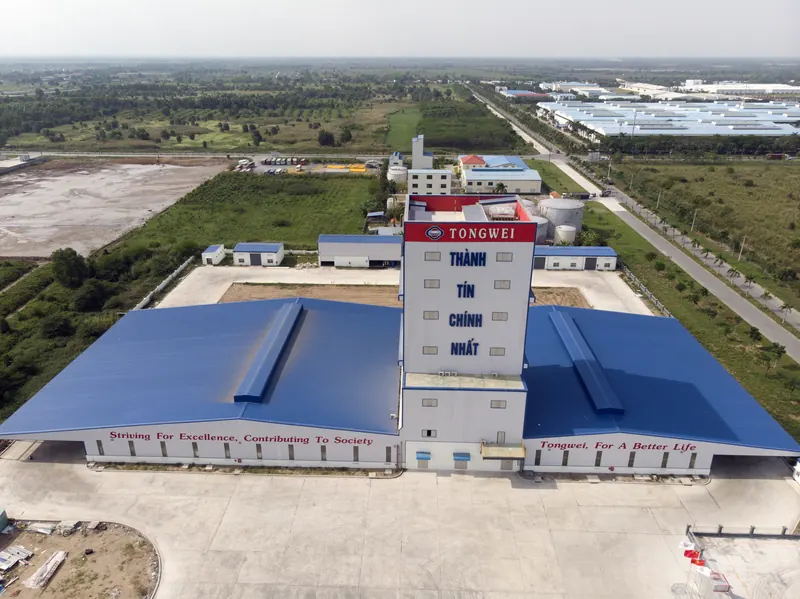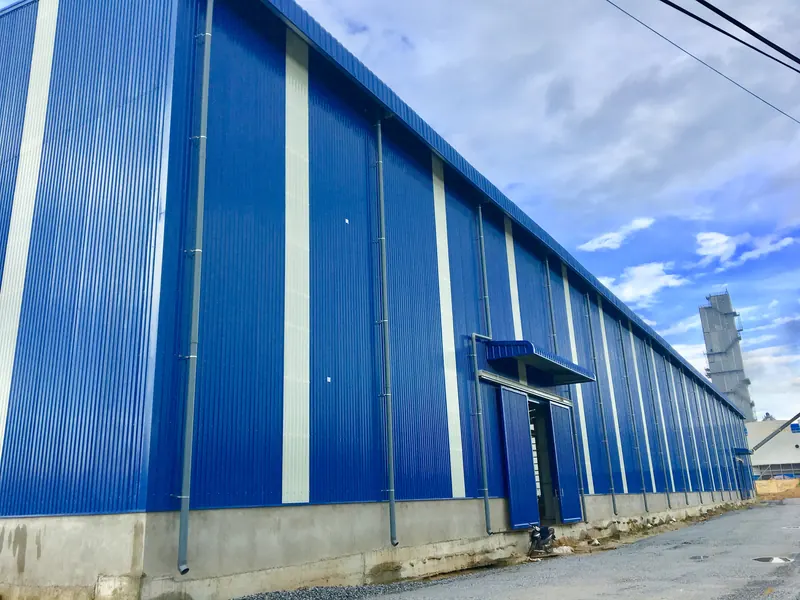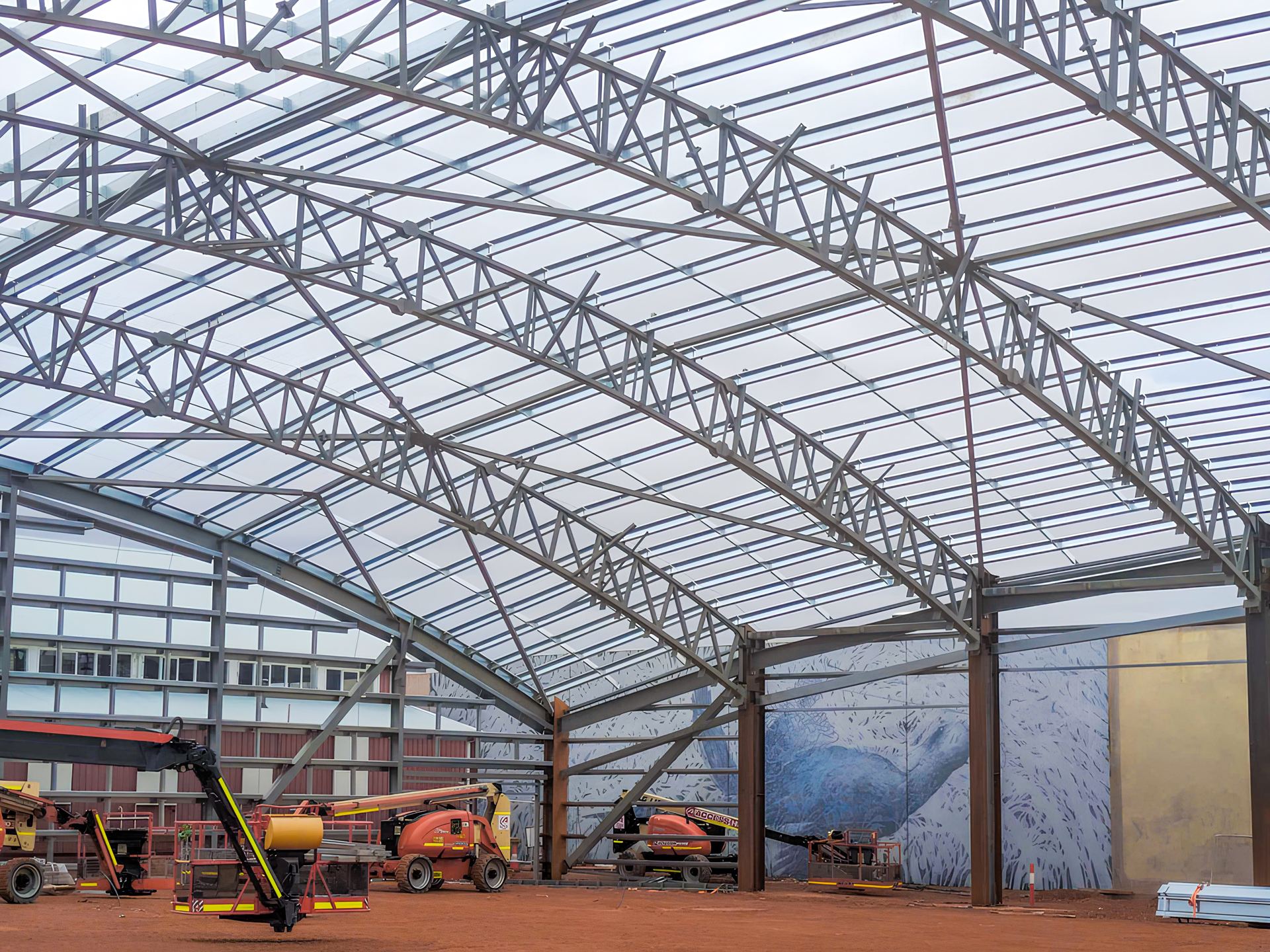
Three common cover forms
Which stockpile cover fits your pile
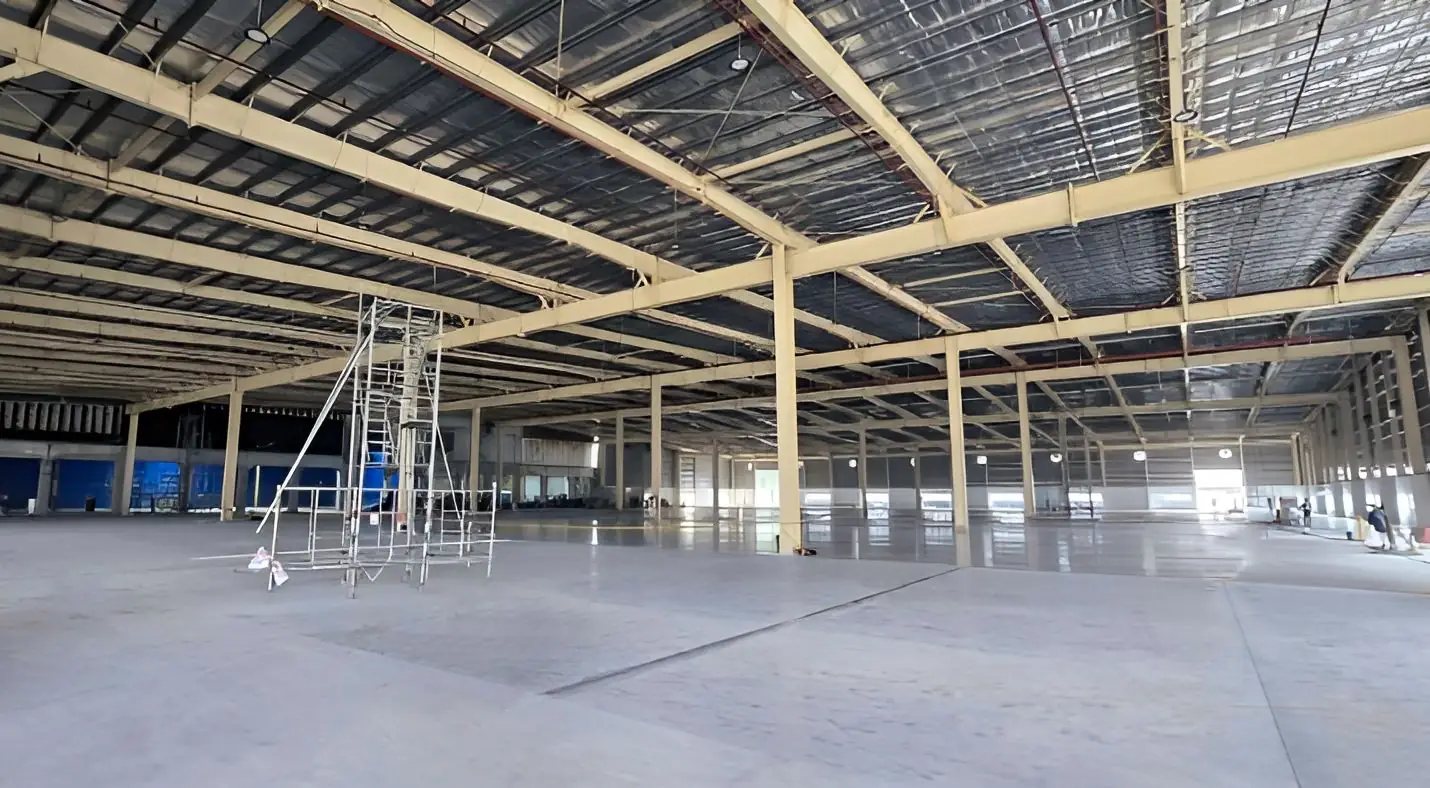
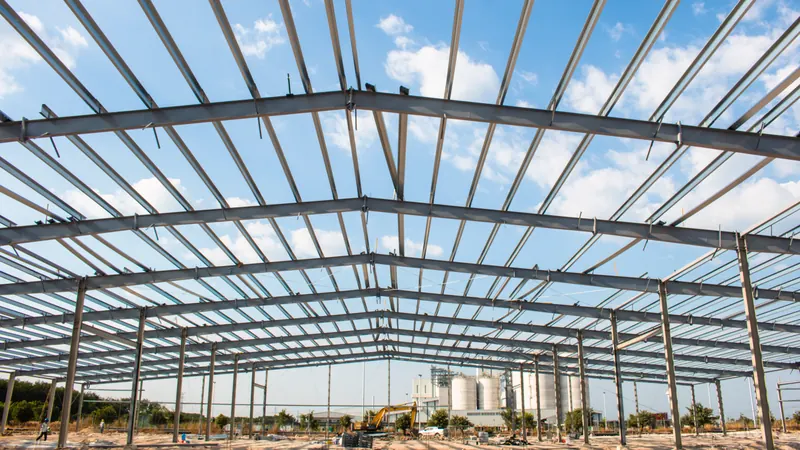
Long-span gable frames
Built-up tapered or truss frames for rectangular piles and reclaim by front-end loaders or bridge reclaimers.
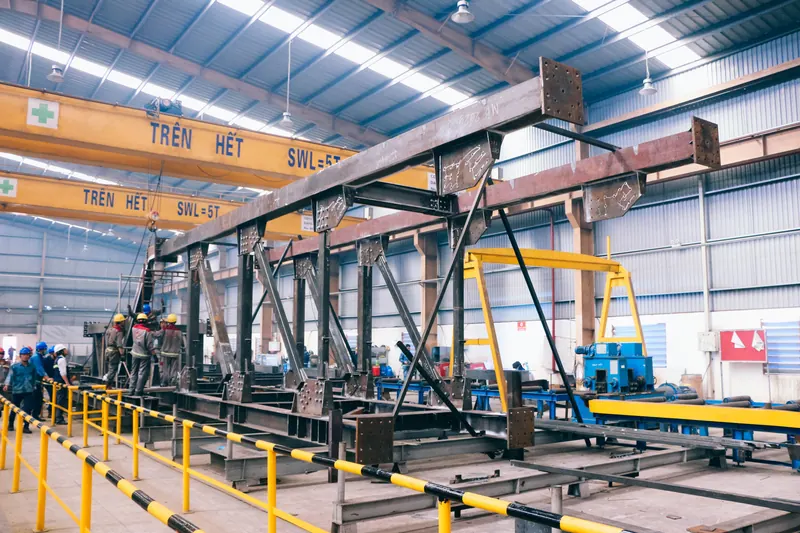
A-frame truss buildings
Trusses that follow the angle of repose of the pile, with a stacker or tripper gallery at the ridge.
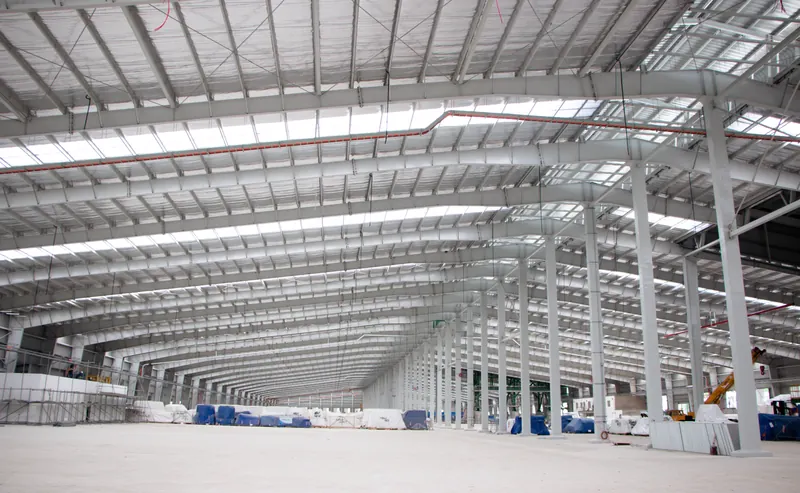
Curved truss covers
Arched long-span trusses for very wide piles, built from repeated truss segments.
The pile sets the shape
Shape the building around the material
The width and height of a stockpile cover come from the material: its angle of repose, the live capacity the owner wants and the reach of the stacking and reclaim equipment. When the steel follows the pile, less building encloses the same tonnage of ore. We compare frame forms for your pile and let your Engineer of Record decide.
The tripper or stacker gallery along the ridge is a conveyor gallery hung from or supported on the frames, so the roof structure carries belt loads as well as wind, snow and dust build-up. Inside the cover the steel lives in dust and moisture, which can be corrosive with sulfide ores or salts; galvanizing or a duplex system is common.
At the load-out, surge bins and their supports sit over rail tracks or truck lanes. Those members carry heavy, changing loads from material flowing in and out, and are designed for them with the bin designer’s data.
Load cases
What a stockpile cover is designed for
| Load | Source | Note |
|---|---|---|
| Tripper or stacker gallery | Conveyor designer | Carried on the frames along the ridge |
| Wind on a large enclosure | ASCE 7-22 for your site | Openings at reclaim ends change the internal pressure |
| Snow and drift | ASCE 7-22 for your site | Important on wide covers in northern states |
| Material pressure on walls | Owner’s criteria and your EOR | Push walls are usually concrete; the steel stays above them |
| Dust build-up | Owner’s criteria | An allowance for settled material on ledges and purlins |