Data centers are built under schedule pressure. Capacity is sold or committed before the building exists, and every week of delay is a week of lost revenue or a missed customer date. Chapter 31 of the Data Center Handbook edited by Hwaiyu Geng (2nd edition, Wiley, 2021), written from the owner's side at a hyperscale operator, sets out the fundamentals of data center project management: kickoff, scope, team roles, schedule, cost, reporting and closeout. None of it is specific to steel, yet each tool applies directly to the structural package, which is usually one of the first long-lead items on the schedule. This article walks through the chapter and shows where the steel fits.
Kickoff: one contact per vendor
The handbook recommends a formal kickoff led by the project manager, to introduce the project as a finite effort with an expected outcome, establish the team, outline roles and the chain of command, and agree objectives. Its kickoff checklist includes aligning roles, agreeing expectations such as meetings and responsiveness, setting the tooling and communication strategy, and assigning a single point of contact from each vendor.
For the steel package, that single point of contact matters more than it sounds. Design questions, shop drawing approvals, fabrication progress, inspection reports and shipping all flow through one person who answers for the whole package. Our project management page explains how World Steel assigns one named project manager from contract to final delivery.
Scope: what the package is, and what it is not
The chapter describes the triple constraint of scope, timeline and cost. Putting more weight on one lowers the priority of the others; shortening a timeline usually costs overtime, higher-skilled labor or expediting fees. The handbook is blunt: if all three are said to be first priority, no prioritization has taken place.
It then calls for a written statement of work (SoW), the baseline against which completion is measured and, importantly, a record of what the project is and also what it is not. On a steel package, the "is not" list prevents most disputes:
- Which structures are included: main frames, mezzanines, platforms, dunnage, pipe racks, canopies, generator yard steel?
- Which are excluded: embeds, anchor rods, deck, cladding, erection, field touch-up?
- Which documents are delivered: design calculations, shop drawings, erection drawings, material certificates, inspection records?
- Which coating system applies to which members?
Roles: the RACI matrix
The handbook recommends a RACI matrix, assigning each stakeholder as responsible, accountable, consulted or informed for each task, reviewed and agreed by all parties before the project starts and used later to settle questions about responsibility.
For the steel scope on a US data center, a typical RACI separates the owner, the US contractor, the Engineer of Record, the steel designer and fabricator, the erector and the special inspector. Sorting out early who approves shop drawings, who is accountable for anchor rod layout, and who accepts delivery at the jobsite saves weeks later.
Schedule: critical path and float
The chapter defines the critical path as the set of tasks that generates the longest overall completion time. Delay a critical path task and the whole project slips; tasks off the critical path have float, time they can lose without delaying completion. It describes two common schedule formats, the PERT network that shows task relationships and the Gantt chart that shows durations and dates, and uses a data center example: racks must be built before switches can be stacked in them.
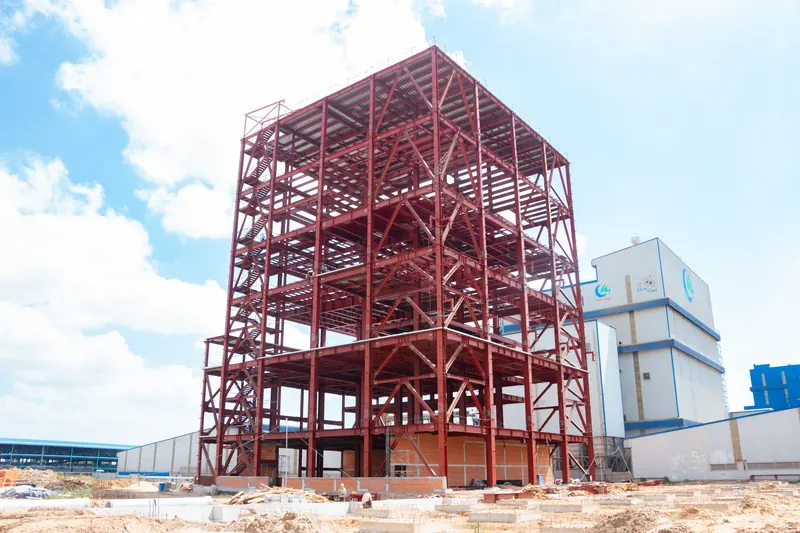
Structural steel is a classic critical path chain on a data center:
- Design and approval of the steel calculations and drawings;
- Mill orders and material receipt;
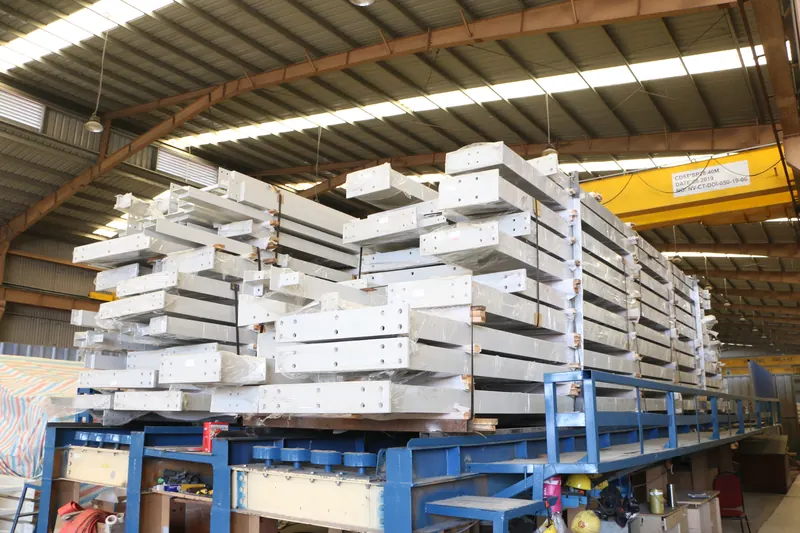
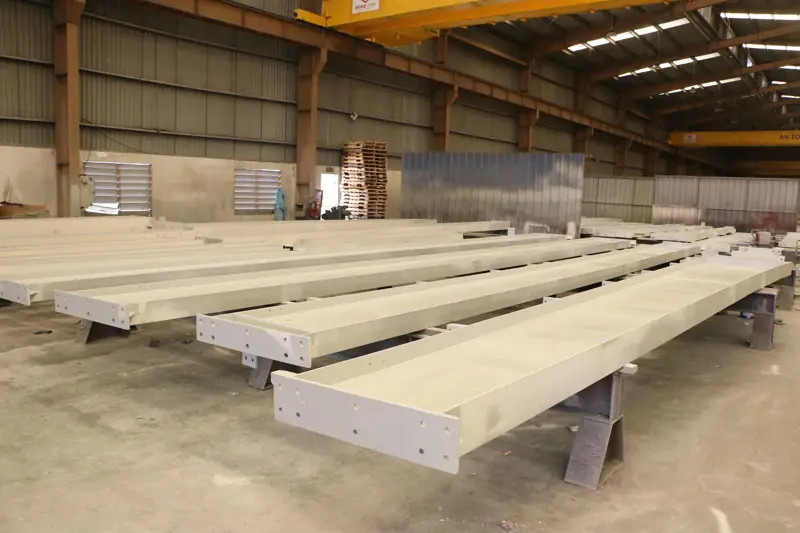
- Fabrication, coating and shop inspection;
- Packing and shipping to the US port, then inland delivery;
- Erection, which in turn releases roofing, cladding, MEP rough-in and fit-out.
Each link can be shortened, but only if it is planned. Early release of mill orders, phased shop drawing approval, and shipping in erection sequence are all ways to buy float. Our fast-track steel schedule guide explains the approach, and the shipping simulator shows realistic ocean transit from Vietnam.
Schedule control: one version for everyone
The handbook stresses that creating a schedule is only the first step. Projects deviate through delays, scope changes and new priorities, so the schedule should be updated on a regular cadence, weekly or monthly, and reissued as a version-controlled document so that "all musicians play off the same sheet of music."
For a steel package fabricated overseas, the equivalent is visibility of shop progress. If the contractor can see which members are cut, welded, blasted, painted, inspected and packed, the field schedule can follow reality rather than estimates. World Steel's PEB Studio gives customers that view of their own project, member by member, and our digital project control page explains how inspection records sit in the same system.
Cost: know the accuracy of the number
The chapter distinguishes three kinds of estimate, each with its own expected accuracy:
| Estimate | Typical accuracy | When it is used |
|---|---|---|
| Rough order of magnitude | About plus or minus 15 to 25% | Feasibility, often from schematic design |
| Detailed | About plus or minus 5% | After construction drawings, the "best guess" |
| Budgetary | Detailed plus contingency, not to be exceeded | Capital budgeting, the maximum spend |
For steel, the gap between those numbers is mostly tonnage and connection complexity. An early tonnage based on a typical bay is fine for feasibility, but design loads for rooftop plant, overhead busway, seismic category and future capacity can move it substantially. The handbook also recommends regular cost control, typically monthly, so the business knows both the size of the expected cost and how certain it is.
Reporting and closeout
The handbook asks for reports tailored to their audience, issued on a predictable cadence, with executives getting budget and progress rather than detail. It then calls for a formal closeout: confirm every objective from the kickoff is met, settle payments, close the budget, run a lessons-learned review and share it with future teams, and set up a process for additional scope requests as a separate project.
For steel, closeout means the handover package: as-built drawings, material certificates, inspection and coating records, and the member traceability that an owner's operations team will want for future modifications. See our project handover documents page.
Where World Steel fits
World Steel designs and fabricates structural steel for data centers with one named project manager per job, written scope, shop progress visible in PEB Studio, and handover records at closeout. Fabrication is done in our own plant in Vietnam with inspection accredited under IAS AC472, and steel ships to the US port packed in erection order. Our customers are US contractors; site work, including erection, is their scope, and their Engineer of Record approves and seals the design. See the data center building package for the full shell scope.
Key takeaways
- The handbook's project fundamentals (kickoff, scope, RACI, schedule, cost, closeout) apply directly to the structural steel package.
- A written statement of work should say what the steel package includes and what it excludes.
- Steel design, fabrication and shipping usually sit on the critical path; early mill orders and erection-sequence shipping buy float.
- Version-controlled schedules and visible shop progress keep field plans tied to reality.
Source: H. Geng (ed.), Data Center Handbook, 2nd ed., Wiley, 2021, Chapter 31. Ideas are paraphrased; consult your Engineer of Record for project decisions.
Quick answers
What is the triple constraint?
Scope, timeline and cost. The Data Center Handbook explains that putting more weight on one lowers the priority of the others, and that a project claiming all three as first priority has not prioritized at all.
What is the critical path?
The set of tasks that produces the longest overall completion time. Any delay to a critical path task delays the whole project. Tasks off the critical path have float, the time they can slip without delaying completion.
How accurate is an early estimate?
The handbook gives typical accuracies: a rough order of magnitude estimate at about plus or minus 15 to 25%, used for feasibility; a detailed estimate at about plus or minus 5%, prepared after construction drawings; and a budgetary estimate that adds contingency and should not be exceeded.
Why does structural steel matter so much on a data center schedule?
Steel is designed, detailed, fabricated and shipped before the building can be closed in, and every later trade depends on it. That puts the steel package on or near the critical path on most data center projects.
Keep building your steel plan
Go further on USPEB.com
On this topic
Across the US market
- Projects by typeWarehouses, plants, data centers and more
- Industries we serveSteel packages by US industry
- Data center steelHyperscale and colocation framing
- Sunpro steel mill, 5,000 tOur largest single steel package
- Large projects, 2,500 t a monthCapacity for large US general contractors
- Contractor partnershipLong-term supply for US contractors