Heat and humidity are the familiar environmental risks in a data hall. Chapter 15 of the Data Center Handbook edited by Hwaiyu Geng (2nd edition, Wiley, 2021), on corrosion and contamination control for mission-critical facilities, describes a quieter one: corrosive gases at parts-per-billion levels attacking the copper and silver on circuit boards. Two trends have made it more pressing. Lead-free electronics are more vulnerable, and economizers bring more outside air into the building. Control of data center gaseous contamination starts with measurement and filtration, but it also depends on a tight building shell and on what the structure and its finishes are made of. This article summarizes the handbook and adds the building view.
Why the risk grew
The handbook explains that RoHS, the European directive restricting hazardous substances in electronics, was the first of many lead-free regulations. They have made printed circuit boards, surface-mounted components, hard disk drives and servers more sensitive to corrosive airborne contaminants. It reports test results in which electroless nickel immersion gold and immersion silver finishes failed early, and cites research that lead-free boards can be more susceptible to corrosion than tin-lead ones.
At the same time, Chapter 13 notes that direct air-side economizers bring large volumes of outdoor air into the hall, with gaseous contaminants that standard high-efficiency filters do not capture. Our air-side economizer article covers that side.
Measuring corrosivity: ISA 71.04
The handbook describes "reactive monitoring": copper and silver coupons are exposed for a period, then analyzed to measure the corrosion film. ANSI/ISA-71.04 classifies the result:
| ISA severity level | Copper reactivity per month | Silver reactivity per month |
|---|---|---|
| G1 Mild | under 300 Å | under 200 Å |
| G2 Moderate | under 1,000 Å | under 1,000 Å |
| G3 Harsh | under 2,000 Å | under 2,000 Å |
| GX Severe | 2,000 Å or more | 2,000 Å or more |
Silver coupons matter because some gases, such as sulfur dioxide alone, corrode silver but not copper. The handbook also notes published gas limits from ISA, IEC, Telcordia and manufacturers, and warns that they are useful for specifying cleanliness but not for predicting failure rates.
Which gases
Chapter 15 groups the main culprits into acidic gases, such as hydrogen sulfide, sulfur and nitrogen oxides, chlorine and hydrogen fluoride; caustic gases such as ammonia; and oxidizing gases such as ozone. The acidic gases are of particular concern; the handbook notes that very low concentrations of chlorine can do serious damage. Sources include fossil fuel combustion, vehicle exhaust, industry, sewage and agriculture. That makes the site's surroundings, and the placement of intakes relative to generator exhausts, loading docks and roads, part of the design.
Control strategy: the building is the first filter
The handbook's design sequence for air cleaning begins with basics before filters:
- Assess the environment with coupons and set the severity level for copper and silver.
- Confirm temperature and humidity are within design limits.
- Seal air leaks into the room: doors, windows, walls, ceilings and floors.
- Eliminate internal sources of contamination.
- Add filtration: gas-phase filters in cooling units, and gas-phase filters or powered filtration units on any outdoor air.
- Pressurize critical areas slightly, about 5 to 10 Pa, with filtered outdoor air, so unfiltered air cannot infiltrate.
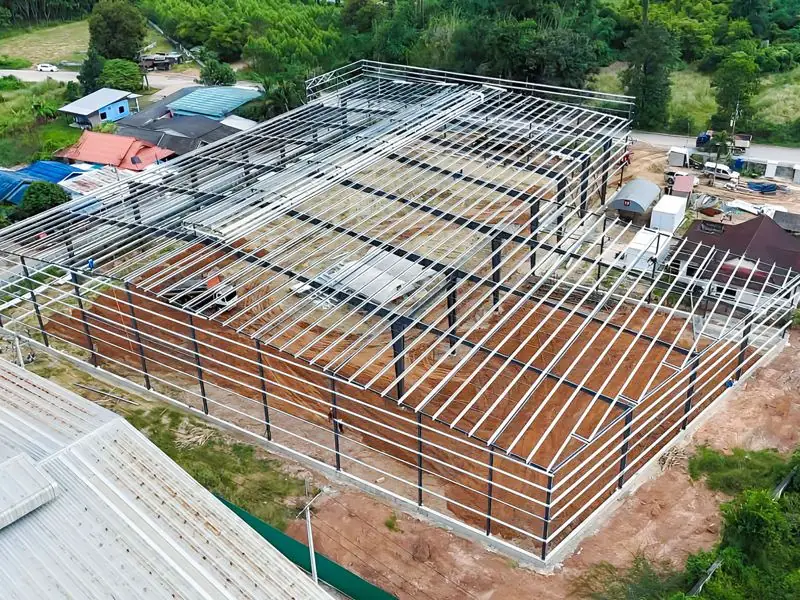
Steps 3 and 6 are building tasks. A data hall at positive pressure leaks outward through every gap, which wastes filtered air; a hall with gaps and negative pressure pulls in raw outside air. Joints between wall panels, at the roof eave, around structural members passing through walls, at girts and at every pipe, duct and cable penetration need deliberate sealing. Insulated metal panels with sealed joints, continuous air barriers and well-detailed flashings at the steel frame make that much easier. See insulated metal panels.
Gas-phase filtration and pressurization units are also physical equipment, often heavy media modules on the roof or in mechanical rooms, which the structure must support.
Steel finishes inside the hall
Chapter 15 lists internal sources of particles such as belt dust from cooling units and tin whiskers. A related concern often raised in the industry is zinc whiskers: fine conductive filaments that can grow from some electroplated zinc surfaces, historically found on raised floor components, and be carried into equipment by airflow. For steel inside or above the data hall, it is common practice to prefer painted finishes or hot-dip galvanizing over electroplated zinc, and to specify coatings that are fully cured and do not chalk or shed particles. The design team and owner set the final finish requirements.
Steel outside: same air, different standard
The same polluted air that threatens electronics also attacks exposed structural steel, though steel coatings are classified differently, by ISO 12944 corrosivity categories rather than ISA levels. Generator yards, rooftop dunnage, screens and pipe racks near cooling towers, coasts or industry may sit in a high category and need galvanizing, a duplex system or a high-performance paint system. See our ISO 12944 corrosivity categories article, paint, galvanizing or duplex, hot-dip galvanizing and coastal corrosion protection.
A short checklist for the shell
When gaseous contamination is a concern, the building team can help by confirming:
- where outdoor air intakes sit relative to generator exhausts, roads, loading docks and nearby industry;
- how wall, roof and floor joints are sealed, including at the eave, base and every structural penetration;
- where pressurization and gas-phase filtration units go, and what they weigh;
- which finishes are used on steel, hangers and supports inside the hall;
- which ISO 12944 category applies to each exposed steel zone outside.
None of these is expensive at the design stage. All of them are expensive to fix in a live facility.
Where World Steel fits
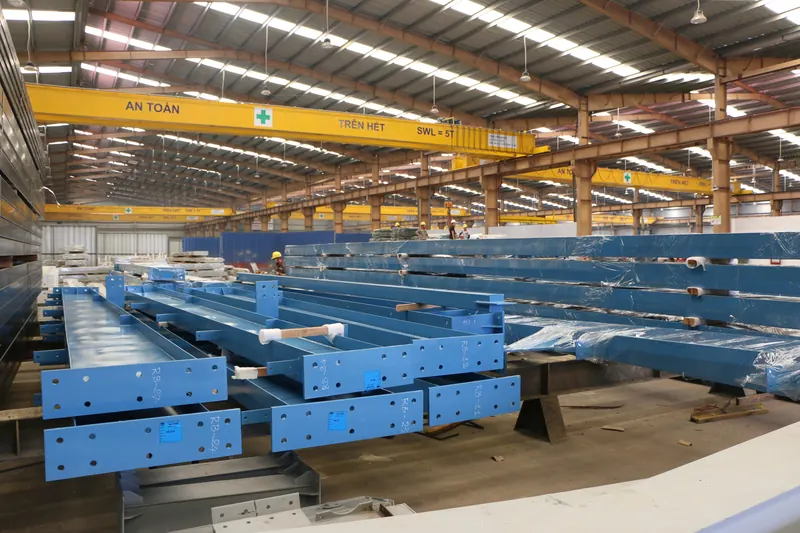
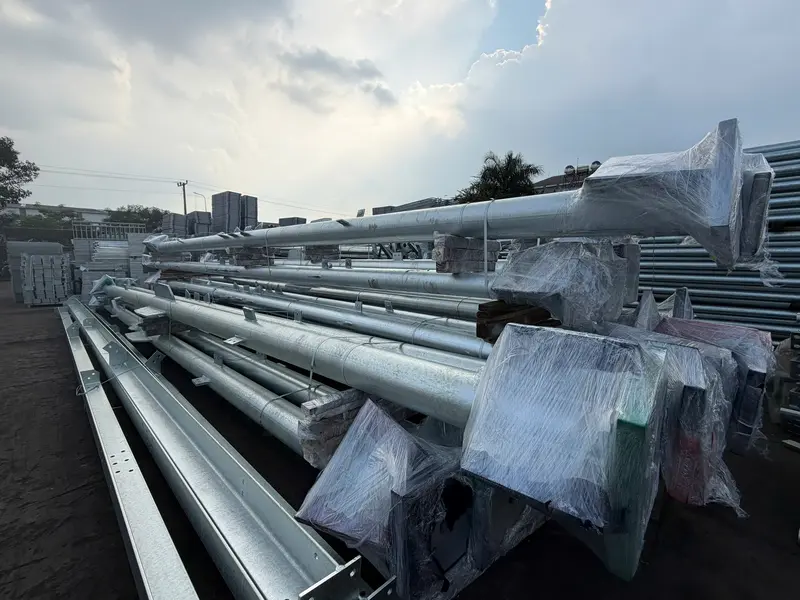
World Steel fabricates and coats structural steel for data centers in our own plant in Vietnam, with coating systems from major international brands such as Jotun, PPG, Carboline, Hempel, Nippon and International Paint, applied by painters trained and certified by the paint manufacturer, and with hot-dip galvanizing where specified. Inspection is accredited under IAS AC472. We detail frames, girts and wall openings so the envelope can be sealed cleanly, and supply platforms for filtration equipment. Our customers are US contractors; site work, including erection, is their scope, and their Engineer of Record approves and seals the design. See the data center building package.
Key takeaways
- Lead-free electronics are more vulnerable to corrosive gases; economizers increase outdoor air exposure.
- ISA 71.04 rates environments from G1 mild to GX severe using copper and silver coupons.
- The handbook's first steps are sealing the room and pressurizing it slightly, about 5 to 10 Pa, before filtration does the rest.
- Choose steel finishes that do not shed particles inside the hall, and coatings matched to the ISO 12944 category outside.
Source: H. Geng (ed.), Data Center Handbook, 2nd ed., Wiley, 2021, Chapters 13 and 15; ANSI/ISA-71.04. Ideas are paraphrased; consult your design team for project decisions.
Quick answers
What is ISA 71.04?
An ISA standard that classifies how corrosive an environment is by measuring corrosion film growth on copper and silver coupons over a month. Levels run from G1 mild through G2 moderate and G3 harsh to GX severe.
Why are modern servers more sensitive to corrosion?
Lead-free manufacturing driven by RoHS and similar rules introduced surface finishes, such as immersion silver, that the Data Center Handbook reports are more susceptible to corrosive gases than traditional tin-lead.
How does the building help control contamination?
By keeping the data hall at a slight positive pressure, about 5 to 10 Pa per the handbook, and by sealing doors, walls, ceilings, floors and penetrations so outside air enters only through filters.
Do steel finishes matter inside the data hall?
Yes. Finishes should not shed particles, and exposed steel outside needs a coating system chosen for its corrosivity category. Electroplated zinc has been linked to zinc whiskers, so painted or hot-dip galvanized finishes are generally preferred near IT equipment.
Keep building your steel plan
Go further on USPEB.com
On this topic
Across the US market
- US codes and standardsIBC, AISC, AWS and MBMA, designed to
- Seismic steel structuresSDC D to F framing for West Coast jobs
- Crane building designUS crane standards for mill and bay buildings
- Design ReportWhat our US-code design report contains
- Large projects, 2,500 t a monthCapacity for large US general contractors
- Contractor partnershipLong-term supply for US contractors