"Step and repeat" is how Chapter 1 of the Data Center Handbook edited by Hwaiyu Geng (2nd edition, Wiley, 2021) describes modularity and scalability, one of the strategic drivers it lists alongside agility, resilience, reliability, total cost of ownership and sustainability. Rather than building the whole facility on day one, a modular data center adds capacity in repeatable blocks as demand arrives. Chapter 3 explains the forms this takes and why it saves energy. For the structure, modular data center steel means frames, platforms and supports designed to be repeated, extended and connected without disturbing what is already live. This article reads the handbook from that angle.
Three forms of modular data center
Chapter 3 notes that modular data centers come in many sizes and form factors, driven by the user's needs, and describes three broad forms.
Containerized
Containerized data centers were first built in standard 6 m and 12 m (20 ft and 40 ft) shipping containers; newer designs use custom-built containers with insulated walls and features better suited to computing equipment. Because each container needs central power and cooling, containers are typically grouped and fed from a central source, and expansion means adding containers together with the extra power and cooling to serve them.
Chapter 4 adds a caution from the colocation market. Although advertised as quick to deliver, containers usually rely on the customer to provide the shared outside plant: generators, switchgear and sometimes chilled water. If those are not already in place, the handbook says they can take upward of eight months to implement, often negating the speed advantage. Their non-hardened shells are also susceptible to wind, rust and water penetration.
Industrialized
The industrialized data center is a hybrid of the container and the traditional building. It is built in increments like containers, but with some freedom in power and cooling choices and in building layout. Modules connect to a central spine containing the "people spaces", while power and cooling equipment sits next to each data center module. Expansion means placing additional modules like building blocks, with their power and cooling.
Traditional, designed for modularity
Modularity can also be applied to a conventional building, but the handbook warns that this requires tactics that diverge from the design habits of the last three decades. The entire shell must accommodate space for future growth, the infrastructure area must be planned for future power and cooling equipment, and the central plant must keep supporting live IT loads during expansion. Where expanding inside a live facility is undesirable, space can be left on the site for a new module, built in isolation with minimal tie-ins to the existing data center.
Why modular plant saves energy
Chapter 3 makes an efficiency argument that is easy to overlook. A monolithic power or cooling system sized for the final load runs at partial load for years, where UPS losses and chiller power per unit of cooling are worse. A modular design spreads the load across several smaller units that can be taken on- and off-line to match the IT load, so each runs nearer its best operating point. It also improves reliability, because redundant modules are part of the design.
The handbook models a facility planned to grow from one data hall to three, with power and cooling at N + 2 for concurrent maintainability, and compares a single monolithic system against four equal modules at 25, 50, 75 and 100% of capacity. The modular system shows lower electrical losses and chiller energy at the lower loading points, which is where a growing data center spends its early years. Air handling units designed modularly can also bring outside air into the data halls in a more controlled, incremental way.
What step and repeat asks of the steel
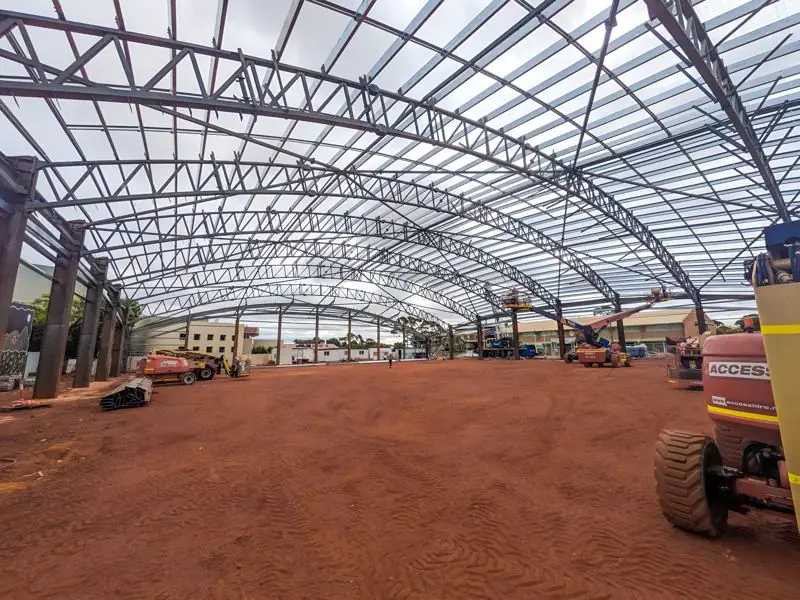
Every form of modularity relies on structure that can be repeated and extended. The steel package supports it in several ways:
| Modular need | Steel response |
|---|---|
| Repeatable data hall blocks | Standard bay sizes, frame types and connection details reused phase after phase |
| Clean expansion | End walls and frames designed to be removed or extended, with connection plates for the next phase |
| Central spine or corridor | A separate framed structure that each new module ties into |
| Plant added in steps | Equipment platforms, dunnage and pipe racks with reserve positions for future modules |
| Containers and skids | Platforms, canopies and enclosures that raise, protect and service prefabricated units |
| Live facility nearby | Erection sequences and isolation details that keep work away from operating halls |
Containers and prefabricated power or cooling skids deserve special mention. They are themselves prefabricated, but they still need something to sit on and something to protect them. Elevated steel platforms keep them above flood levels and allow cable and pipe entry from below; canopies and screens protect them from sun, rain and wind; stairs and walkways give maintenance access. Our equipment platforms and equipment shelter buildings are often used this way, and the article on colocation and wholesale data center types compares the five building types the market calls modular.
Steel is already prefabricated
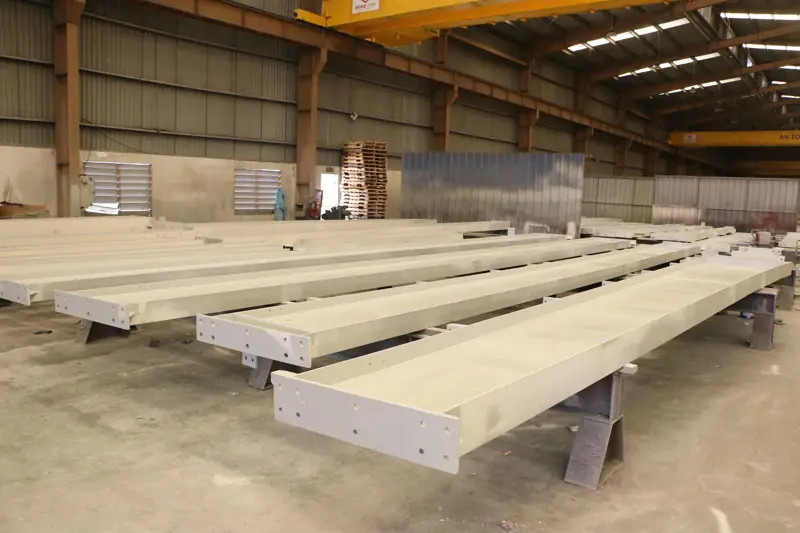
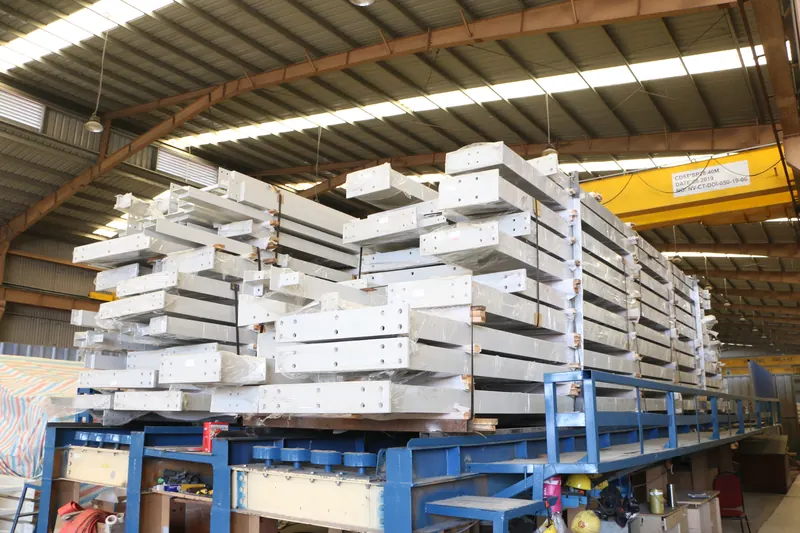
Structural steel suits modular delivery because it is prefabricated by nature. Members are cut, drilled, welded and coated in the shop, inspected there, and bolted together on site. When the second phase repeats the first, the fabricator works from proven drawings, connection details and shop programs, which shortens detailing and reduces errors. Phase-two steel can even be fabricated while phase one is being erected, timed to arrive when the contractor needs it.
Designing for repetition starts early:
- Fix the module: hall width, bay spacing and clear height that will be repeated;
- Standardize connections: the same base plate, splice and moment connection details across phases;
- Plan the joint: which frame line is temporary, which is permanent, and how the roof and cladding tie across;
- Reserve capacity: in the frame, roof and platforms for plant added later;
- Keep records: so phase three in five years' time can be fabricated from the same models.
Our phased campus build-outs guide and steel frame systems page explain these choices in more detail.
Where World Steel fits
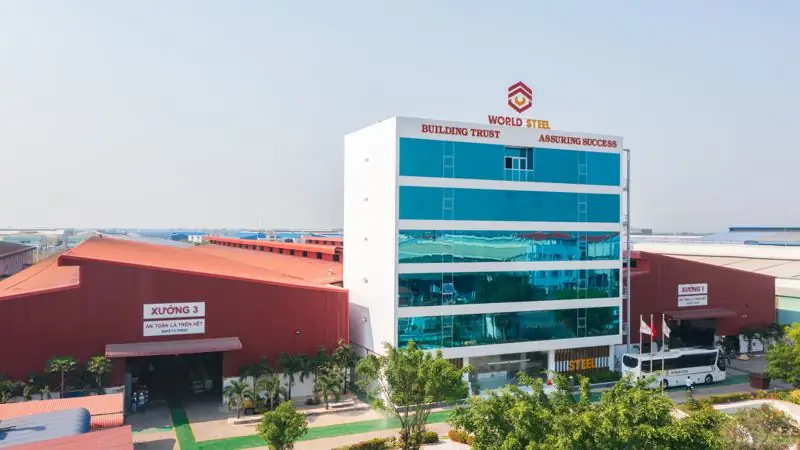
World Steel designs and fabricates repeatable data hall frames, spine structures, equipment platforms, canopies and pipe racks for modular data centers, keeping drawings and connection details consistent across phases so each new block arrives ready to connect. Fabrication is done in our own plant in Vietnam with inspection accredited under IAS AC472, and steel ships to the US port packed in erection order. Our customers are US contractors; site work, including erection, is their scope, and their Engineer of Record approves and seals the design. See the data center building package for the full shell scope.
Key takeaways
- The handbook describes three modular forms: containerized, industrialized around a central spine, and traditional buildings planned for growth.
- Modular power and cooling run closer to their efficient point at partial load and add redundancy.
- Containers still need shared outside plant, which can take months to build, and protection from the weather.
- Step and repeat works best with standard bays, standard connections, planned expansion joints and reserve capacity in the steel.
Source: H. Geng (ed.), Data Center Handbook, 2nd ed., Wiley, 2021, Chapters 1, 3 and 4. Ideas are paraphrased; consult your Engineer of Record for project decisions.
Quick answers
What forms do modular data centers take?
The Data Center Handbook describes three: containerized units grouped around central power and cooling, industrialized data centers where modules connect to a central spine of people spaces, and traditional buildings designed so the shell and plant space accommodate future growth.
Why are modular power and cooling more efficient?
Spreading the load over several smaller units lets equipment be switched on and off to match the IT load, so each unit runs nearer its efficient operating point. A single large system running at partial load wastes more energy. Redundant modules also improve reliability.
Are containers a fast route to capacity?
They can be, but the handbook notes that the shared outside plant they depend on, such as generators, switchgear and chilled water, can take upward of eight months to put in place if it does not already exist, which can erase the speed advantage.
How does modularity affect the steel frame?
It favors repeatable bays, standard connection details and frames designed so that the next phase connects cleanly to the last, plus prefabricated platforms, canopies and supports for modular plant.
Keep building your steel plan
Go further on USPEB.com
On this topic
Across the US market
- Projects by typeWarehouses, plants, data centers and more
- Industries we serveSteel packages by US industry
- Data center steelHyperscale and colocation framing
- Sunpro steel mill, 5,000 tOur largest single steel package
- Large projects, 2,500 t a monthCapacity for large US general contractors
- Contractor partnershipLong-term supply for US contractors