Every US state adopts some edition of the International Building Code, and the IBC takes its loads from ASCE/SEI 7, Minimum Design Loads and Associated Criteria for Buildings and Other Structures. ASCE 7 sorts buildings into four Risk Categories, and the category sets how strong the building must be against earthquake, wind, snow and other hazards. Chapter 27 of the Data Center Handbook edited by Hwaiyu Geng (2nd edition, Wiley, 2021), written by David Bonneville and Robert Pekelnicky of Degenkolb Engineers, makes a clear case about the data center risk category: the code minimum is usually not enough for a critical facility. This article explains why, and what designing to Risk Category IV means for the steel.
Codes protect lives, not uptime
The handbook stresses that the primary purpose of building codes is life safety, the protection of occupants and the public, not business continuity. Each Risk Category carries an assumed probability of failure that is considered acceptable for its occupancy. Some protection of property is intended at lower force levels, but it is not clearly defined.
The four categories are, in summary:
- Risk Category I: low-occupancy structures such as barns.
- Risk Category II: by far the most common; most commercial, residential and many industrial buildings.
- Risk Category III: buildings that house large assemblies of people, people with limited mobility such as schools, or limited amounts of hazardous material.
- Risk Category IV: essential facilities such as hospitals, police and fire stations, and buildings with larger amounts of hazardous or toxic material.
A data center designed strictly to code generally falls into Risk Category II. The handbook points out that this is consistent with the code's purpose, which leaves business risk to the owner, but that it creates a performance decision that is often overlooked for high-value facilities.
Why the minimum falls short for data centers
The handbook gives three reasons a data center deserves more than the minimum.
The contents are worth far more than the structure. The structural system of an office may be around 20% of the shell value; in a data center it may be as little as about 5% of the shell and core cost, and a fraction of that once fully equipped. The servers, power and cooling inside are the real asset.
The contents are fragile. Servers, racks, switchgear and cooling equipment are nonstructural components. Nonstructural damage historically occurs at earthquake intensities well below those that cause significant structural damage. Building sway can break pipe seals, swing sprinkler heads into obstructions, and open the envelope to rain.
The goal is continued operation. A Risk Category II building in a major earthquake is expected to protect lives, with a collapse probability of 1% or less in 50 years in the handbook's description, but it may be damaged beyond economic repair or flagged unsafe. For a data center, being red-tagged after an event can be as damaging as collapse, because the facility cannot be reoccupied until it is inspected and repaired.
The handbook's recommendation follows: in many instances it is prudent to design a data center structure to the same level as essential facilities, using the provisions of Risk Category IV, and to use performance-based design where the owner's goals call for it.
What Risk Category IV changes, hazard by hazard
| Hazard | What Category IV brings in ASCE 7 | Handbook comment |
|---|---|---|
| Earthquake | Higher importance factor, stricter design category, more demanding detailing and nonstructural anchorage | Controlling damage is essential so the facility is not flagged unsafe |
| Wind | Higher-return-period wind speed maps for Category IV | Design the building as an essential facility; consider tornado exposure separately |
| Snow | Higher importance factor on snow load | Use Category IV provisions; keep roof drains maintained |
| Rain and flood | Codes do not yet raise rain loads or the base flood for essential facilities | Consider the 500-year flood instead of the 100-year flood for critical sites |
Two practical points follow. First, in seismic regions, Category IV changes not only forces but also the seismic design category and the detailing required of the lateral system. A frame that would be an ordinary system in Category II may need a special system. Second, the nonstructural requirements change: anchorage and bracing of equipment, piping and ductwork, and in some cases seismic certification of equipment that must work after an earthquake.
Cost in perspective
Higher categories cost more to build, as the handbook acknowledges. But because the structure is such a small part of a data center's total cost, the increase is small in proportion. The handbook notes that for an office, making the structure more resilient may add 5% or less to total building cost, and that for manufacturing and data centers the percentage is even smaller. Weighed against the value of the equipment and the cost of downtime, that is usually an easy decision once it is put in front of the owner.
The real risk is that nobody puts it in front of the owner. The handbook observes that without company guidelines, designers are often unaware that greater resilience is appropriate. That is why the risk category belongs in the owner's design criteria from the first meeting.
What it means for the steel package
Designing to Risk Category IV affects the steel in predictable ways:
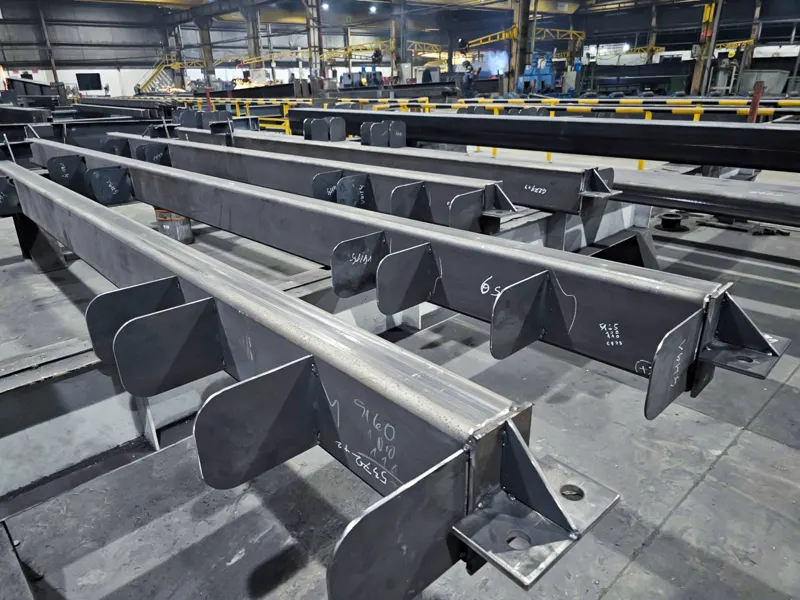
- Heavier lateral system: larger braces or moment frame members, and in seismic regions, more demanding connection detailing under AISC 341. See our seismic design categories guide.
- Stronger roof and cladding attachment: higher wind pressures drive purlin, girt and connection design, especially at corners and edges.
- Equipment supports designed as part of the system: roof dunnage, platforms and racks anchored and braced for higher forces.
- Tighter drift limits to protect cladding, piping and sprinkler systems from building movement.
World Steel designs data center frames to the risk category and performance goals the owner sets, under ASCE 7, AISC 360 and, where needed, AISC 341, with calculations ready for the Engineer of Record to review, approve and seal. Our seismic data centers guide covers equipment support in seismic regions, and the data center building package lists the full shell scope.
Where World Steel fits
We design and fabricate structural steel only. Fabrication happens in our own plant in Vietnam with inspection accredited under IAS AC472, including welding to AWS D1.1 and, for seismic systems, AWS D1.8 with qualified procedures and welders. Our customers are US contractors; site work, including erection, is their scope, and their Engineer of Record holds the seal and the permit.
Key takeaways
- Codes classify most data centers as Risk Category II because they protect lives, not business continuity.
- The Data Center Handbook recommends designing critical data centers to Risk Category IV, like hospitals and emergency centers.
- Category IV raises seismic, wind and snow demands and tightens nonstructural anchorage; flood should be checked against the 500-year event.
- The structure is a small share of data center cost, so enhanced performance is a small premium on a very valuable building.
Source: H. Geng (ed.), Data Center Handbook, 2nd ed., Wiley, 2021, Chapter 27; ASCE/SEI 7 and the IBC. Ideas are paraphrased; the code adopted by your jurisdiction and your Engineer of Record govern.
Quick answers
What risk category is a data center under ASCE 7?
In most cases Risk Category II, the category for ordinary commercial and industrial buildings, because codes classify buildings by risk to life rather than by business value.
What does Risk Category IV change?
It raises design forces for earthquake, wind, snow and ice through higher importance factors or higher-return-period maps, and brings stricter detailing and nonstructural anchorage requirements in seismic regions.
Is Category IV design expensive?
The Data Center Handbook notes the structure is a small share of a data center’s cost, as little as about 5% of shell and core, so enhanced structural performance adds a small share to the total while protecting far more valuable contents.
Who decides to use Risk Category IV?
The owner, with the Engineer of Record. It is a performance choice above the code minimum and should be written into the owner’s design criteria before design starts.
Keep building your steel plan
Go further on USPEB.com
On this topic
Across the US market
- US codes and standardsIBC, AISC, AWS and MBMA, designed to
- Seismic steel structuresSDC D to F framing for West Coast jobs
- Crane building designUS crane standards for mill and bay buildings
- Design ReportWhat our US-code design report contains
- Large projects, 2,500 t a monthCapacity for large US general contractors
- Contractor partnershipLong-term supply for US contractors