Code seismic design in the United States has a clear and limited goal. As Chapter 27 of the Data Center Handbook edited by Hwaiyu Geng (2nd edition, Wiley, 2021) explains, ordinary buildings are designed for a "maximum considered earthquake" with a 2% probability of being exceeded in 50 years, and the stated objective for typical buildings is collapse prevention in that very rare event. Damage is expected and accepted. For a data center, that is not the right target. Performance-based seismic design lets an owner set goals for damage, loss and downtime, and designs the building to meet them. This article explains the idea and what it means for the steel frame.
Five performance states
The handbook illustrates building performance with a ladder of states, adapted from Degenkolb Engineers:
| State | What it means after the earthquake |
|---|---|
| Operational | Fully functional |
| Immediate occupancy | Safe and usable during repair |
| Life safety | Safe and usable after repair |
| Collapse prevention | Safe but not repairable |
| Collapse | Unsafe, partial or complete collapse |
A Risk Category II building designed to code targets the lower end of this ladder in the largest earthquakes. The handbook argues that new data centers should ideally be designed for higher performance, at a minimum a level that controls structural damage, so the facility is not flagged unsafe after a major event and can be reoccupied quickly. It adds that in many cases it is prudent to design to Risk Category IV, the level of hospitals and emergency operations centers.
Two ways to use performance-based design
The handbook describes two uses for new buildings:
- Equivalent performance by alternative means. ASCE 7 allows performance-based procedures that demonstrate strength and displacement equivalent to a given Risk Category without following every prescriptive rule. This can open the door to more creative or economical systems and materials.
- Designing for loss and downtime. More relevant to data centers is the FEMA P-58 methodology, Seismic Performance Assessment of Buildings. It simulates a design under a range of earthquake events and reports results in terms owners understand: life safety, financial loss and how long the building will be out of service. The design can then be adjusted to meet the owner's objectives.
The second approach changes the conversation. Instead of "does this meet code?", the question becomes "what is the expected repair cost and repair time for this design, and is that acceptable for this facility?"
Nonstructural components carry most of the risk
The handbook is emphatic that in a data center the equipment matters more than the structure. Key points:
- Anchorage prevents equipment from sliding or toppling, but does not guarantee the equipment will work afterward.
- US codes now require manufacturers' seismic certification of equipment in essential facilities that must operate after an earthquake. Certified equipment should be considered for data centers.
- Servers and racks are not normally certified, and their electronics can be sensitive to large floor accelerations. Placing racks on isolated platforms or isolating the whole access floor decouples them from floor shaking and greatly reduces the accelerations they feel.
- Building drift can break pipe seals, swing sprinkler heads and open envelope joints, so damage to nonstructural systems often starts at lower shaking than structural damage.
Chapter 37 of the handbook adds that ASCE 7 Chapter 13 covers seismic design and anchorage of mechanical and electrical components in depth, points to FEMA's practical guides on restraining mechanical equipment, electrical equipment, and duct and pipe, and notes that seismic restraints cost little on a new project. It also introduces loss measures such as probable maximum loss that help justify the investment.
What performance goals mean for the steel frame
When the owner sets a performance goal above life safety, the structural design responds in several ways:
- Drift control. Limiting story drift protects cladding, piping, sprinklers and raised floors. Braced frames or stiffer moment frames may be chosen for this reason alone.
- Floor accelerations. Equipment demand depends on how the building amplifies ground motion. The lateral system's stiffness and the location of heavy equipment both matter.
- Ductile, well-detailed systems. Where yielding is expected, AISC 341 detailing confines damage to designated members and keeps it repairable. See our AISC 341 page and seismic force-resisting systems.
- Equipment support as structure. Roof dunnage, platforms and racks become part of the seismic load path and are designed and anchored accordingly.
- Analysis. Performance assessment often relies on nonlinear analysis; our article on nonlinear response history analysis explains how it is used for steel frames.
Where the hazard pattern matters
The handbook points out that seismic hazard patterns differ by region. The San Francisco Bay Area can expect both very large and more frequent moderate earthquakes; the middle Mississippi Valley around Memphis and St. Louis faces mainly rare but very damaging events from the New Madrid zone. Performance goals and design choices may reasonably differ between those settings, and the difference is worth considering when selecting or comparing sites.
A practical sequence for owners and contractors
- Set the goal. Decide which performance state the facility must reach after a design-level earthquake, and write it into the owner's design criteria.
- Choose the system. Pick a lateral system that controls drift and damage for that goal.
- Treat equipment as part of the design. List critical equipment, specify certification where needed, and consider isolation for racks.
- Assess and adjust. Use performance assessment to check expected loss and downtime, then refine the design.
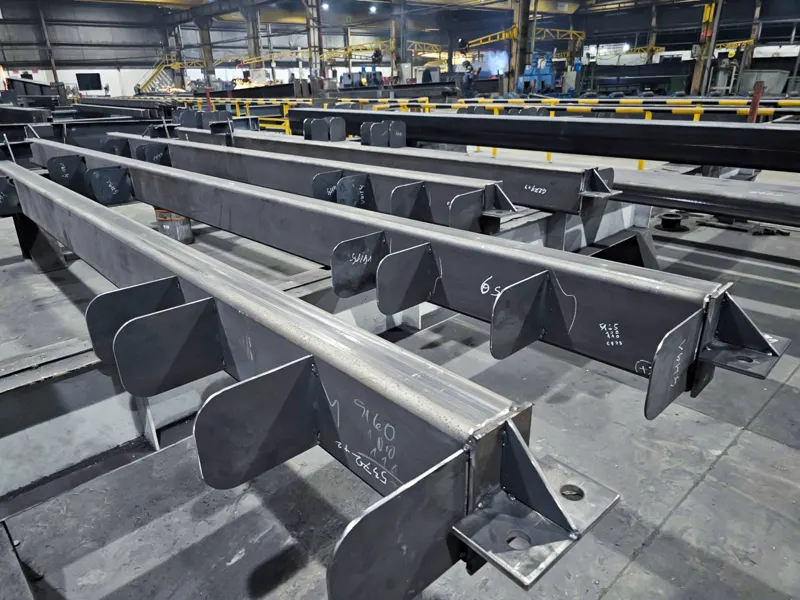
- Build it as designed. Seismic detailing only works if fabrication and inspection follow it; demand-critical welds, protected zones and material toughness all need control in the shop.
Where World Steel fits
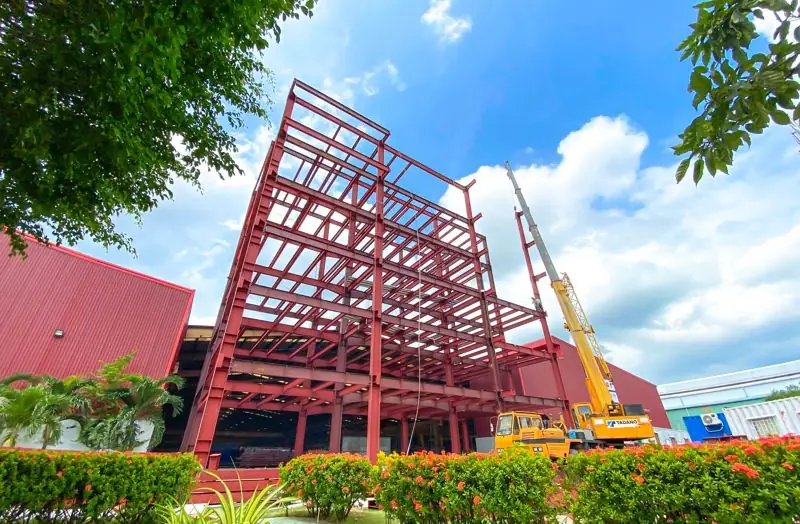
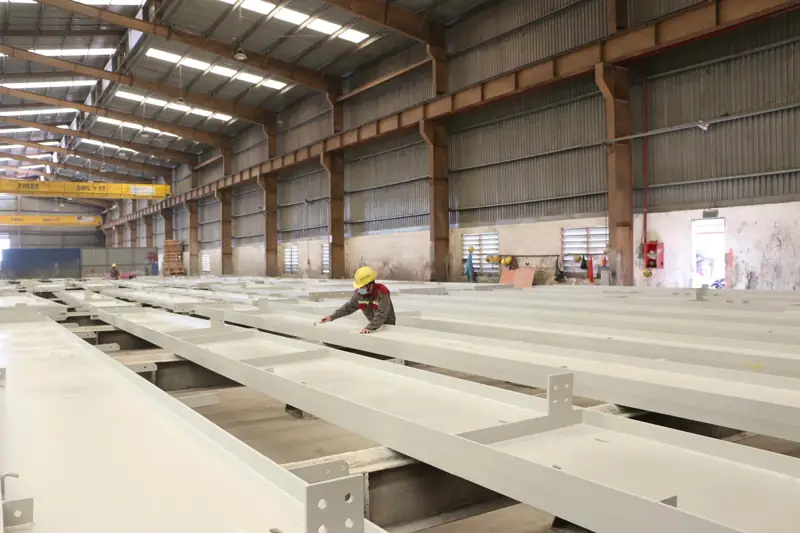
World Steel designs and fabricates steel frames to the performance criteria set by the owner and the US contractor's Engineer of Record, including systems detailed under AISC 341. Our plant in Vietnam holds IAS AC472 accreditation and our shop has AWS D1.8-qualified welding procedures and welders for seismic work. Site work, including erection, is the US contractor's scope, and their Engineer of Record approves and seals the design. See our seismic data centers guide and the data center building package.
Key takeaways
- Code seismic design targets collapse prevention in rare events; data centers need control of damage and downtime.
- The handbook recommends higher performance, often to Risk Category IV, and points to FEMA P-58 for loss and downtime assessment.
- Equipment, not structure, carries most of the value and risk; certification, anchorage and rack isolation protect it.
- Drift control, ductile detailing and equipment supports designed as structure are how the steel frame delivers the goal.
Source: H. Geng (ed.), Data Center Handbook, 2nd ed., Wiley, 2021, Chapters 27 and 37; ASCE/SEI 7; FEMA P-58. Ideas are paraphrased; consult your Engineer of Record for project decisions.
Quick answers
What is performance-based seismic design?
An approach that designs a building to meet stated goals for damage, financial loss and downtime under defined earthquakes, rather than only meeting prescriptive code rules aimed at life safety.
What is FEMA P-58?
A methodology for seismic performance assessment that simulates a design under many earthquake events and reports consequences such as casualties, repair cost and repair time, so the design can be adjusted to the owner’s goals.
Are servers seismically certified?
Usually not. The Data Center Handbook notes that servers and racks are not normally certified and are sensitive to floor accelerations; isolating racks or the access floor is one way to protect them.
Does World Steel do performance-based design?
We design the steel frame to the performance criteria set by the owner and the Engineer of Record, including frames detailed under AISC 341, and we fabricate them with qualified seismic welding procedures.
Keep building your steel plan
Go further on USPEB.com
On this topic
Across the US market
- US codes and standardsIBC, AISC, AWS and MBMA, designed to
- Seismic steel structuresSDC D to F framing for West Coast jobs
- Crane building designUS crane standards for mill and bay buildings
- Design ReportWhat our US-code design report contains
- Large projects, 2,500 t a monthCapacity for large US general contractors
- Contractor partnershipLong-term supply for US contractors