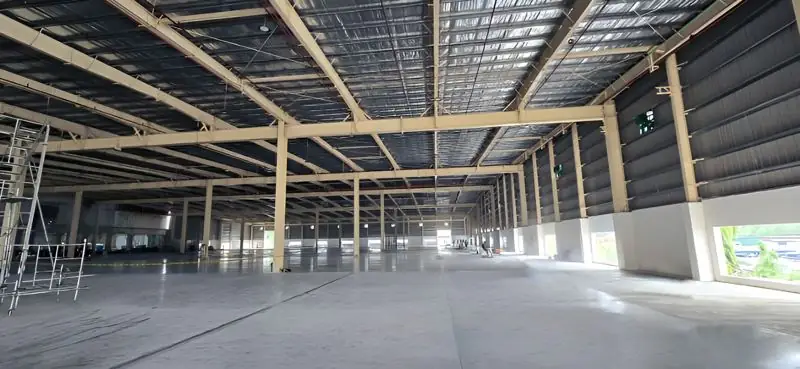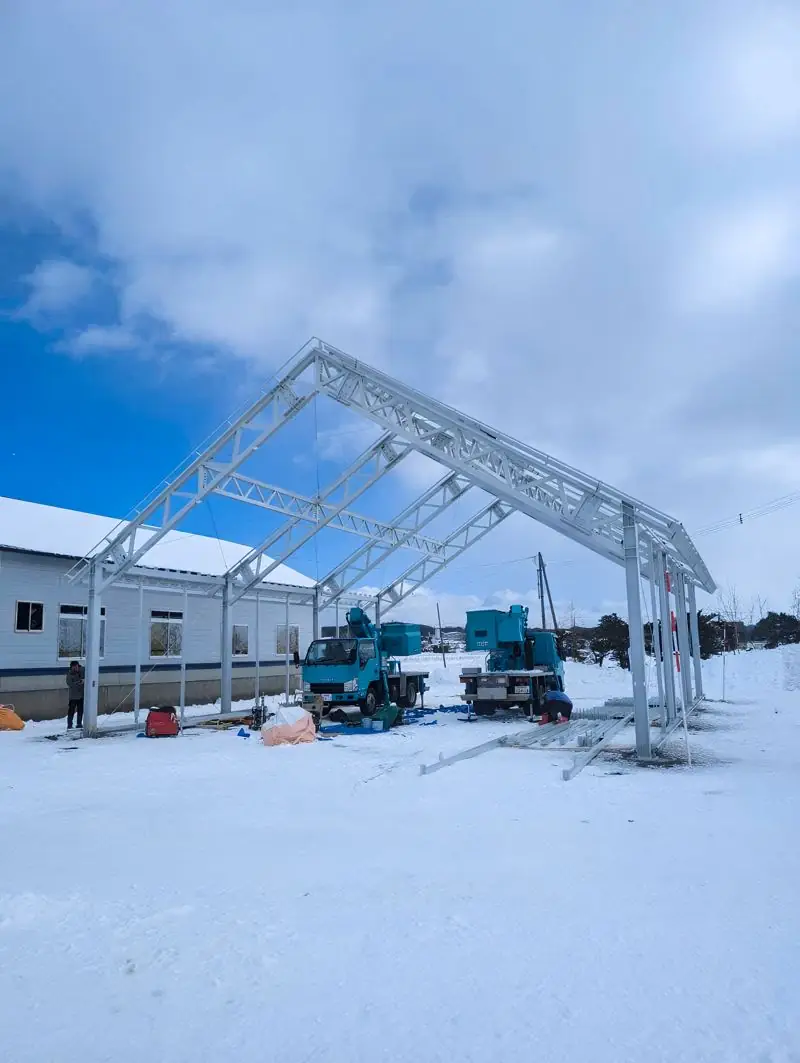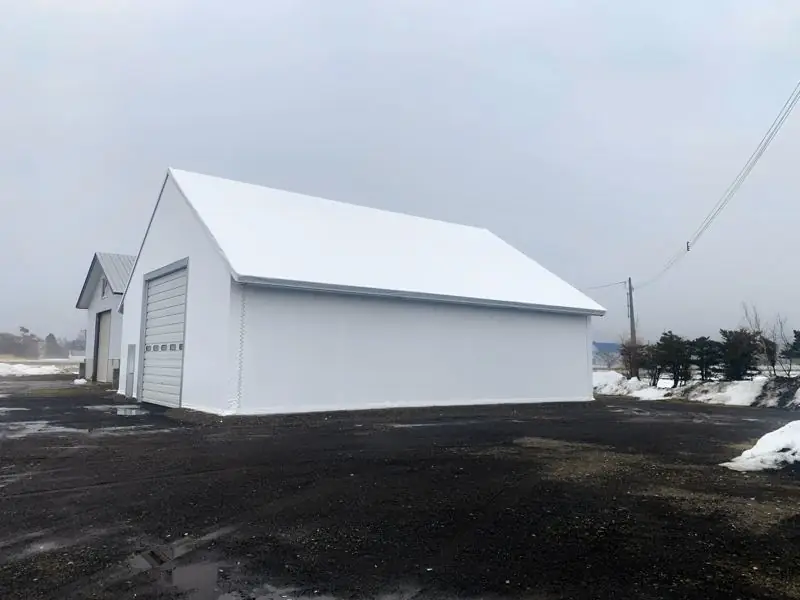
Section 27.4 of the Data Center Handbook edited by Hwaiyu Geng (2nd edition, Wiley, 2021) covers hurricanes, tornadoes and other windstorms. Its message for owners is practical: wind seldom destroys an engineered building outright, but it damages the parts that keep a data center running, the roof, the cladding and the cooling plant on top. Data center wind design is about protecting those parts. This article summarizes the handbook's view and explains what it means for the steel frame and envelope.
Three kinds of wind hazard
The handbook identifies three atmospheric phenomena that produce damaging gusts: ordinary storms, hurricanes or cyclones, and tornadoes. Like earthquakes, they occur transiently and cannot be predicted exactly, so engineers use probability models. The handbook notes that design wind for a typical building is based on a gust with a mean recurrence interval of about 700 years, and that ASCE 7 provides separate wind speed maps for each of the four Risk Categories, covering all US regions including the hurricane-prone Gulf and East Coasts.
The site selection chapter adds context: a large part of the continental United States lies in regions with high design wind speeds or tornado activity, yet these areas keep attracting data centers, because the risk can be mitigated by design.
Wind design stays elastic
An important difference from earthquakes: in seismic design, the maximum expected forces are reduced on the assumption that the structure yields and dissipates energy. In wind design, the handbook explains, the structural system, components and cladding are intended to remain elastic and essentially undamaged at design wind loads. The design wind is a load the building is expected to resist without damage.
The exception is the tornado. Building codes have historically not addressed tornadoes, because the probability that a given building lies in the path of a destructive tornado is low; only facilities such as nuclear plants routinely designed for them. The handbook notes that maximum tornado wind speed maps exist for the US and that in Tornado Alley the tornado wind speeds are roughly 75% higher than those used in typical building design. Since the handbook was written, ASCE 7-22 has introduced tornado loads for Risk Category III and IV buildings in tornado-prone areas, which makes the question more concrete for critical data centers.
How wind damages buildings
The handbook describes the mechanisms clearly:
- Positive pressure on the windward wall is transferred from cladding to girts to the frame.
- Suction acts on the roof and on side and leeward walls, pulling cladding and roof deck outward and upward.
- Local failures at roof edges, corners and around openings are the most common damage: cladding panels, windows, doors, and less often roof sheathing and deck.
- Lateral deformation or overturning of the whole structure is rare for engineered buildings, but the handbook specifically warns that if a data center is housed in a light-framed metal building, the possibility exists and should be evaluated.
- Windborne debris ("missiles") can break windows or wall panels. Once the envelope is breached, wind rushes in, raising internal pressure and adding to the load on the roof and walls, which can lead to failure.
How wind stops a data center
The handbook names the main causes of function loss after a windstorm, apart from collapse:
- Cladding damage, which ends the building's weathertightness and lets rain reach the equipment.
- Rooftop equipment damage: unanchored units can be blown over, and units can be struck by debris. Because cooling is essential, losing rooftop air handling plant may force a shutdown.
Both are envelope and support problems, and both are solved by detailing.
Mitigation for new buildings
The handbook's recommendations are straightforward:
- Design as a Risk Category IV essential facility, which means higher design wind forces than an ordinary building.
- Consider higher forces still in tornado-prone areas, for the building and its cladding.
- Use impact-resistant windows and doors, tested to the ASTM standard for windborne debris (ASTM E1996), where the hazard warrants.
- Screen rooftop equipment with wind screens designed for the maximum wind forces and made of a material that can stop debris strikes.
For existing buildings, it recommends evaluating them against the forces a new building would be designed for, strengthening overstressed roof members, framing, cladding and connections, replacing non-impact-resistant openings where the hazard is high, and adding or upgrading equipment screens.
What it means for the steel
Wind design for a data center touches every layer of the steel package:
| Element | Wind design focus |
|---|---|
| Main frames and bracing | Lateral strength and drift under Category IV wind, uplift at column bases |
| Purlins and girts | Corner and edge zone pressures, uplift, bracing of compression flanges |
| Roof deck and panel attachment | Fastener spacing in edge and corner zones, standing seam clip capacity |
| Wall cladding | Panel spans and fastening for suction, impact resistance where required |
| Door and louver framing | Framed openings strong enough for the panel and its pressures |
| Rooftop dunnage and screens | Equipment anchorage, screen posts and girts designed for maximum wind and debris |
| Anchor rods and base plates | Uplift and shear transfer to foundations |
Two details deserve special care. First, corner and edge zones: ASCE 7 pressures there are several times higher than in the middle of the roof, and failures start there. Second, continuous load path: from the panel fastener, through the purlin or girt, into the frame, down the column and into the anchor rods, every link must be designed for the same storm. Our pages on high-wind steel buildings and hurricane coast steel buildings explain these checks, and the article on hurricane-zone steel building design goes deeper on coastal sites.
Rooftop plant is structure
On a data center, the roof often carries chillers, condensers, air handlers, generators' exhaust and their screens. Wind acting on that equipment produces horizontal force and overturning at its supports. The dunnage, its connections to the roof frame and the screen structure are all part of the wind load path. World Steel models roof plant, dunnage and screens together with the frame, so that the forces from equipment and screens are carried through the structure rather than added as an afterthought. Our heavy roof and MEP loads guide explains the approach.
Where World Steel fits
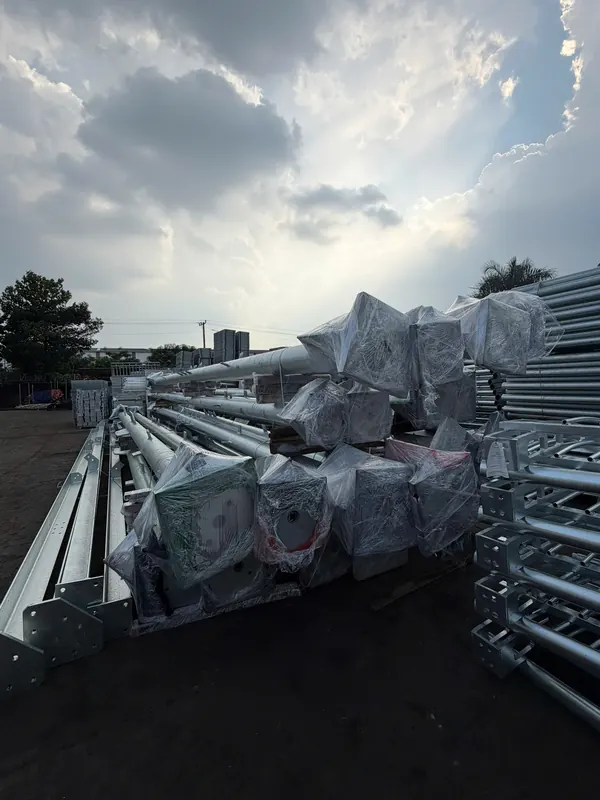
World Steel designs frames, purlins, girts, dunnage and screen structures for data centers to ASCE 7 wind loads at the risk category the owner sets, and fabricates them in our own plant in Vietnam with inspection accredited under IAS AC472. Exposed steel can be hot-dip galvanized for coastal sites. Our customers are US contractors; site work, including erection, is their scope, and their Engineer of Record approves and seals the design. See the data center building package for the shell scope, and Florida solutions for one of the toughest wind markets.
Key takeaways
- Wind design keeps the structure and cladding elastic at design loads; tornadoes historically fell outside codes, and ASCE 7-22 now adds tornado loads for critical buildings in tornado-prone regions.
- Data centers lose function in windstorms mostly through cladding breaches and rooftop equipment damage.
- The handbook recommends Category IV wind design, higher forces in tornado regions, impact-resistant openings and debris-resistant equipment screens.
- A continuous load path from fastener to anchor rod, with special care at roof edges and corners, is what makes the steel envelope work.
Source: H. Geng (ed.), Data Center Handbook, 2nd ed., Wiley, 2021, Chapters 22 and 27; ASCE/SEI 7. Ideas are paraphrased; consult your Engineer of Record for project decisions.
Quick answers
Is wind design different from seismic design?
Yes. Seismic design reduces forces on the assumption that the structure yields and absorbs energy. Wind design expects the structure, cladding and components to stay elastic and essentially undamaged at design wind loads.
Do building codes cover tornadoes?
Traditionally they did not, because the chance of a given building being in a strong tornado’s path is low. The Data Center Handbook notes tornado speeds in Tornado Alley can be about 75% higher than typical design winds. Recent editions of ASCE 7 add tornado loads for higher risk categories in tornado-prone regions.
What usually causes a data center to lose function in a windstorm?
Besides collapse, the handbook names two main causes: damage to the cladding, which lets rain in, and damage to rooftop equipment, especially the cooling plant.
How can rooftop equipment be protected?
Anchor it for the design wind, and surround it with wind screens designed for the maximum wind forces and able to resist windborne debris.
Keep building your steel plan
Go further on USPEB.com
On this topic
Across the US market
- US codes and standardsIBC, AISC, AWS and MBMA, designed to
- Seismic steel structuresSDC D to F framing for West Coast jobs
- Crane building designUS crane standards for mill and bay buildings
- Design ReportWhat our US-code design report contains
- Large projects, 2,500 t a monthCapacity for large US general contractors
- Contractor partnershipLong-term supply for US contractors