Chapter 21 of the Data Center Handbook edited by Hwaiyu Geng (2nd edition, Wiley, 2021) considers microgrids for data centers. Its starting point is simple: the costs of solar photovoltaics and lithium-ion storage have fallen so far that generating electricity on site is now a serious option, not a niche. A data center microgrid can keep critical loads running during long grid outages, reduce energy costs and lower emissions. For the structural team, a microgrid is also a set of new structures on the site, each with its own loads and hazards. This article summarizes the handbook's view and the steel that follows.
What a microgrid is
The handbook describes a microgrid as local generation, optionally with storage, serving local loads, able to run connected to the utility grid or separate from it. In an emergency, it can move into islanded mode, disconnecting from the regional grid and creating an "air gap" that secures supply to the customer. The handbook likens this to a fortress pulling up its drawbridges.
A microgrid does not mean going off-grid. Most of the time, it can buy from and sell to the utility, use its own generation when that is cheaper, and charge or discharge storage. A microgrid controller optimizes those choices and manages the islanding transition, which for a data center must be seamless and instantaneous.
Why data centers are interested
The handbook lists three drivers:
- Resilience. The ability to remain operational for prolonged periods while the grid is down, especially where extended outages are increasingly likely, for example where utilities shut off power to reduce wildfire risk.
- Lower total energy cost. As self-generation, especially solar, and storage become cheaper, the microgrid can supply power more cheaply than the grid at some times, and rising or unpredictable grid prices strengthen the case.
- Lower emissions. Grid electricity comes from a wide mix of sources; on-site renewable generation gives the owner more control over the carbon content of its power.
It cites examples of data center microgrids in the United States, from a 63 MW system in Phoenix developed with the local utility, to a data center planned around 20 MW of fuel cells in Connecticut, to a 1.5 MW microgrid in Atlanta. It also notes that US microgrid installations had more than doubled over a decade, to roughly 500 MW per year.
How a microgrid is designed
The handbook outlines the design process:
- create bundles of generation sources, optionally with storage, each able to supply critical loads with appropriate redundancy;
- choose which proven, commercially available technologies to consider;
- decide whether cogeneration, producing useful heat as well as electricity, should help supply the data center's cooling;
- configure the distribution network and circuits;
- design controls for optimization and islanding.
The bill of materials includes generation (solar, engines, fuel cells, microturbines), storage (lithium-ion, lead-acid, flow batteries), network equipment (cables, connectors, switchgear) and controls. Chapter 25, on electrical design, adds that gas generators and fuel cells are being investigated as alternatives to diesel standby generation.
The structures a microgrid adds
Every item on that bill of materials sits on, under or inside a structure:
| Microgrid element | Typical structure |
|---|---|
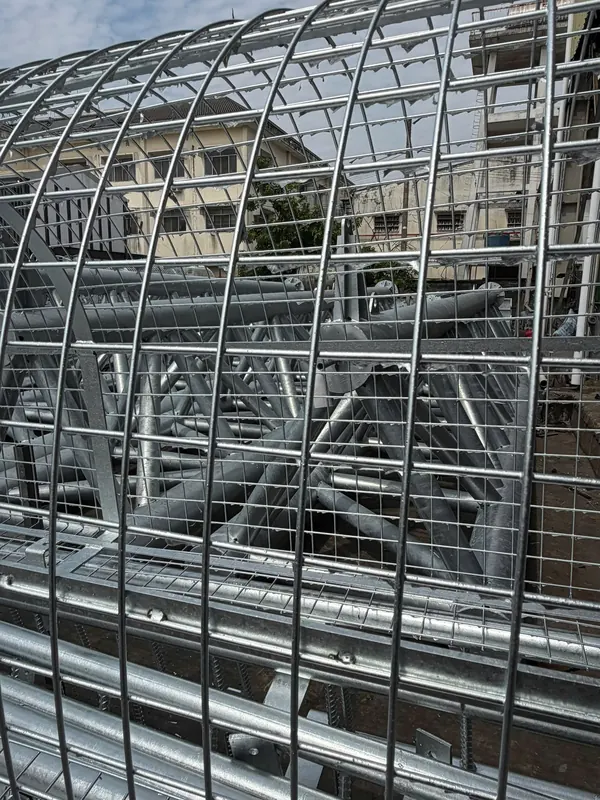
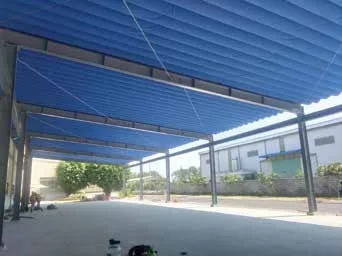
| Solar on parking areas | Steel solar canopies over parking, with foundations, drainage and lighting |
| Solar on open land | Ground-mount racking on driven or screw piles |
| Solar on the data center roof | PV support rails on the roof, adding dead load and wind uplift to the roof design |
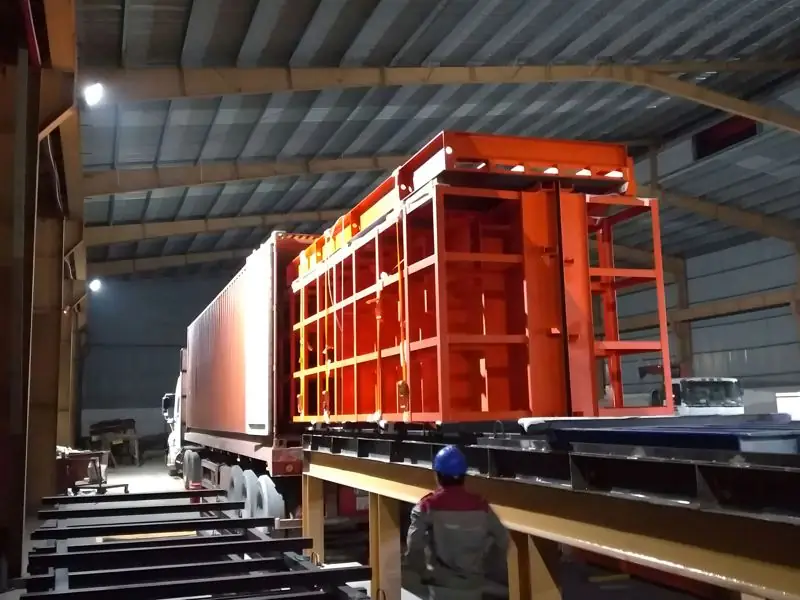
| Battery energy storage | Containerized enclosures on pads or raised steel platforms, with spacing and fire separation |
| Fuel cells and microturbines | Skids on pads or platforms, with gas piping supports |
| Engine generators | Generator platforms, stacks and screens, as in a standby yard |
| Switchgear and controls | Prefabricated equipment buildings or shelters |
| Interconnection | Cable racks, trench covers and pipe supports between all of them |
Rooftop PV deserves special attention on a data center. Roofs are already crowded with cooling plant, and PV arrays add uniform load, change snow drift patterns and add wind uplift at edges and corners. Our articles on rooftop equipment steel and roof snow, rain and ponding explain the interactions. On many campuses, solar canopies over parking are a better fit, since they use land that is already paved and shade vehicles.
Battery storage brings the same issues as UPS batteries at a larger scale: weight, thermal control and fire code separation. Our article on UPS and battery rooms covers those, and raised platforms protect enclosures from flooding as they do for generators; see generator yard steel.
Design for the same hazards
A microgrid that is meant to keep the data center running through a disaster must survive the disaster itself. Solar canopies and racking must be designed for the site's wind, snow and seismic loads; equipment platforms must sit above the design flood level; enclosures must be anchored. The handbook's structural chapter recommends Risk Category IV design for critical data center facilities, and the same thinking applies to the microgrid assets they depend on. See Risk Category IV design.
Where World Steel fits
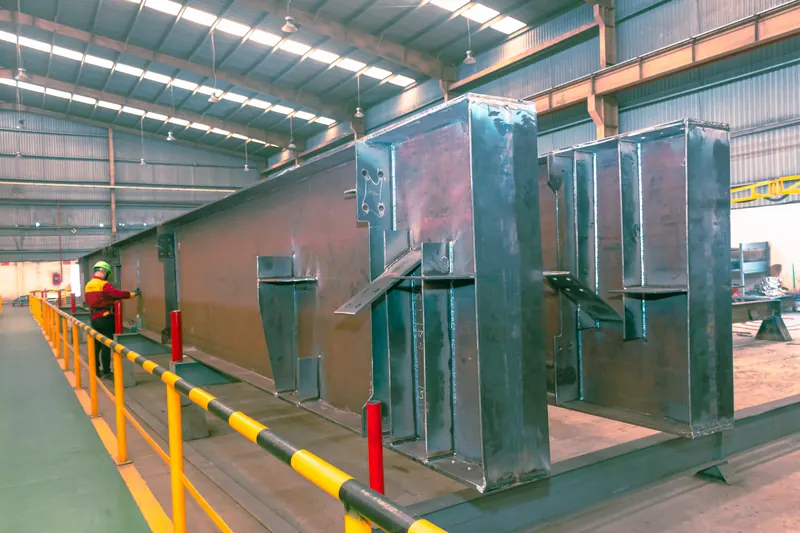
World Steel designs and fabricates the steel structures of a data center microgrid: solar parking canopies, rooftop PV support framing coordinated with the roof design, equipment platforms for battery enclosures, fuel cells and generators, equipment shelters and cable racks, with galvanizing for exposed steel. Fabrication takes place in our own plant in Vietnam, with inspection accredited under IAS AC472. Our customers are US contractors; site work, including erection, is their scope, and their Engineer of Record approves and seals the design. See solar and EV charging canopies, solar panel support structures, equipment shelter buildings and the data center building package.
Key takeaways
- The handbook sees falling solar and storage costs making on-site generation a serious option for data centers.
- Microgrids offer resilience through islanding, lower energy costs and lower emissions.
- A microgrid adds canopies, racking, rooftop PV, storage and generator platforms, shelters and cable racks to the site.
- Those structures must be designed for the same flood, wind, snow and seismic hazards as the data center they protect.
Source: H. Geng (ed.), Data Center Handbook, 2nd ed., Wiley, 2021, Chapters 21, 25 and 27. Ideas are paraphrased; consult your design team for project decisions.
Quick answers
What is a microgrid?
A local network of generation, storage and loads that can operate connected to the utility grid or separate from it in "islanded" mode, which the Data Center Handbook compares to a fortress raising its drawbridges.
Why would a data center build a microgrid?
The handbook names three drivers: resilience during long grid outages, lower total energy cost as on-site solar, storage and other generation get cheaper, and lower carbon emissions.
What generation does a data center microgrid use?
Combinations of solar PV, gas or diesel engines, fuel cells, microturbines and battery storage, chosen so that each bundle can supply the critical load with appropriate redundancy.
What structures does a microgrid add?
Solar canopies or ground-mount racking, rooftop PV supports, platforms or pads for battery enclosures, fuel cells and generators, switchgear and control buildings, and cable racks between them.
Keep building your steel plan
Go further on USPEB.com
On this topic
Across the US market
- Projects by typeWarehouses, plants, data centers and more
- Industries we serveSteel packages by US industry
- Data center steelHyperscale and colocation framing
- Sunpro steel mill, 5,000 tOur largest single steel package
- Large projects, 2,500 t a monthCapacity for large US general contractors
- Contractor partnershipLong-term supply for US contractors