Not every data center is a purpose-built hall owned by the company that uses it. Many organizations lease space, some buy prefabricated capacity, and some build their own campus. Chapter 4 of the Data Center Handbook edited by Hwaiyu Geng (2nd edition, Wiley, 2021) explains the market from the provider's side: hosting, wholesale space and the different building types that providers call "modular". Knowing the wholesale data center types helps a US contractor understand what kind of structure an owner is really buying, and what the steel package must deliver.
Hosting and wholesale: two ways to rent capacity
The handbook separates two business models:
- Hosting. The provider leases servers, storage and often managed services, along with the space they sit in. The customer buys computing capacity rather than square meters.
- Wholesale. The provider leases physical space, power and cooling to customers who bring their own IT equipment. The handbook notes that the older term "colocation" for this model has largely been replaced by "wholesale", and that wholesale customers tend to be larger.
For the building team, both models lead to the same conclusion: the provider must serve many tenants, or many generations of one tenant, with different rack densities and growth curves. The building has to be flexible, and it has to be repeatable across sites, because providers value operational consistency above almost everything.
Five types the market calls "modular"
The handbook observes that "modular" has no single accepted definition and groups the market into five categories. Here they are, with what each means for the structure.
1. Traditional design
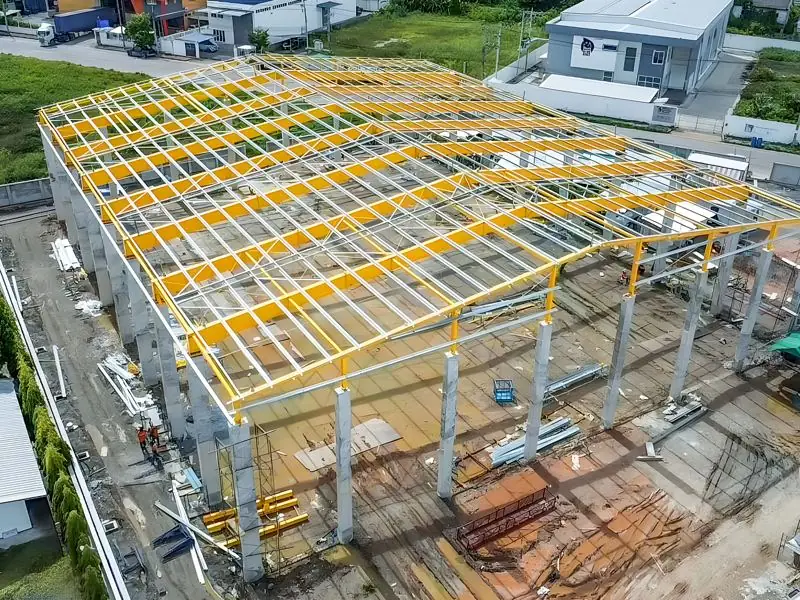
Building-based facilities with shared internal and external plant, such as a central chilled water plant and a parallel generator plant. They are built all at once or extended by adding data halls. Structurally these are the familiar long-span halls, with a heavy roof, a mechanical and electrical yard, and pipe and cable racks tying them together. The risk the handbook points out is that a large facility built all at once can sit underused if the forecast load never arrives.
2. Monolithic modular with data halls
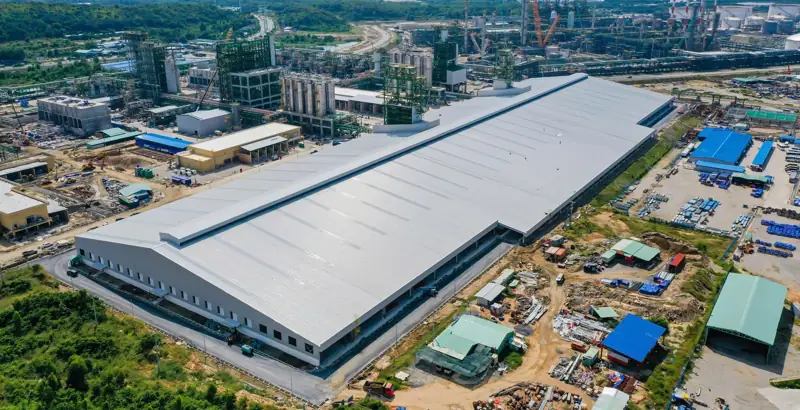
Large buildings, typically offering several megawatts of IT power from day one and often five to twenty megawatts per site, divided into data halls served by segmentable backplanes. For the steel this means a big shell with internal demising walls, many hall-sized fit-out zones, and support steel for each hall's plant. A consistent bay and a consistent hall size are what make this type efficient.
3. Containerized
Prefabricated data halls in ISO shipping containers that can be delivered to fill an immediate need. The handbook is frank about the limits: the containers still need shared outside plant, including generators, switchgear and sometimes chilled water, and their non-hardened shells are susceptible to wind, rust and water penetration. They also lack support space. In steel terms, a container deployment shifts the work into foundations or platforms, canopies or enclosures that protect the units, stairs and walkways, and racks for the services. Our equipment shelter buildings and canopies are often used this way.
4. Monolithic modular with prefabricated halls
Building-based solutions populated with the provider's own prefabricated data halls. The handbook warns that a shared backplane raises the risk of a cascading failure across attached units. The building shell still carries the roof, the envelope and the cranes or rigging paths needed to place the prefabricated modules, so clear height, floor capacity along the delivery route and door sizes become structural requirements.
5. Stand-alone data centers
Dedicated facilities in a hardened shell that include their own support spaces, such as loading dock, storage, staging, break room and security, and that grow in standard-sized increments. The handbook contrasts them with container and prefabricated approaches that need a separate building to become permanent. This type relies heavily on the structure: the hardened shell must resist wind and other hazards, and the standard increment must be designed so that each new phase connects cleanly to the last.
Scaling and consistency
The handbook's section on scaling notes that adding capacity across regions is easier with providers that have a consistent footprint, and its section on choosing providers stresses consistent equipment vendors, documented procedures and trained staff. The building equivalent is a repeatable structural design: the same hall module, the same connection details, the same roof dunnage layout, used across phases and sites. A repeatable design shortens engineering on every new phase, reduces mistakes and makes inspection predictable. Our data hall frames and phased campus build-outs guides describe how we set up that module.
Build or buy
Chapter 4 closes with the build-versus-buy decision. Building gives control and a custom fit, but the handbook stresses that designing, building and operating a data center is unlike any other building and needs a specialized team. It also notes that only facilities actually certified by the Uptime Institute can claim a certified Tier rating, which is a useful reminder when comparing providers' claims.
When an owner or provider does decide to build, the structural package is one of the first long-lead items, and the one that sets the shape of everything that follows.
What each type asks of the steel
| Type | Main structural elements | Key structural requirement |
|---|---|---|
| Traditional | Long-span halls, heavy roof, central plant yard, racks | Roof capacity and expansion walls |
| Data hall facility | Large shell, demising walls, hall plant supports | A repeatable bay and hall module |
| Container | Platforms, canopies, enclosures, stairs, racks | Wind protection and corrosion resistance |
| Prefabricated halls | Shell, delivery route, rigging, envelope | Clear height and floor capacity on the route |
| Stand-alone | Hardened shell, support spaces, phased increments | Hazard resistance and clean phase joints |
Where World Steel fits
World Steel designs and fabricates structural steel for every one of these types: hall frames, roofs and dunnage, equipment platforms, pipe and cable racks, canopies and shelters. We design to US codes, with calculations and drawings ready for the US contractor's Engineer of Record to review, approve and seal. All fabrication happens in our own plant in Vietnam, with inspection accredited under IAS AC472, and the steel ships to the customer's US port. Site work, including erection, is the US contractor's scope. Start with the data center building package, or read how our steel serves the data center and technology industry.
Key takeaways
- Hosting sells computing capacity; wholesale sells space, power and cooling to customers who bring their own IT.
- The handbook lists five building types called "modular": traditional, data hall, containerized, prefabricated hall and stand-alone.
- Containers and prefabricated halls still need shared plant and protection; stand-alone and traditional facilities need a strong, expandable shell.
- Whatever the type, a repeatable structural module is the building version of the operational consistency providers value most.
Source: H. Geng (ed.), Data Center Handbook, 2nd ed., Wiley, 2021, Chapter 4. Ideas are paraphrased; consult the handbook and your design team for project decisions.
Quick answers
What is the difference between hosting and wholesale space?
A hosting provider leases servers, storage and services as well as space. A wholesale provider, once called colocation, leases physical data center space, power and cooling to larger customers who bring their own IT equipment.
Are container data centers a permanent solution?
The Data Center Handbook describes them as best suited to temporary or immediate needs. They still need shared generators, switchgear and often chilled water, and their light shells are exposed to wind, rust and water penetration unless protected.
What is a stand-alone data center?
A dedicated facility in a hardened shell that includes its own support spaces, such as loading dock, storage and security, and grows in standard-sized increments.
Which type uses the most structural steel?
Traditional and stand-alone buildings and large data hall facilities carry the most steel: long-span halls, heavy roofs, equipment yards and racks. Containers and prefabricated halls shift steel into platforms, canopies and support structures.
Keep building your steel plan
Go further on USPEB.com
On this topic
Across the US market
- Projects by typeWarehouses, plants, data centers and more
- Industries we serveSteel packages by US industry
- Data center steelHyperscale and colocation framing
- Sunpro steel mill, 5,000 tOur largest single steel package
- Large projects, 2,500 t a monthCapacity for large US general contractors
- Contractor partnershipLong-term supply for US contractors