Chapter 27 of the Data Center Handbook edited by Hwaiyu Geng (2nd edition, Wiley, 2021) treats flood and tsunami together. The causes differ, but the effect on a building is similar: an uncontrolled flow of water into a region, pressing on the facade and, once the envelope is open, filling the lower floors. The handbook calls flooding the most common natural disaster in the United States, caused by storm surge, heavy rain, river overflow and dam failure. Data center flood design is therefore not only a coastal topic. This article summarizes the handbook's guidance and explains where the steel frame comes in.
How water stops a data center
The handbook describes two ways a flood or tsunami affects a building.
- Impact. Moving water strikes the exterior walls and transfers force into the structure. Walls can be badly damaged or blown out. In extreme cases the flow can cause permanent lateral deformation or push a building off its foundation. Debris carried by the water adds to the damage.
- Inundation. Water enters the building, usually the basement and first floor, and immediately disables mechanical and electrical equipment. After it recedes, mold and other environmental hazards can keep people out until the building is cleaned.
The second effect is far more common, and for a data center it is enough on its own. Switchgear, UPS systems, pumps, chillers and generators are all intolerant of water. The handbook recalls that the Fukushima Daiichi nuclear disaster began when tsunami water flooded the rooms housing the emergency generators, leaving the plant without power to run its cooling. A data center that loses its generators and switchgear to water is in the same position, on a smaller scale.
Weak points in the envelope, such as doors, windows and louvers, are where water gets in first.
The design flood: 100-year or 500-year?
The handbook explains the US framework clearly:
| Item | What the handbook says |
|---|---|
| Code flood | US codes require consideration of the 100-year mean recurrence interval flood |
| Flood maps | FEMA publishes flood inundation zone maps |
| Essential facilities | Codes do not currently require a rarer flood for Risk Category IV buildings |
| Professional opinion | Many engineers argue the 500-year flood should be used for essential facilities |
| Tsunami | Covered by the tsunami loads chapter of ASCE 7, with NOAA and state inundation maps |
| Site study | Where maps do not exist, site-specific studies can determine inundation depth, run-up and flow velocity |
For a critical data center, the handbook's recommendation is plain: consider the 500-year flood rather than the 100-year flood. The difference in inundation height can be modest at some sites and large at others, which is why the check belongs in site selection, not after the layout is fixed. Our site selection checklist article covers the wider site review, and the Risk Category IV article explains why data centers are treated as essential facilities.
Tsunami: a coastal special case
The handbook notes that many coastal regions are exposed to tsunamis generated by earthquakes, and that NOAA and some state agencies, such as the California Department of Conservation, publish tsunami inundation maps. To judge a site, the engineer needs the extent of inundation, the height of run-up and the flow velocity. The handbook's chapter on disasters adds a sobering comparison: the Pacific Northwest coast, from Washington to Oregon, has a subduction zone setting similar to the one that produced the 2011 Tohoku earthquake and tsunami in Japan.
Tsunami flows can be violent enough to load the structure directly, which is a different problem from slow-rising water. Where a site is in a tsunami zone, the lateral system, the foundations and the walls facing the sea all need to be checked for the hydrodynamic and debris loads defined in ASCE 7.
Mitigation: first, stay out of the water
The handbook's first recommendation is the simplest: do not build a data center in an inundation zone, and do not move a data center into an existing building in one. When that is not possible, it lists what to consider:
- Inundation height for the chosen recurrence interval.
- Maximum flow height and velocity, which decide whether impact loads matter.
- Nearby objects that could become waterborne debris, such as vehicles, containers and tanks.
In many cases the flow will be neither high nor violent. Then, the handbook says, mitigation may simply mean placing every piece of equipment needed for continued operation above the inundation height. Locating critical equipment in a basement should be avoided. It is common in flood regions to build on platforms so that the first occupied floor sits above the inundation height.
Lessons from Superstorm Sandy
Chapter 37 of the handbook gives the practical side. When Sandy struck in 2012, the storm surge reached about 4.2 m (13.9 ft) at Battery Park in New York. The handbook observes that most data centers installed before the storm had been kept out of basements, and often above the first floor. But a trend to put supporting "gray space" on lower levels, including switchgear, chillers, pumps and UPS, exposed some facilities. Gray space at grade is acceptable; gray space in a basement is not.
Where local codes require fuel tanks at the bottom of a building, the handbook suggests:
- high-capacity sump pumps in the basement;
- fuel pumps in waterproof enclosures, or submersible pumps with watertight power feeds and tall vents;
- watertight fuel tank rooms, because a flooded tank can float off its foundation and break its connections;
- a connection that lets a fuel truck refill the building's risers directly.
None of these replace the simpler answer: put the plant above the water.
Where steel helps
Raising plant is a structural task, and steel is well suited to it.
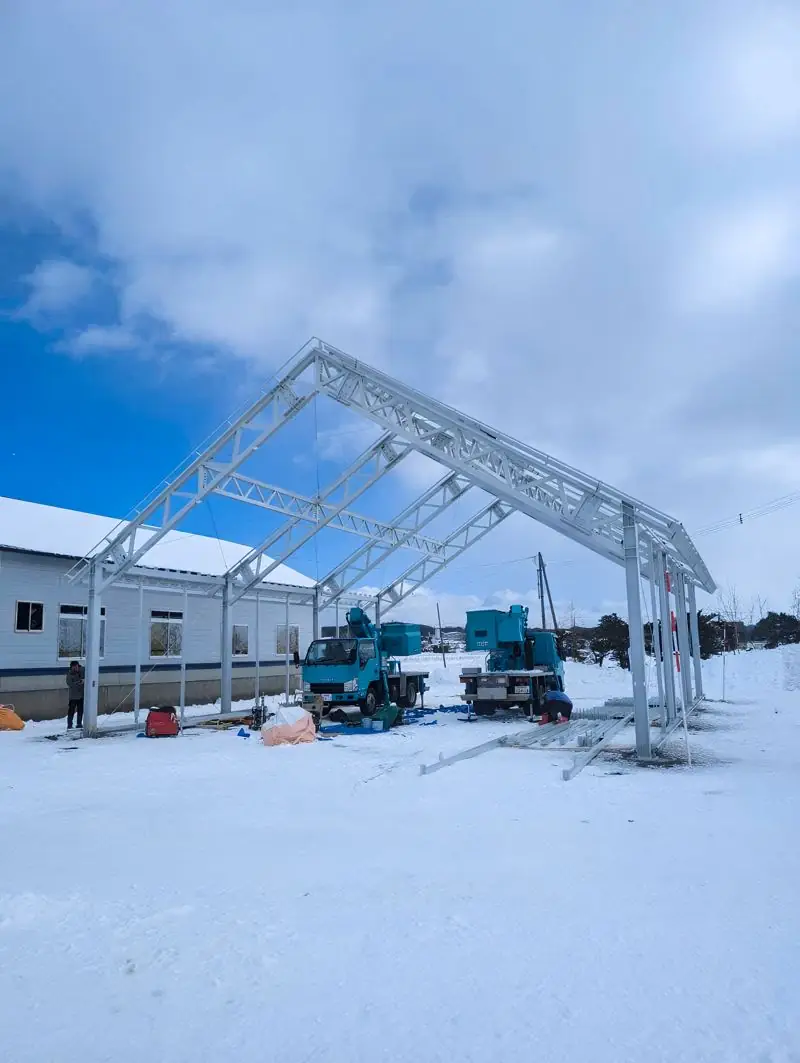
- Elevated equipment yards. Generator, transformer and switchgear yards can sit on steel platforms with the deck above the design flood, leaving open framing below for water to pass. See our equipment yards and platforms guide and steel platforms.
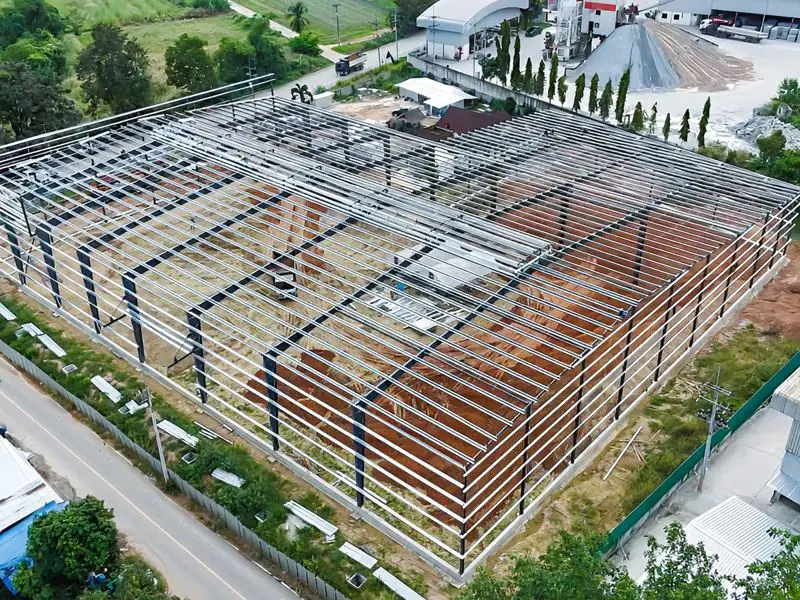
- Raised first floor. A steel frame with a composite floor can lift the data hall itself above the inundation height, with only parking, storage or nothing at all at grade.
- Rooftop and upper-level plant. Moving chillers and generators to the roof or an upper level takes them out of the flood entirely, at the cost of heavier roof steel. Our heavy roof and MEP loads guide explains the trade-offs.
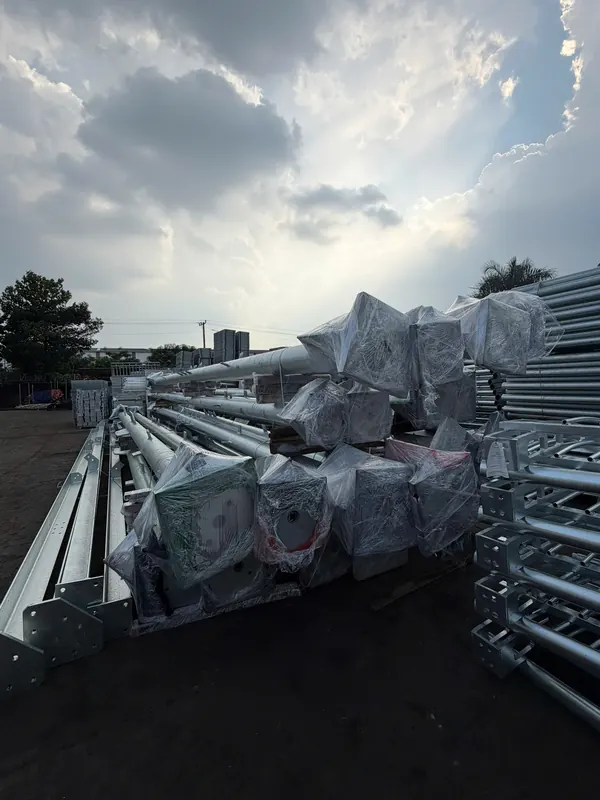
- Corrosion protection. Steel that stands in a flood zone, or near salt water, should be hot-dip galvanized or carry a coating system chosen for the exposure. See coastal corrosion protection and hot-dip galvanizing.
- Open frames for flow. Where impact loads apply, braced steel frames with breakaway or non-structural infill at the flood level present less area to the water than solid walls.
The coastal wind and surge environment is covered in our hurricane coast steel buildings page.
Where World Steel fits
World Steel designs platforms, raised equipment yards, multi-level frames and rooftop dunnage for data centers, using the flood elevation, wind and seismic criteria the owner and the Engineer of Record set. Fabrication is done in our own plant in Vietnam, with inspection accredited under IAS AC472, and steel for exposed or flood-prone locations can be hot-dip galvanized before it ships. Our customers are US contractors; site work, including erection, is their scope, and their Engineer of Record approves and seals the design. See the data center building package for the full shell scope.
Key takeaways
- Floods are the most common US natural disaster; water stops a data center by reaching its electrical and mechanical plant.
- Codes require the 100-year flood; the handbook recommends considering the 500-year flood for critical data centers.
- Tsunami sites need checks for inundation, run-up, flow velocity and debris under ASCE 7.
- Never put critical equipment in a basement; steel platforms, raised yards and elevated floors keep it above the water.
Source: H. Geng (ed.), Data Center Handbook, 2nd ed., Wiley, 2021, Chapters 27 and 37; ASCE/SEI 7. Ideas are paraphrased; consult your Engineer of Record for project decisions.
Quick answers
What flood do US codes design for?
US building codes require consideration of the flood with a 100-year mean recurrence interval, using FEMA flood maps. They do not require a rarer flood for essential facilities, although many engineers argue that the 500-year flood is more appropriate for Risk Category IV buildings.
How does a tsunami damage a building?
In two ways: the wave strikes the walls and pushes on the structure, sometimes enough to deform or displace it, and the water floods the building and destroys mechanical and electrical equipment.
Can critical equipment go in a basement?
The Data Center Handbook advises against it. Basements flood first, and Superstorm Sandy showed how quickly flooded switchgear, pumps and fuel systems take a facility down.
How does steel help with flood risk?
Steel platforms, raised equipment yards and elevated first floors keep generators, switchgear and cooling plant above the inundation height, with open structure that lets water pass beneath.
Keep building your steel plan
Go further on USPEB.com
On this topic
Across the US market
- US codes and standardsIBC, AISC, AWS and MBMA, designed to
- Seismic steel structuresSDC D to F framing for West Coast jobs
- Crane building designUS crane standards for mill and bay buildings
- Design ReportWhat our US-code design report contains
- Large projects, 2,500 t a monthCapacity for large US general contractors
- Contractor partnershipLong-term supply for US contractors