Every structural steel package needs a decision about protection against corrosion. The three main options are a paint system, hot-dip galvanizing (HDG) and a duplex system that combines the two. None is best everywhere; each is best somewhere.
Paint systems
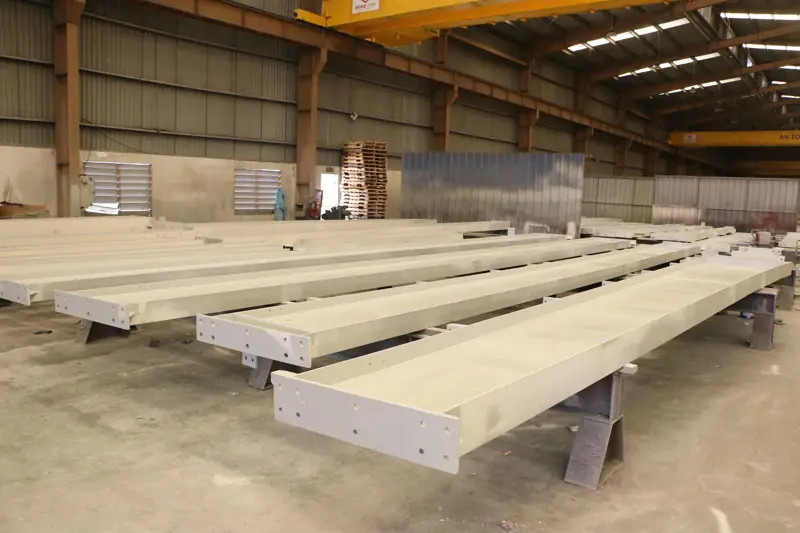
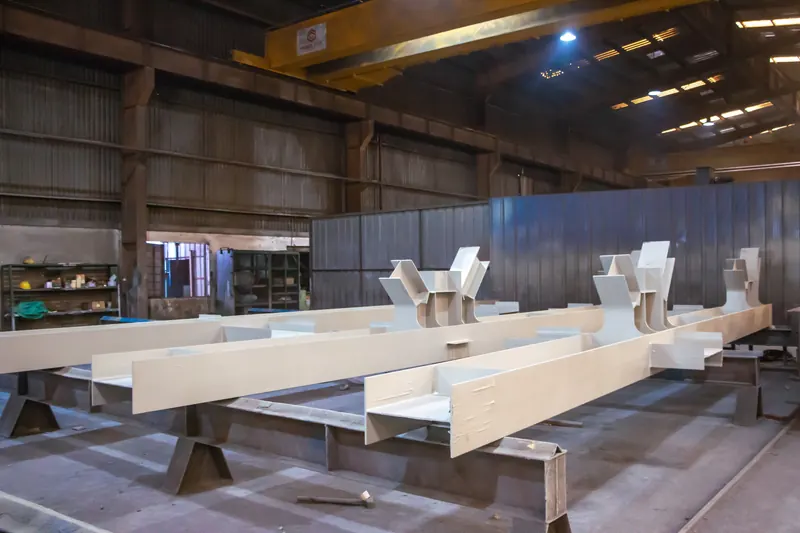
A paint system is a sequence of coats applied over blast-cleaned steel, typically a zinc-rich or epoxy primer, an intermediate epoxy and a polyurethane topcoat for exterior exposure.
Strengths
- Any colour, and a smooth architectural finish.
- No size limit: any member that fits in the paint shop can be coated.
- Easy to touch up on site with the same products.
Limits
- Protection depends on film thickness and application quality.
- Damage in transport and erection must be repaired.
- Periodic maintenance over the building's life.
Hot-dip galvanizing
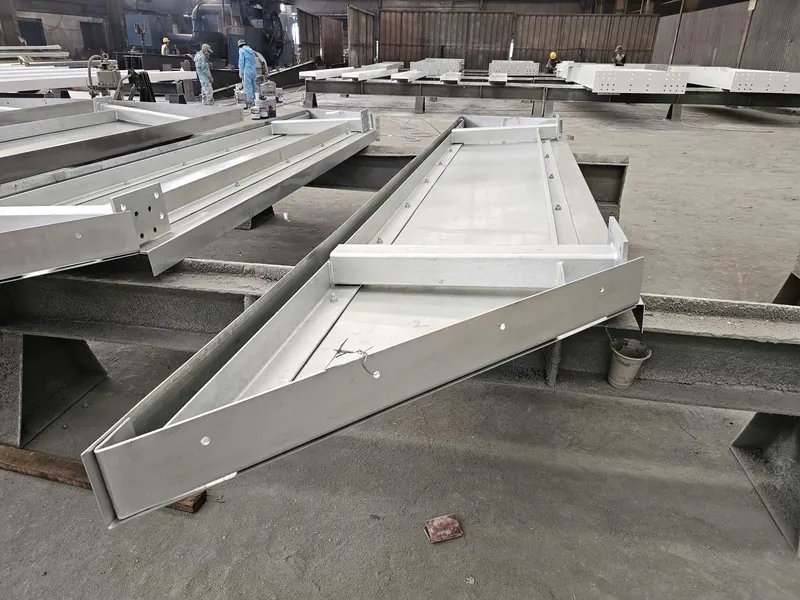
The steel is cleaned and dipped in molten zinc, which bonds metallurgically to the surface, coats inside and out, and protects small damaged areas sacrificially.
Strengths
- Very durable in many exposures, with little maintenance.
- Robust in handling and shipping.
- Thickness set by the steel and the process, not by an applicator.
Limits
- Member size limited by the kettle.
- Members need vent and drain holes, and some details can distort in the bath.
- A grey metallic finish unless painted.
Duplex systems
A duplex system is galvanizing plus paint. The two protect each other: the paint shields the zinc from consumption, and the zinc stops corrosion creeping under damaged paint. The combined life is commonly longer than the sum of each alone.
Use it for severe coastal and industrial exposures, long design lives with limited maintenance access, and exposed steel that also needs colour.
How to choose
| Situation | Usual choice |
|---|---|
| Interior, dry, conditioned building | Primer or simple paint system |
| Exterior, moderate exposure, colour required | Multi-coat paint system |
| Exposed steel, low maintenance, no colour needed | Hot-dip galvanizing |
| Coastal or aggressive industrial site, long life | Duplex system |
| Very large or complex members | Paint system (size limits on HDG) |
Use the corrosivity category of the site, from ISO 12944 or ISO 9223, together with the design life you need before first major maintenance.
Size limits for galvanizing
Hot-dip galvanizing is limited by the size of the kettle. Long or deep members may not fit, or may need double dipping, which can leave a visible line and needs care. Check member sizes against the galvanizer's kettle early. When members are too large, the designer can add splices or choose paint for those members.
Galvanizing also needs venting and drain holes in closed sections and some built-up members, so the zinc can flow in and out. These holes should be shown on the shop drawings and approved by the Engineer of Record.
Bolted connections and slip resistance
Slip-critical connections depend on the faying surface. Paint and galvanizing change the slip coefficient, so the coating at those surfaces must be qualified for the slip class the design assumes, or masked. Write the requirement on the drawings and in the coating specification so the shop knows which surfaces to leave bare or coat with a qualified primer.
Welding after coating
Field welds on galvanized or painted steel need the coating removed around the weld and repaired afterwards. Where possible, design connections to be bolted in the field so that the shop coating stays intact.
Maintenance over the building's life
Paint systems need periodic inspection and maintenance coats over the building's life, with timing set by the environment. Galvanizing generally needs little maintenance until the zinc is consumed. A duplex system lasts longer than either layer alone, and when the paint eventually needs maintenance the zinc underneath protects the steel. Owners who plan to keep a building for decades often prefer the duplex option for exposed steel in aggressive environments.
Appearance
Galvanizing looks grey and can vary in colour from member to member. If appearance matters, a paint or duplex system gives a uniform colour. Paint over galvanizing needs the right surface preparation, such as sweep blasting, and a compatible primer.
Get the coating supplier involved
Ask the paint manufacturer to confirm the system for the environment and the expected durability. Their confirmation supports the warranty.
Details that decide performance
- Specify surface preparation, for example SSPC-SP 10 / Sa 2½, and profile.
- Avoid water traps and narrow gaps that cannot be coated.
- Design vent and drain holes for galvanized members early, before shop drawings.
- Ask for dry film thickness records with every coated delivery.
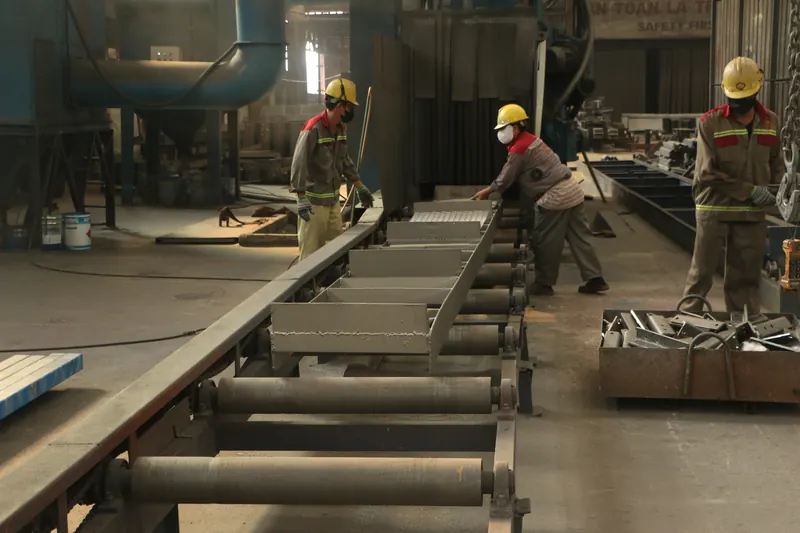
World Steel's painters are trained and certified by the paint manufacturers, and the coating products used carry UL certification where it applies. Whatever the system, the record of how it was applied is as important as the specification.
Quick answers
Which paint brands does World Steel use?
World Steel applies systems from Jotun, PPG, Carboline, Hempel, Nippon and International Paint, including epoxy lines. These are sold worldwide, so touch-up and warranty are straightforward in the US.
Can galvanized steel be painted?
Yes, with proper surface preparation of the zinc. That combination is a duplex system.
Does World Steel galvanize in-house?
Galvanizing is arranged with a project-specified galvanizer and coordinated by World Steel within its fabrication schedule.
Keep building your steel plan
Go further on USPEB.com
On this topic
Across the US market
- Steel fire protectionIntumescent and fire-rated steel packages
- Quality hubCoating inspection by FROSIO Level III inspectors
- Products catalogGalvanized, painted and built-up members
- Download centerSample ITP, design report and approval drawings
- Large projects, 2,500 t a monthCapacity for large US general contractors
- Contractor partnershipLong-term supply for US contractors