
Match the site
How harsh is your site?
ISO 12944 corrosivity categories. Galvanizing earns its place from C3 upward, and duplex systems where the exposure is highest.
C4: Galvanize, or duplex on exposed faces.
Why it lasts
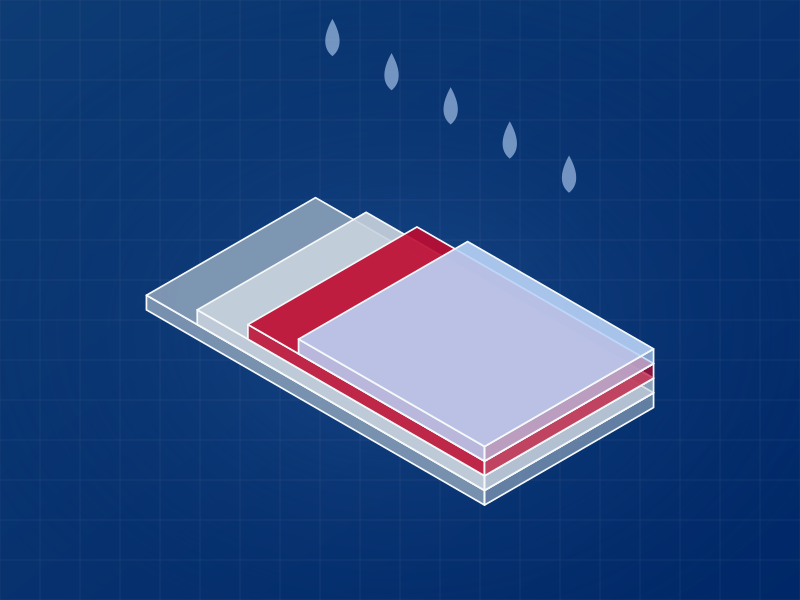
Protection that goes where paint cannot
- Coverage paint cannot reachMolten zinc coats inside corners, plate backs and hollow sections.
- Tough in transitThe alloy layers resist the knocks of an ocean voyage and erection.
- Less maintenanceZinc protects scratched areas next to it, so small damage does not spread rust.
- Measured, not assumedCoating thickness is recorded and goes into your submittals.
Before the kettle
Steel detailed and checked for dipping
- Vent and drain holesSet in the shop drawings so cleaning solutions and molten zinc flow into every hollow and drain out again.
- Hanging pointsLifting and hanging holes placed so long members can be dipped at an angle and drain cleanly.
- Bare steel onlyNo paint, glue, hard-to-clean chemicals or old galvanizing. Steel that arrives with them is reported back before dipping.
- Thin plate handled with carePlate 2 mm (about 5/64 in) and thinner is dipped quickly and air-cooled first so it does not distort.
Our galvanizing procedure
Ten stages from bare steel to measured zinc
Every galvanized order runs through World Steel's written hot-dip galvanizing procedure: ten stages, each with its own chemistry, temperature and time, and a quality gate before the steel moves on.
-
ReceivingCheck and hang
Each lot is counted against the order and tagged. QC checks the vent, drain and hanging holes, then the steel is wired to the dipping beam.
- Long members:
- 2,200 mm (7 ft 3 in) and up hung at 25 to 35°
- Spacing:
- At least 10 mm (3/8 in) between rows
- Grouping:
- Similar thickness and requirements on one beam
-
CleaningDegrease
An alkaline bath lifts the oil and grease left from fabrication and storage, so the zinc does not flake or fail to bond.
- Solution:
- Hydronet Base, 10%
- Temperature:
- 30 to 35 °C (86 to 95 °F)
- Check:
- Every 3 to 5 minutes until clean
-
CleaningPickle
Hydrochloric acid strips rust and mill scale down to bare steel. The steel is lifted and checked so it never sits long enough to pit.
- Solution:
- HCl, 8 to 14%
- Temperature:
- 25 to 30 °C (77 to 86 °F)
- Check:
- Every 10 minutes, typically 30 to 120 minutes in all
-
Quality gateRinse
Clean water washes off the acid and loose dirt. Anything still showing grease, dirt or rust goes back to the start.
- Water:
- pH 6.5 to 7
- Time:
- 1 to 2 minutes
- Extra:
- Pressure spray into hollows where needed
-
PreparationFlux
A zinc ammonium chloride flux takes off the last oxide film, protects the bare steel from rusting again and helps the molten zinc wet the surface.
- Solution:
- ZnCl₂ + NH₄Cl, 20 to 25%, 16 to 20 °Bé
- Temperature:
- 60 to 80 °C (140 to 176 °F)
- Time:
- 3 to 6 minutes
-
PreparationDry
The fluxed steel dries and warms before the kettle, so no moisture reaches the molten zinc and causes splashing.
- Temperature:
- 37 to 65 °C (99 to 149 °F)
- Time:
- 5 to 10 minutes
-
GalvanizingDip in molten zinc
The crane lowers the beam slowly into the kettle until the zinc-iron alloy layers form, the dross is skimmed off, and the steel is lifted out slowly and shaken so excess zinc drains.
- Zinc:
- 99.99% pure, imported from Australia and Korea
- Temperature:
- 440 to 450 °C ±5 (824 to 842 °F ±9)
- Time:
- 3 to 5 minutes, by steel thickness
-
FinishingCool and passivate
A chromate quench cools the steel and passivates the fresh zinc against white rust. Steel that will be painted (duplex) is cooled in water or air instead.
- Passivation:
- Chromate, 1.2 to 1.8‰
- For paint:
- Water or air cooling, no passivation
-
Quality gateInspect and measure
QC counts the lot, checks every piece visually and reads coating thickness with an Elcometer 456 magnetic-induction gauge. Steel that fails is stripped in the acid and dipped again.
- Visual:
- No bare spots, burns, drips, inclusions or white rust
- Thickness:
- To ASTM A123, recorded per lot
-
ReleaseClean, tag and release
Hanging wires are cut, zinc drips are filed or ground smooth and touched up, and each bundle is tagged before final QC releases it.
- Tag:
- Customer, product, quantity, item code, date
- Release:
- Final QC check before dispatch
Quality gate: steel that fails goes back a stage before it can move on.
Bath control
Every tank kept in spec
- Molten zincSampled once a month and analyzed by TÜV Rheinland (acid digestion, ICP-OES and ICP-MS). Every zinc shipment arrives with its own composition analysis. Temperature watched continuously, zinc level kept about 100 mm (4 in) below the rim.
- Flux and passivation tanksAnalyzed every week by QUATEST 3, the Vietnamese government quality testing center.
- Acid tanksComponent analysis every day, density checked with a Baumé hydrometer every three days.
- Degreasing tankChecked every three days and topped up when the strength drops below 10%.
Records
Paperwork that follows the steel
- Process tracking sheetTravels with every dipping beam and logs the time in each tank, the hanging QC sign-off, and the pieces accepted or rejected after cleaning and after galvanizing.
- Thickness inspection sheetElcometer readings per lot, ready for your submittal package.
- Nonconformance reportEvery defect, minor or major, logged daily and held aside until it is dispositioned.
Repair or redip
Clear limits, no guesswork
- Touched upSmall bare or damaged spots: no more than 0.5% of the surface and 250 cm² (about 39 in²) in total, and no single spot over 40 cm² (about 6 in²). Repaired with zinc-rich coating to ASTM A780.
- Stripped and redippedAnything beyond those limits, or outside ASTM A123, goes back through the acid and the kettle.
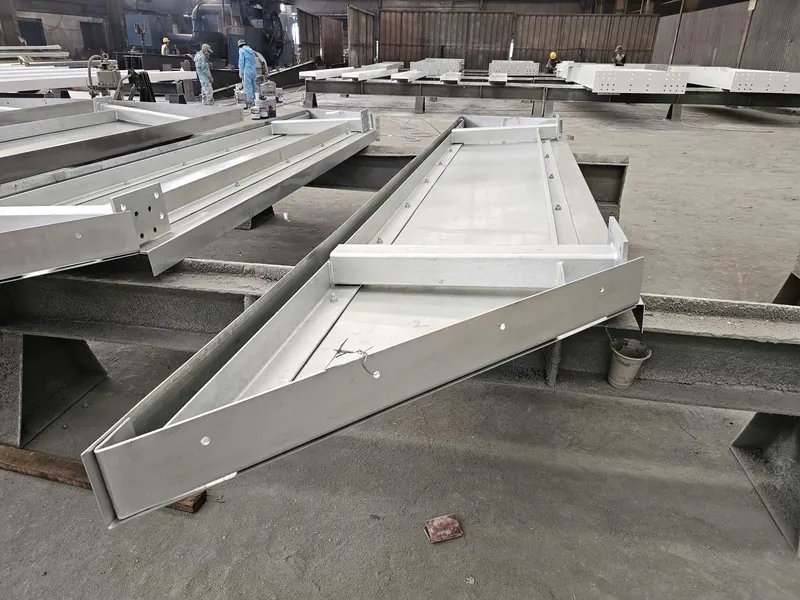
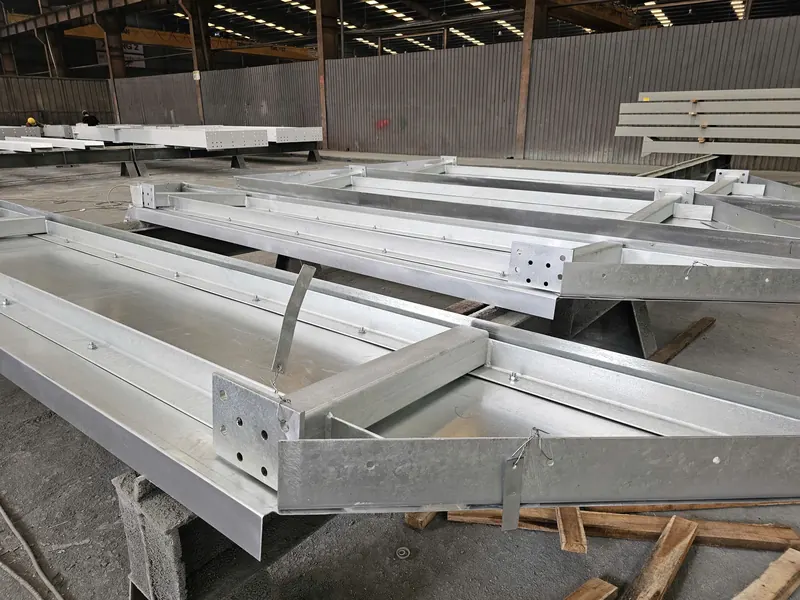
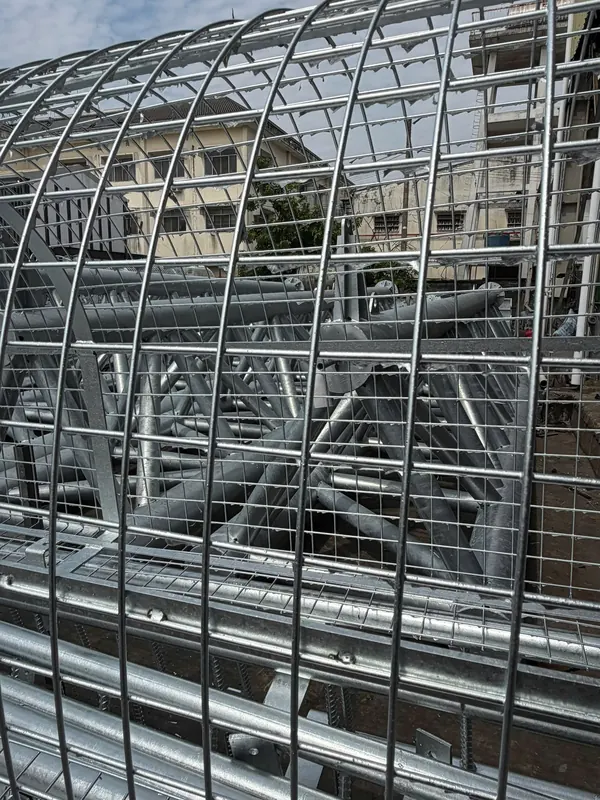
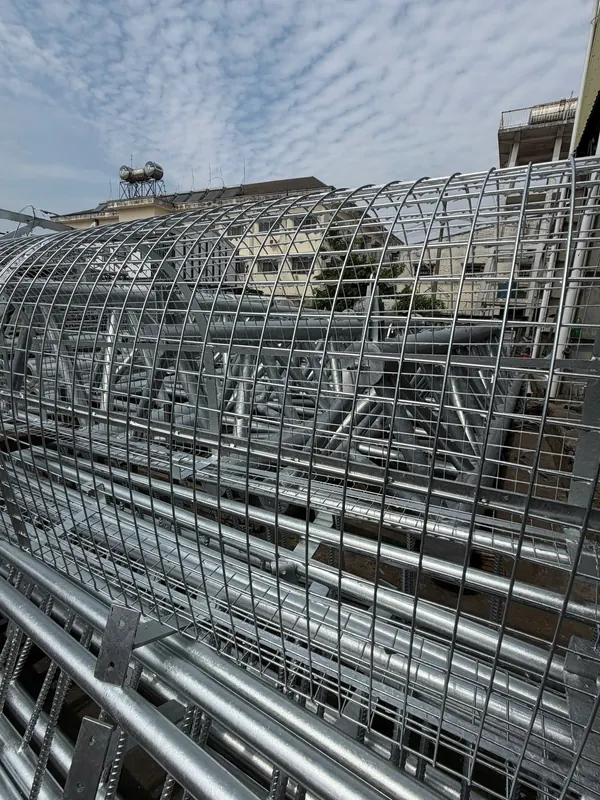
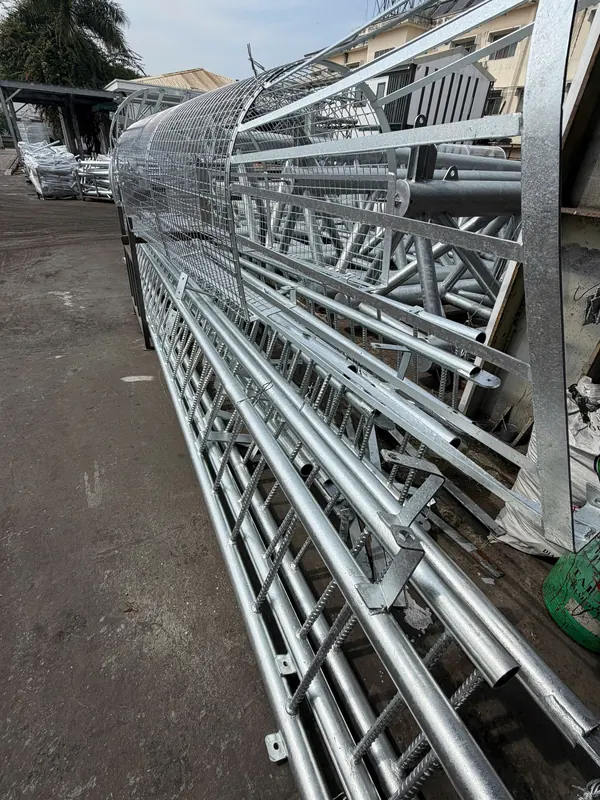
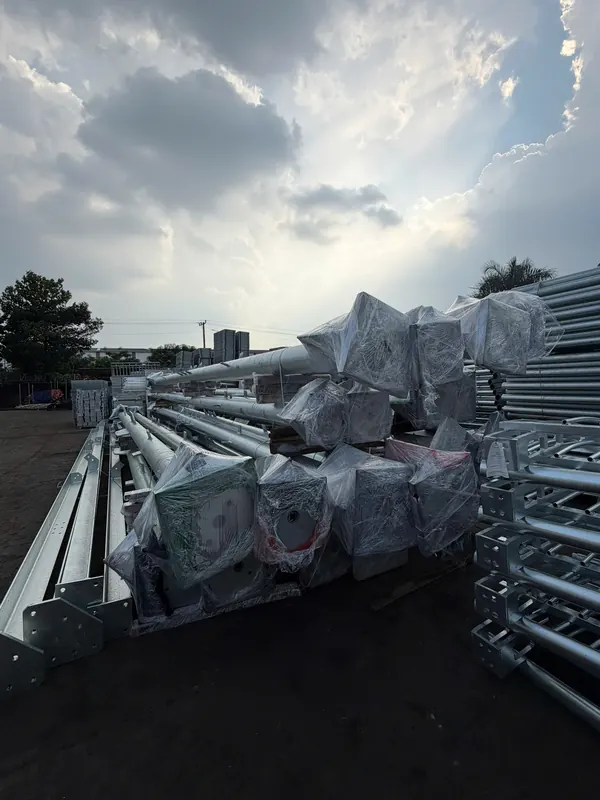
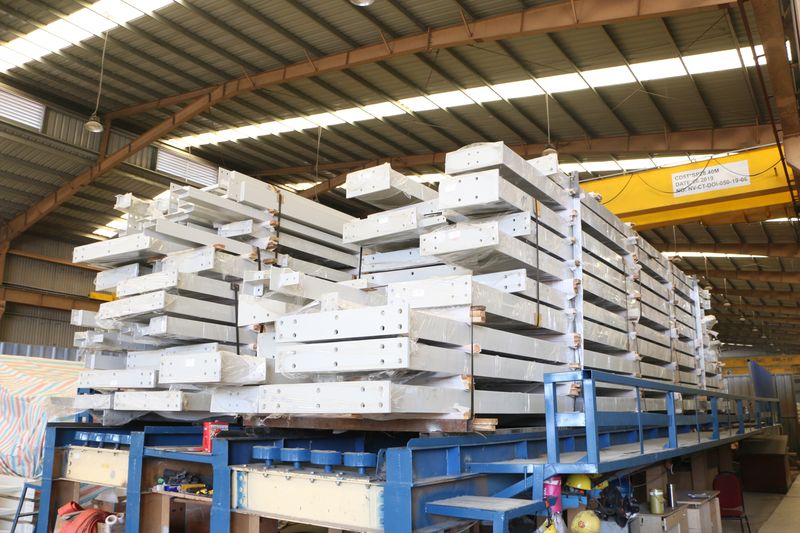
Galvanized steel, straight from the kettle
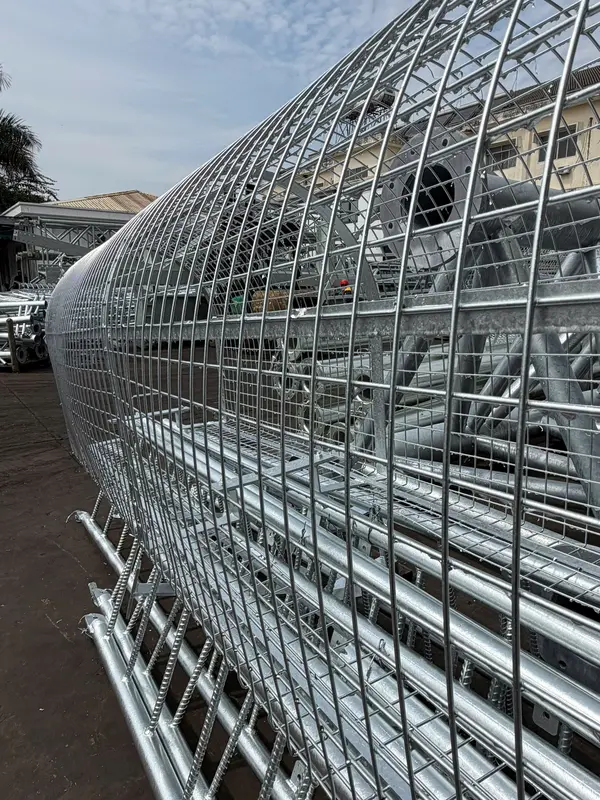
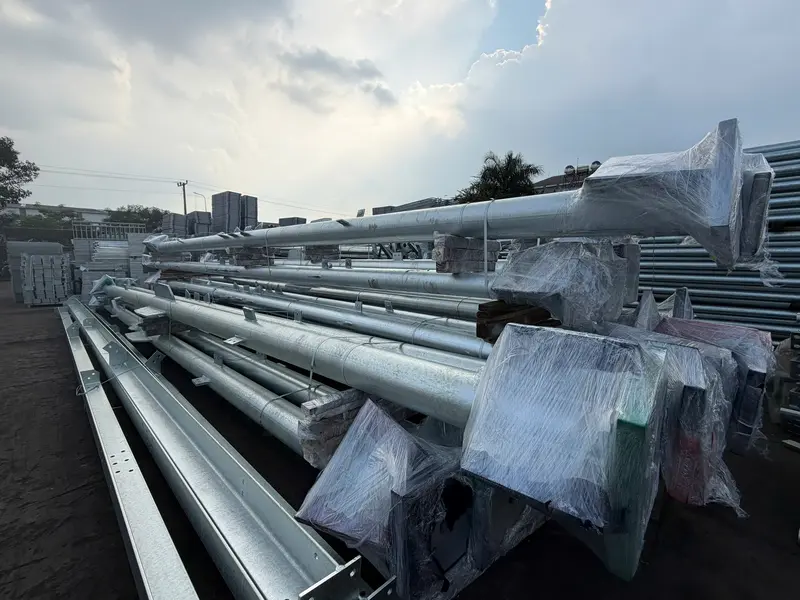
Welded frames, tower ladder cages and tubes after dipping: one continuous zinc coat, inside and out, ready to inspect and pack.
 Photo
 Photo
 Photo
 Photo
 Photo
 Photo
Specification
Hot-Dip Galvanizing, line by line
- Standard
- ASTM A123 for structural members, ASTM A153 for bolts and hardware
- Preparation
- Cleaned and pickled before dipping; venting and drain holes detailed in the shop drawings
- Coating thickness
- To the A123 table for the steel thickness, measured and recorded
- Duplex
- Paint over galvanizing for color or the most aggressive exposures
- Fasteners
- Galvanized bolts and nuts so the joint matches the members
- Field touch-up
- Zinc-rich repair to ASTM A780 by your erector after erection
 Photo
 Photo
 Photo
 Photo
Questions
Galvanizing questions US buyers ask
When should we galvanize instead of paint?
When the site is coastal, agricultural, industrial or exposed to de-icing salt, roughly ISO 12944 C3 and above, or when the owner wants the least maintenance. In heated, dry interiors a shop paint system is usually enough.
Who does the galvanizing?
World Steel arranges it in Vietnam with a galvanizer named for your job, and the coating records go into your submittals with the rest of the steel.
What is a duplex system?
Paint applied over galvanizing. It adds color and extends protection in the most aggressive exposures, and the two layers protect each other.
What zinc goes into the kettle?
Zinc of 99.99% purity imported from Australia and Korea, each shipment with its composition analysis. The molten bath is sampled every month and analyzed by TÜV Rheinland.
How is coating thickness checked?
QC reads every lot with an Elcometer 456 magnetic-induction gauge against the ASTM A123 table for the steel thickness, and the readings go on a thickness inspection sheet you can put in your submittals.
What happens to a piece that fails inspection?
Small bare spots inside the repair limits are touched up with zinc-rich coating to ASTM A780. Anything larger is stripped in the acid and dipped again.
What do you need from our drawings for galvanizing?
Nothing extra: our detailers add the vent, drain and hanging holes to the shop drawings following ASTM A385 practice, and you see them when you approve the drawings.
How are scratches repaired on site?
Your erector touches up damaged areas and field bolt areas with a zinc-rich repair to ASTM A780. We list the repair product in the submittals.
More corrosion protection: Zinc-Rich Primer · Epoxy Coatings · Polyurethane Coatings · Duplex Systems · Corrosion-Resistant Fasteners · Protective Connection Detailing · Coating Inspection · Maintenance Planning
Painting over the zinc? Galvanized steel is sweep blasted to SSPC-SP 16 before a duplex system, and checked under AMPP coating inspection practice.
Next step
Price it, or build with us for the long run
Every item comes from a plant that fabricates 2,500 metric tons of structural steel a month, accredited under IAS AC472 since 2019, with shop drawings included.
Request a quote for Hot-Dip Galvanizing
Send your drawings, loads or a simple list. Our engineers take off the quantities, check the US code basis and price exactly the scope you need, one item or the whole steel package.
Become our partner in the US
Contractors who bid steel often partner with World Steel: engineering support on your bids, OEM and private-label supply under your brand, and one fabricator behind every job you win. You erect and own the customer; we design, fabricate and ship.
 Illustration
Catalog record Verified
Sized by our engineers for your loads and code, then listed line by line in your quote.
Related solutions