Crane runways wear out in predictable places: seats, tiebacks, the top flange weld, rail joints. Appendix C of AIST Technical Report No. 13 (2021), Recommended Practice for Inspecting and Upgrading of Existing Structures, gives owners a structured way to find problems before they stop production. This article covers the inspection side; our article on crane runway upgrades covers the upgrade side.
Why inspect
TR-13 lists two groups of reasons. Ongoing operation: keep people and equipment safe, avoid unplanned shutdowns and large repair bills, plan maintenance, extend service life and meet regulations. Specific events: more production, a bigger or extra crane, change of use, a change of owner (due diligence), damage from impact, fire or earthquake, new floors, or new material stored at grade near the foundations.
The appendix covers the building and supporting structures only. Crane machinery inspection is covered by AIST's separate crane maintenance handbook and, in the US, OSHA 1910.179.
How often
Appendix C first sorts structures by duty, then adjusts for operating conditions, age, history, environment and consequence of failure. Suggested minimum frequencies:
| Category | Examples | Minimum frequency |
|---|---|---|
| High duty, moving loads | Class A crane runways | Every year |
| Moderate duty | Class B and C runways, process lines, conveyor and transfer car supports | About every 3 years |
| Low duty | Class D runways | Every 3 to 5 years |
| No moving loads | Buildings without cranes, stairs, platforms, utility supports, ducts | About every 5 years |
Regulations or specific conditions can require more frequent inspections. The building classes are explained in mill building class A to D.
Who does what
TR-13 describes a team of three:
- Owner's representative (usually engineering): starts the inspection, sets scope and questions, checks the inspector's and engineer's competence, arranges shutdown time, safe access, lockout/tagout and cleaning, and carries out repairs.
- Inspector: competent in crane runway construction; plans and performs the inspection, reports findings and raises emergencies immediately.
- Engineer: a qualified person who sets inspection requirements, evaluates results, decides how urgent repairs are, designs them and writes the final assessment.
The inspector reports to the owner and engineer, not to maintenance or operations, to keep the assessment objective.
Before going up
Review the runway's history: operating conditions past and present, earlier inspections and repairs, existing drawings, fall arrest systems, alignment requirements and site hazards such as lead paint or asbestos. Talk to maintenance and operations staff. Park the cranes out of the way, clean the structure enough to see it, plan manlifts and crane access, agree PPE and the protocol for emergency repairs, and check roof access restrictions.
What to check
Inspection is visual, from about arm's length, with NDT added where the engineer asks. The appendix template covers:
- Column bases: corrosion, grout, base plate, loose anchor nuts (hammer check), settlement.
- Columns: flanges, web, diaphragms, cap plate and its weld, cracks, loose bolts or rivets.
- Crane girders: walked, from manlifts or riding the crane. The most critical areas: girder seat and bolts, tiebacks, the top flange-to-web connection along the full length, stiffener welds at the top flange, attachments (especially on the bottom flange), and alignment.
- Lateral bracing: walkway plate, cap channels, lacing, their welds and bolts, sagging plates and cracks at openings.
- Longitudinal bracing and struts: cracks, loose or missing parts, corrosion.
- Rails: wear and uneven wear, joints, pads, clips and clip bolts.
- Roof: impact damage to bottom chords and bracing, sagging bracing, missing or altered members, leaks, debris.
- Fall arrest systems: cable, sag, tags.
- Anywhere: undocumented modifications, heat damage, overloading and dust build-up.
Where findings suggest it, a runway survey checks rail-to-girder, girder-to-column and column alignment, plumbness, rail gauge and elevations. A survey tied to the original benchmark shows whether settlement is the cause.
Reports that build a history
Every finding is documented with its exact location, photos or sketches. The inspector's report records findings; the engineer's report adds scope, history, assessment, analysis, repair recommendations with timing, and the next inspection. The owner keeps both, as the basis of preventive maintenance.
Starting with good records
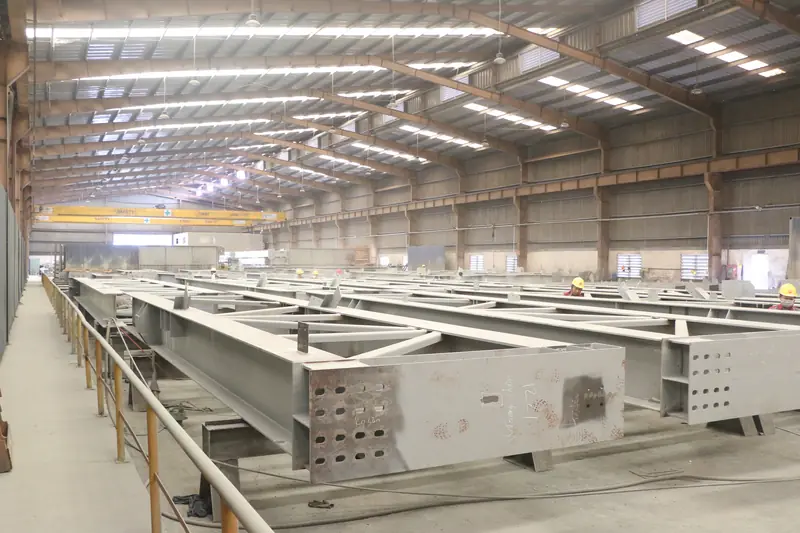
Inspection is easier when the runway starts with complete records. World Steel ships crane girders with weld and NDT reports, girder marks and as-fabricated data, and our project handover documents can feed the owner's inspection file. See our crane design standards page and the Sunpro Steel mill.
Solutions and the Sunpro Steel project
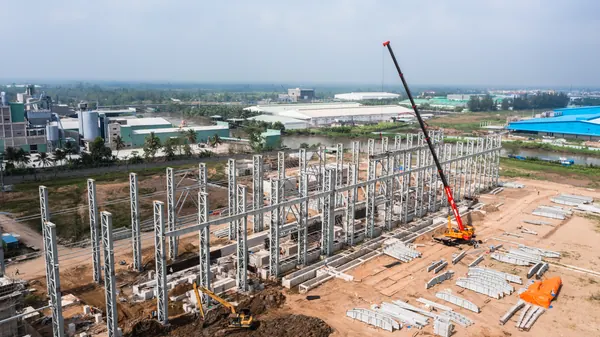
Our heavy industrial plants solution shows how World Steel handles a full mill or heavy plant, and the crane building system page shows the runway package itself. For a factory with bridge cranes, start from manufacturing plants with crane bays. The Sunpro Steel mill project, about 5,000 t with 150 t cranes, is where these TR-13 points were applied at full scale, and our large projects page explains how we run jobs of that size.
Source and limits
This article paraphrases AIST Technical Report No. 13 (2021), Appendix C, Sections C1 to C3. The owner's program and local regulations govern actual inspection frequency and scope.
Quick answers
How often should a crane runway be inspected?
AIST TR-13 suggests at least yearly for high-duty (Class A) runways, about every three years for moderate duty (Class B and C), every three to five years for low duty (Class D), and five years for structures without moving loads, unless rules require more.
Who should the inspector report to?
To the owner and the engineer, not to plant maintenance or operations, so the assessment of structural condition stays objective.
What are the most critical items on a crane girder?
The girder seat and its bolts, the tieback to the column, the top flange-to-web weld along the full length, stiffener welds at the top flange and anything attached to the bottom flange.
Keep building your steel plan
Go further on USPEB.com
On this topic
Across the US market
- Quality hubInspection, testing and sign-off at the plant
- IAS AC472 accreditationThe first and only AC472 plant in Vietnam
- Accredited testing labsILAC ISO/IEC 17025 testing on every project
- Online factory auditWalk the shop live with our QA team
- Large projects, 2,500 t a monthCapacity for large US general contractors
- Contractor partnershipLong-term supply for US contractors