Every crane building starts with a question that has nothing to do with steel sizes: how often will the cranes lift, and how heavy will those lifts be? AIST Technical Report No. 13, Guide for the Design and Construction of Mill Buildings (2021 edition), answers it with a simple tool, the mill building class. This article explains the four classes, how to pick one and what changes in the steel when the class goes up.
Why a class instead of a crane tonnage
A 50 t crane that lifts twice a week and a 50 t crane that runs three shifts a day load the runway with the same peak force, but the second one sends millions more stress cycles through every weld under the rail. Steel does not fail from peak load alone. It fails from repeated load, through fatigue cracks that start at welds and holes.
TR-13 (Section 1.4) therefore bases the classification mainly on the number of cycles of crane loading, or the repetition of a specific load case, that parts of the structure will see. It recommends a 50-year service life as the basis, unless the owner sets another.
The four classes in plain numbers
The report groups buildings by load repetitions over the service life. Its Table 1.1 also gives a handy daily equivalent:
| Class | Load repetitions over the life | About how often, over 50 years |
|---|---|---|
| A | More than 500,000 | 25 or more lifts a day |
| B | 100,000 to 500,000 | 5 to 25 a day |
| C | 20,000 to 100,000 | 1 to 5 a day |
| D | Under 20,000 | Less than 1 a day |
For Class A, TR-13 lists the kinds of buildings it expects to see there: steelmaking and continuous casting buildings, soaking pits, slab, billet and scrap yards, coil handling, foundries, mixer and stripper buildings, and shipping facilities. These are the bays where cranes never rest.
The owner sets it, and can set it per bay
The report puts the decision with the owner. Only the owner knows the production plan, so the owner studies the service and specifies the class for all of the building or for any part of it. A melt shop bay can be Class A while the motor room crane next door is Class C.
Two practical points follow:
- Write the class on the design criteria. The steel designer, the fabricator and later anyone assessing the building need to see it.
- Allow for growth. TR-13 lets the owner raise the assumed number of cycles where production may increase or the use of the building may change. Raising it at design stage costs little; fixing cracked girders after an output increase costs a shutdown.
What changes when the class goes up
The class is not a label for the file. It flows straight into the design rules in the rest of the report:
- Fatigue design. Members, connections, welds and fasteners under repeated load are designed to the fatigue provisions of AISC 360 for the number of cycles the class implies (TR-13 Sections 3.11.2.3 and 5.7).
- Girder welds. For all classes the report calls for a full-penetration weld with contoured fillets between the web and the top flange of crane girders. Only Classes C and D may use continuous fillet welds there, and intermittent welds are kept for light pendant-crane cases in C and D. See crane girder fatigue details.
- Deflection. Vertical girder deflection from one crane without impact is limited to span/1000 in Classes A and B, and span/600 in Classes C and D (Section 5.8.7). More in deflection and drift limits.
- Rails. For maximum rail life, TR-13 recommends head-hardened rails, welded joints and elastomeric pads on Class A and B runways, and rules out hook bolts there.
- Inspection. Appendix C ties inspection frequency to duty: Class A runways are inspected every year, Class B and C runways about every three years, Class D every three to five.
How the classes compare with crane classes
Crane suppliers in the US rate the crane itself with CMAA service classes. The two systems answer different questions: the CMAA class describes the crane machinery, the mill building class describes the structure that carries it. A heavy-duty crane usually points to a Class A or B building, but the owner should still count the cycles each runway will see. Our US crane design standards page sets the CMAA classes, ASCE 7 crane loads and TR-13 side by side.
How World Steel uses the class on a mill project
When a US contractor sends us a mill or heavy crane building, the class is one of the first items we confirm, together with the crane data. It decides how we detail and weld the built-up crane runway girders, which welds get 100% testing and how tight the shop tolerances are.
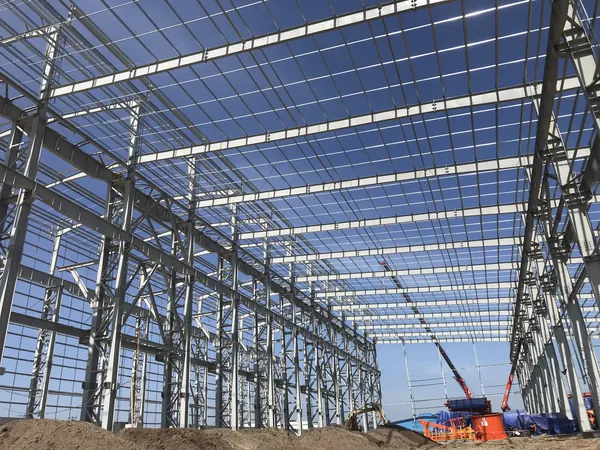
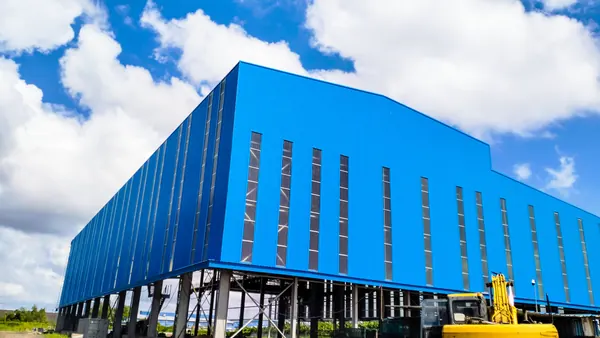
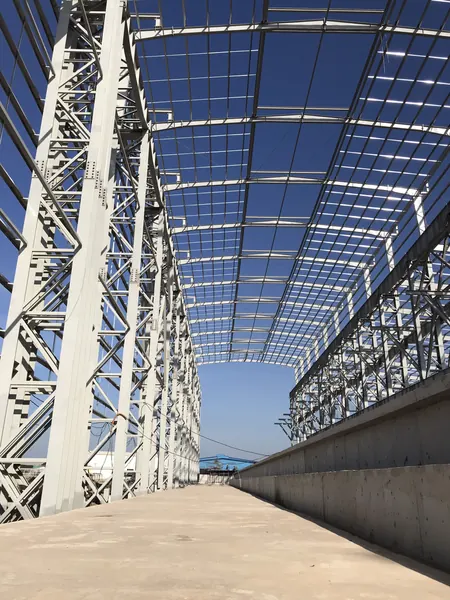
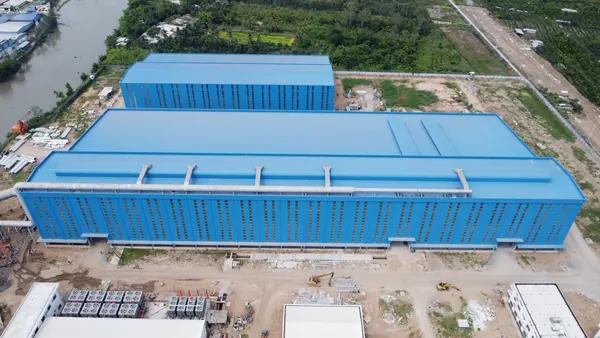
Our largest crane building to date is the Sunpro Steel mill in Vietnam: about 5,000 t of structural steel and crane bays designed for overhead cranes up to 150 t. We design and fabricate the steel, and we can supply the overhead cranes with the building; the US contractor, our customer, handles site work with its Engineer of Record approving the drawings. The steel is designed to AISC 360 and the guidance in TR-13.
Solutions and the Sunpro Steel project
The rules in this article come together in our crane building system: runway girders, stepped columns, bracing and, on request, the overhead cranes, supplied as one package. For whole facilities, see our solutions for heavy industrial plants and manufacturing plants with crane bays. The reference job is the Sunpro Steel mill project: about 5,000 t of steel and crane bays for cranes up to 150 t, our largest crane building to date.
Source and limits
This article paraphrases AIST Technical Report No. 13 (2021), Sections 1.4, 3.11, 5.7, 5.8 and Appendix C, published by the Association for Iron & Steel Technology. TR-13 is guidance, not a code: the project specification, the local building code and the Engineer of Record govern each job. Buy the full report from AIST for design use.
Quick answers
What is a Class A mill building?
Under AIST TR-13, a building or part of a building where members may see more than 500,000 repetitions of a specific load over the service life, roughly 25 crane lifts a day for 50 years. Steelmaking, casting, slab and scrap yards are typical.
Who chooses the building class?
The owner. TR-13 asks the owner to study the crane service and specify the class for the whole building or each part of it, normally on a 50-year service life.
Can one building have more than one class?
Yes. A scrap bay can be Class A while a maintenance bay in the same building is Class C or D. The class follows how hard each runway works.
Keep building your steel plan
Go further on USPEB.com
On this topic
Across the US market
- Seismic steel structuresSDC D to F framing for West Coast jobs
- Design ReportWhat our US-code design report contains
- Large projects, 2,500 t a monthCapacity for large US general contractors
- Contractor partnershipLong-term supply for US contractors
- Solutions by stateState-by-state steel solutions
- Send your drawingsGet a steel package quote from your drawings