A crane girder can be strong enough on day one and still crack in ten years. The cause is almost always fatigue: millions of wheel passes, each opening and closing a tiny flaw at a weld until it becomes a crack. AIST Technical Report No. 13 (2021), Section 5.8, is precise about the weld details that resist fatigue in mill buildings. This article goes through them.
Why fatigue governs crane girders
Ordinary building members see their design loads a few times in their life. A crane girder sees a wheel load every time the crane passes, and each wheel of the crane counts. TR-13 points out that load cycles on the web-to-flange weld should count the stress change as each individual wheel passes, not just each crane. In a Class A building that adds up to well over 500,000 cycles (see mill building class A to D). Fatigue design follows AISC 360 for that cycle count.
The web-to-top-flange weld
This weld sits right under the rail and takes the wheel load directly, plus torsion from side thrust at the rail head and from any rail offset on the web. TR-13 asks for:
- a full-penetration weld with contoured fillets between web and top flange, for all classes;
- in Class C and D buildings only, continuous fillet welds are allowed, provided they are designed for the full load, including wheel contact forces, out-of-plane forces and torsion.
For local checks, the report spreads a wheel load over a web length equal to twice the combined depth of rail and top flange, and uses the same length for the weld force.
Bottom flange and splices
- The bottom flange may be fillet-welded to the web if the welds are continuous on both sides and checked for strength and fatigue.
- No welded attachments to the bottom flange, ever. It is the tension flange, the worst place for a crack starter.
- Web and flange splices are complete-penetration butt welds, ground flush on all sides, with grinding running along the span.
- In plate girders, flange and web splices must be staggered, at least one flange width apart.
Stiffeners
Stiffeners are a classic crack site, so TR-13 is specific (Section 5.8.3):
- Intermediate stiffeners are welded to the top (compression) flange with a full-penetration bevel weld and stop short of the bottom flange.
- End bearing stiffeners are welded to the top flange with a full-penetration weld and fitted for full bearing on the bottom flange, or full-penetration welded.
- Stiffener welds are continuous; only Class C and D girders may use intermittent welds for intermediate stiffener-to-web connections.
- Corners are clipped to clear the web-to-flange welds.
- The effect of stiffener welds on girder fatigue must be checked.
No intermittent welds, no tension field
Intermittent fillet welds are not used on crane girders, except for cover plates and stiffeners on pendant-crane girders in Class C and D buildings. Webs are designed for shear to AISC 360 Chapter G without tension field action. The commentary explains why: tension field action lets the web buckle and flex sideways every pass, which shortens life under repeated load.
Top flange and web must be compact
TR-13 requires the top flange and web of a crane girder to be compact under AISC 360, and lists the limit states to check, from biaxial bending and sidesway web buckling to fatigue and tieback connections. Girders are designed as simple spans, without connections that restrain rotation between adjacent girder ends, because continuity there drives fatigue at the seats and tiebacks.
No unplanned attachments
Section 5.8.9 bans any attachment not shown on the design drawings, during or after construction, unless a qualified engineer approves it and the drawings are revised. The rule should be printed on the drawings. A conduit clip welded to a bottom flange can start the crack that takes a girder out of service.
How World Steel builds these details
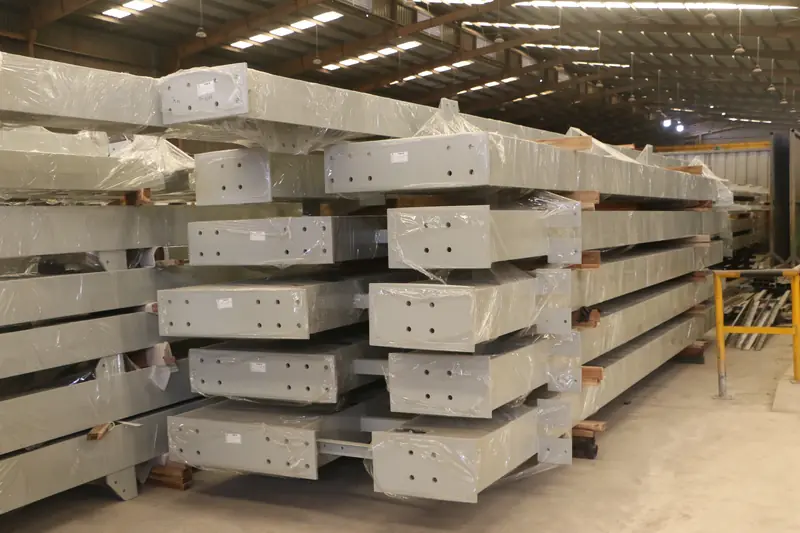
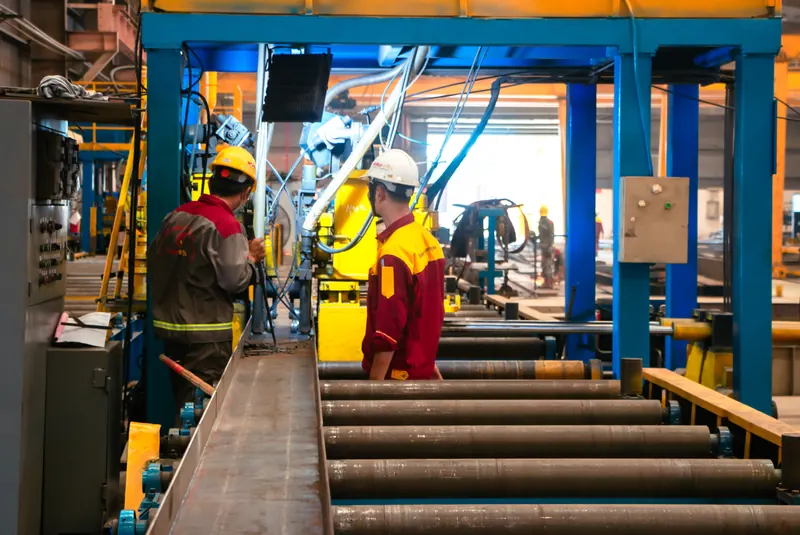
We fabricate built-up crane runway girders on submerged arc welding lines, with complete-joint-penetration web-to-flange welds where the class calls for them, and grind splices flush in the shop. Our laser cutting handles plate up to 100 mm thick for flanges and stiffeners. The welds that need 100% testing are listed in our article on crane girder weld testing. These girders carry cranes up to 150 t at the Sunpro Steel mill. See also our crane design standards page.
Solutions and the Sunpro Steel project
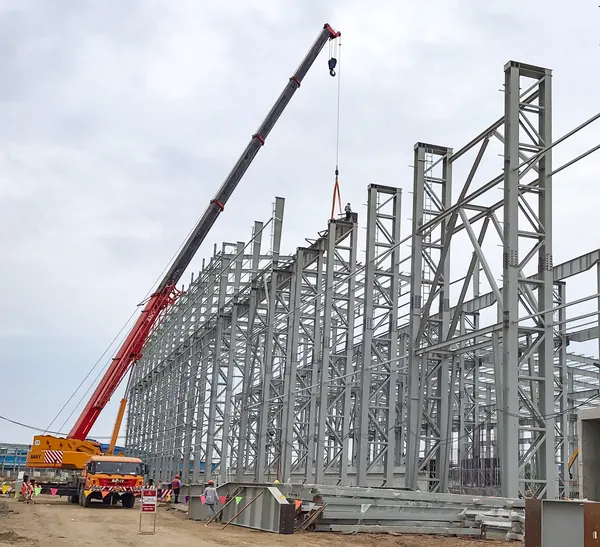
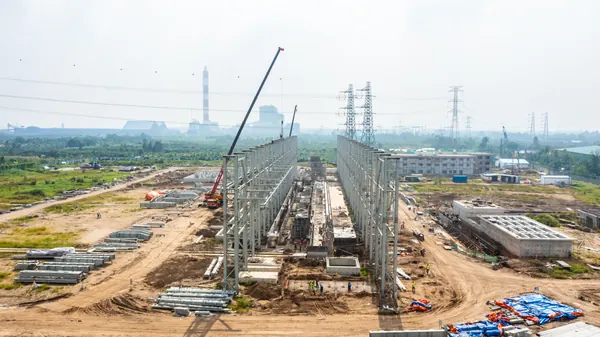
The rules in this article come together in our crane building system: runway girders, stepped columns, bracing and, on request, the overhead cranes, supplied as one package. For whole facilities, see our solutions for heavy industrial plants and manufacturing plants with crane bays. The reference job is the Sunpro Steel mill project: about 5,000 t of steel and crane bays for cranes up to 150 t, our largest crane building to date.
Source and limits
This article paraphrases AIST Technical Report No. 13 (2021), Sections 5.7 and 5.8 and the commentary. Each project's details are set by its design drawings and approved by the Engineer of Record.
Quick answers
Which weld joins the web to the top flange of a mill crane girder?
AIST TR-13 calls for a full-penetration weld with contoured fillets in all building classes. Only Class C and D buildings may use continuous fillet welds, designed for the full wheel load and torsion.
Can anything be welded to the bottom flange?
No. TR-13 forbids welded attachments to the bottom flange of crane girders, because it is the tension flange where fatigue cracks grow.
Why is tension field action not allowed?
It lets the web buckle and carry shear as a diagonal tension band. Under repeated crane loads the web flexes each pass, which shortens fatigue life, so TR-13 keeps webs below their buckling stress.
Keep building your steel plan
Go further on USPEB.com
On this topic
Across the US market
- Projects by typeWarehouses, plants, data centers and more
- Industries we serveSteel packages by US industry
- Data center steelHyperscale and colocation framing
- Large projects, 2,500 t a monthCapacity for large US general contractors
- Contractor partnershipLong-term supply for US contractors
- Solutions by stateState-by-state steel solutions