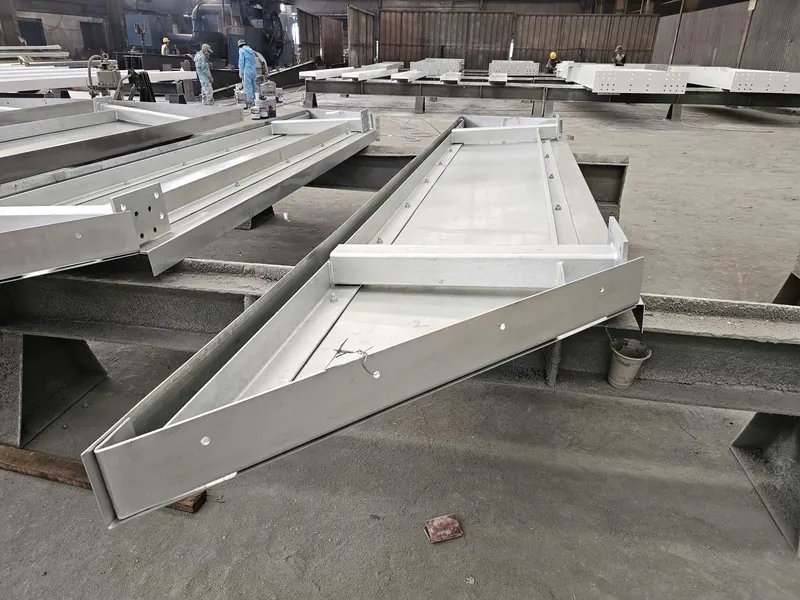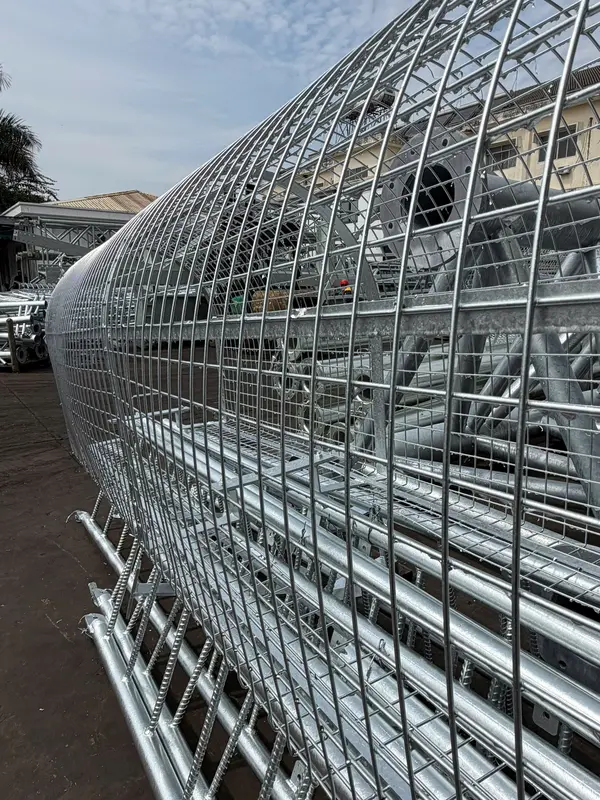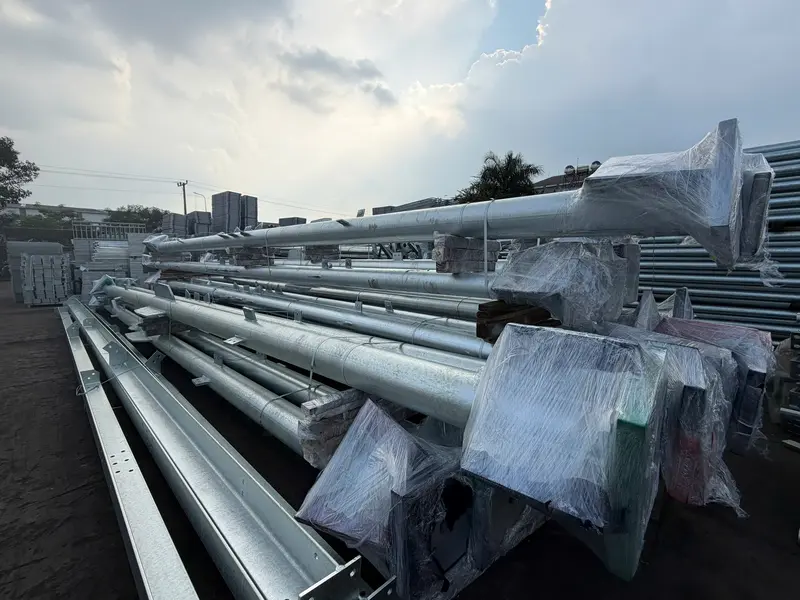
Most disputes over galvanized steel do not start at the kettle. They start on the order, when nobody wrote down which specification year applied, what the steel was, how pieces would be identified or whether a certificate was wanted. Section 4 of ASTM A123 lists the information an order must carry. This article goes through those galvanizing order requirements one line at a time, with the reason each one exists and how we handle it when the steel is fabricated and galvanized in Vietnam for a US job.
The edition reviewed is ASTM A123/A123M-13. The edition your contract names governs, and the standard itself is the final reference.
Why the order matters more than it seems
ASTM A123 is written as a purchase specification. The "purchaser" is whoever orders the galvanizing, and the "galvanizer" is whoever operates the kettle. When a general contractor buys steel already galvanized from a fabricator, the fabricator is usually the purchaser of the galvanizing service, and the contractor's specification flows down through the fabricator's order.
That chain is where information gets lost. A specification may say "galvanize to ASTM A123", the fabricator's order may say "galvanize", and the galvanizer may apply its usual practice. If the project then asks for a certificate, a heavier coating or a particular sampling plan, nobody wrote it down. Section 4 exists to stop that.
The eight lines of Section 4.1
Section 4.1 says orders shall include the following. We have kept the order of the standard and added what each line means on a structural job.
Quantity and total weight
Section 4.1.1 asks for the number of pieces and the total weight. Weight matters for more than invoicing. The repair limit in Section 6.2.2 is tied to piece weight: no more than 256 cm² of renovated area per metric ton (36 sq in per short ton), or 0.5 % of the accessible surface, whichever is less. A clear record of the weight of each piece makes that limit easy to check.
Description, sizes and weights
Section 4.1.2 asks for the type and size of the products. For structural steel the shop drawing piece list is the natural answer: piece mark, section, length, weight. It lets the galvanizer plan the dipping jig, choose the angle of immersion for long members and spot pieces that are too long or too heavy for one dip.
Specification designation and year
Section 4.1.3 asks for the ASTM designation and its year of issue. This is the line most often missed. The 2013 edition, for example, split the old "structural shapes and plate" line of Table 1 into two lines and reduced the minimum for plate up to 16 mm (5/8 in) thick. An inspector working from a different edition could reject plate that is fully compliant with the edition on the contract. Writing "ASTM A123/A123M-13" removes the doubt.
Material identification and surface condition
Section 4.1.4 points to Section 5.1, which puts the duty on the purchaser to give the galvanizer the specification, grade or designation of the steel, and the type and degree of any surface contamination, before galvanizing.
Two reasons stand behind it. First, steel chemistry changes the coating. Note 2 of the standard explains that silicon, carbon and phosphorus in certain percentages speed up the growth of the zinc-iron alloy layer and can leave a matte finish with little or no outer zinc. The galvanizer has limited control over that, and knowing the steel lets it plan. Second, contamination that the pickling acid cannot remove, such as paint, lacquer marking, welding anti-spatter spray or oil-based crayon, leaves bare spots. Telling the galvanizer up front lets the steel be cleaned before it reaches the tanks.
On our jobs the mill test certificates already travel with every heat of steel, so the grade and chemistry of each galvanized piece can be traced through the piece mark. We also list any marking or coating on the steel that needs removal.
Sampling plan, if different
Section 4.1.5 asks for the sampling plan if it differs from Section 7.3. Without a stated plan, the standard sets the minimum number of test articles by lot size: all pieces in a lot of three or fewer, three pieces from 4 to 500, five from 501 to 1,200, and so on up to twenty for lots of more than 10,000. If the owner or the engineer wants more, or a statistical plan to ASTM B602, it must be agreed at the time of the order. The full sampling table is on our ASTM A123 page.
Special test requirements
Section 4.1.6 points to Section 8.1. Thickness testing and visual inspection are always part of A123. Adhesion testing and embrittlement testing are only done when the galvanizer and the purchaser agree, so if the project wants them, the order must say so. Embrittlement tests under ASTM A143 are not required unless there is strong evidence of embrittlement.
Special requirements
Section 4.1.7 covers anything else: special stacking, a heavier coating weight, and so on. Note 4 explains why a heavier coating is not simple. The Table 1 grades are minimums that can be reached with high confidence. Purchasers who want a guarantee of heavier coatings should specify a higher grade as a special requirement and expect test batches or extra preparation, such as abrasive blasting before galvanizing, and some higher thicknesses may be impractical or unattainable.
Other special requirements we see on US jobs:
- Duplex preparation. Steel that will be painted is often cooled in water or air rather than quenched in a chromate passivation, so the paint can bond. That must be on the order.
- Masking. Faying surfaces, threads or areas to be field welded may need masking.
- Stacking and packing. Long members may need dunnage and spacers to avoid wet storage stain on the voyage.
Tagging and piece identification
Section 4.1.8 asks for the tagging or piece identification method. Galvanizing burns off paint markers and chalk, and pickling removes most surface marks. Pieces need to be identified in a way that survives the process: stamped steel tags wired on, die-stamped marks in an agreed place, or heat-resistant labels. On a large job the piece mark is the key to the drawings, the coating records and the erection sequence, so losing it in the kettle is expensive.
The lines that are not in Section 4, but should be
Section 4 is a minimum. Three more items come from other sections and are worth writing on the order.
- Certification. Section 10.1 says the purchaser shall be furnished certification that each lot was tested or inspected and met the specification when the purchase order or contract asks for it. A report of test results is also furnished only when specified.
- Inspection access. Section 9.2 lets the purchaser's inspector or an independent inspector accept or reject material at the galvanizer's plant, with access to the areas where the coating is applied while the work is done. Naming the inspector and the hold points avoids surprises.
- Lot definition. Section 7.2 defines a lot, unless otherwise agreed, as one or more articles of the same type and size in a single order or delivery load, whichever is smaller, galvanized within one shift in the same bath. If the project prefers to define lots by shipment or by area of the building, say so.
A sample order block
A complete order for galvanized structural steel might read:
| Item | Example entry |
|---|---|
| Specification | ASTM A123/A123M-13; hardware to ASTM A153 |
| Pieces and weight | Per attached piece list, by piece mark, with total weight |
| Steel | ASTM A992 shapes, ASTM A572 Grade 50 plate; mill certificates attached |
| Surface condition | Bare steel, weld slag removed; no paint or marking that needs removal |
| Coating | Table 1 minimum; no heavier coating required |
| Sampling | Section 7.3 |
| Special tests | Adhesion per Section 8.3 on one piece per lot |
| Finish for paint | Air or water cooled, no passivation, for members marked "D" |
| Identification | Stamped steel tags wired to each piece, piece mark as drawing |
| Certification | Certificate of conformance and report of thickness results per lot |
That block takes ten minutes to write and removes most of the questions an inspector will ask.
How the order fits into the rest of the work
The order is the front door to the rest of the series. Steel chemistry, the subject of reactive steel and the zinc bath, explains why the steel grade line matters. The design rules in vent and drain holes for galvanizing explain why the pieces must reach the galvanizer ready for the kettle. The process itself is described in the hot-dip galvanizing process, step by step.
How World Steel places galvanizing orders
World Steel fabricates up to 2,500 metric tons of structural steel a month in its own IAS AC472-accredited plant in Vietnam. When a job calls for galvanizing, we arrange it in Vietnam with a galvanizer named for the job, under our written galvanizing procedure, and our order carries every line above, taken from the project specification and the shop drawings.
For the US contractor, our customer, that means one coating schedule instead of three sets of paperwork: the members to be galvanized with their ASTM A123 grade, the steel grade and mill certificate by piece mark, the special requirements, the sampling plan, the inspection access for your inspector and the certificate of conformance. The records are posted in PEB Studio as each lot is released. If your specification only says "galvanize", we send the questions back in writing before fabrication starts, so the gaps are closed by your Engineer of Record and not by assumption.
See our ASTM A123 page for the standard at a glance, and our hot-dip galvanizing page for the procedure that follows the order.
Quick answers
What must a galvanizing order include under ASTM A123?
Quantity and total weight, a description of the pieces with sizes and weights, the specification designation and year, the steel identification and surface condition, any sampling plan other than Section 7.3, special tests, special requirements such as a heavier coating or special stacking, and the tagging or piece identification method.
Why does the galvanizer need the steel grade?
Because steel chemistry, especially silicon and phosphorus, changes how the coating grows and how it looks. Section 5.1 puts the duty to supply the grade and the surface condition on the purchaser.
Is a certificate of conformance automatic?
No. Section 10 provides certification and a report of test results when the purchase order or contract asks for them, so the order should say so.
Can the order ask for a thicker coating than Table 1?
Yes, as a special requirement agreed with the galvanizer. Heavier coatings may need reactive steel, blasting before dipping or trial batches.
Keep building your steel plan
Go further on USPEB.com
On this topic
Across the US market
- Steel fire protectionIntumescent and fire-rated steel packages
- Quality hubCoating inspection by FROSIO Level III inspectors
- Products catalogGalvanized, painted and built-up members
- Download centerSample ITP, design report and approval drawings
- Large projects, 2,500 t a monthCapacity for large US general contractors
- Solutions by stateState-by-state steel solutions