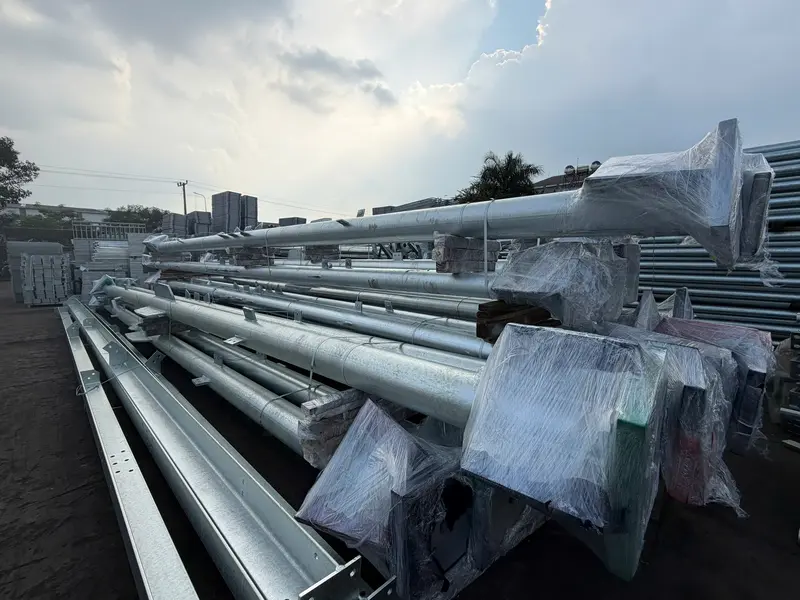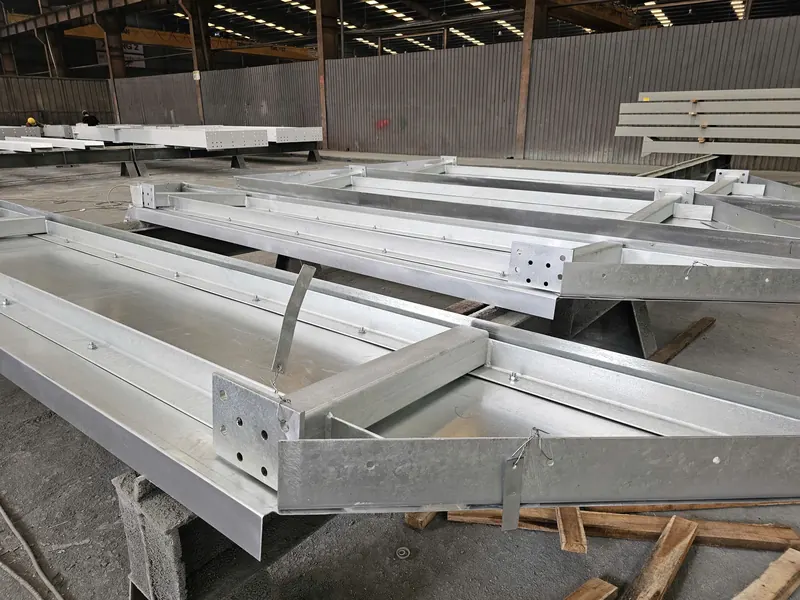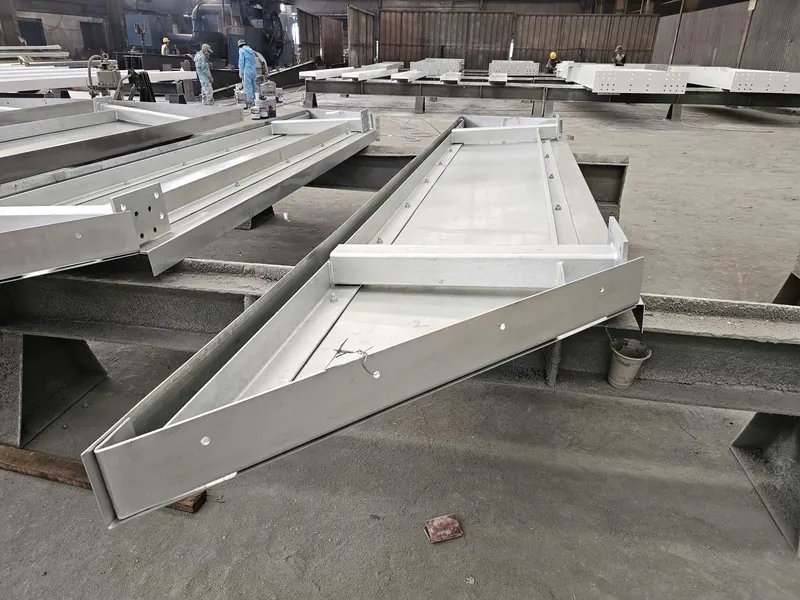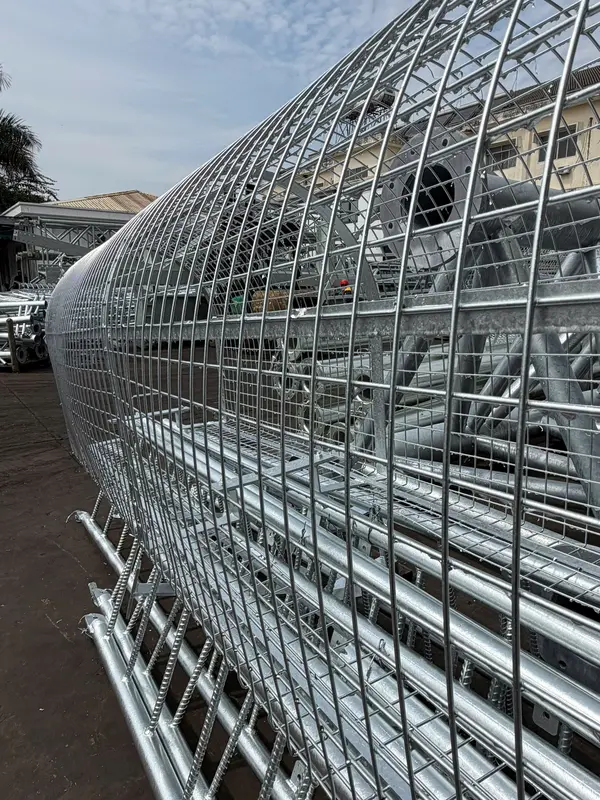
Galvanizers say that the steel decides the coating. Two beams of the same size, dipped on the same jig for the same time, can come out of the kettle with one bright and spangled and the other dull gray and twice as thick. Nothing went wrong: the steel chemistry was different. This article explains reactive steel galvanizing, what ASTM A123 says about it, and the rules the specification sets for the zinc and the bath on the other side of the reaction.
The edition reviewed is ASTM A123/A123M-13. ASTM A385, the practice it points to on steel selection, gives the detailed guidance. The editions named in your specification govern.
What happens in the kettle
When clean, fluxed steel is lowered into zinc at about 450 °C (842 °F), iron atoms at the surface react with the zinc. The reaction grows a series of zinc-iron alloy layers on the steel, and as the piece is withdrawn a layer of nearly pure zinc stays on top. The result, seen in a cross-section, is usually:
- a thin gamma layer next to the steel, about 75 % zinc,
- a delta layer, about 90 % zinc,
- a zeta layer of columnar crystals, about 94 % zinc,
- an eta layer of pure zinc on the outside.
How fast those alloy layers grow depends on the bath temperature, the time in the bath, the thickness and mass of the steel, and above all the chemistry of the steel. Our ASTM A123 page draws the four layers beside the coating grade finder, and a later article in this series looks at each one.
Silicon, phosphorus and carbon
Note 2 of ASTM A123 is short but important. It says the presence in steel and weld metal, in certain percentages, of elements such as silicon, carbon and phosphorus tends to accelerate the growth of the zinc-iron alloy layer, so that the coating may have a matte finish with little or no outer zinc layer. It adds that the galvanizer has only limited control over this, and that the mass, shape and amount of cold working of the product may also affect the result.
Silicon is the main driver on structural steel. Steelmakers add silicon to kill (deoxidize) the steel, and the amount varies by mill, by grade and by product. Galvanizers describe the effect in bands:
| Silicon in the steel | Typical behaviour in the kettle |
|---|---|
| Very low, below about 0.04 % | Normal growth, bright finish with a full outer zinc layer |
| About 0.04 to 0.15 % | A reactive band: fast growth, thick and often gray coating |
| About 0.15 to 0.25 % | Growth slows again, coating close to normal |
| Above about 0.25 % | Growth rises steadily with silicon, thick matte gray coatings |
The reactive band between about 0.04 and 0.15 % is often called the Sandelin effect. Phosphorus adds to it: a steel with low silicon but high phosphorus can still behave as reactive. ASTM A385 discusses these effects and gives guidance on choosing steel compositions for galvanizing, which is why Note 2 refers to it.
The bands are a guide, not a rule. Bath temperature, time in the bath and bath additions move them.
What a reactive coating looks like
A coating on reactive steel has three signs:
- Color. Matte gray, sometimes in patches, because the alloy layers have grown right through the outer zinc.
- Thickness. Often well above the Table 1 minimum, sometimes two or three times the value for the steel thickness.
- Texture. Rougher to the touch, and on very reactive steel, more brittle under impact.
The coating still protects the steel. Its corrosion resistance depends on the mass of zinc per square metre, and a gray coating usually carries more zinc than a bright one. ASTM A123 is clear about acceptance: Section 6.2 says roughness related to steel chemistry or steel reactivity to zinc shall not be grounds for rejection. A gray area on a bright member is not a defect.
What a reactive coating can do is chip at the edges if the member is dropped or banged hard, because the alloy layers are harder and less ductile than pure zinc. Note 9 of A123 makes a related point for all galvanized steel: the coating is generally too heavy to allow severe bending without damage.
Mixed steels in one assembly
Reactive steel causes the most visual trouble in welded assemblies. A frame may combine wide flange shapes from one mill, plate from another and hollow sections from a third, each with its own silicon content. After galvanizing, the frame can show bright members next to gray ones, and the inspector may see different coating thicknesses on parts of the same piece.
ASTM A123 deals with that in two ways. First, Section 3.2.9 treats each material category and steel thickness on one article as its own specimen, so each part is judged against its own Table 1 line. Second, Note 6 says the finish requirements address visual inspection only, not the measured thickness variations that come from different steels or different thicknesses in one assembly.
On architectural or exposed steel where appearance matters, the answer is upstream: agree an appearance expectation with the owner, keep the steel source consistent where possible, and consider a duplex paint system if a uniform color is wanted.
Weld metal counts too
Note 2 mentions weld metal as well as steel. Weld wire and electrodes with high silicon can galvanize thicker and darker than the parent steel, leaving a visible line along the weld. ASTM A385 recommends weld consumables with chemistry close to the base metal, and welding processes that leave little slag, because slag is not removed by the pickling acid and causes bare spots. The welding side is covered in welded assemblies for galvanizing.
The other side: the zinc and the bath
While the steel decides how fast the coating grows, ASTM A123 sets firm rules for what goes into the kettle.
Zinc to B6 or B960. Section 5.4 requires the zinc used in the bath to conform to ASTM B6, or to ASTM B960 for Prime Western Grade recycled zinc, or both. If a zinc alloy is used as the main feed, the base zinc used to make it must meet B6 or B960.
At least 98.0 % zinc. Section 5.5 requires the molten metal in the working volume of the bath to average not less than 98.0 % zinc by weight.
Trace additions allowed. Note 3 explains that the galvanizer may add trace amounts of elements such as aluminum, nickel and tin to help with reactive steels or to improve appearance, as long as the bulk of the bath stays at 98.0 % zinc or more. The additions can come as a pre-alloyed zinc feed or as a master alloy added by the galvanizer.
Nickel is the best known of those additions: a small amount in the bath damps the Sandelin effect and gives thinner, brighter coatings on steels in the reactive band. Aluminum brightens the finish and slows oxidation of the bath surface.
What the galvanizer can and cannot do
With reactive steel the galvanizer has a few tools: bath additions, a lower bath temperature within its process window, a shorter immersion time and faster withdrawal. Each one has limits. A shorter dip may not give the thin parts of an assembly enough time to reach their minimum, and a lower temperature slows drainage.
That is why Note 4 warns that some higher-than-standard coating thicknesses may be impractical, and why the opposite, a perfectly uniform bright coating on every steel, cannot be promised either. The purchaser's best tool is choosing and identifying the steel. Section 5.1 requires the purchaser to tell the galvanizer the steel specification and grade before galvanizing, so the galvanizer can plan.
Practical guidance for specifiers
- Name the steel grade and source on the order, with the mill certificates, so the galvanizer sees the silicon and phosphorus before dipping.
- Do not reject gray zinc. Write into the specification that matte gray coatings caused by steel chemistry are acceptable, as A123 already says.
- Agree appearance for exposed steel before fabrication, and use a duplex system where uniform color matters.
- Handle reactive coatings with care: use nylon slings and padded supports, and avoid dropping members on edges.
- Ask for heavier coatings only with a plan: Note 4 says reactive steel or blasting may be needed to reach them consistently.
How World Steel manages steel chemistry for galvanizing
World Steel buys structural steel mainly from Vietnamese mills, such as Hòa Phát, Formosa Hà Tĩnh, POSCO Vietnam, Hoa Sen and Nam Kim, and from Japan, Korea, Indonesia or Thailand when a project specification requires it. Every heat arrives with its mill test certificate, and EN 10204 3.1 certificates with impact results can be supplied on request. Because the chemistry of every heat is on file by piece mark, the silicon and phosphorus of the steel going to the galvanizer is known before the first member is hung.
The zinc for our galvanizing is 99.99 % pure, imported from Australia and Korea with a composition analysis for each shipment, and the molten bath is sampled every month and analyzed by TÜV Rheinland. Galvanizing is arranged in Vietnam with a galvanizer named for the job, under World Steel's written galvanizing procedure, and the readings travel with the steel.
Our plant in Vietnam fabricates up to 2,500 metric tons a month and is accredited under IAS AC472. For a large galvanized job we flag any steel likely to come out gray before fabrication, so the owner hears it from us and not from the site. Read more on our ASTM steel grades page and on our hot-dip galvanizing page.
Quick answers
What is reactive steel in galvanizing?
Steel whose chemistry, mostly silicon and phosphorus, makes the zinc-iron alloy layers grow faster in the bath. The coating comes out thicker and often matte gray instead of bright, with little or no outer pure zinc layer.
Is a matte gray galvanized coating a defect?
No. ASTM A123 Section 6.2 says roughness related to steel chemistry or reactivity is not grounds for rejection, and the thicker alloy coating protects the steel at least as well. It may be more brittle under impact, so handle it with care.
What zinc does ASTM A123 require in the bath?
Zinc to ASTM B6 or B960, or an alloy made from them, and at least 98.0 % zinc by weight on average in the working bath. Small additions of aluminum, nickel or tin are allowed within that limit.
Can the galvanizer control reactive steel?
Only partly. Note 2 of A123 says the galvanizer has limited control. Bath additions such as nickel, a lower bath temperature or a shorter dip help; choosing steel with suitable silicon and phosphorus helps most.
Keep building your steel plan
Go further on USPEB.com
On this topic
Across the US market
- Steel fire protectionIntumescent and fire-rated steel packages
- Quality hubCoating inspection by FROSIO Level III inspectors
- Products catalogGalvanized, painted and built-up members
- Download centerSample ITP, design report and approval drawings
- Large projects, 2,500 t a monthCapacity for large US general contractors
- Contractor partnershipLong-term supply for US contractors