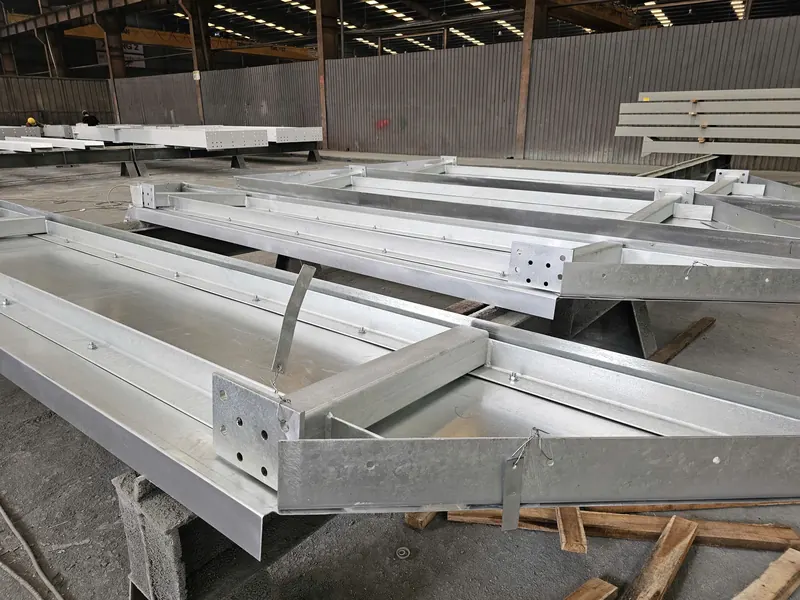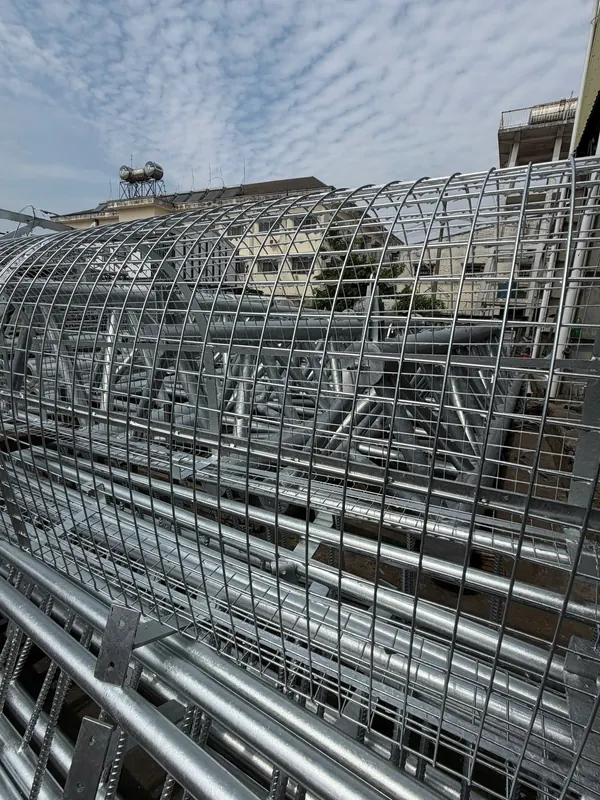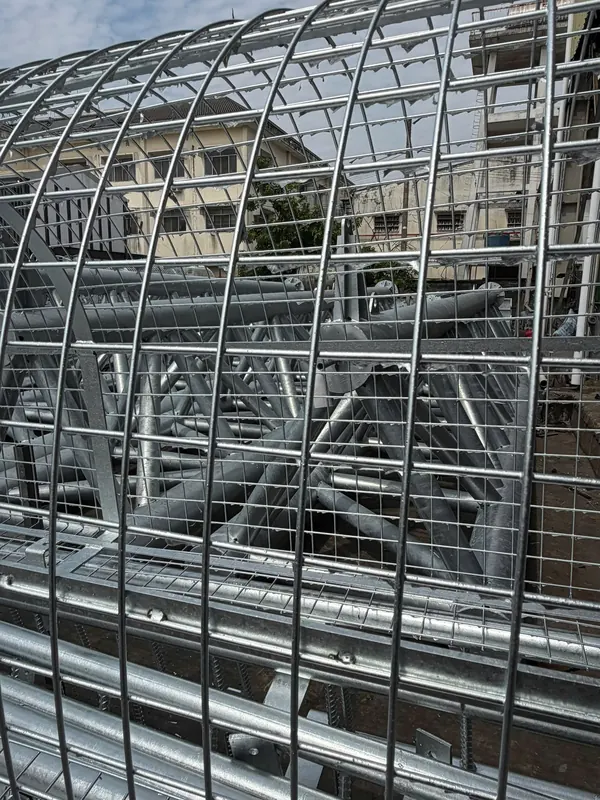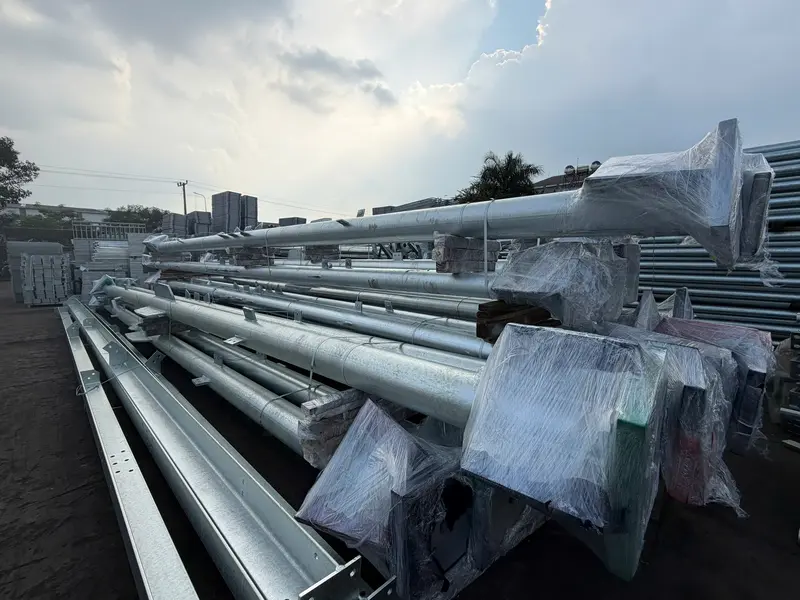
A galvanized member that leaves the kettle bright can arrive on site covered in a white, powdery bloom. That bloom is wet storage stain, sometimes called white rust. It forms on fresh zinc that stays wet without enough air, and it is the most common complaint about galvanized steel shipped a long way. Usually it is cosmetic; sometimes it hides real loss of zinc. This article explains why it forms, how ASTM A123 frames acceptance, and how packing, shipping and site storage keep it away.
The acceptance points come from ASTM A123/A123M-13. The storage practice is general industry guidance for galvanized steel, applied through World Steel's procedures. The edition your specification names governs.
Why fresh zinc stains
New zinc is reactive. In open air it reacts with oxygen, moisture and carbon dioxide and, over a few weeks of wetting and drying, builds a thin, stable zinc carbonate patina that slows further corrosion. That patina needs air circulation and drying cycles to form.
When fresh galvanized steel is stacked tightly, nested, wrapped in plastic or left in standing water, the surfaces stay wet with very little carbon dioxide reaching them. Instead of the stable patina, the zinc forms a bulky, porous layer of zinc oxide and zinc hydroxide. It is white to gray, powdery or crusty, and it can appear within days.
The conditions that cause it are typical of an export journey:
- condensation inside containers or holds as the ship passes from warm to cold waters,
- rain on open stacks at ports and laydown yards,
- tight bundles and nested angles or channels,
- plastic wrapping that traps condensation,
- timber dunnage that holds moisture against the zinc.
How ASTM A123 frames it
ASTM A123 judges the coating when it leaves the galvanizer. Section 6.4 sets the appearance requirements "upon shipment from the galvanizing facility", and Section 9.3 places inspection at the galvanizer's plant before shipment. Wet storage stain usually forms after that point, during storage and transport, so it is not one of the A123 coating defects in itself.
What A123 does keep in force is the coating thickness and adherence. Section 6.5 requires the coating to stand normal handling and use, and if heavy staining has consumed enough zinc to take the coating below its grade, the area needs attention. Section 4.1.7 lets the order include special requirements, and special stacking is one of the examples the standard gives. That is the hook for writing packing and storage rules into the galvanizing order.
Grades of staining
Galvanizers and inspectors usually describe stain in three levels:
| Level | What it looks like | Effect on the coating | Usual action |
|---|---|---|---|
| Light | Thin white film or haze | Cosmetic | Leave to weather once exposed to air |
| Moderate | Visible white powder, slight dulling of the zinc | Minor zinc loss | Brush off with a stiff nylon brush, check thickness |
| Heavy | Thick white or gray crust, dark spots underneath | Measurable zinc loss | Remove, measure, repair to ASTM A780 if below the grade |
The important step for anything beyond light stain is to measure the coating with a magnetic gauge after the deposit is removed. If the thickness still meets the Table 1 grade for the steel, the coating has done its job and will weather normally.
Prevention starts at the kettle
The last stage of the galvanizing process is the first line of defense. Under World Steel's written galvanizing procedure, most steel is quenched in a chromate passivation solution at 1.2 to 1.8 parts per thousand, which leaves a thin film that protects the fresh zinc from early staining.
Steel that will be painted in a duplex system is cooled in water or air instead, without passivation, because the passivation film can stop paint bonding. That steel is more vulnerable to stain, so it needs the most careful packing and the shortest wet exposure before it is prepared and painted.
Packing for an ocean voyage
Packing for export is where most stain is prevented or caused. Good practice for galvanized steel:
- Space the members. Use spacers between layers and members so air can pass and water can drain. Avoid nesting angles and channels inside each other.
- Slope the stacks. Stack long members on a slight incline so water runs off instead of pooling.
- Choose dry dunnage. Use dry timber or plastic spacers; wood packaging for export must also meet ISPM 15 treatment and stamping.
- Keep wraps breathable. Covers should shed rain but let air through. Avoid sealing galvanized steel in plastic without ventilation.
- Protect small parts. Bolts, plates and clips go in ventilated crates or boxes, not sealed bags.
- Mark the lots. Keep the galvanizing lot tags on the bundles, as Section 7.2 expects when the purchaser will test after delivery.
Containers add one more risk: condensation from temperature swings. Ventilated containers, desiccants for sensitive small parts and avoiding wet loading all help. Breakbulk cargo stowed below deck is generally drier than cargo on deck.
At the port and on site
The steel's last weeks before erection matter as much as the voyage:
- Unwrap and inspect on arrival, and open tight bundles if the steel will be stored for long.
- Store off the ground on dunnage, sloped for drainage, away from standing water and soil splash.
- Keep air moving between members; restack if needed.
- Cover against rain with tarpaulins tented to let air circulate, not wrapped tight.
- Avoid contact with wet timber, concrete or other metals for long periods.
- Erect in sequence, so steel does not sit stacked longer than needed.
Once erected and exposed to air, galvanized steel develops its normal patina and light staining fades.
Treating stain on painted work
For steel that will be painted, any wet storage stain must be removed completely before surface preparation, because paint applied over zinc oxide and hydroxide will lift. The surface is cleaned, checked for thickness and then prepared with a light sweep blast to SSPC-SP 16 or another method the paint manufacturer accepts. Our SSPC page covers that preparation.
What to tell the owner
Owners who see a white bloom on their new steel often assume the galvanizing has failed. A short note in the coating submittal heads off the call: what wet storage stain is, that light stain is cosmetic, how it is checked, and what happens if the coating is below its grade. It also helps to agree in advance who checks and treats stain on arrival, which on a World Steel job is part of the US contractor's receiving and site work.
A receiving check for galvanized steel
When galvanized steel arrives on site, a quick check by the receiving crew catches problems while they are easy to deal with:
- Open a sample of bundles and look between members, not only at the outside faces.
- Note any white bloom and its level: light, moderate or heavy.
- Check for standing water inside nested or wrapped bundles.
- Measure coating thickness on any area with heavy stain after brushing it off.
- Note transport damage separately from stain, with photographs and piece marks.
- Restack and ventilate any bundle that will wait more than a few days.
The record helps decide quickly whether anything needs repair and keeps stain separate from the galvanizing acceptance done before shipment.
Hardware and small parts
Galvanized bolts, nuts and washers, galvanized to ASTM A153, are just as prone to staining when stored in sealed bags or wet cartons. They should stay in their original, dry packaging until use, be stored indoors, and be kept as matched assemblies. Lubricated bolt assemblies for high-strength joints also need protecting from rain, which can wash off the lubricant as well as stain the zinc.
How long galvanized steel can wait
There is no fixed safe period: properly spaced, ventilated and covered steel can sit for months without staining, while a tightly wrapped bundle left in the rain can stain within days. What matters is whether the surfaces can dry. Long waits at a port or laydown yard are best planned in advance with the receiving crew, so bundles are opened and restacked on arrival rather than left as shipped. Erecting steel in the sequence it was packed also keeps the time each bundle spends in storage short.
Stain versus real corrosion
Wet storage stain should not be confused with red rust. White or gray deposits are zinc products and show that the zinc is doing its job. Red or brown rust on a galvanized surface means bare steel is exposed, from damage, an uncoated area or a coating that has been consumed. Rust spots are measured, cleaned and repaired with an ASTM A780 method, and their cause, transport damage or a missed area, is recorded separately from any stain.
How World Steel ships galvanized steel
World Steel fabricates up to 2,500 metric tons of structural steel a month in its own IAS AC472-accredited plant in Vietnam. Galvanizing is arranged in Vietnam with a galvanizer named for the job, under our written galvanizing procedure, with chromate passivation for steel that will not be painted. Galvanized members are packed in erection-order bundles with spacers, sloped where long, protected with breathable covers, and small parts are crated, with ISPM 15 wood packaging and the lot tags kept on every bundle.
Each shipment leaves with its galvanizing records and a short storage note for the site. See how we pack and ship on our Vietnam to USA shipping page, and the coating rules on our ASTM A123 page. For finish questions on arrival, read galvanized coating finish and appearance.
Quick answers
What is wet storage stain?
A white or gray powdery deposit of zinc oxide and zinc hydroxide that forms when freshly galvanized steel stays wet with little air movement, for example tightly stacked or wrapped. It is also called white rust.
Does wet storage stain damage the galvanizing?
Light stain is cosmetic and weathers away once the steel is exposed to air. Heavy stain consumes some zinc, so the coating thickness should be checked, and areas below the required thickness repaired to ASTM A780.
How is wet storage stain prevented in shipping?
By a chromate passivation quench where the steel will not be painted, by stacking members on spacers with air between them and a slope for drainage, by covers that shed water but let air through, and by dry, ventilated storage.
How is wet storage stain removed?
Light deposits are left to weather or brushed off with a stiff nylon brush. Heavier deposits are brushed and the surface checked for thickness; steel to be painted needs the deposit fully removed before preparation.
Keep building your steel plan
Go further on USPEB.com
On this topic
Across the US market
- Steel fire protectionIntumescent and fire-rated steel packages
- Quality hubCoating inspection by FROSIO Level III inspectors
- Products catalogGalvanized, painted and built-up members
- Download centerSample ITP, design report and approval drawings
- Large projects, 2,500 t a monthCapacity for large US general contractors
- Contractor partnershipLong-term supply for US contractors