Ask a structural engineer what can go wrong with galvanizing and embrittlement is usually on the list. In practice it is rare: the common structural grades galvanize safely in normal fabrication, and the reports of brittle galvanized steel trace back to a short list of causes. Galvanizing embrittlement is worth understanding because those causes are fabrication choices, and ASTM A143 sets out how to avoid them. This article explains the mechanisms, the precautions and what ASTM A123 says about testing.
The editions reviewed are ASTM A123/A123M-13 and the A143 practice it refers to. The editions your specification names govern.
What "embrittlement" means here
Embrittlement is a loss of ductility. An embrittled member looks normal but can crack or snap under an impact or a bend that sound steel would absorb. For galvanized steel three mechanisms matter.
Strain-age embrittlement. Steel that has been heavily cold worked, by tight bending, punching or shearing, holds a lot of strain. Over time, nitrogen and carbon atoms in the steel migrate to that strained metal and pin it, so it loses ductility. The process is slow at room temperature but fast at galvanizing temperature, about 450 °C (842 °F), so galvanizing can bring on in minutes what would take years.
Hydrogen embrittlement. Pickling in acid releases hydrogen at the steel surface, and some of it enters the steel. In ordinary structural steel it escapes harmlessly, much of it driven out by the heat of the kettle. In very hard or very high-strength steel, the hydrogen can stay trapped and cause delayed cracking.
Cracking at very high stress. Rarely, large welded assemblies with high restraint and very high local stresses can crack during galvanizing. It is linked to steel chemistry, weld detailing and the bath, and the guidance for avoiding it sits in the same family of design practices.
Where ASTM A123 places the responsibility
ASTM A123 deals with embrittlement in four places:
- Section 5.2 requires the designer and fabricator to follow ASTM A143, along with A384 and A385, in design and fabrication.
- Section 5.3 says some castings are known to be predisposed to embrittlement in the normal galvanizing thermal cycle, and makes it the purchaser's responsibility to heat treat or otherwise allow for it. Malleable iron castings must meet ASTM A47.
- Section 8.4 says tests for embrittlement follow A143, and are not required unless strong evidence of embrittlement is present. Section 8.1 makes the decision to specify such tests a matter of agreement between galvanizer and purchaser.
- Section 9.6 allows rejected material to be stripped and regalvanized, but only when it was rejected for reasons other than embrittlement.
The message is that embrittlement is prevented upstream, by steel selection and fabrication, not inspected out at the end.
The precautions in ASTM A143
ASTM A143 lists practical safeguards. In general terms:
Choose suitable steel
- Common hot-rolled structural grades, such as ASTM A36, A572 and A992, are well suited to galvanizing.
- Steels susceptible to strain aging, very high-strength quenched and tempered steels and very hard material deserve a check before galvanizing.
- Where steel is to be cold worked heavily, a grade less prone to strain aging is preferred.
Limit cold work
- Bending. Use generous bend radii; a common guide is an inside radius of at least three times the material thickness for cold bends in structural steel. Tight bends in thick plate should be made hot, or stress relieved before galvanizing.
- Punching. Holes punched full size in thicker material leave a cold-worked, sometimes micro-cracked edge. Drill them, or punch undersize and ream to remove the worked metal.
- Shearing. Sheared edges of thick plate carry the same cold work; machine or grind them where the edge will be highly stressed.
- Notches. Avoid sharp re-entrant corners, gouges and notches in members that will be cold worked, because they concentrate strain.
Stress relieve when cold work cannot be avoided
Where a part must be heavily cold formed, a stress-relief or normalizing heat treatment before galvanizing restores ductility. The A143 practice describes the approach; the treatment is set by the material and the design.
Keep hard steel out of the pickling tank, or protect it
Very high-strength or hardened parts, such as some springs and high-strength fasteners, are at risk from hydrogen. They are better protected by other coatings, or cleaned by abrasive blasting rather than acid pickling before galvanizing, with a bake-out where appropriate.
Bolts: a practical case
The most common embrittlement question on a structural job is about bolts. High-strength bolts under the RCSC Specification come in two main grades, now both under ASTM F3125. Galvanized structural joints use Grade A325 bolts with galvanized nuts and washers, all galvanized to ASTM A153 or a mechanical zinc process, and tested together as a lubricated assembly. Grade A490 bolts are not permitted to be hot-dip galvanized, because their higher strength raises the risk of hydrogen embrittlement.
That is why a galvanized frame designed with A490 bolts needs a design question before fabrication, and why we raise it on the coating schedule.
Fabrication practices that keep the risk low
On a steel job the precautions translate into shop rules:
- Drill bolt holes in plate thicker than the punching limit, or punch undersize and ream.
- Cold bend only with radii that suit the steel and its thickness; bend thick parts hot.
- Grind out flame-cut gouges and notches on edges that will be stressed.
- Keep weld toes smooth and avoid arc strikes outside the weld.
- Identify high-strength or hardened parts and keep them out of acid pickling.
- Record steel grades and heats, so the galvanizer knows what is going in.
Most of those habits are good fabrication practice for any structural steel, galvanized or not.
When a test is justified
ASTM A143 includes a bend test for detecting embrittlement: a specimen of the galvanized steel, cut or prepared as the practice describes, is bent and examined for cracking. Under A123 Section 8.4 the test is not routine. It is justified when there is strong evidence of embrittlement, for example cracking found after galvanizing, or when the steel and fabrication fall into a known risk category and the parties agree to test.
If a test confirms embrittlement, the piece cannot simply be stripped and regalvanized, because Section 9.6 excludes embrittled material. The answer is new steel, fabricated with the precautions.
Castings and forgings
Section 1.2 brings steel forgings and iron castings that are part of a fabricated piece into A123. Section 5.3 makes the purchaser responsible for their composition and heat treatment and for allowing for the possibility of embrittlement. In practice that means confirming the casting specification with the supplier and, where the casting is critical, agreeing a test with the galvanizer.
Risk factors at a glance
The table below sums up where the risk sits on a typical structural job. Most members fall in the first row.
| Situation | Risk | Usual precaution |
|---|---|---|
| Hot-rolled shapes and plate in A36, A572 or A992, drilled holes | Very low | None beyond good fabrication |
| Plate punched full size in thicker material | Raised at the hole edge | Drill, or punch undersize and ream |
| Cold bends with a tight radius in thick plate | Raised in the bend | Larger radius, hot bending or stress relief |
| Quenched and tempered or very hard steel | Raised, mainly hydrogen | Check with the steel supplier; blast instead of pickling |
| High-strength bolts above Grade A325 strength | High | Do not hot-dip galvanize; use another coating |
| Castings | Depends on type | Confirm composition and heat treatment (Section 5.3) |
What embrittlement looks like in the field
Embrittled galvanized steel usually shows itself at erection or soon after, not years later. The signs are:
- Cracks at bends or punched holes that appear when a member is lifted, dropped or bolted up.
- Brittle fracture surfaces: flat and granular, without the stretched, torn look of ductile steel.
- Delayed cracking of hard parts, such as high-strength fasteners, hours or days after tightening.
A crack found on site should be reported, the piece set aside and the fabrication history checked: steel grade and heat, cold work, hole making and any heat treatment. That record, kept by piece mark, decides whether an A143 test is justified.
Questions to settle before fabrication
A short list, asked during shop drawing review, removes almost all of the risk:
- Are any members cold bent, and at what radius and thickness?
- Are bolt holes in thicker plate drilled or reamed?
- Is any steel quenched and tempered, or harder than normal structural grades?
- Which bolt grade does the design use in galvanized joints?
- Are there castings or forgings in any assembly, and to which specification?
- Does the project specification call for embrittlement testing, and on what sample?
How World Steel guards against embrittlement
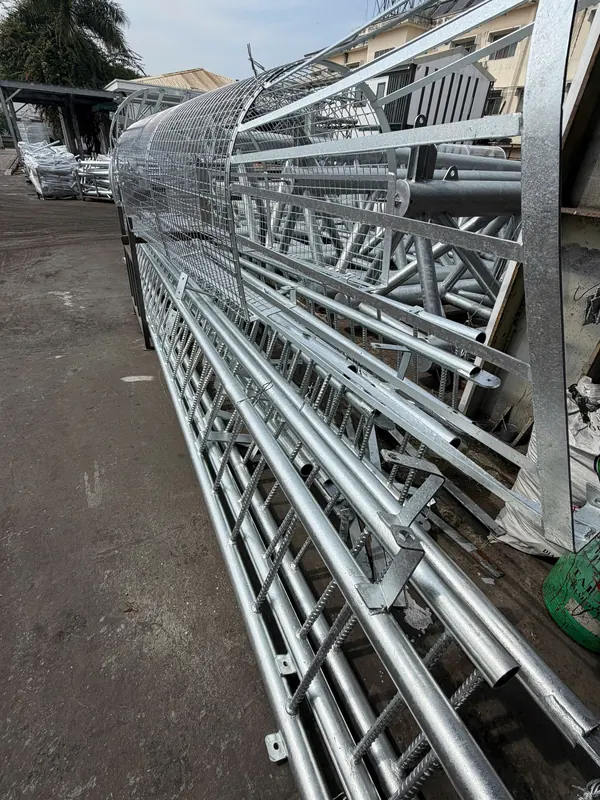
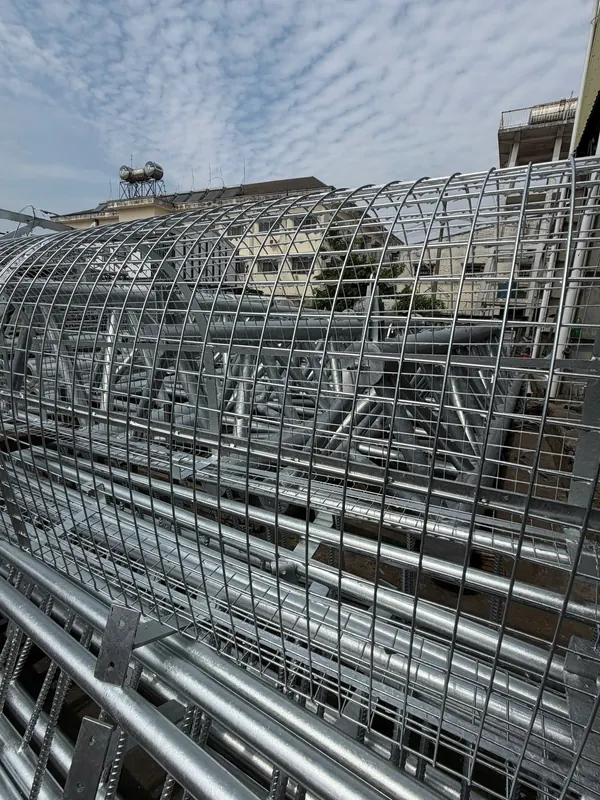
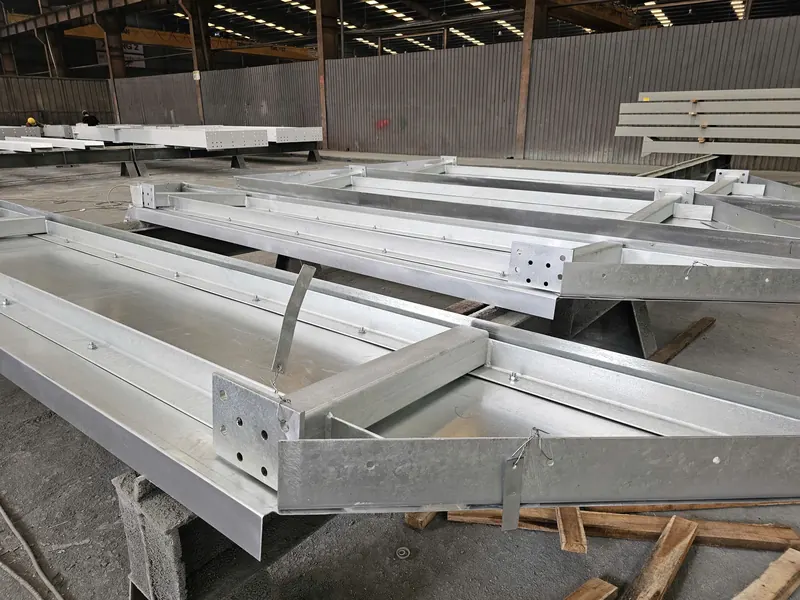
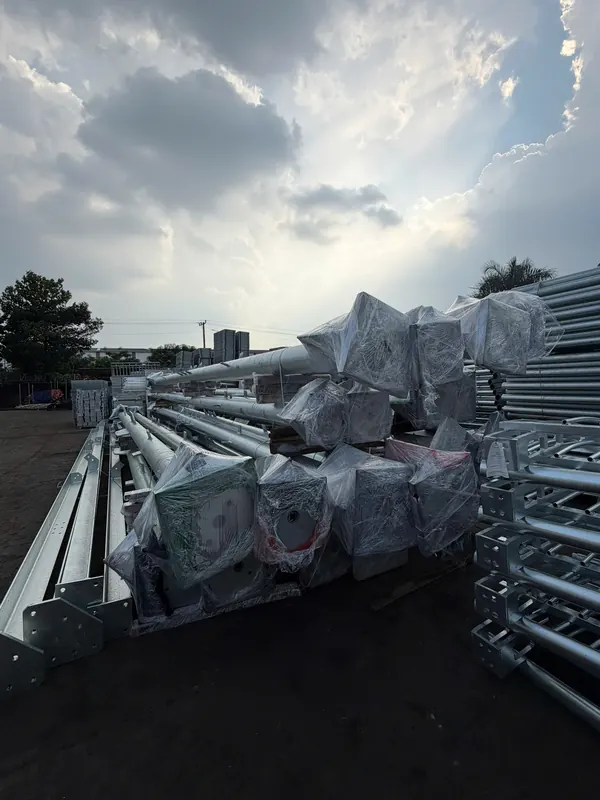
World Steel fabricates up to 2,500 metric tons of structural steel a month in its IAS AC472-accredited plant in Vietnam, mainly in common structural grades such as ASTM A36, A572 and A992 supplied with mill certificates for every heat. For galvanized work our shop drawings call for drilled or reamed holes in thicker plate, controlled bend radii and ground edges where stress is high, and the steel grade of every piece is known before it reaches the galvanizer.
Galvanizing is arranged in Vietnam with a galvanizer named for the job, under World Steel's written galvanizing procedure, and bolts for galvanized joints are supplied as galvanized Grade A325 assemblies rather than A490. If a project specification asks for embrittlement testing, we agree the test and the sampling before fabrication.
The design stage continues with welded assemblies for hot-dip galvanizing. Distortion is covered in galvanizing warpage and ASTM A384, and our RCSC bolting page covers galvanized bolt assemblies. For the standard at a glance, see our ASTM A123 page.
Quick answers
Does galvanizing make structural steel brittle?
Rarely. Common structural grades such as ASTM A36, A572 and A992 galvanize without embrittlement in normal fabrication. The risk rises with severe cold work, very hard or high-strength steel and some castings.
When does ASTM A123 require an embrittlement test?
Only when the purchaser and galvanizer agree to it, and Section 8.4 says the test is not required unless there is strong evidence of embrittlement. The test follows ASTM A143.
Can ASTM A490 bolts be galvanized?
No. The RCSC Specification and ASTM F3125 do not permit hot-dip galvanizing of Grade A490 bolts because of the risk of hydrogen embrittlement. Galvanized high-strength joints use Grade A325 bolts with matching galvanized nuts and washers.
How are punched holes handled on galvanized steel?
In thicker material they are drilled, or punched undersize and reamed, so the cold-worked edge is removed. Thin material punched to size is generally acceptable.
Keep building your steel plan
Go further on USPEB.com
On this topic
Across the US market
- Steel fire protectionIntumescent and fire-rated steel packages
- Quality hubCoating inspection by FROSIO Level III inspectors
- Products catalogGalvanized, painted and built-up members
- Download centerSample ITP, design report and approval drawings
- Large projects, 2,500 t a monthCapacity for large US general contractors
- Contractor partnershipLong-term supply for US contractors