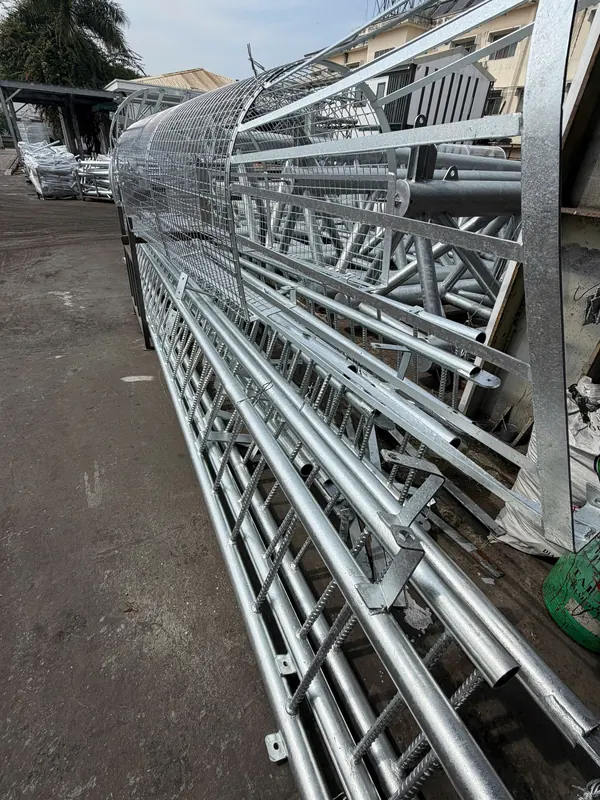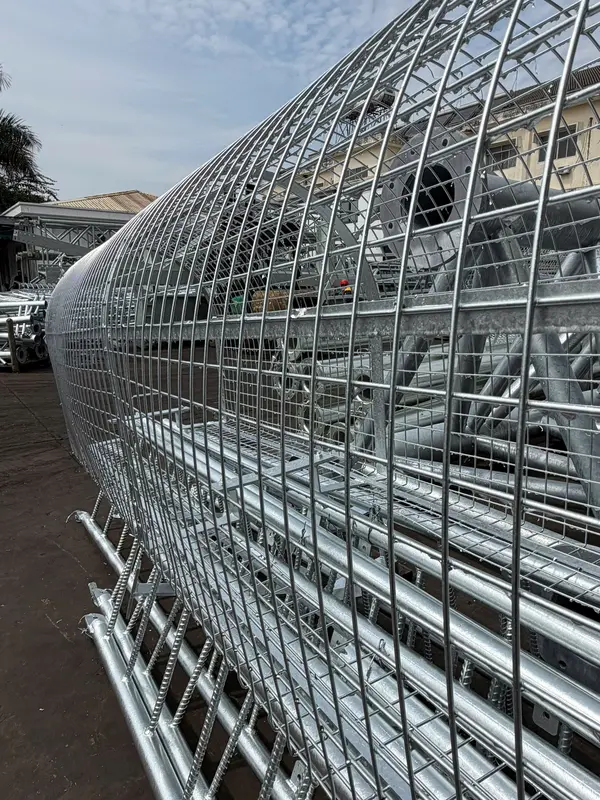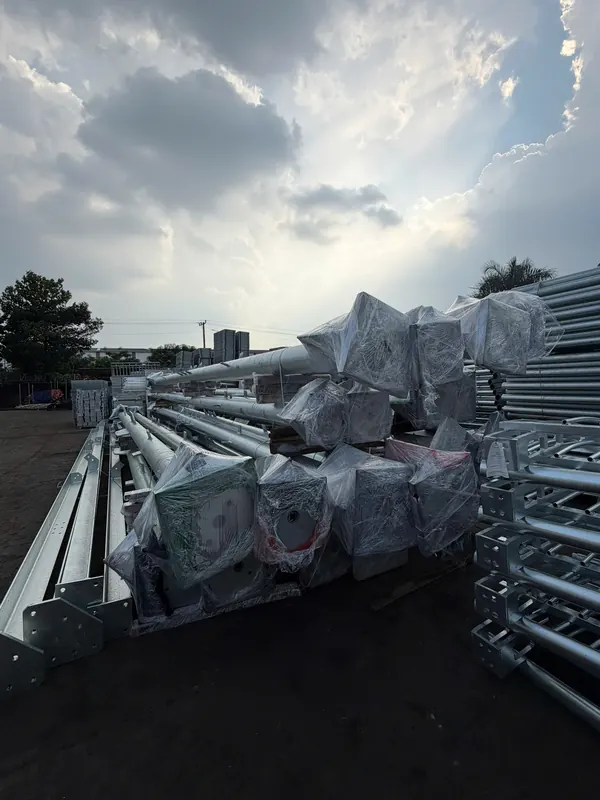
Nobody measures every piece of a large galvanized order. ASTM A123 accepts or rejects a lot on a sample, a few pieces picked at random, measured and judged against the specification. That makes galvanizing lot sampling the hinge of acceptance: define the lot wrongly, or pick the sample by eye, and a good lot can fail or a bad one can pass. This article explains Section 7 of A123 and the sampling rules around it.
The edition reviewed is ASTM A123/A123M-13. The sampling plan in your contract, if it differs, governs, and so does the edition your specification names.
The words: lot, sample, test article
Three terms from Section 3 carry the whole section:
- Lot. A unit of production or shipment from which a sample is taken for testing (Section 7.2).
- Sample. A collection of individual units from a single lot, selected under Section 7 to represent the lot for acceptance. Section 3.2.7 says it must be taken at random, without regard to the perceived quality or appearance of any individual unit, and consists of one or more test articles.
- Test article. An individual piece that is a member of the sample and is examined for conformance (Section 3.2.11).
Each test article then contains one or more specimens, as explained in ASTM A123 coating thickness grades.
Every lot is sampled
Section 7.1 states the starting point: each lot is sampled for conformance with the specification. There is no lot so small or so routine that it skips the check.
What a lot is
Section 7.2 defines the lot in two settings, unless the galvanizer and purchaser agree otherwise or the specification sets it elsewhere.
At the galvanizer's facility, a lot is one or more articles of the same type and size in a single order or a single delivery load, whichever is smaller. Alternatively it is any number of articles identified as a lot by the galvanizer, when they have been galvanized within a single production shift and in the same bath.
For tests by the purchaser after delivery, the lot is the single order or the single delivery load, whichever is smaller, unless the lot identity set at the galvanizer is maintained and clearly marked in the shipment by the galvanizer.
The logic is that a lot should be steel that saw the same process: same type and size of piece, same bath, same shift. Mixing pieces from different days or different kettles in one lot hides differences that sampling is meant to find.
On a large structural job, lot definition needs a decision. An order may cover hundreds of tons over several weeks and many shipments. Defining lots by piece type and shipment, and keeping the lot tags on the bundles, lets the purchaser test after delivery against the same lots the galvanizer tested.
How many pieces: the Section 7.3 table
Section 7.3 says the method of selection and the number of test articles are agreed between galvanizer and purchaser. Without an agreement, the test articles are selected at random from each lot, with at least:
| Pieces in the lot | Test articles |
|---|---|
| 3 or fewer | all |
| 4 to 500 | 3 |
| 501 to 1,200 | 5 |
| 1,201 to 3,200 | 8 |
| 3,201 to 10,000 | 13 |
| 10,001 and over | 20 |
The numbers grow slowly because the sample is meant to detect a process problem, not to inspect every piece. A lot of 400 rafters is represented by three of them, each measured as three specimens with five or more readings, so at least 45 readings in all.
Statistical plans
Note 10 adds an option for repetitive work. Where many identical items are galvanized, a statistical sampling plan may be wanted, and ASTM B602, which covers attribute sampling of metallic and inorganic coatings, contains one. If B602 is used, the level of sampling is agreed between galvanizer and purchaser when the order is placed. On jobs with thousands of identical clips, brackets or grating panels, a B602 plan can give a clearer statistical basis than the table.
Random means random
Section 3.2.7 requires the sample to be taken at random, without regard to the perceived quality or appearance of any piece. That rule cuts both ways:
- A galvanizer may not offer the best-looking pieces as the sample.
- An inspector may not pick the worst-looking piece and treat it as representative.
Appearance has its own requirements in Section 6, judged by visual inspection of the lot. If a piece looks wrong, it is checked against the finish and appearance rules, not used to bias the thickness sample. Practical ways to keep sampling random include numbering the pieces in the lot and drawing numbers, or taking pieces at fixed positions in the stack agreed in advance.
One failure, one requirement
Section 7.4 adds a rule that keeps judgments separate: a test article that fails one requirement of the specification is not used to determine conformance to other requirements. A piece rejected for a bare spot, for example, is not then also used in the thickness average.
Figures 2 and 3
The standard includes two figures that are worth looking at in the original. Figure 2 shows how an article made of many components is divided: each specimen is nominally one third of the surface area, with at least five readings spread through its volume. Figure 3 is a flow chart of the coating thickness inspection steps, from the lot to the sample, the test articles, the specimens, the readings and the averages compared with Table 1. Our ASTM A123 page sets out the same steps in plain words.
Where sampling happens
Section 9.3 says material is inspected at the galvanizer's plant before shipment. By agreement, the purchaser may also make the tests that govern acceptance in its own laboratory or elsewhere. When steel is galvanized overseas, that choice matters:
- At the galvanizer, with the purchaser's inspector present or watching by video, lots can be sorted, repaired or regalvanized before they leave.
- After delivery, the lot must be the order or delivery load, unless the galvanizer's lot identity is kept and marked, and any nonconformance means a repair or replacement far from the kettle.
For overseas supply, sampling at the galvanizer with remote witnessing is usually the sensible default, with spot checks on site.
Resampling a sorted lot
If a lot is rejected on the visual requirements of Section 6.2, Section 9.4 lets the galvanizer sort it, remove the nonconforming pieces, replace them with conforming ones and submit it again. Section 9.5 says the sampling plan used the first time is used again on the sorted lot. By mutual agreement the galvanizer may also submit the sorted lot without replacing the removed pieces, and that smaller lot is then treated as a new lot. Thickness disputes follow the referee method of Section 8.2.5, covered in measuring galvanized coating thickness.
A sampling plan for a large project
For a large galvanized job we suggest agreeing these points before the first dip:
- Lot definition: piece type, galvanizing shift and bath, and shipment.
- Sampling: Section 7.3 table, or a B602 plan for repetitive parts.
- Random selection method, written down.
- Where acceptance happens: at the galvanizer, with remote witness access.
- How lot tags are kept on bundles through shipping.
- What happens to a rejected lot: sorting, repair limits, redipping.
Sampling small parts and hardware
Small parts follow the same section, but the arithmetic differs. Clips, small plates and brackets with a surface area of 100,000 mm² (160 sq in) or less are single-specimen articles, so Section 6.1.2 judges the average of all the test articles in the sample, with each test article allowed to be one grade lower. A lot of 2,000 clips gives a sample of eight; their readings are averaged together for acceptance.
Bolts, nuts and washers are galvanized to ASTM A153, not A123, and follow its own sampling rules. Where an order mixes members, small parts and hardware, each needs its own lot.
Sampling records
A sampling record should allow anyone to repeat the check. For each lot it lists the lot identity, the number of pieces, the method of random selection, the test articles chosen by piece mark, the specimens on each, the readings, the averages and the result. Records kept that way also let a later inspector, on site, test the same lot and compare.
Sampling when lots are small
On projects where each member type is unique, many lots will have three or fewer pieces, and Section 7.3 then tests all of them. That makes sampling on custom structural work closer to full inspection than the table suggests. It is a good reason to group similar pieces galvanized in the same shift into one lot where the piece type and size allow, as Section 7.2 permits, so the sample stays meaningful without measuring every one-off piece twice.
How World Steel samples galvanized lots
World Steel fabricates up to 2,500 metric tons of structural steel a month in its own IAS AC472-accredited plant in Vietnam. Galvanizing is arranged in Vietnam with a galvanizer named for the job, under our written galvanizing procedure, which counts each lot against the order, tags it, and records the sample, the readings and the result on a thickness inspection sheet.
Lots are defined by piece type, bath and shift and carried through to the shipping bundles, so your inspector can test after delivery against the same lot. The inspection and test plan for the job names the sampling plan and the hold points, and your inspector can witness them in person or live by video, with the records posted in PEB Studio. See the full sampling table on our ASTM A123 page.
Quick answers
What is a lot under ASTM A123?
Unless agreed otherwise, a lot at the galvanizer is one or more articles of the same type and size in a single order or single delivery load, whichever is smaller, or any number of articles the galvanizer identifies as a lot when galvanized in one shift in the same bath.
How many pieces are tested from a galvanized lot?
Unless the parties agree a plan, Section 7.3 sets a minimum by lot size: all pieces for 3 or fewer, 3 for 4 to 500, 5 for 501 to 1,200, 8 for 1,201 to 3,200, 13 for 3,201 to 10,000 and 20 for more than 10,000.
Can test pieces be chosen by the inspector?
They must be chosen at random from the lot, without regard to the perceived quality or appearance of any piece, as Section 3.2.7 requires. Picking the worst-looking piece is not random sampling.
What happens after a lot is sorted?
Under Sections 9.4 and 9.5, the galvanizer may remove nonconforming articles and resubmit the lot, and the same sampling plan used the first time is used again on the sorted lot.
Keep building your steel plan
Go further on USPEB.com
On this topic
Across the US market
- Steel fire protectionIntumescent and fire-rated steel packages
- Quality hubCoating inspection by FROSIO Level III inspectors
- Products catalogGalvanized, painted and built-up members
- Download centerSample ITP, design report and approval drawings
- Contractor partnershipLong-term supply for US contractors
- Solutions by stateState-by-state steel solutions