
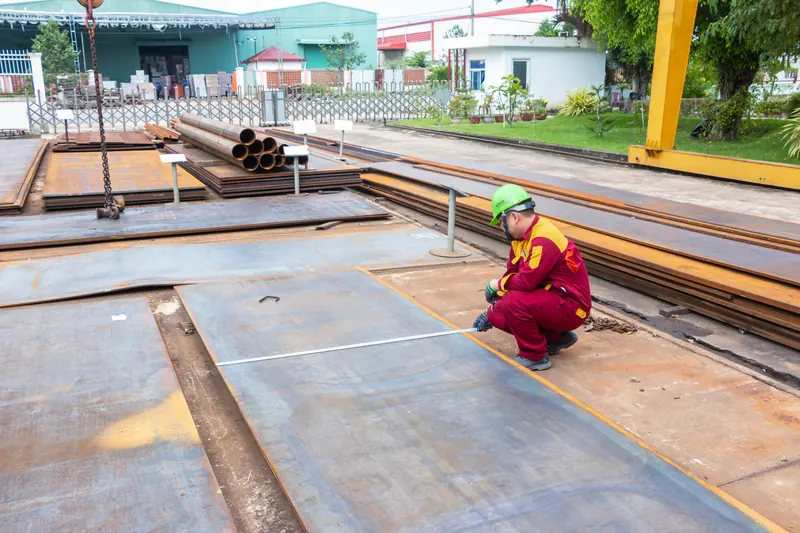
Incoming plate is measured at intake, before any cutting, in the Vietnam plant.
Materials · Steel plate
Structural steel plate to the ASTM grade on your drawings, cut and welded in our own plant
A36, A572 and A588 plate as regular grades, A709 bridge steel and A514 on request, each heat matched to its EN 10204 3.1 certificate and fabricated into members in a plant that turns out 2,500 metric tons a month.
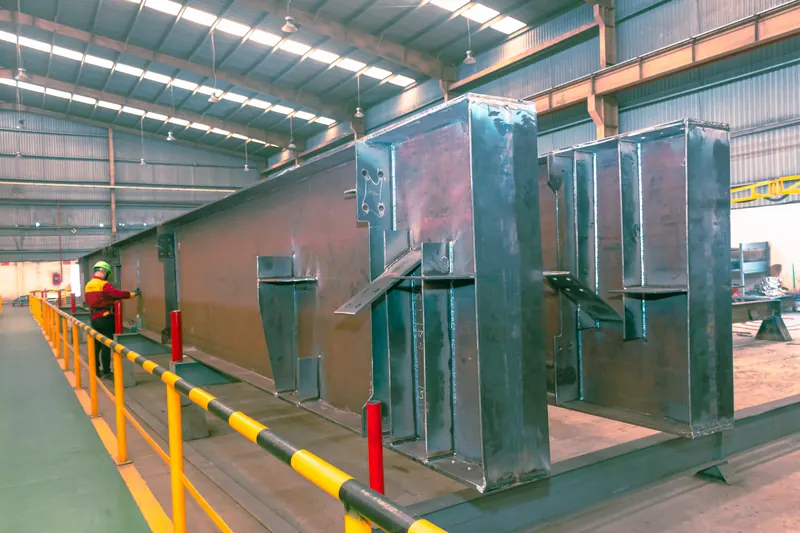
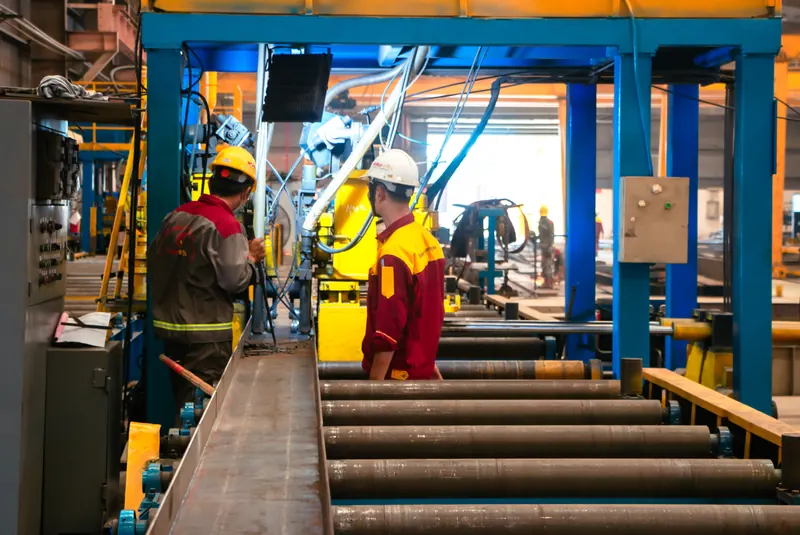
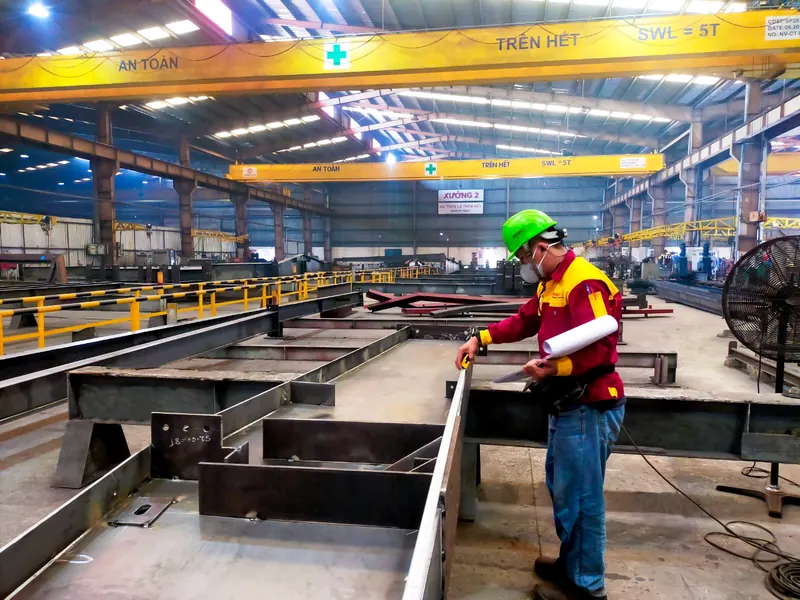
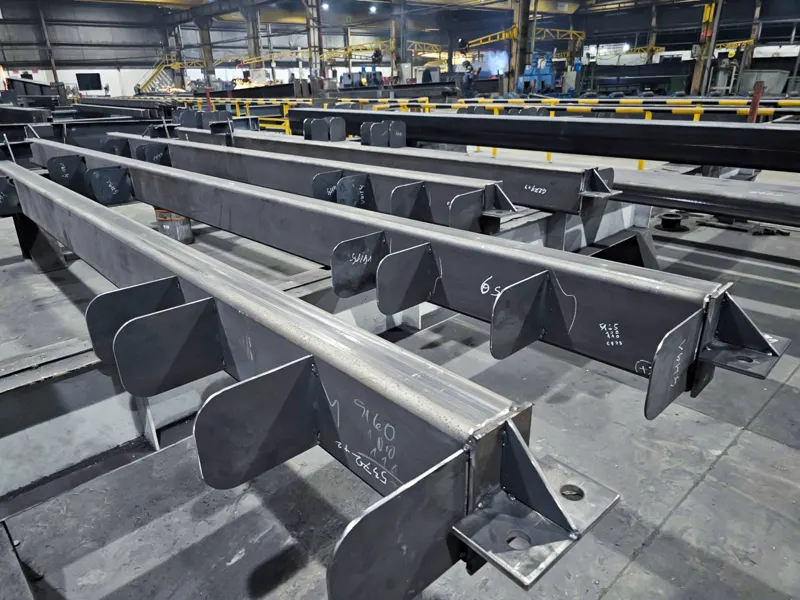
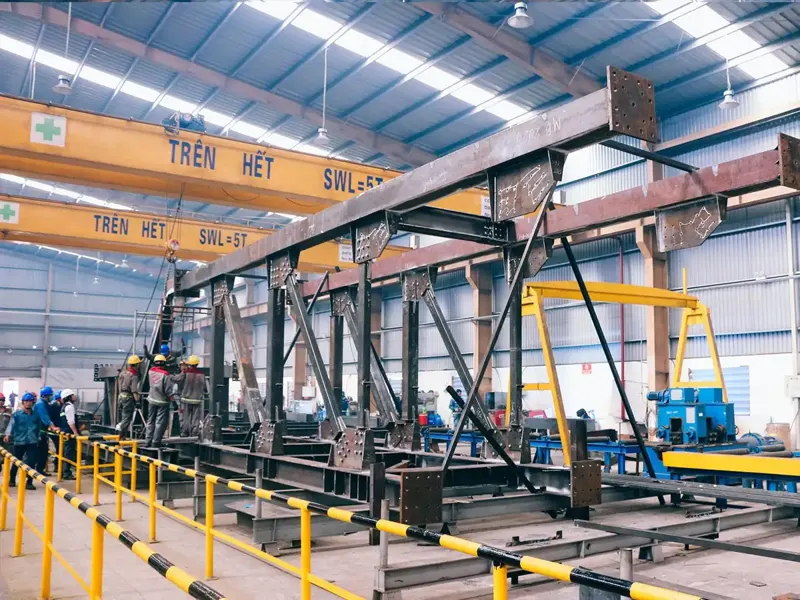
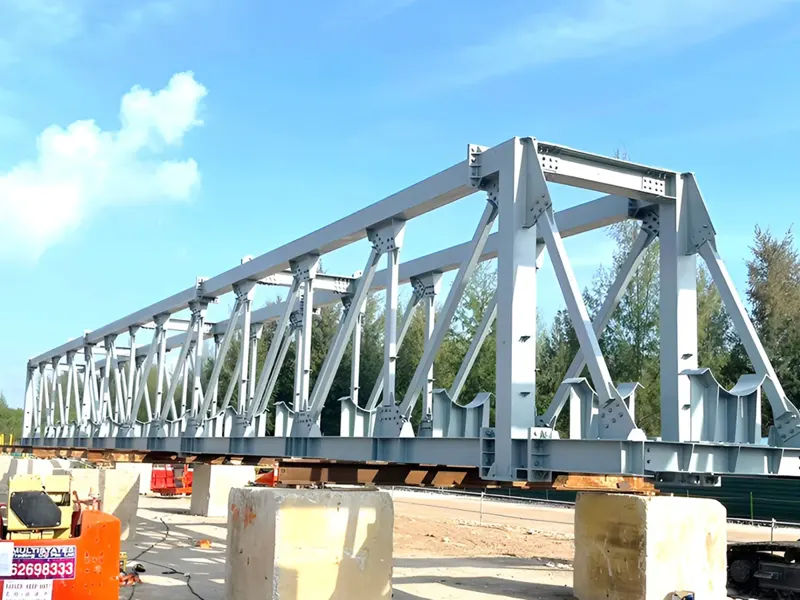
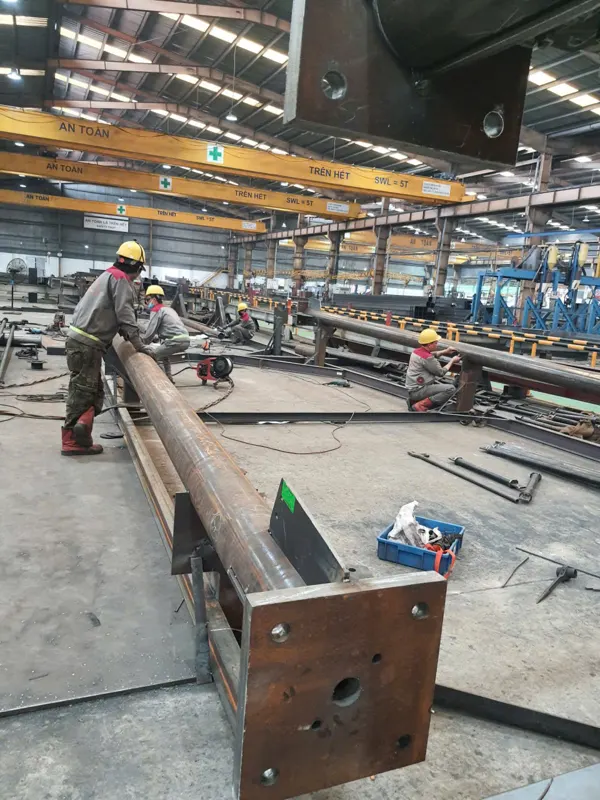
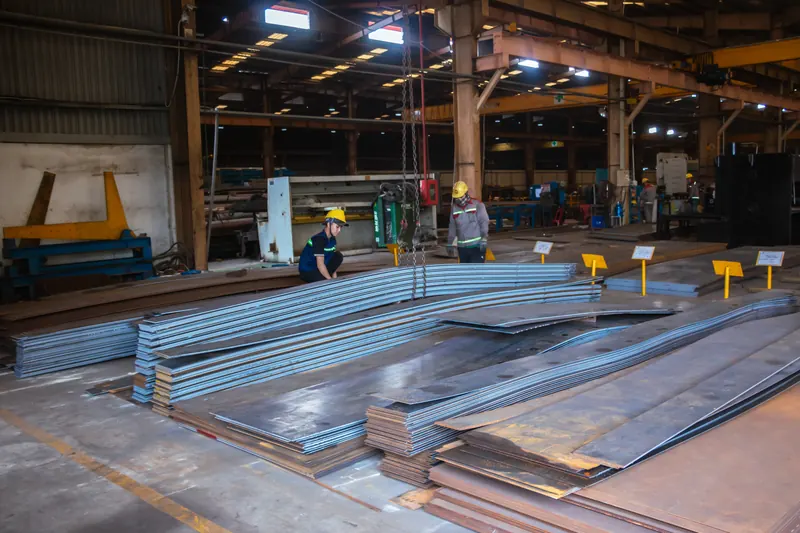
Plate grades we order for US jobs
Every plate grade on a US drawing, ordered by its ASTM name
Regular grades are the ones we buy every month. Grades marked on request are sourced for your project and confirmed, with their mill, in the proposal.
-
Regular grade
ASTM A36
Single grade
- Yield
- 250MPa (36 ksi)
- Tensile
- 400–550MPa (58–80 ksi)
- Up to
- 200mm (8 in)
Base plates, gusset and connection plates, stiffeners, embeds and general plate work.
-
Regular grade
ASTM A572
Grade 50
- Yield
- 345MPa (50 ksi)
- Tensile
- 450MPa (65 ksi)
- Up to
- 100mm (4 in)
The everyday high-strength plate: flanges and webs of built-up girders, columns and rafters, and heavy connection plates.
-
Regular grade
ASTM A572
Grade 55
- Yield
- 380MPa (55 ksi)
- Tensile
- 485MPa (70 ksi)
- Up to
- 50mm (2 in)
Lighter flanges where a stronger plate saves weight on long, repeated members.
-
Regular grade
ASTM A572
Grade 60 / 65
- Yield
- 415 / 450MPa (60 / 65 ksi)
- Tensile
- 520 / 550MPa (75 / 80 ksi)
- Up to
- 32mm (1¼ in)
High-strength plate for towers, transmission and heavily loaded members where the engineer has designed for it.
-
Regular grade
ASTM A588
Grade A
- Yield
- 345MPa (50 ksi)
- Tensile
- 485MPa (70 ksi)
- Up to
- 100mm (4 in)
Weathering steel for exposed frames and bridges that are left unpainted and form their own protective patina.
-
On request
ASTM A709
Grade 36 / 50 / 50W
- Yield
- 250 / 345MPa (36 / 50 ksi)
- Tensile
- 400 / 450 / 485MPa (58 / 65 / 70 ksi)
- Up to
- 100mm (4 in)
Bridge steel with toughness zones and fracture-critical rules, for pedestrian and highway bridge members.
-
On request
ASTM A709
HPS 50W / HPS 70W
- Yield
- 345 / 485MPa (50 / 70 ksi)
- Tensile
- 485 / 585MPa (70 / 85 ksi)
- Up to
- 100mm (4 in)
High-performance bridge steel with better weldability and toughness, when the bridge owner calls for it.
-
On request
ASTM A514
Quenched and tempered
- Yield
- 690MPa (100 ksi)
- Tensile
- 760–895MPa (110–130 ksi)
- Up to
- 65mm (2½ in)
Very high-strength plate for crane runways, heavy equipment supports and lifting gear, welded to special procedures.
Minimum yield and tensile values as listed in each ASTM specification for plate within the thickness shown; thicker plate of some grades carries lower minimums (A514 above 65 mm, for example, has a 620 MPa (90 ksi) minimum yield). "On request" grades are sourced per project and confirmed, with their mill, in your proposal before you order.
Capacity behind the plate
Plate is most of what a heavy job is made of, and we cut it at 2,500 metric tons a month
Built-up girders, box columns and base plates are plate before they are members. It all runs through one IAS AC472-accredited plant in Vietnam, with each heat checked at our gate and tracked in PEB Studio.
Engineering guides on these grades
Thickness limits
How thick each grade goes at its full strength
Each bar is drawn to scale. Beyond these thicknesses a grade either stops or carries a lower minimum yield, so the grade and the thickness are always chosen together.
- A572 Grade 60 / 65
- A572 Grade 55
- A514 at 690 MPa
- A572 Grade 50
- A588 Grade A
- A709 Grade 50 / 50W
- A36
Our laser machines cut and hole plate up to 100 mm (4 in) thick, the full A572 Grade 50 range. The dashed red line marks that 100 mm limit on every bar.
Extra requirements
What your specification can add to a plate order
Supplementary requirements are written into the mill order, tested by the mill and shown on its EN 10204 3.1 certificate, so the proof arrives with the plate.
ASTM A6 S5 · A673
Charpy V-notch toughness
Impact energy at the temperature your specification names, by heat or by plate. Required by AISC 341 for thick plate in seismic systems and by AASHTO for bridge members.
ASTM A770
Through-thickness (Z) testing
Reduction of area across the plate thickness, for plate loaded through its thickness at large welded joints, where lamellar tearing is a risk.
ASTM A435 · A578
Ultrasonic plate inspection
Straight-beam ultrasonic scan of the plate for laminations before it is cut, at the acceptance level your engineer sets.
ASTM A6 supplementary · AWS D1.1
Carbon equivalent limit
A maximum carbon equivalent on the mill order, so the plate welds with the preheat in our qualified procedures.
EN 10204
EN 10204 type 3.1 certificate
Chemistry and mechanical results for the heat, validated by the mill’s inspector independent of production, kept with every cut part.
ISO/IEC 17025 · ILAC
Independent retest
Check tests of plate samples at an ILAC-accredited laboratory, or at the laboratory you name.
In our plant
From mill plate to a traced, welded part
Racked by grade and heat
Plate arrives with its 3.1 certificate, is matched to it at our gate and stored by grade and heat number, never by size alone.
Laser and plasma cutting
Nested on CNC tables; our laser machines cut and make holes in plate up to 100 mm (4 in) thick.
Heat number transferred
Every cut part carries the heat number of the plate it came from, stenciled and logged in PEB Studio.
Bevels and edges
Groove bevels for CJP welds, ground edges and copes are prepared to the shop drawing before fit-up.
Welded into members
Flanges and webs become girders, box and cruciform columns on our automatic welding lines, to qualified AWS D1.1 procedures.
Checked and recorded
Dimensions, welds and coating are inspected and the member’s record lists every heat inside it.
Where it goes
What we make from structural steel plate
- Plate girders and built-up columnsA572 Grade 50 flanges and webs welded into members larger than any rolled section.
- Box and cruciform columnsFour-plate boxes and cruciform columns for heavy and seismic frames.
- Base plates and embedsThick A36 or A572 base plates, cap plates and embeds, drilled for anchor rods.
- Bridge membersGirders and truss members for pedestrian bridges, with A709 plate when the owner specifies it.
- Crane runway girdersPlate girders and cap plates for crane-served buildings, with fatigue-rated details.
- Pipe racks and process steelGussets, base plates and built-up members for racks and modules.
Sourcing
Rolled mainly in Vietnam, heavy grades from across Asia
Most plate in a World Steel package is rolled in Vietnam. Heavy plate, quenched and tempered grades and bridge steel come from mills in Japan, Korea, Indonesia or Thailand when your specification calls for them. The ASTM grade, the 3.1 certificate and the heat trace are the same whichever mill rolls it.
Mill certified to JIS, EN or GB?
We set the certified chemistry and mechanical values beside the ASTM limits and send the comparison to your Engineer of Record. A comparable grade is used only with written acceptance.
Questions from US contractors
Structural steel plate, answered
Which steel plate grades can World Steel supply for a US project?
ASTM A36, A572 in Grades 50, 55, 60 and 65, and A588 weathering steel are our regular plate grades. ASTM A709 bridge steel, including HPS grades, and A514 quenched and tempered plate are available on request: we source them for the project and confirm the mill in the proposal before you order.
How thick can the plate be?
It depends on the grade. ASTM A572 Grade 50 is specified up to 100 mm (4 in), Grade 55 up to 50 mm (2 in) and Grades 60 and 65 up to 32 mm (1¼ in). Our laser machines cut and hole plate up to 100 mm (4 in) thick; thicker plate is cut by oxy-fuel.
Can you supply plate with Charpy V-notch results?
Yes, on request. The mill order names the test temperature and energy your specification sets, and the results appear on the EN 10204 3.1 certificate for each heat or plate. That covers AISC 341 toughness rules for thick plate in seismic systems.
Is A572 Grade 50 the same as A992?
They have the same 345 MPa (50 ksi) minimum yield, but A992 is a specification for rolled wide-flange shapes with a maximum yield and yield-to-tensile ratio, while A572 covers plate, bars and shapes without those limits. Plate for built-up members is ordered to A572 Grade 50 unless your engineer specifies otherwise.
Where does your plate come from?
Mainly from mills in Vietnam. When a grade or thickness is not rolled in Vietnam, such as heavy plate or quenched and tempered grades, we buy it from mills in Japan, Korea, Indonesia or Thailand. The ASTM grade, the 3.1 certificate and heat traceability stay the same whichever mill rolls it.
What if the mill certifies plate to JIS, EN or GB instead of ASTM?
We compare the certified chemistry and mechanical values with the ASTM limits and send the comparison to your Engineer of Record. A comparable grade is used only with written acceptance; otherwise the plate is ordered to the ASTM grade itself.
Do you sell plate on its own or only fabricated?
World Steel supplies plate as fabricated parts and members, cut, drilled, welded and coated for your project, not as mill stock. That way every piece arrives with its heat traced to the drawing.
Who approves the plate grades and any substitution?
Your Engineer of Record. World Steel designs and fabricates; the US contractor, our customer, and the EOR approve the material submittal, any substitution and the drawings.
Heavy plate on your next bid?
Send the drawings and the material schedule. We confirm every plate grade, thickness and test, and quote the fabricated steel from a plant that turns out 2,500 metric tons a month.