
Mounting
Three ways a pipe bollard meets the ground
The mounting is picked by where the bollard stands and whether it ever has to come out.
Docks, door jambs and yard corners
The pipe is set in a concrete footing and filled with concrete. Our part is the pipe, cut to length with a cap; the footing and fill are site work.
Floors and slabs that cannot be dug up
A pipe welded to a stiffened base plate, drilled for anchors your engineer sizes. Used inside buildings and on structural slabs.
Fire lanes and access gates
A bollard that drops into an embedded steel sleeve and can be lifted out or locked in place. Sleeve and post ship as a pair.
Sizes
Common pipe bollard sizes
Light duty: pedestrian areas, small equipment, parking.
The common size at dock doors, overhead doors and gas meters.
Heavy duty: truck courts, drive lanes and building corners.
Where your engineer calls for more mass or a taller post.
Sizes are nominal pipe sizes, commonly ASTM A53 Grade B or as your specification says, in Schedule 40 or 80 wall. Height, embedment and footing come from the drawings and your Engineer of Record.
Finish
Coated for the yard, painted to be seen
Where they go
Six places a bollard schedule usually covers
Inside the plant, guards for columns and wall corners have their own page: column and corner guards.
Who does what
Pipe bollards: our part and the US contractor's part
World Steel fabricates, coats and ships. The US contractor, our customer, and its crews dig, set, fill and anchor.
World Steel
- Takes the bollard schedule off the site and building drawings, with every mark located
- Cuts pipe to length, welds caps, base plates and stiffeners, and fabricates sleeves
- Galvanizes or paints safety yellow as the specification says
- Tags each bollard by mark and packs by area with the building steel
The US contractor, our customer
- Engineer of Record sizes the bollards, footings and base plate anchors
- Concrete crew digs footings, sets embedded bollards and fills them with concrete
- Erector or site crew drills and installs anchors for base-plated bollards
- Contractor buys and fits any plastic bollard covers
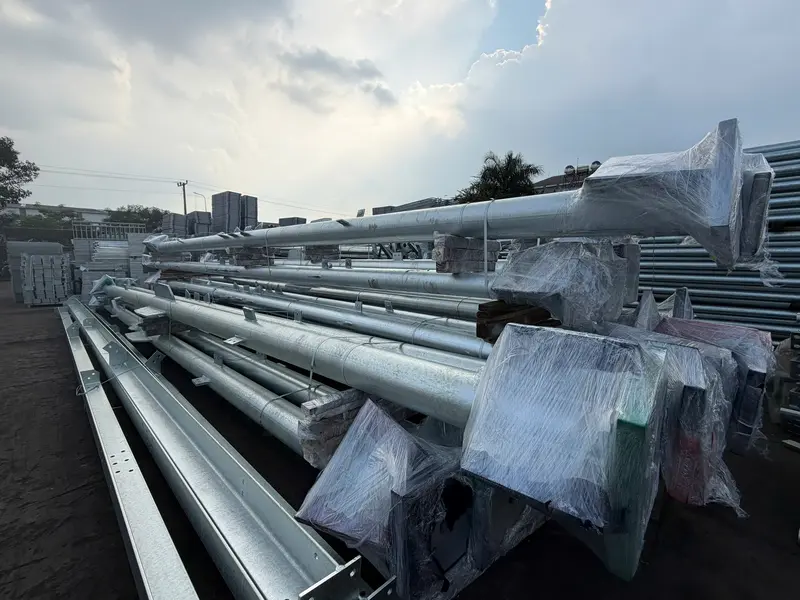
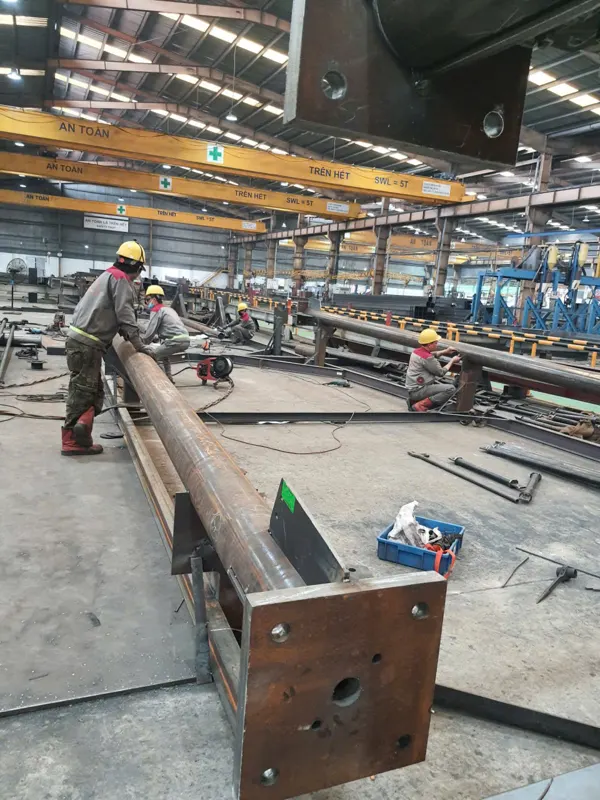
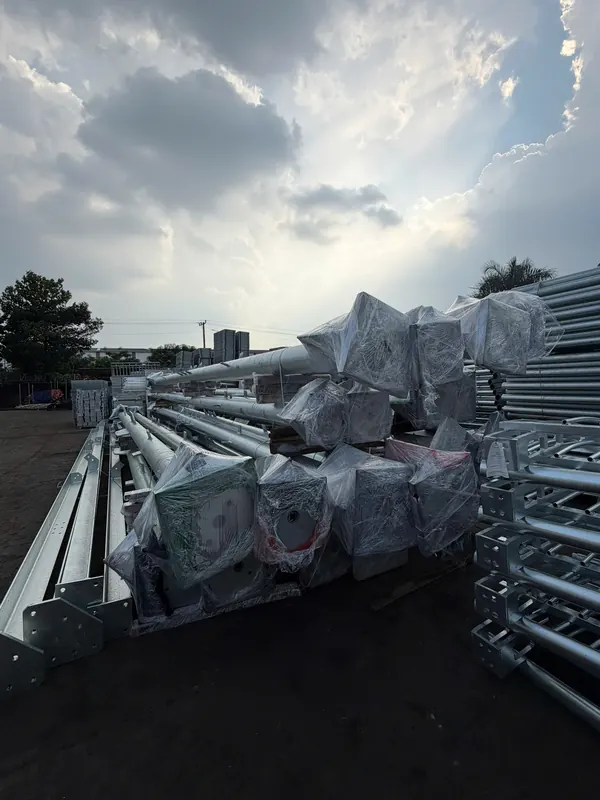
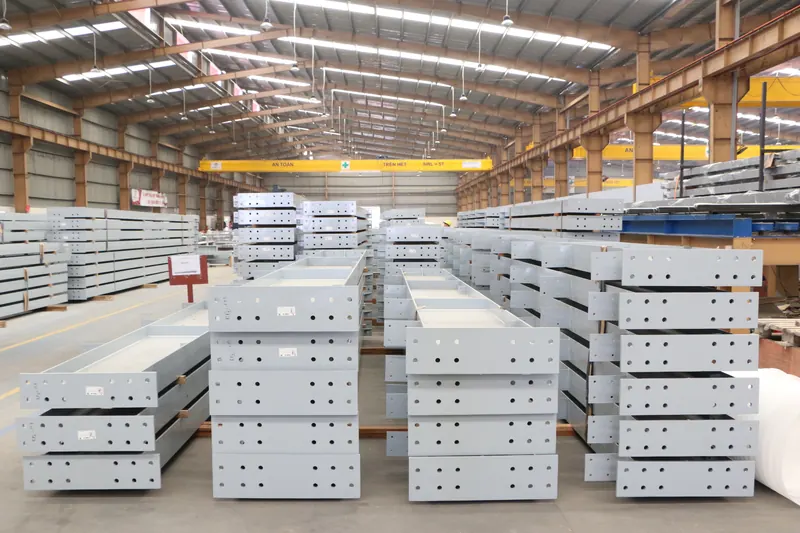
Pipe, plates and galvanized steel in our work
Questions
Pipe bollard questions from US contractors
What size pipe is used for a steel bollard?
150 mm (6 in) pipe is common at doors and docks, with 100 mm (4 in) for light duty and 200 mm (8 in) or more for truck courts. Your engineer sets the size, wall and height.
Should a pipe bollard be filled with concrete?
Embedded bollards are usually filled with concrete on site, which adds mass and keeps water out. The fill is site work; we ship the pipe cut, capped or open as the detail shows.
Are pipe bollards crash rated?
No. Crash-rated barriers are tested systems under ASTM F2656 from specialist makers. Pipe bollards protect buildings and equipment from everyday vehicle hits.
When do you use a base-plated bollard?
Where the slab cannot be dug up, such as inside a building or on a structural slab. The base plate is drilled for anchors your engineer sizes.
Can bollards be removable?
Yes. A removable bollard drops into an embedded steel sleeve, for fire lanes and gates. We fabricate the sleeve and post together.
What color should bollards be painted?
Safety yellow is common, since OSHA 1910.144 uses yellow to mark striking hazards. Galvanized bollards can be painted too, or fitted with covers.
Bollards at dock doors? See loading bay steel and dock edge angles.
Built for large jobs
Pipe bollards for your next large package
Our own plant in Vietnam fabricates 2,500 metric tons of structural steel a month, is accredited under IAS AC472 since 2019 and is audited twice a year. Shop drawings are included on every project.
- 5,000 tSunpro Steel Factory
- 2,500 tCPV Food Processing Factory
- 2,000 tLong Son petrochemical complex
- 2,000 tM&D (MD Factory)
Request a quote
Send drawings, a model or a member schedule. Our engineers check the US code basis, size or verify the members and price the fabricated steel, delivered to your US port.
Become our partner in the US
You erect and own the customer; we design, fabricate and ship. Engineering support on your bids and supply under your brand.
Who approves the design. We prepare calculations and drawings ready for your Engineer of Record’s review and approval. The PE seal and the permit stay with the US contractor, our customer.
Shop drawings, included